



Cerro Chirripó: En la montaña más alta de Costa Rica en 2 días
Advertisement: Article in collaboration with the Instituto Costarricense de Turismo
Climbing Cerro Chirripó is one of Costa Rica’s most impressive hikes. The country’s highest mountain (3,820 m) is located in the Cordillera de Talamanca, whose protected areas are partly designated as a UNESCO World Natural Heritage Site. The barren high‑mountain landscape forms a fascinating contrast to the tropical scenery for which Costa Rica is otherwise known.
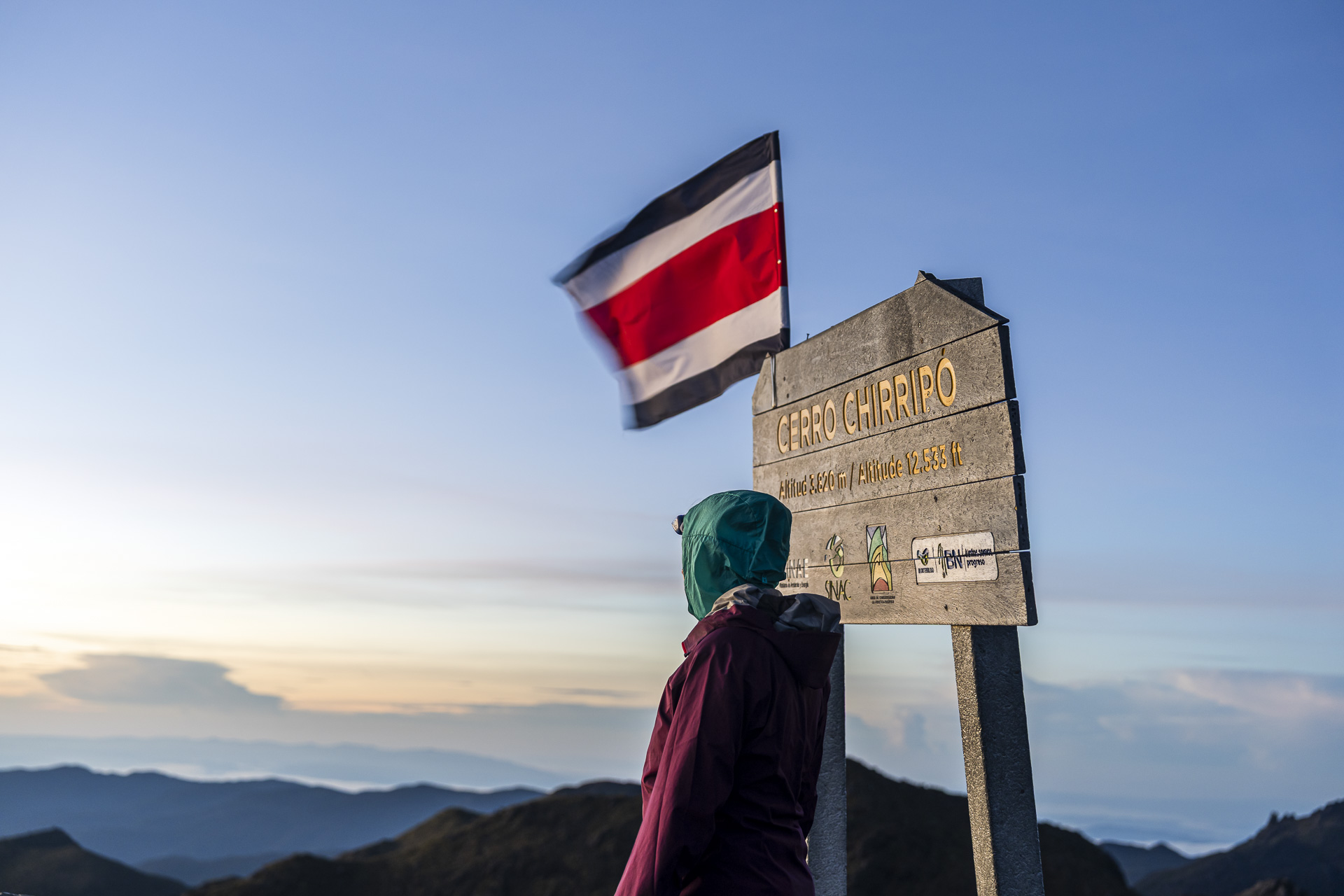
We climbed Cerro Chirripó over two days, stayed overnight at the Albergue Base Crestones, and watched the sunrise from the summit. Undoubtedly the highlight of our two‑week trip around Costa Rica. In this post I’ll take you along on our hike and give practical tips for planning your own tour.
Cerro Chirripó: The essentials for the hike at a glance
Cerro Chirripó is located in the national park of the same name in southern Costa Rica. At a height of 3,820 meters it is the highest mountain in Costa Rica and one of the highest summit destinations in Central America. The classic ascent route starts at San Gerardo de Rivas and leads via the mountain hut «Albergue Base Crestones» to the summit.
| Starting point | San Gerardo de Rivas, the trail begins at the end of the village at around 1,550 m above sea level. |
| Summit elevation | 3,820 m above sea level |
| Total distance | around 40 kilometers |
| Elevation gain | around 2,400 m |
| Duration | 2-3 hiking days |
| Difficulty | Technically moderate, physically very demanding |
| Accommodation | at least 1 night at Albergue Base Crestones |
| Permit | Advance reservation and personal registration required |
The ascent of Cerro Chirripó can be done in two days. On the first day the hike leads from San Gerardo de Rivas to the Albergue Base Crestones at just under 3’400 meters. On the second day the summit ascent follows. Afterwards you return along the same route to the albergue and continue down to San Gerardo de Rivas. The GPX tracks of our tour with detailed information on distance, elevation profile and hiking times can be found below at the end of the respective stage description (Day 1 | Day 2).
Those who have more time can plan an additional overnight stay in the albergue and explore the high-mountain landscape of Chirripó National Park more extensively. Another worthwhile hiking destination is the 3’812-meter-high Cerro Ventisqueros, the second-highest mountain in Costa Rica.
Planning the ascent of Cerro Chirripó: Registration, tickets and accommodation
The ascent of Cerro Chirripó requires some advance planning. Both entry to the national park and overnight accommodation at the Albergue Base Crestones must be reserved in advance. Available spots are limited, so early booking is recommended.
Step 1: Reserve park entry with SINAC
First, you book the park entry through the official SINAC’s online reservation system. For the classic hiking route from San Gerardo de Rivas you choose the corresponding park sector and your desired date. The number of available spots is limited.
Step 2: Book an overnight stay at Albergue Base Crestones
With the confirmed entry reservation, you can then book the overnight stay at Albergue Base Crestones with the local operator Consorcio Chirripó book. Through Consorcio Chirripó, meals and luggage transport can also be arranged. On request, the operator will also arrange local guides.
Step 3: In-person registration the day before
On the day before the hike, you must register in person with the National Park administration SINAC and with Consorcio Chirripó in San Gerardo de Rivas no later than 4:00 PM. For this you need to bring your original passport.
Starting point San Gerardo de Rivas: Arrival and accommodation
San Gerardo de Rivas lies at the foot of Cerro Chirripó, about 20 kilometers northeast of San Isidro de El General. From San José the drive with a rental car takes roughly three to four hours. The small mountain village is the starting point for the classic ascent route.
We stayed at Hotel de Montaña El Pelícano. In addition to classic hotel rooms, there are also pretty freestanding Cabañas. Our Cabaña Mielero offered a magnificent view of the surrounding mountain landscape. The hotel is located about three kilometers from the actual starting point of the Chirripó hike, which is marked on Google Maps as «Entrada al sendero Parque Nacional Chirripó». Ask locally whether a transfer can be organized for you. Without a transfer you’ll need to allow about 45 minutes for the additional walk.
San Gerardo de Rivas: What’s worth doing before the Chirripó hike
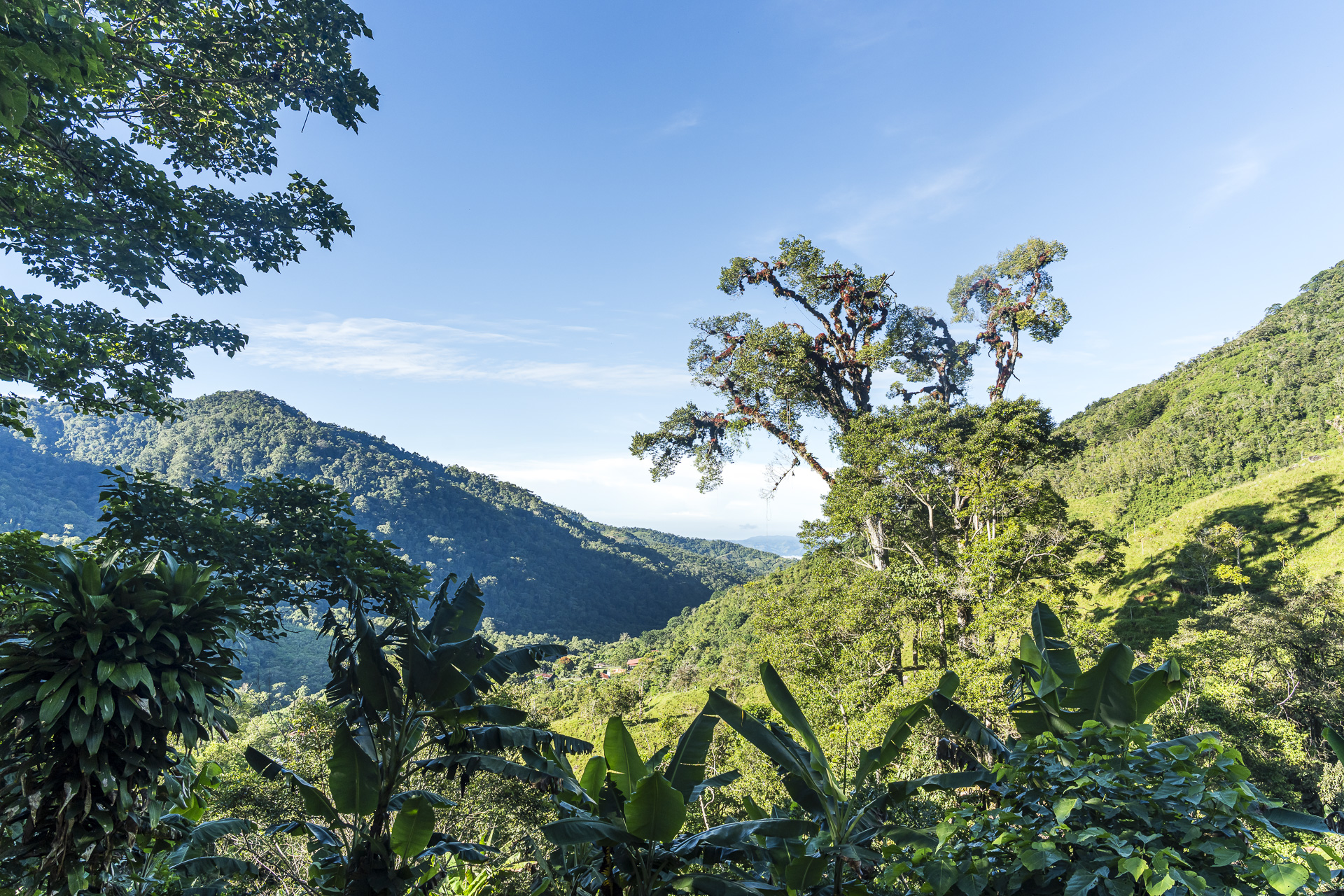
San Gerardo de Rivas is not only the starting point for the ascent of Cerro Chirripó. The surroundings of the small mountain village also offer several worthwhile places to visit. We had planned our itinerary so that we had a whole day available before the hike. In addition to the mandatory registration with the national park administration SINAC, we visited the following places:
Cloudbridge Nature Reserve
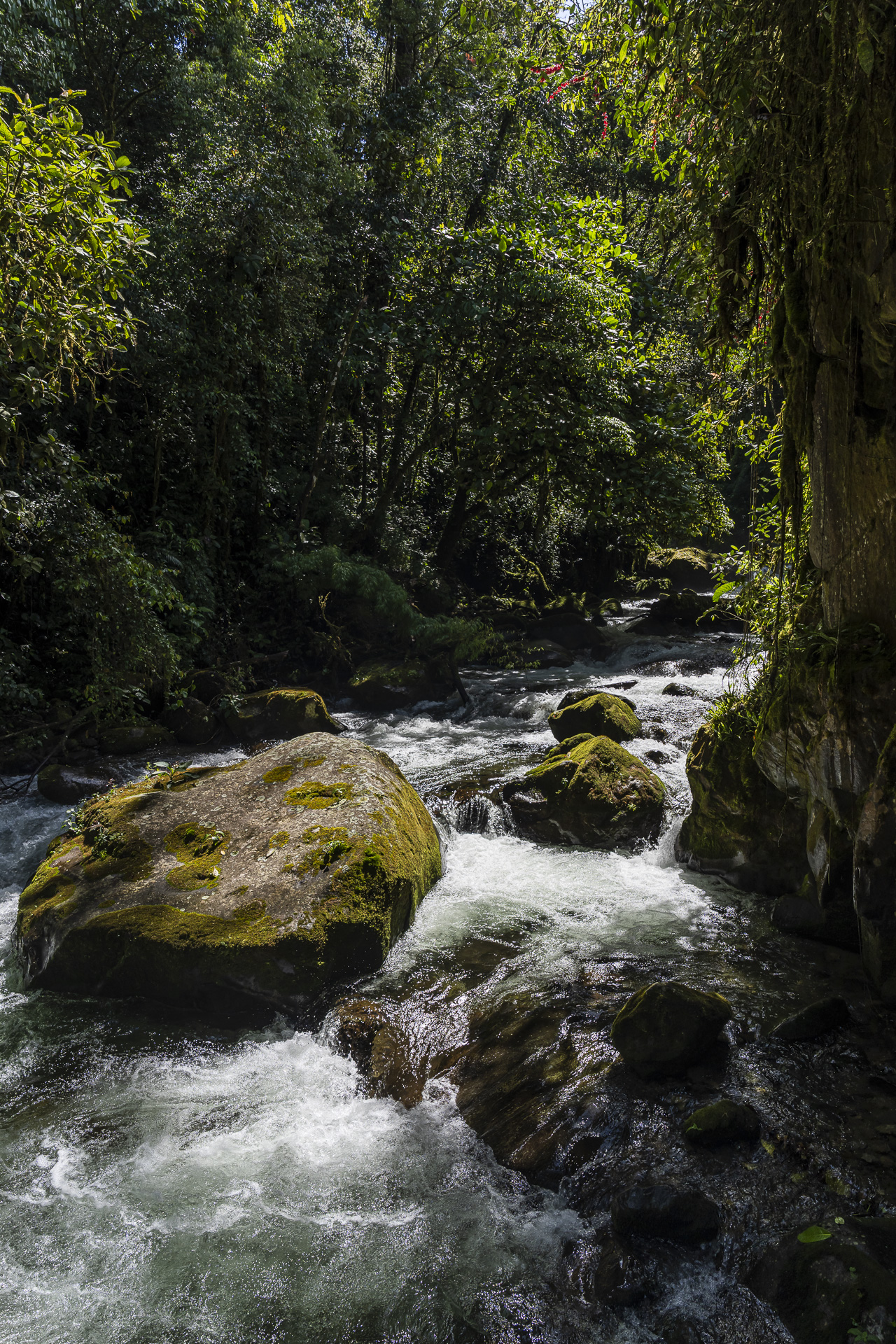
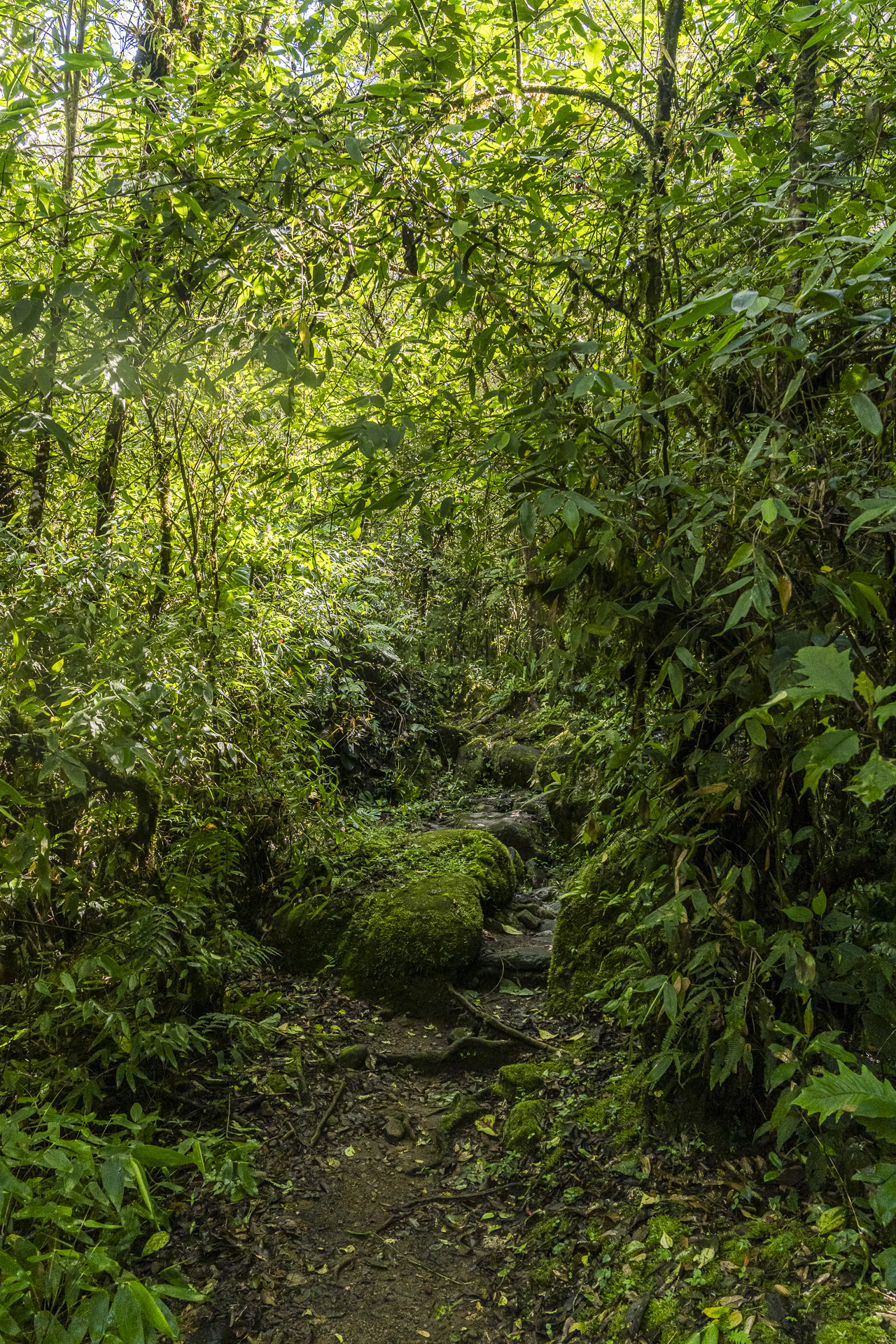
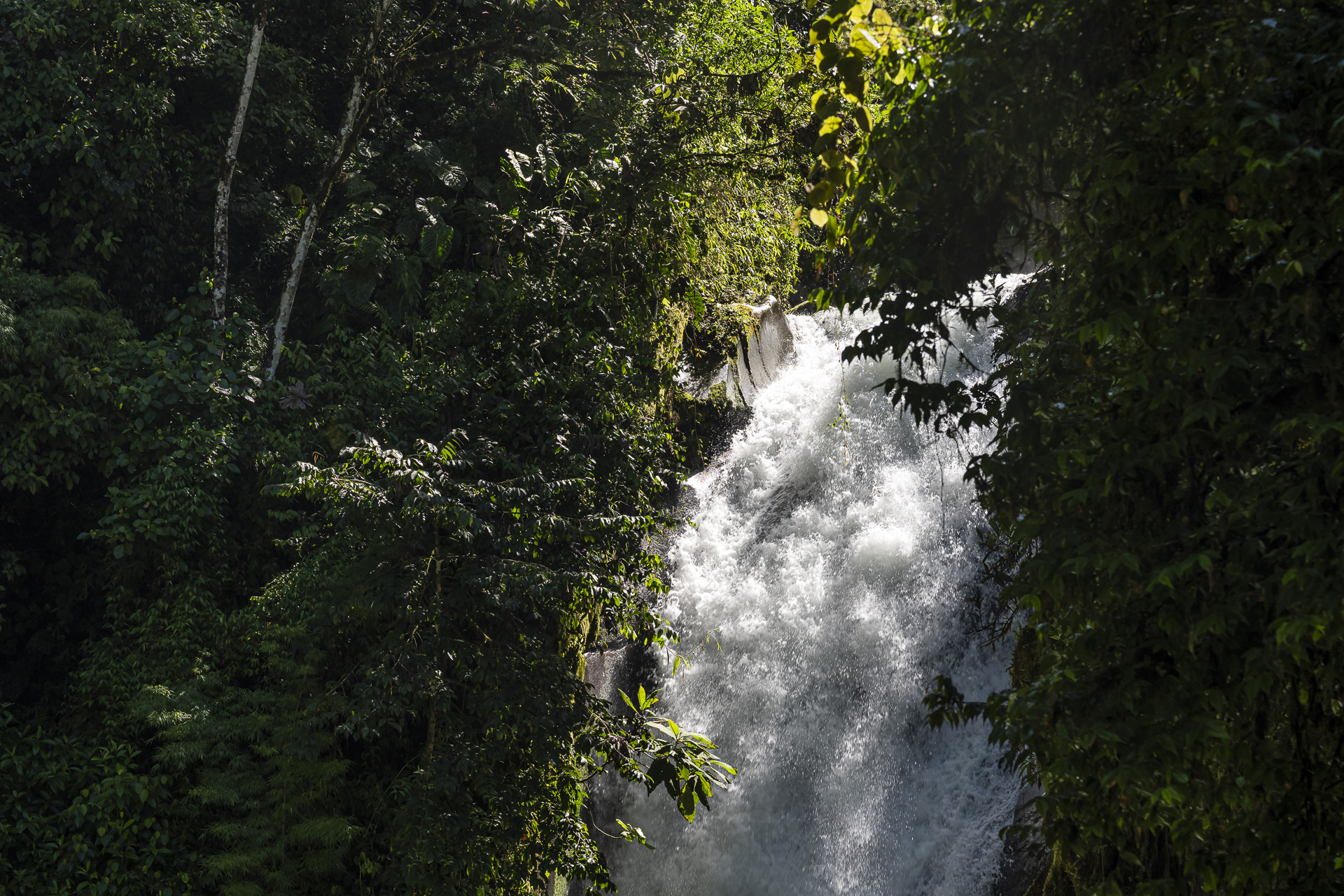
Located above San Gerardo de Rivas, the Cloudbridge Nature Reserve is a private protected area dedicated to the restoration of the montane rainforest. Various hiking trails lead through lush cloud forest, past waterfalls and to viewpoints. We opted for a short loop on the Waterfall Trail. Information on trails and entrance fees can be found on the Cloudbridge Nature Reserve website.
Jardines Secretos
Our next detour took us to Jardines Secretos, a private botanical garden with a diverse collection of tropical plants. On about 1.5 kilometers of walking paths you can explore the garden grounds with their small ponds and streams. The onsite restaurant is particularly recommended; we had an excellent lunch there.
Quesos Canaán
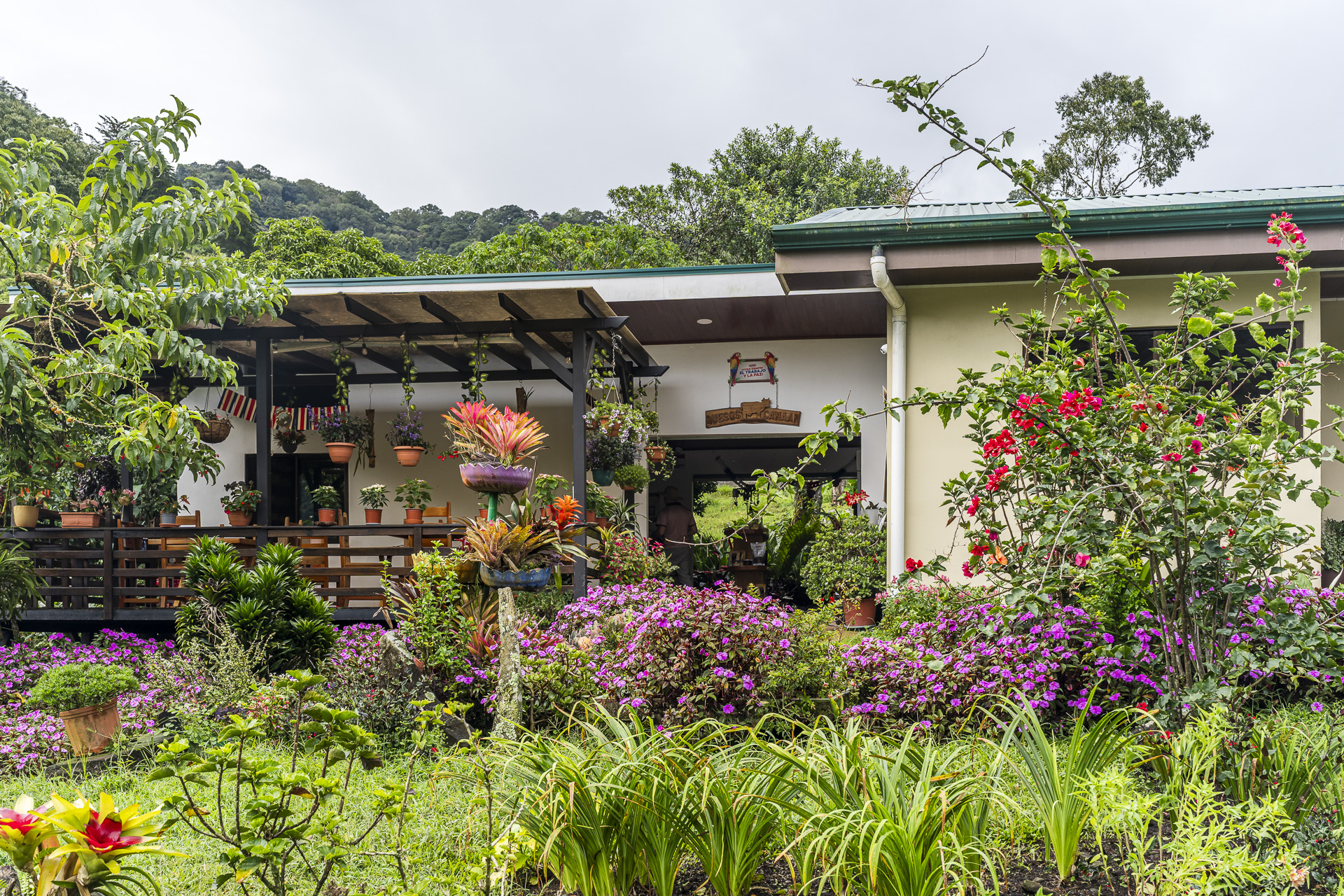
As Swiss, we couldn’t miss a visit to Quesos CanaánWhen production was set up in the early 2000s, the family business was supported by a cheesemaker from the canton of Fribourg. In addition to selling cheese, they also offer tours that provide insight into the production and tastings.

Cerro Chirripó in 2 Days: Our Experience Report
The two-day hike up Cerro Chirripó is a real athletic challenge, with around 2’300 meters of elevation to the summit and over 40 kilometers of trail distance. For many Costa Ricans, the ascent is a goal they set for themselves at least once in their lives and prepare for quite intensively. After our three-day trek on the Camino de Montes de OroI was confident I could complete the trek, but I still felt a bit nervous about the two long hiking days.
Day 1: From San Gerardo de Rivas to Albergue Base Crestones
And the hiking days really are long. On the first morning our local hiking guide Jenny Vargas is already waiting for us at 2:30 a.m. in front of the hotel. A trail maintenance worker drives us by car to the starting point of the hike.
Shortly after 3 a.m. we set off into the pitch-black night. I’m glad when Jenny suggests that I walk ahead and set the pace. After all, we learned the day before that she has already successfully completed the Ultra Maratón Valle del Chirripó. I’m quite glad she’s not the one setting the pace. So we go very slowly, step by step, uphill. I want to manage my energy well and not start out too fast right at the beginning.
We decided against a luggage transport and carry everything we need for the two days ourselves. The hut is supplied and the luggage is transported by horses that use the same trail. Accordingly, the lower sections can be particularly muddy. The biggest challenge in the dark is not to absentmindedly step into one of the many mud holes. Jenny behind me helps us get safely through these passages. Apart from that, the first hours in the dark have an almost meditative quality.
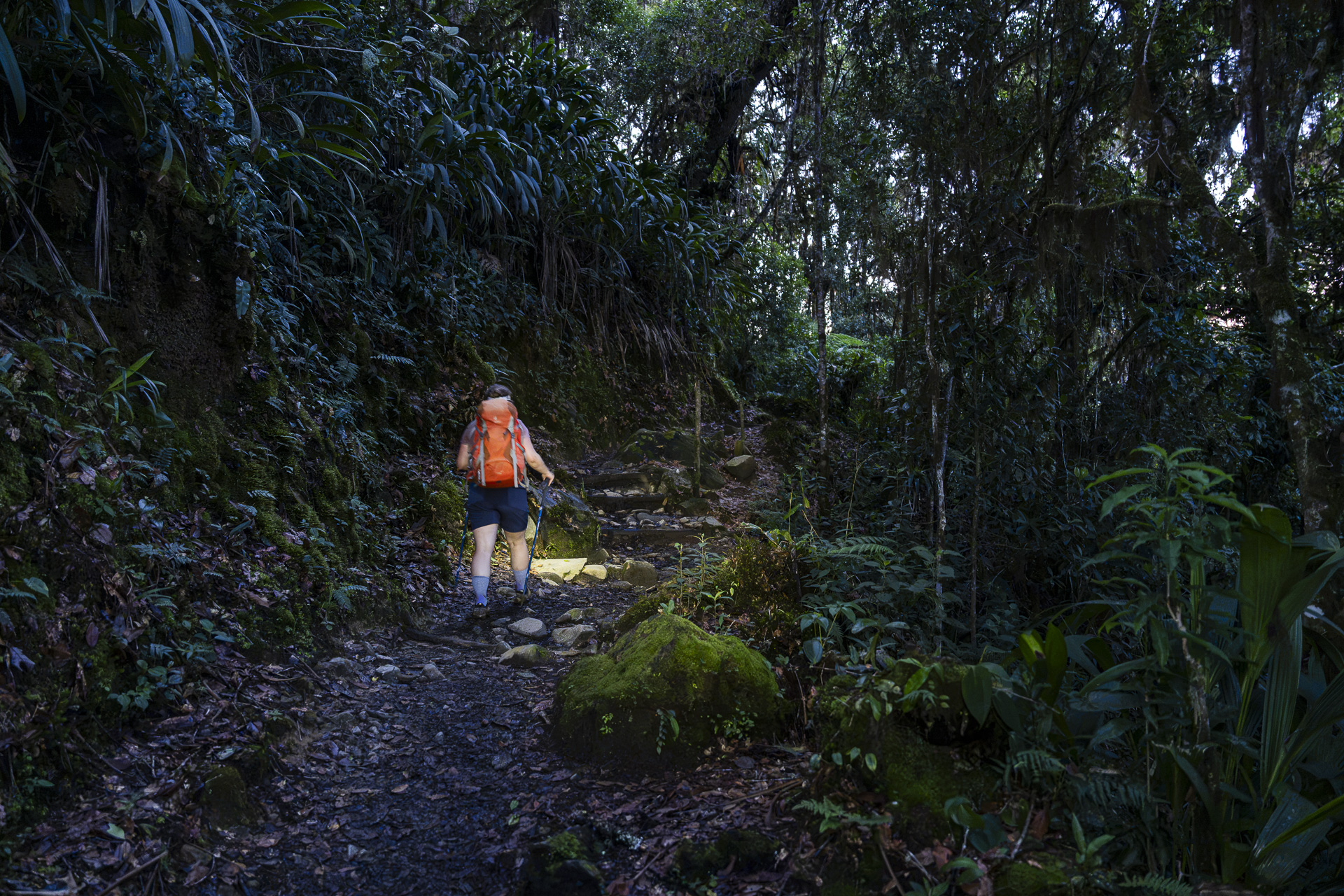
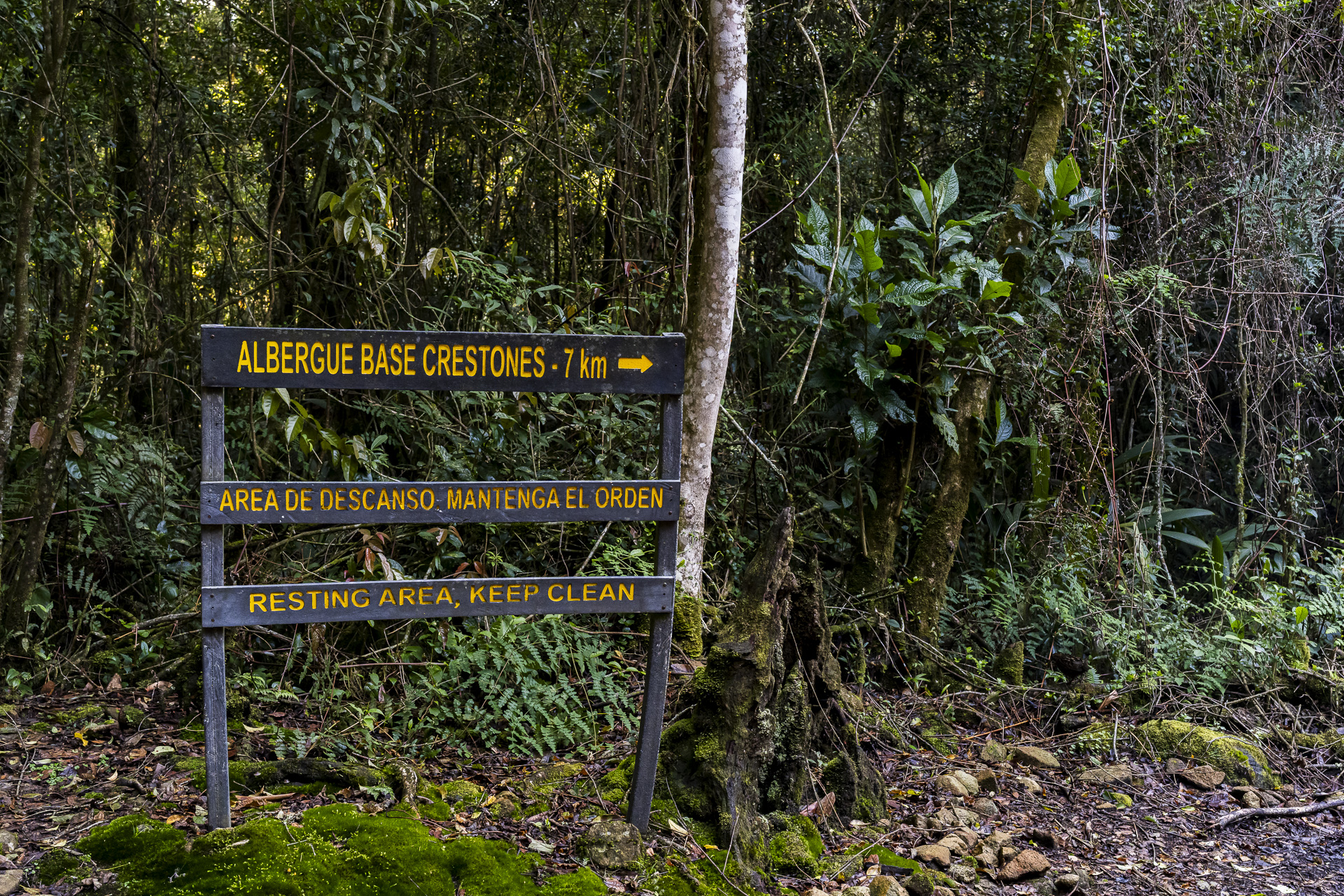
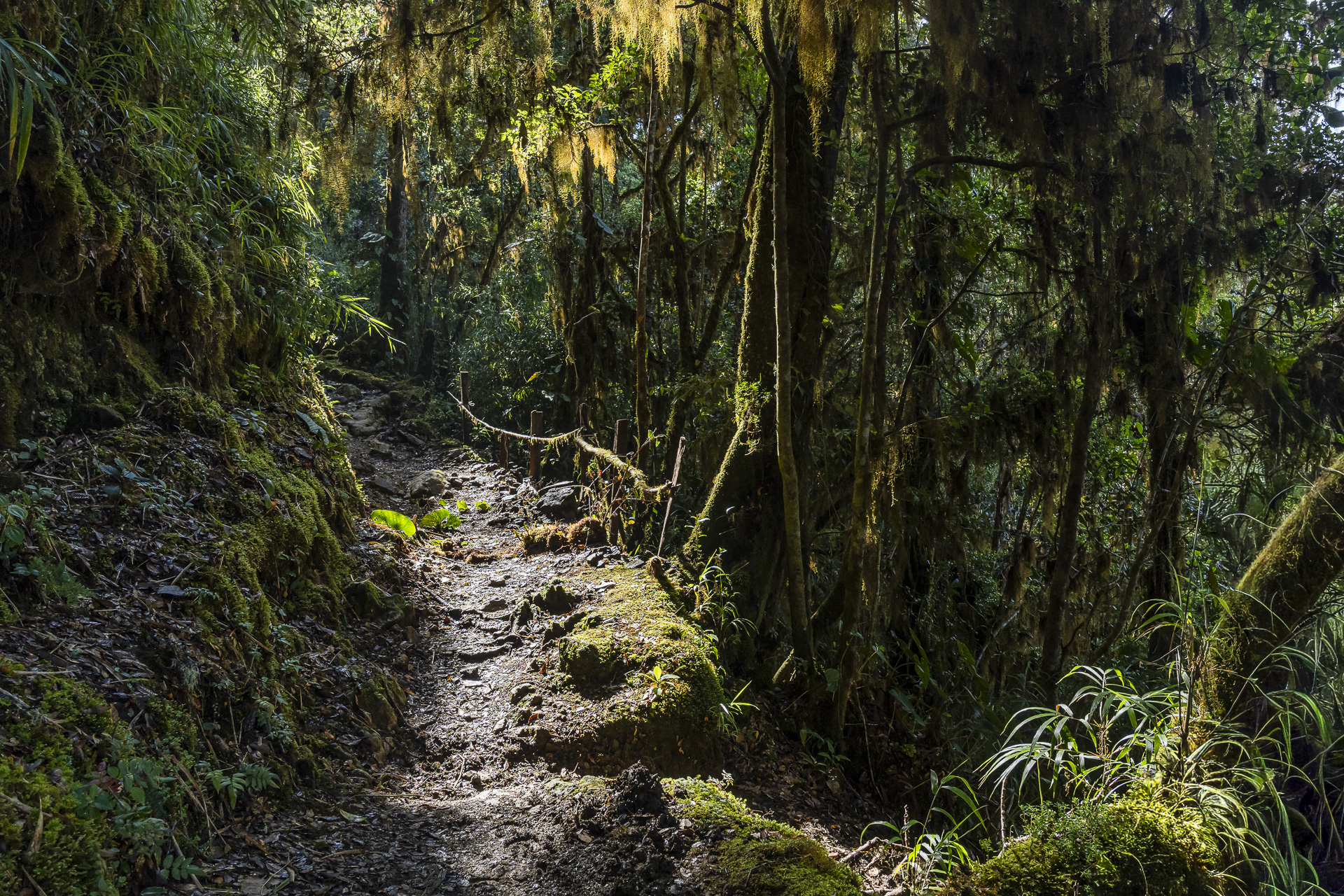
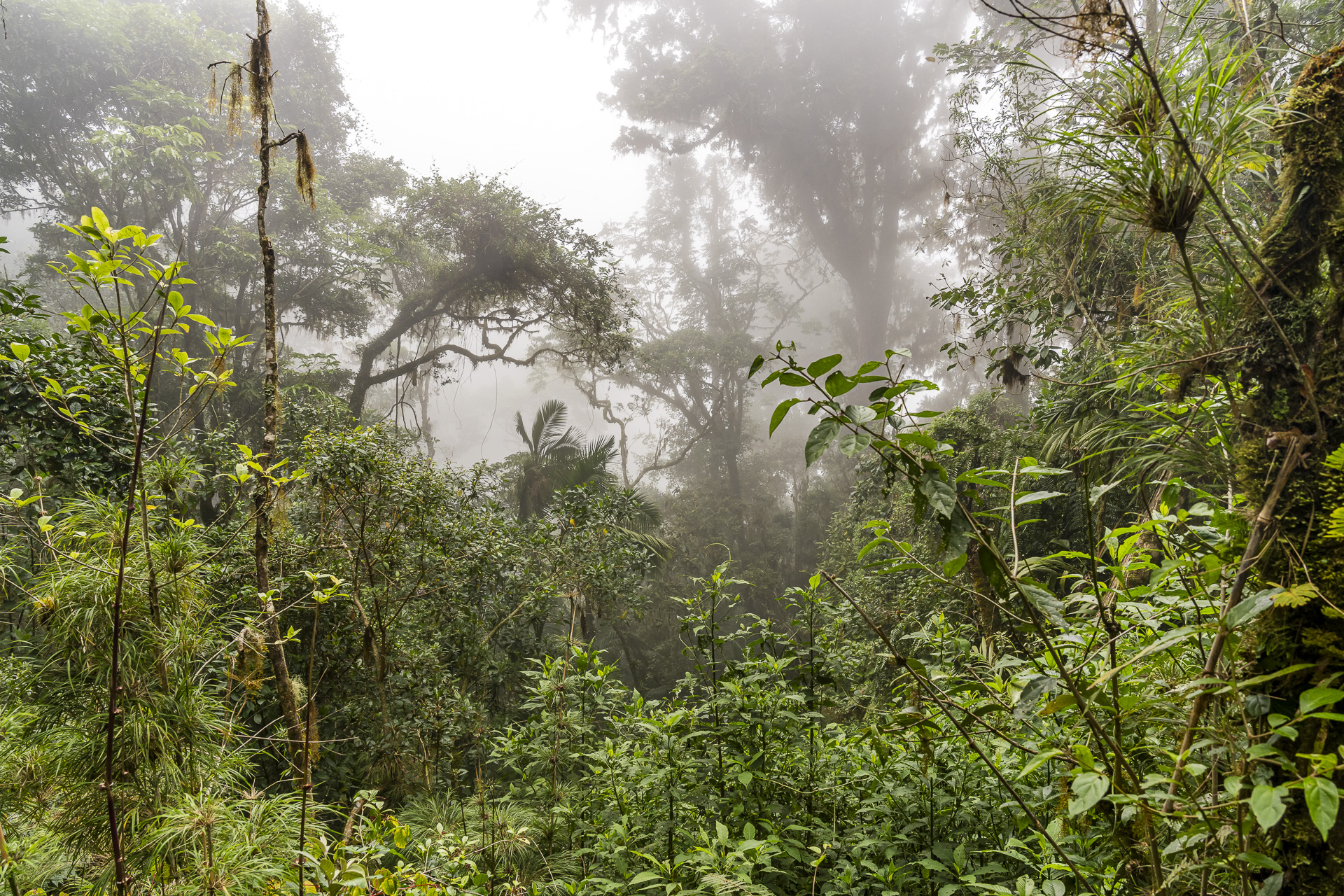
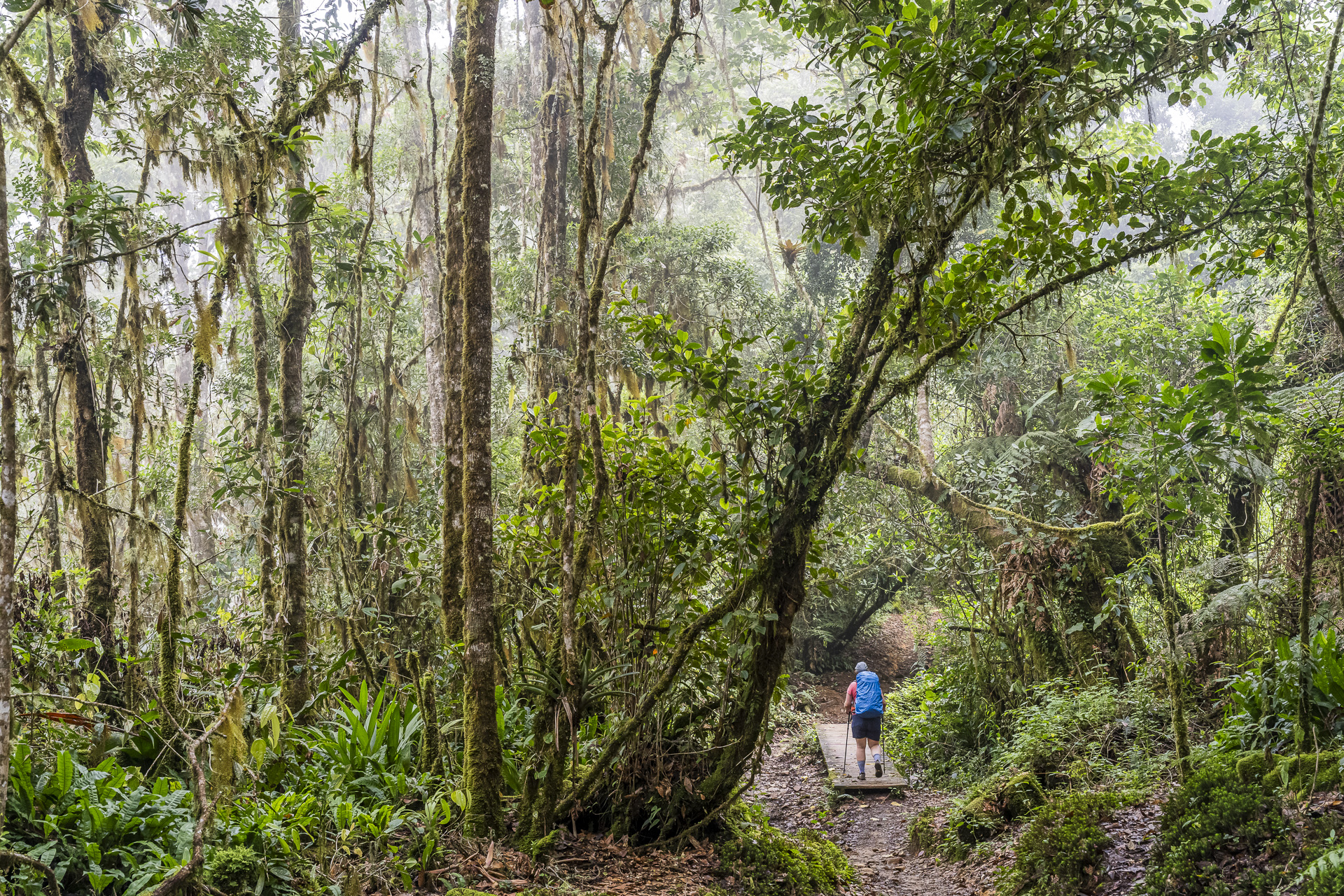
After just under four hours of ascent we reach the only staffed rest station on the way to Albergue Base Crestones: the small hostel at Llano Bonito. There is coffee and freshly baked tortillas. The break is welcome. At the same time I’m satisfied with our pace so far. The trail is better than expected, and now, in the morning light, the atmosphere is wonderful anyway.
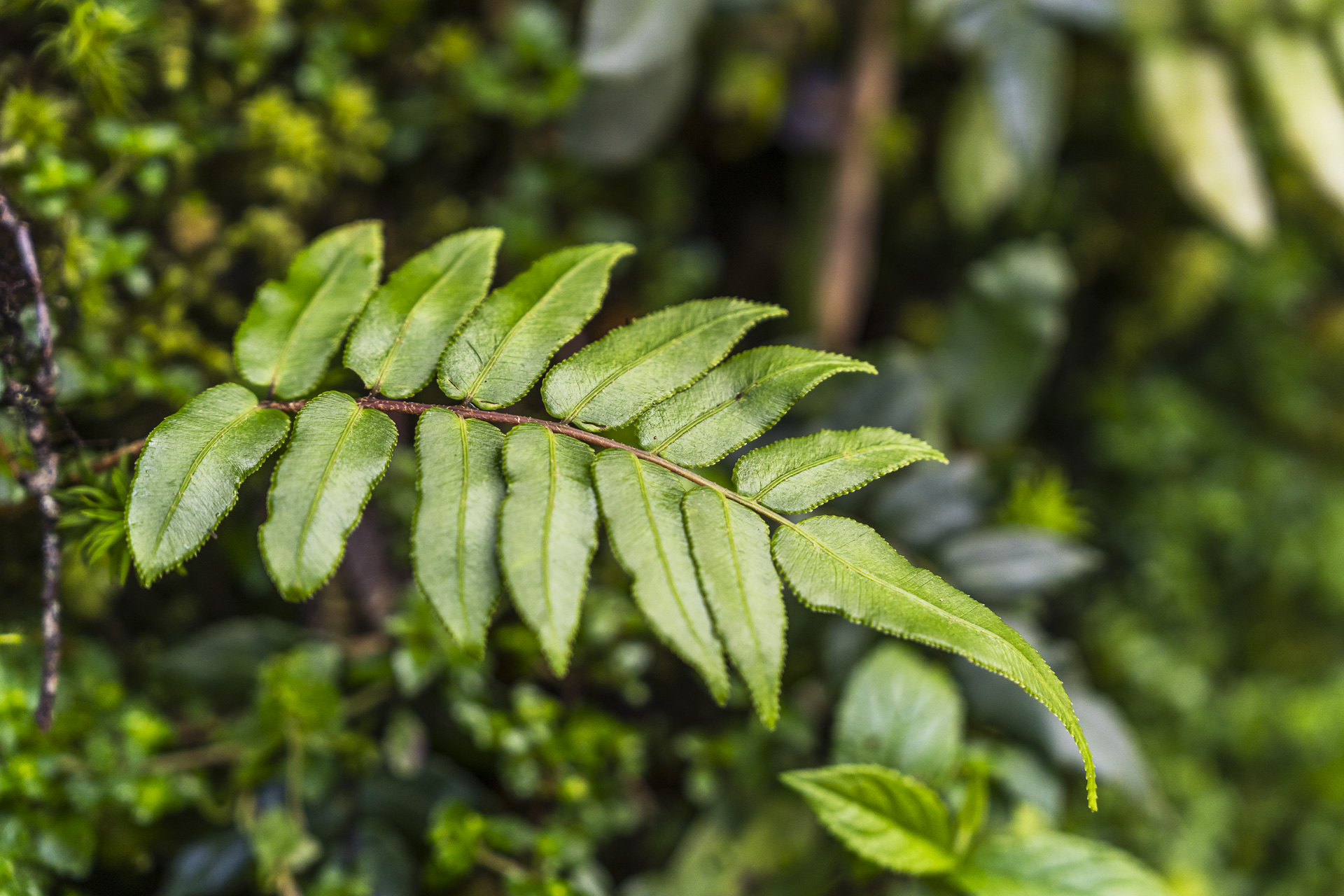
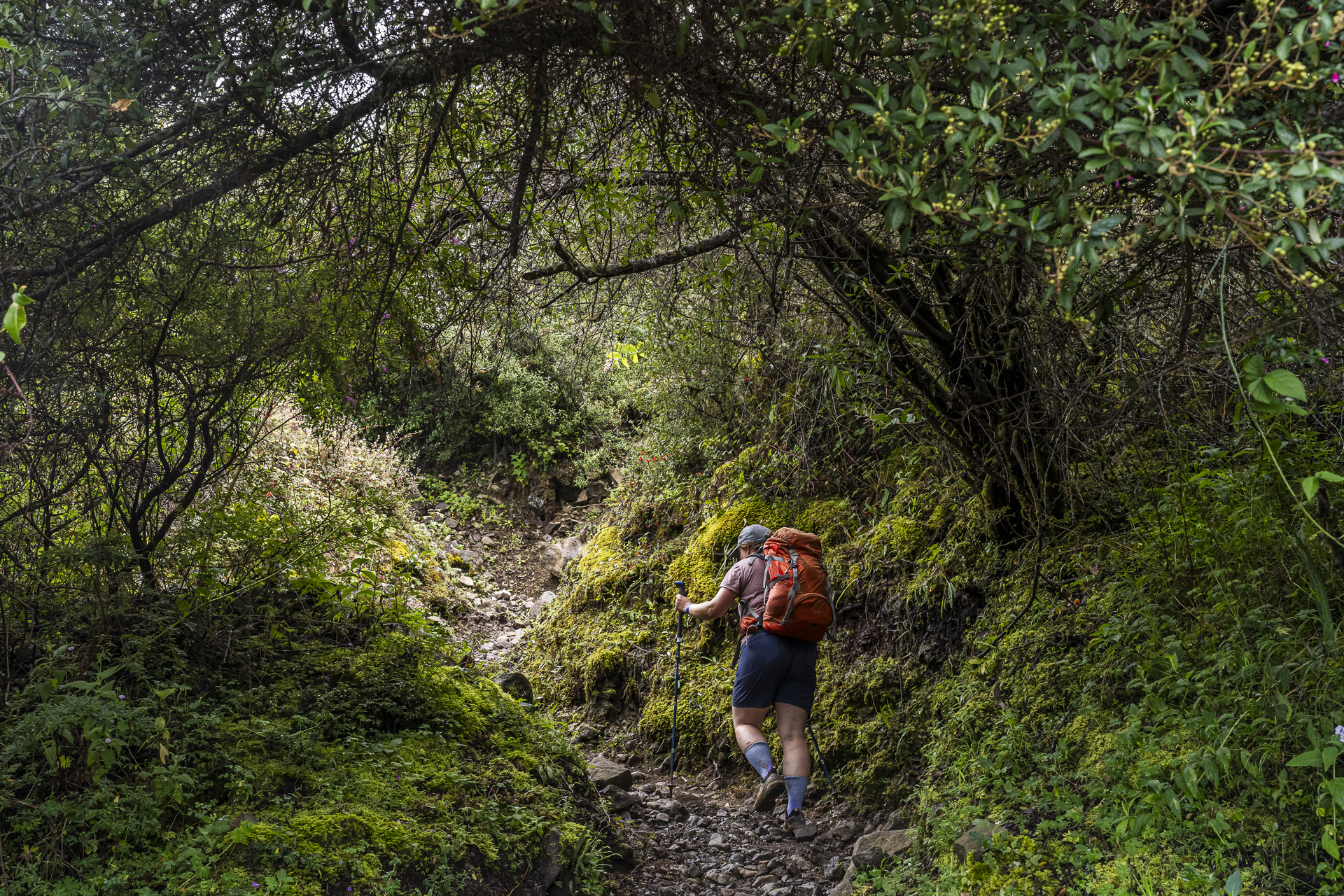
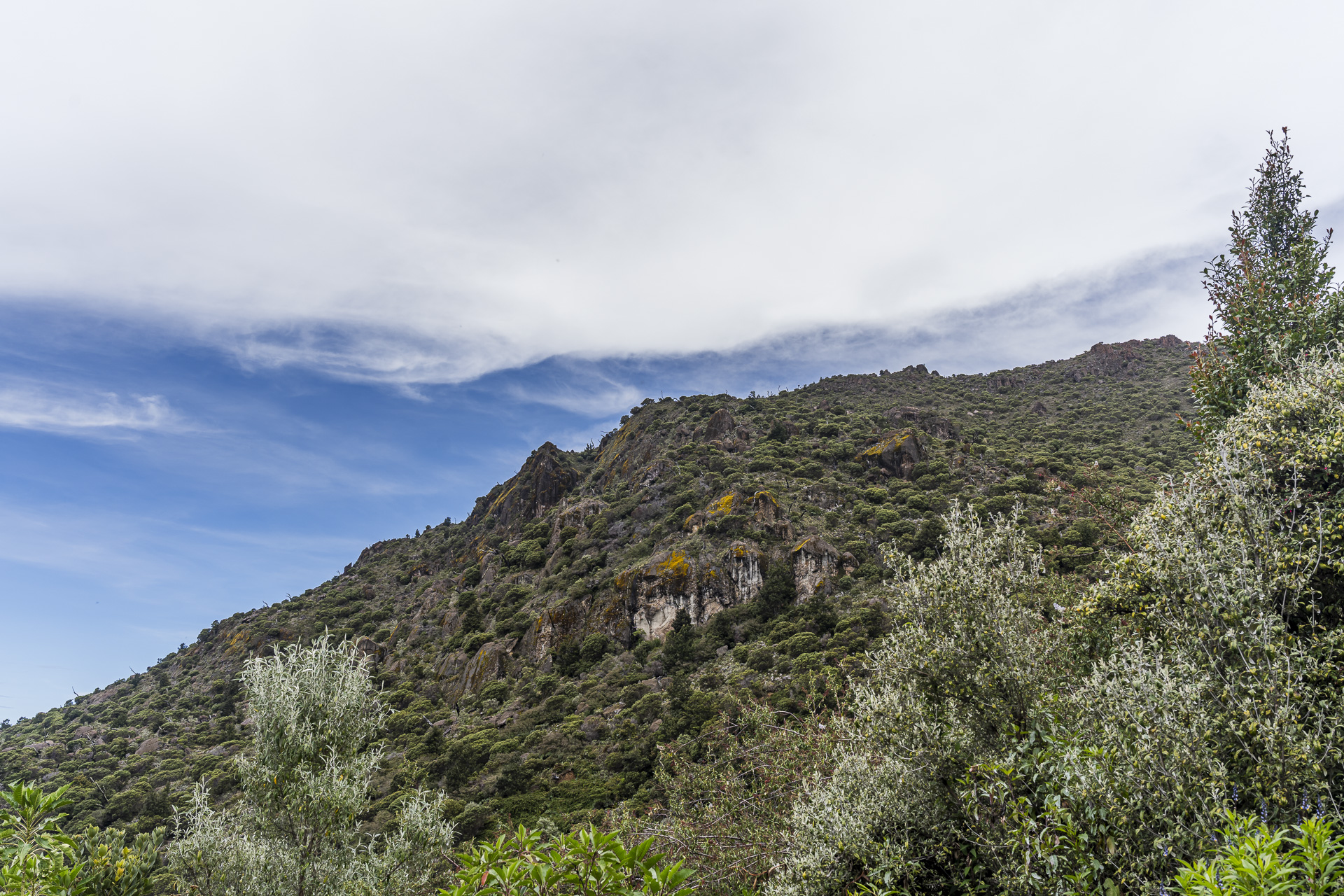
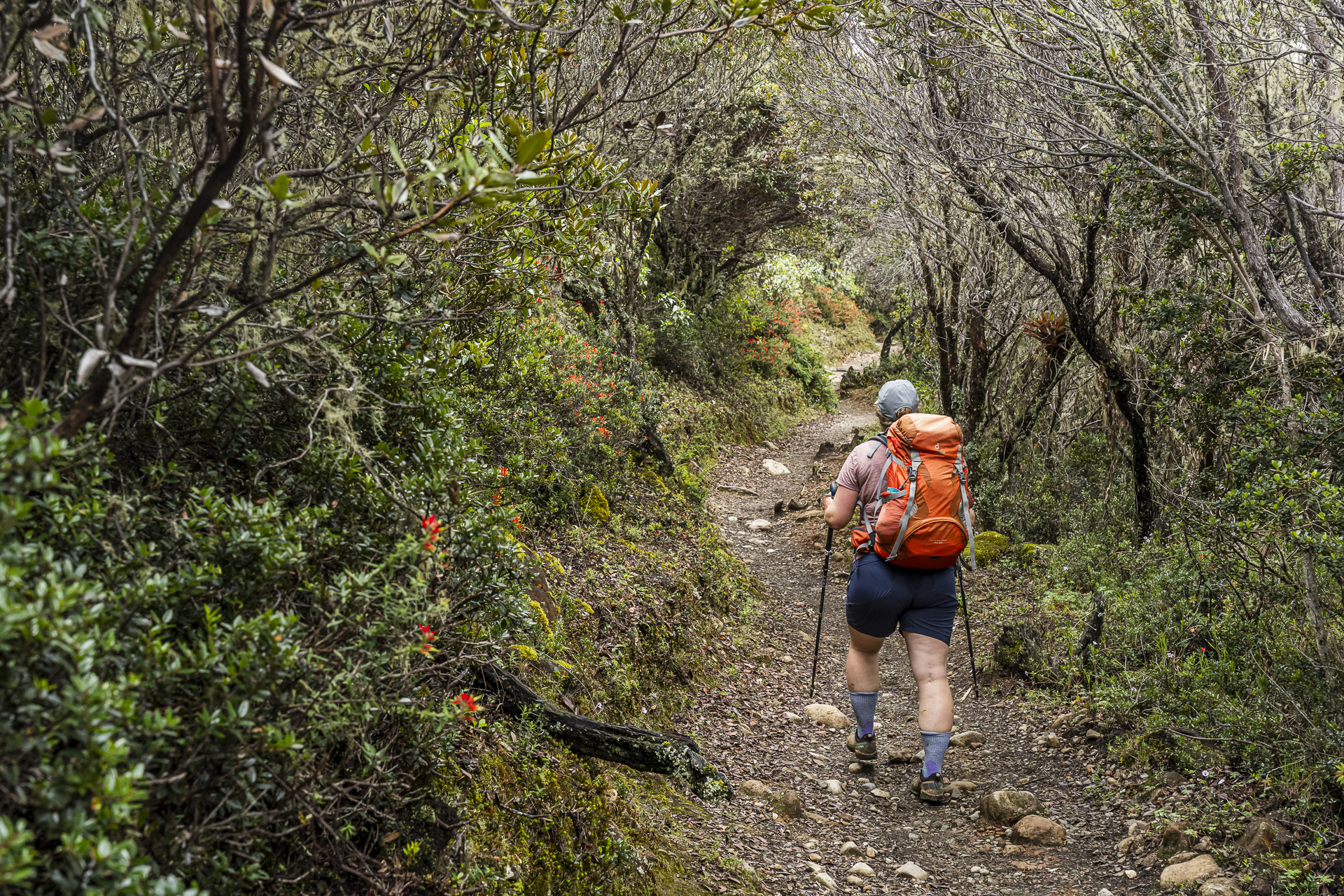
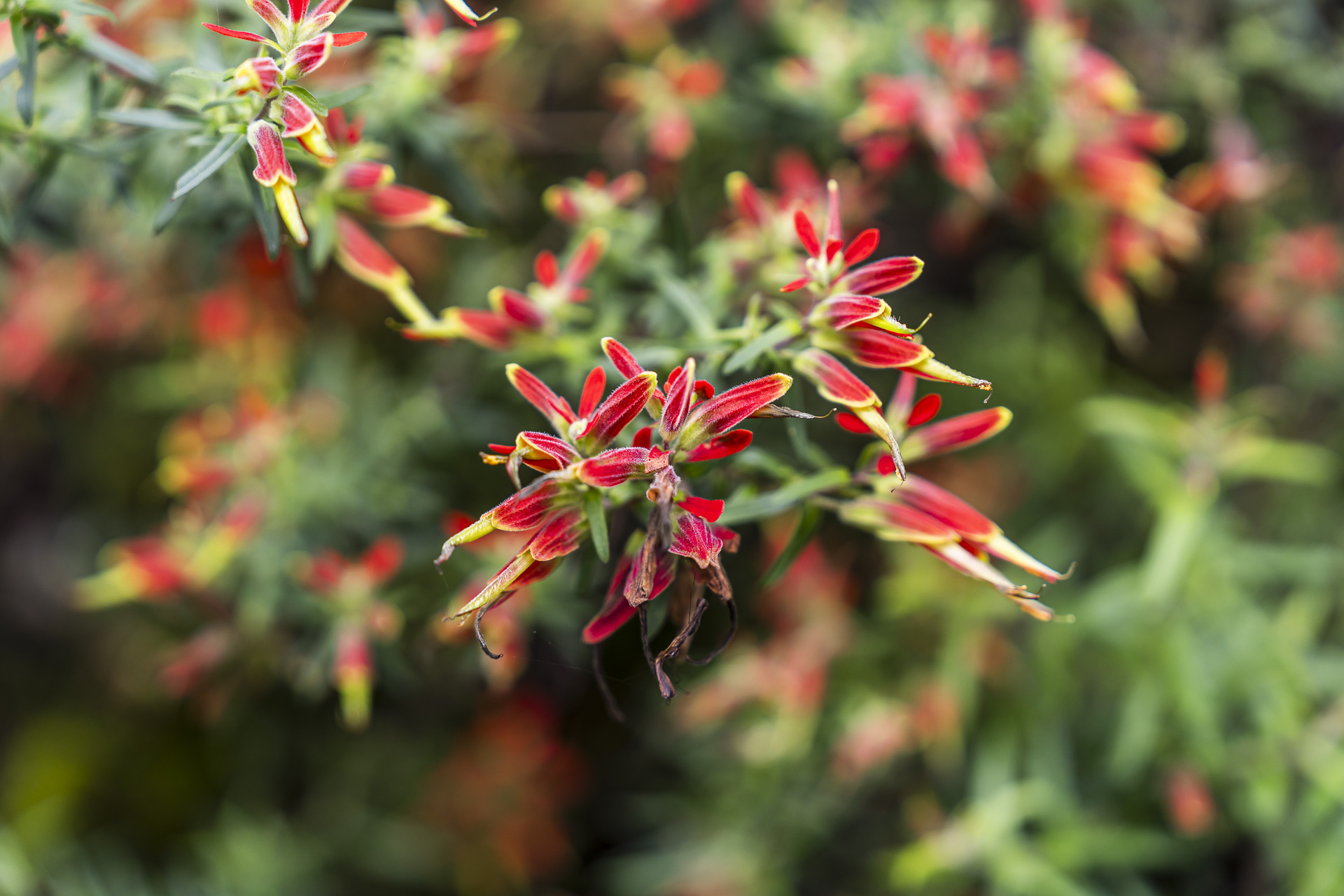
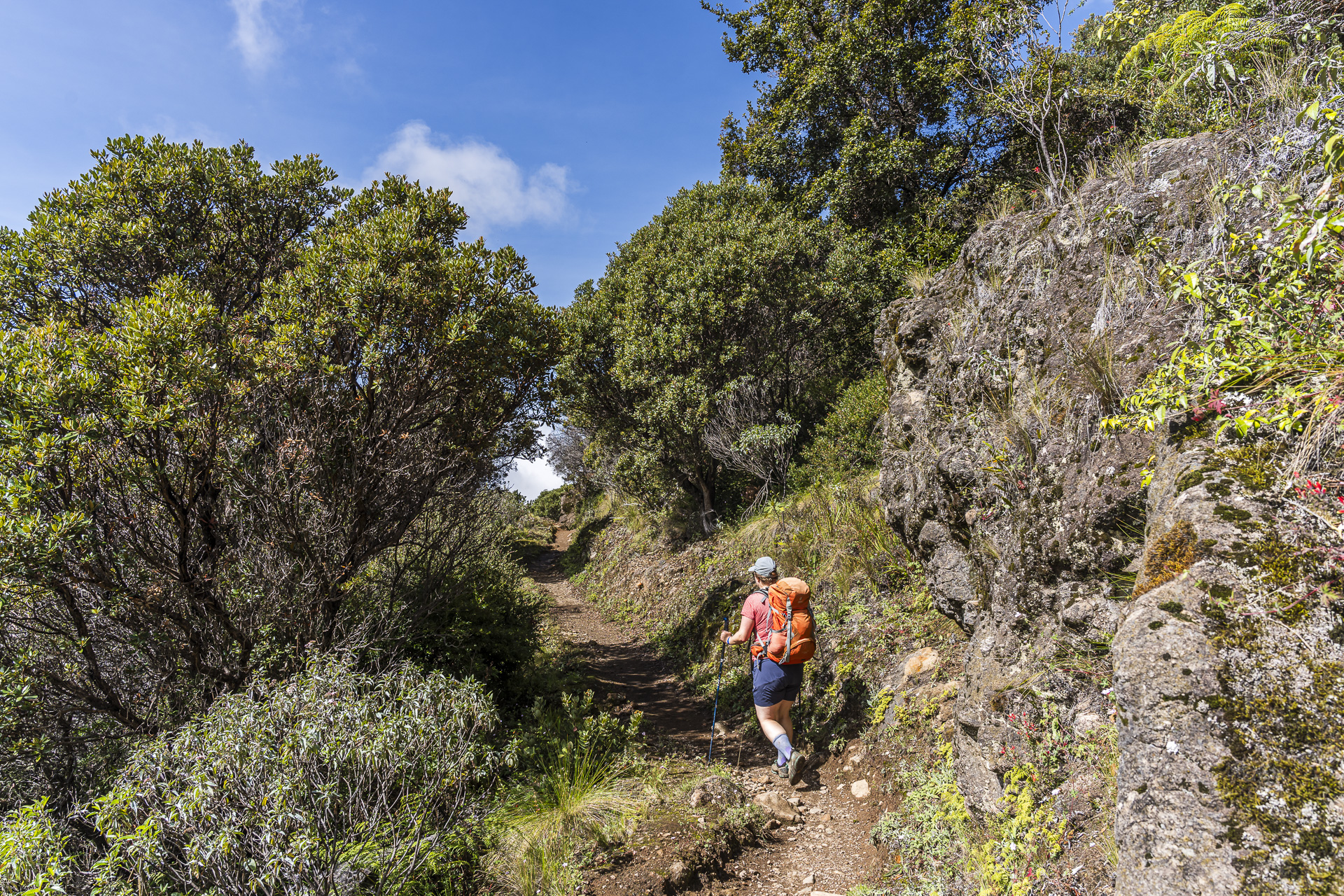
After Llano Bonito there is another rather steep climb up to around 2’900 meters above sea level. Here we gradually leave the dense cloud forest behind and reach the transition zone to the Páramo, a vegetation type typical of tropical high mountains with grasses and low shrubs. The landscape becomes increasingly more open and barren.
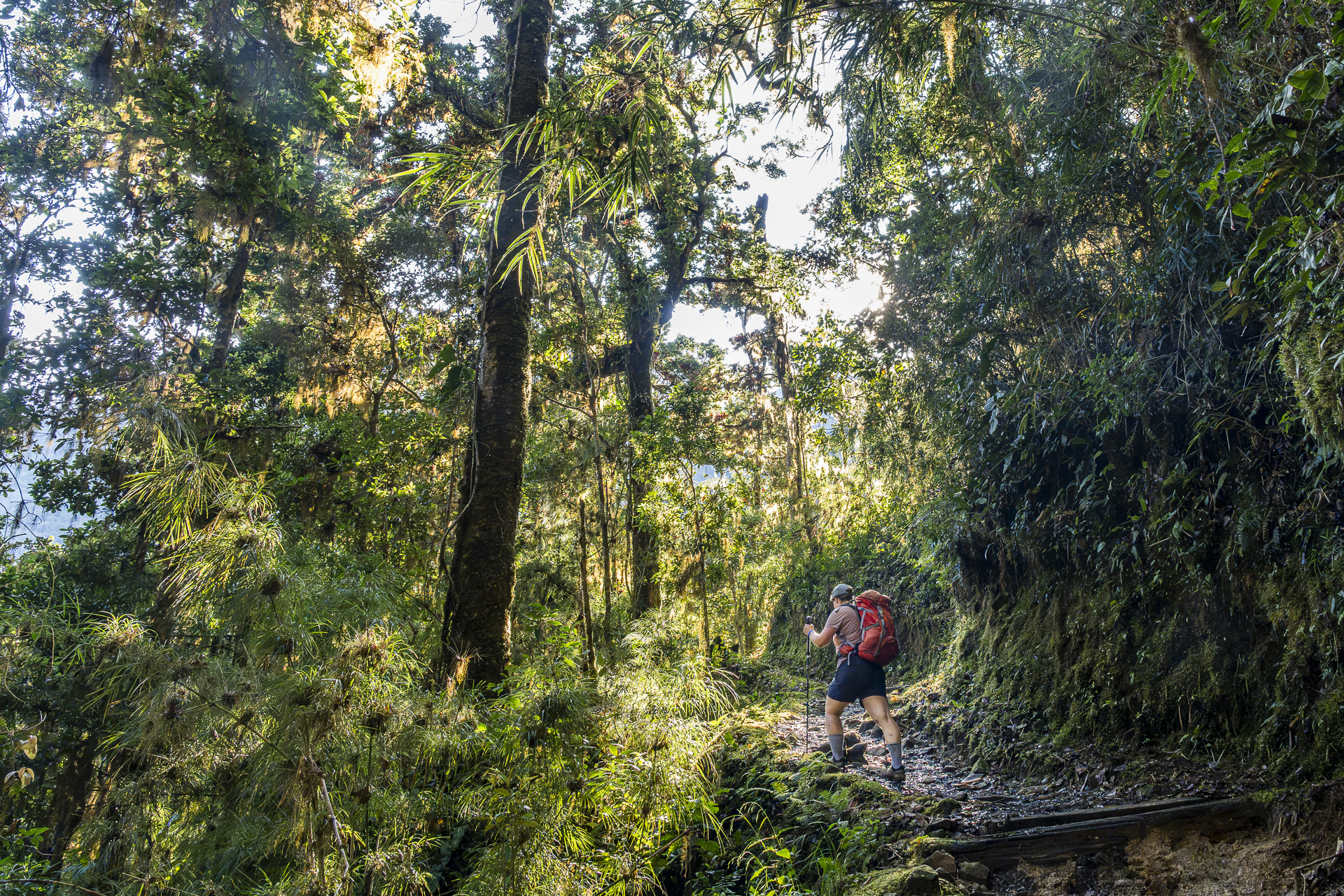
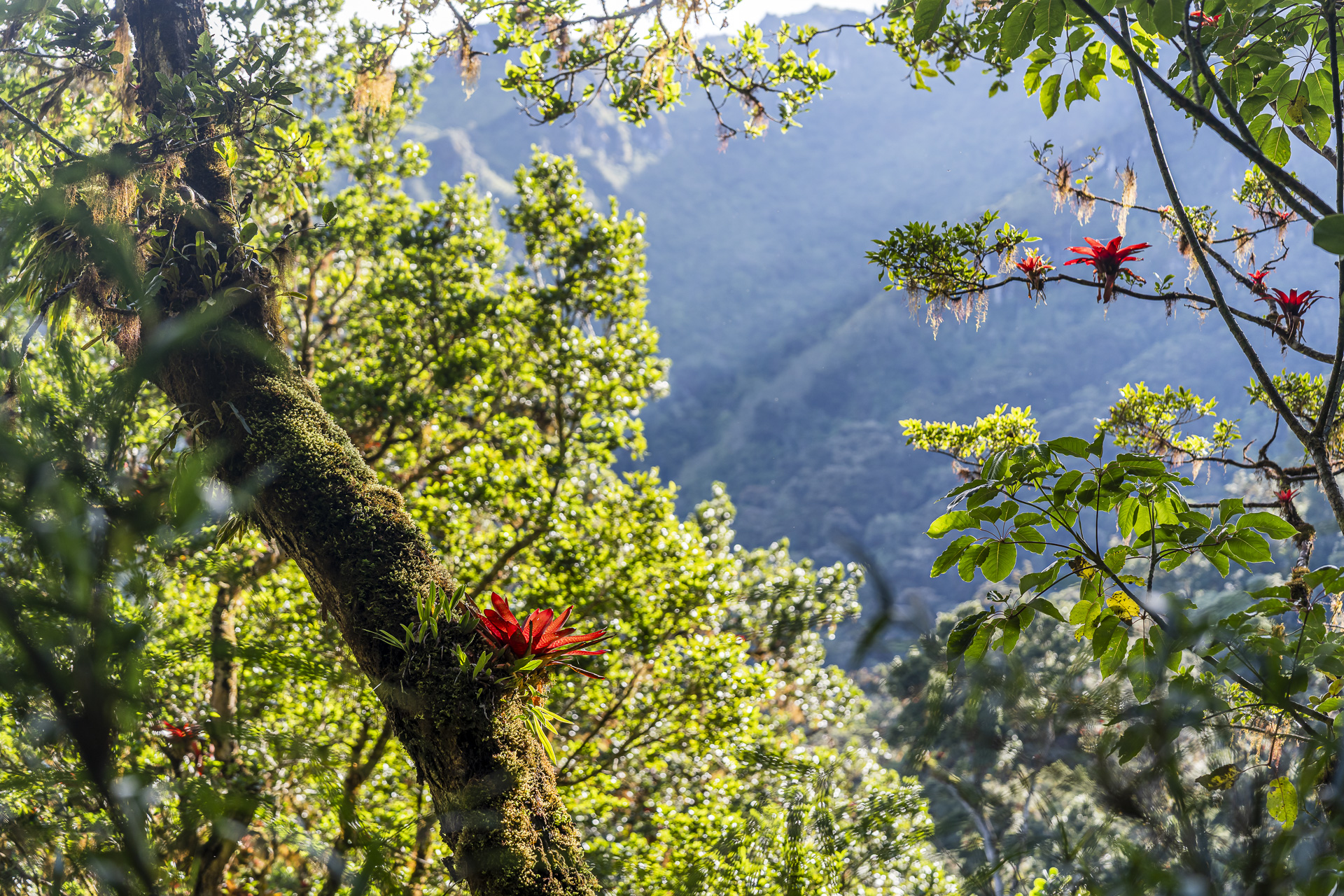
For the first time that day we enjoy some visibility and marvel at the opposite Cerro de la Muerte. But the view is short-lived. Soon denser clouds roll in from the Pacific. It looks as if the rain won’t be long in coming.
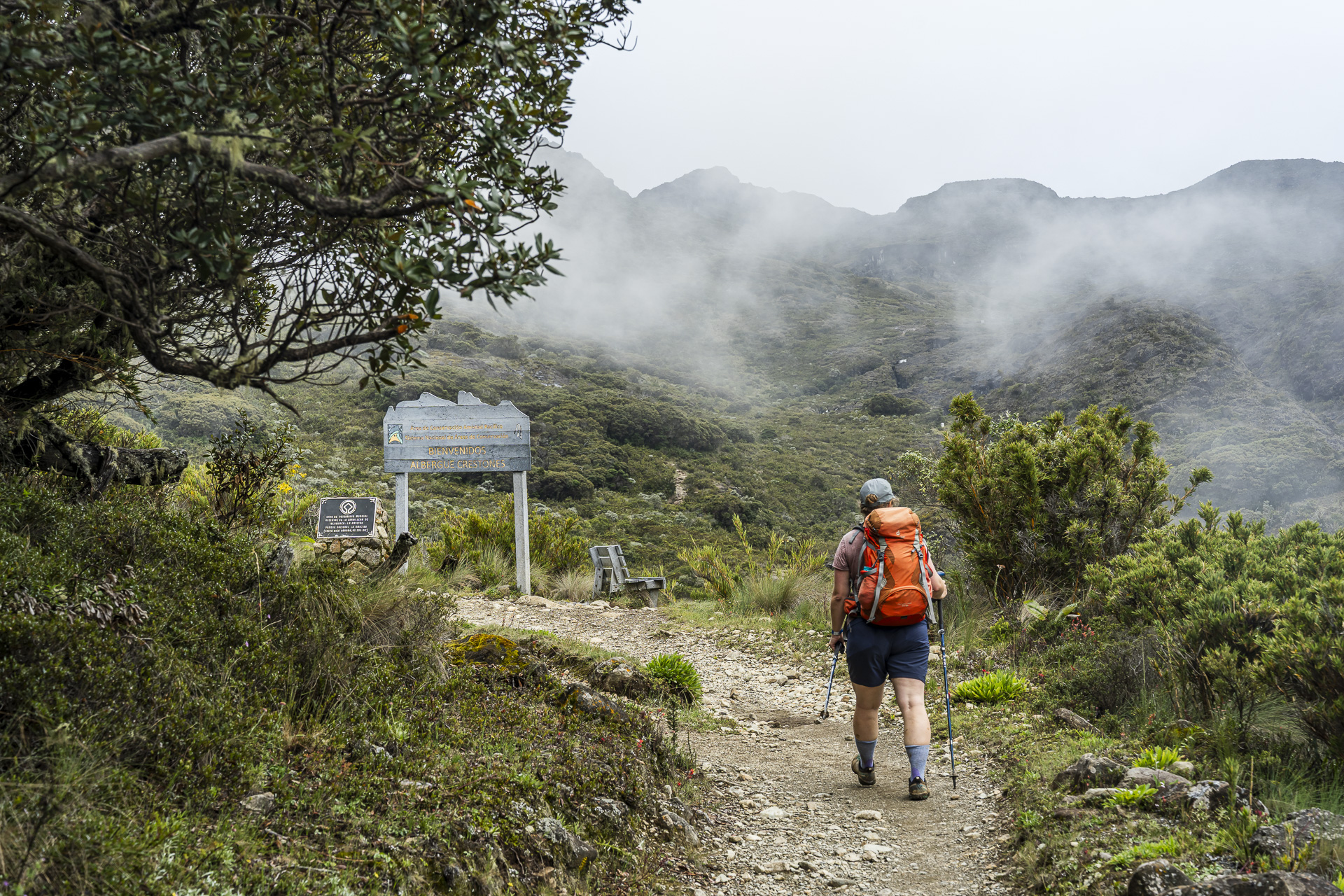
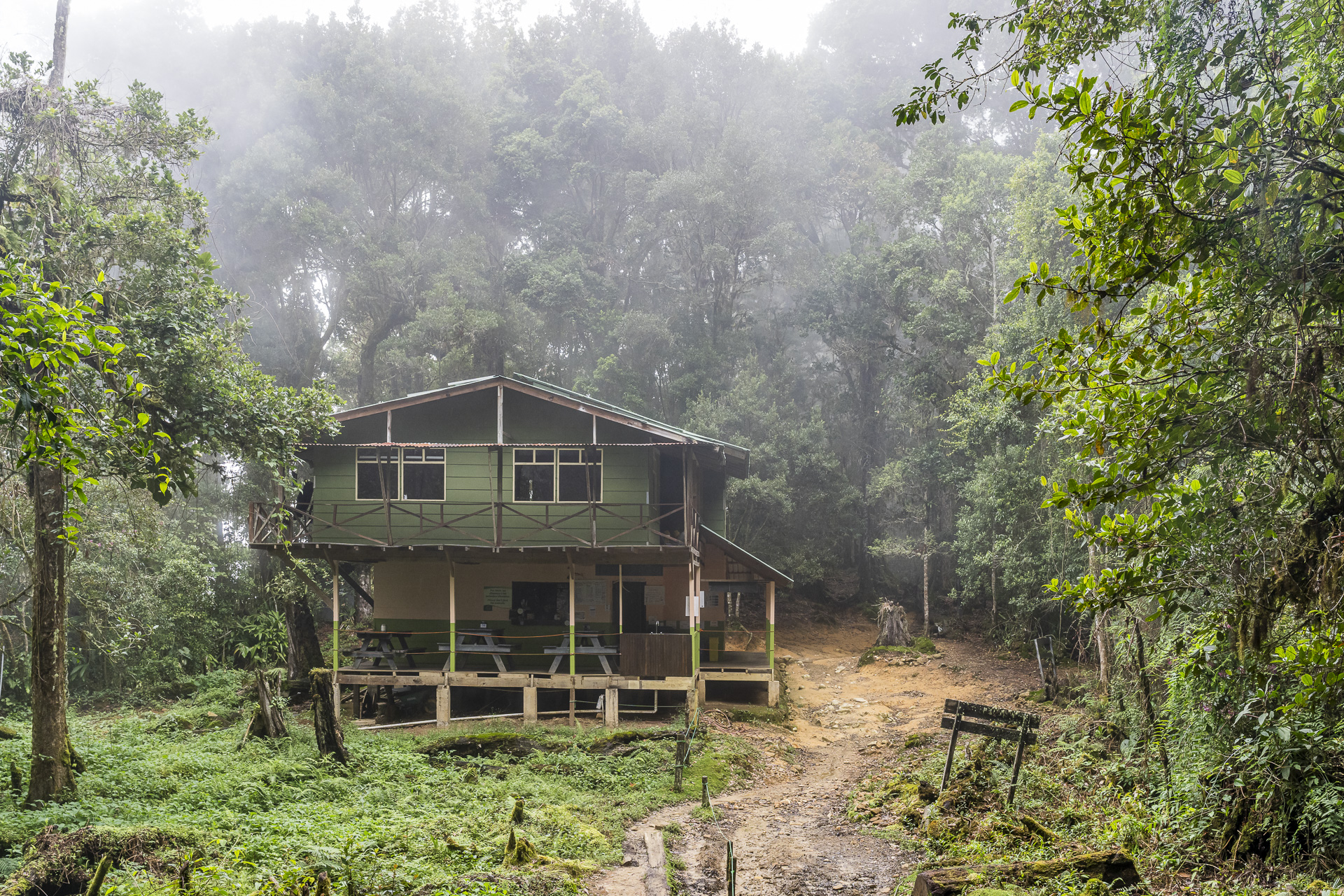
We continue our ascent and get closer to our day’s goal step by step. Fortunately the weather is still holding, and around eleven o’clock the longed-for welcome sign of Albergue Base Crestones finally appears before us. We actually managed to reach the hut still dry.



Overnight stay at Albergue Base Crestones
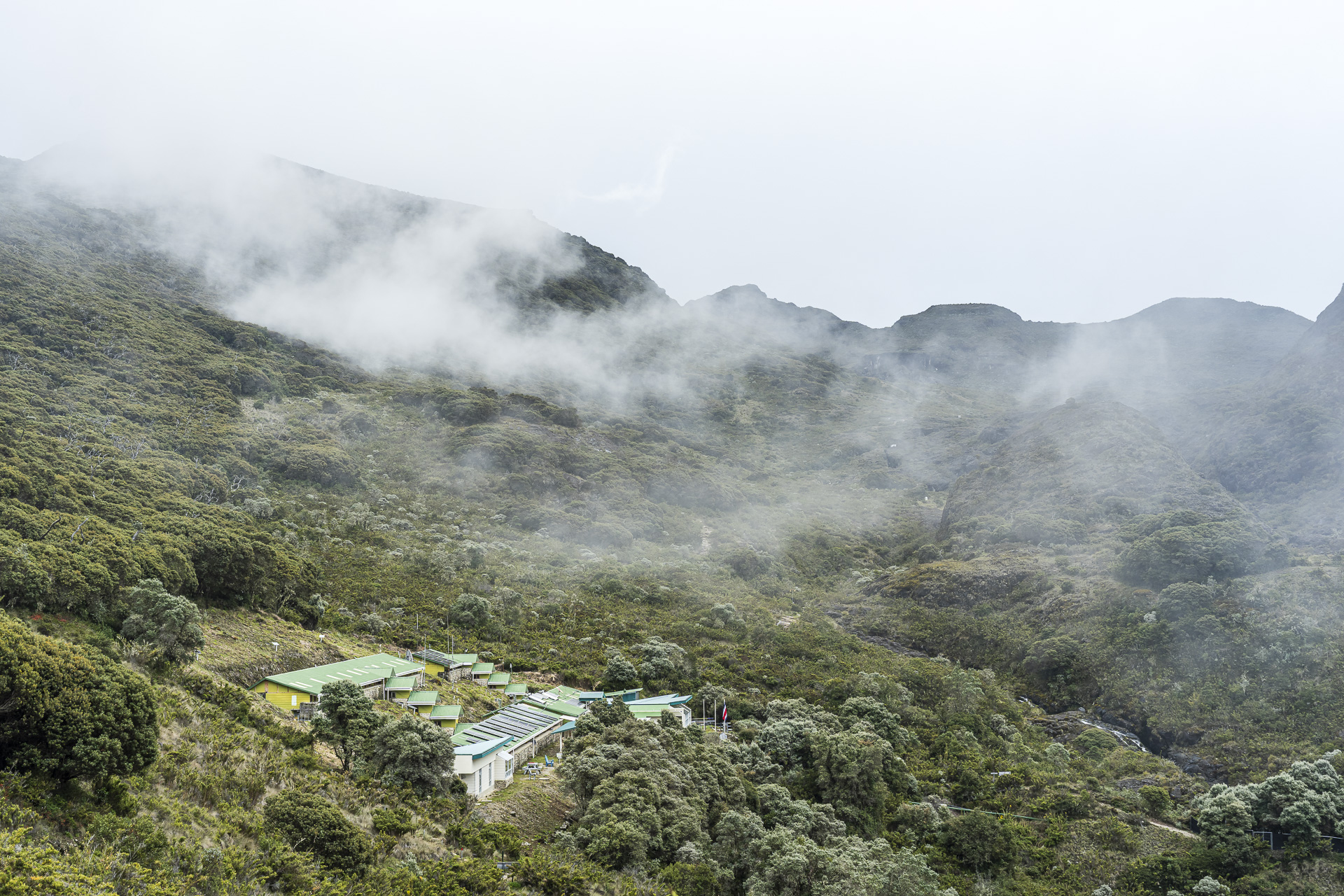
At the albergue we take a four-person room with bunk beds. Toilets and showers are, as we know from mountain huts in the Alps, on the floor. Showering costs nothing extra, but the water is ice cold. So cold that I shiver in the hut for the rest of the afternoon. A warm sweater and dry long pants are therefore essential in the luggage.
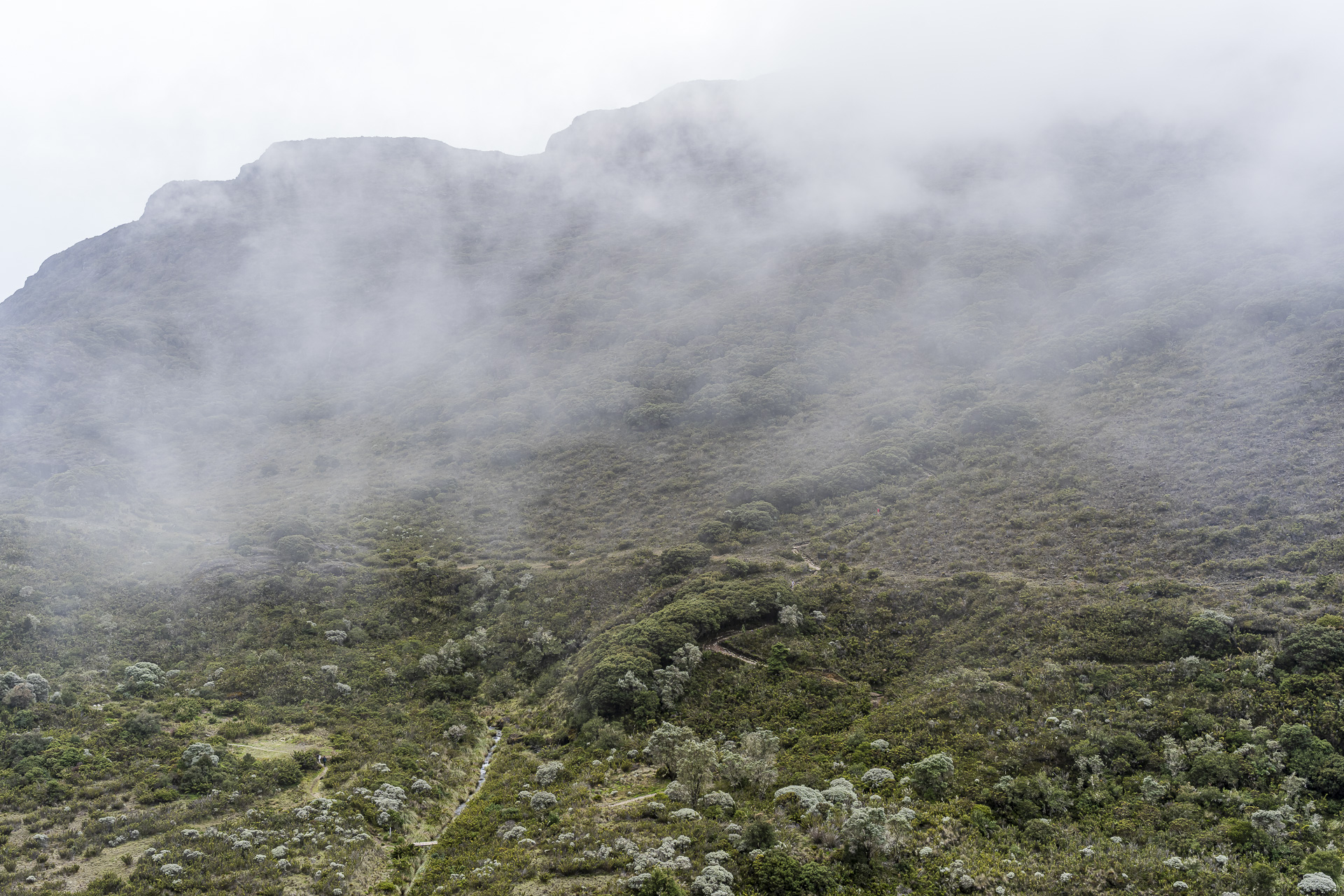
The weather also shows its unpleasant side in the afternoon. Drizzle and heavy showers alternate. After our arrival we first fortify ourselves with a Casado, which we preordered the day before from Consorcio Chirripó, and spend the rest of the afternoon reading in the hut.
Day 2: Summit ascent for sunrise
At exactly eight o’clock in the evening the power is switched off in the hut. However, I had already crawled under the blanket right after dinner, hoping that I would get a little warmer there (I do!) and that I would fall asleep soon (I don’t). It feels like I don’t get a wink of sleep until the alarm jerks us awake again at half past three in the morning. It must still have been one or two hours though.
Most people who climb Cerro Chirripó in two days want to be standing on the summit at sunrise. From the Albergue it’s about five kilometers and 450 meters of elevation gain. Really not a huge distance. But at over 3,000 meters the altitude is certainly noticeable. And then there’s that starry night sky that repeatedly makes you stop and stare. Rarely have I seen the Milky Way so impressively.
For the summit ascent we finally need about two hours. In the last half hour it becomes somewhat rockier in places and we have to scramble a bit. The difficulties, however, remain limited. In Switzerland the route would probably be marked as a white-red-white mountain hiking trail up to the summit.
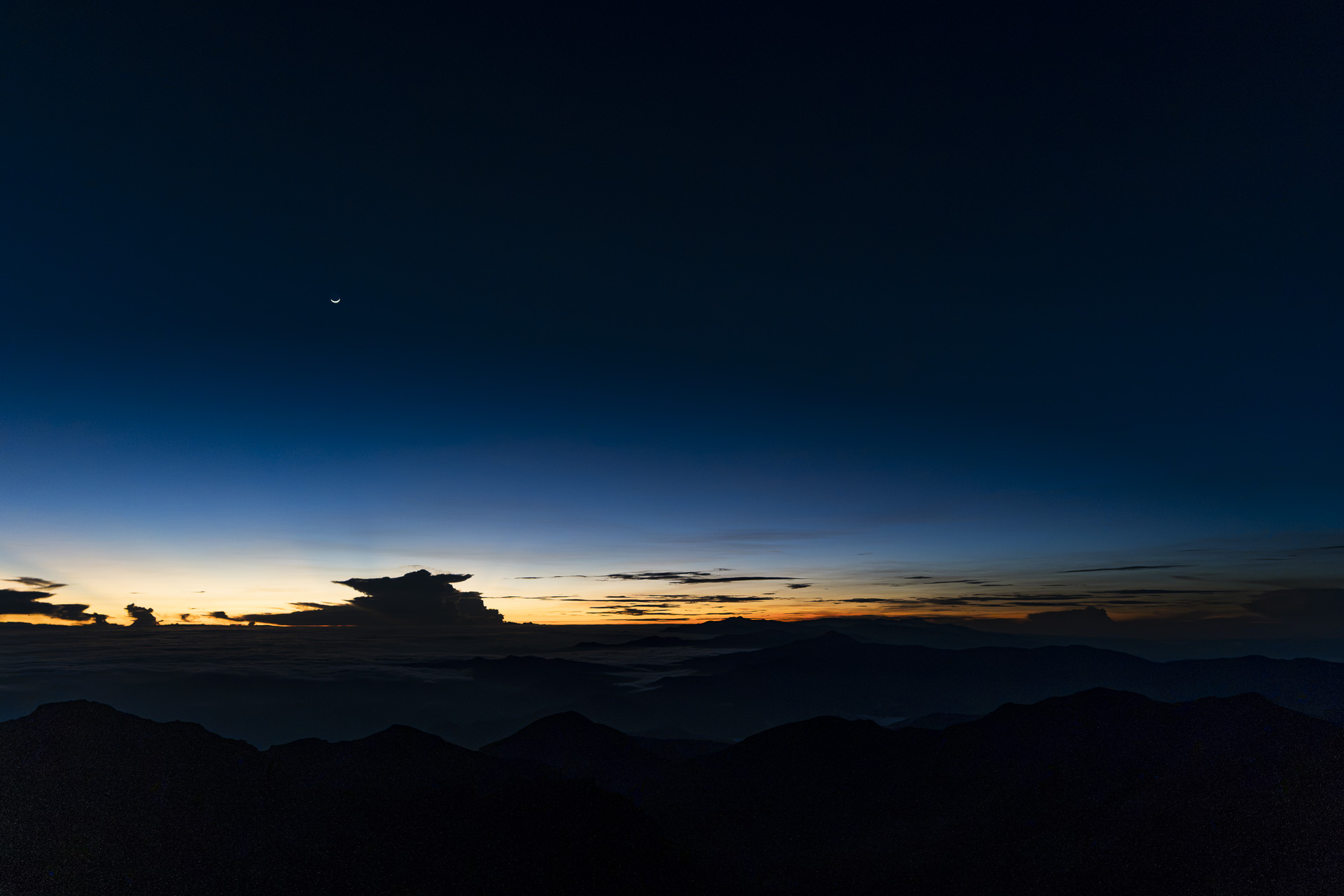
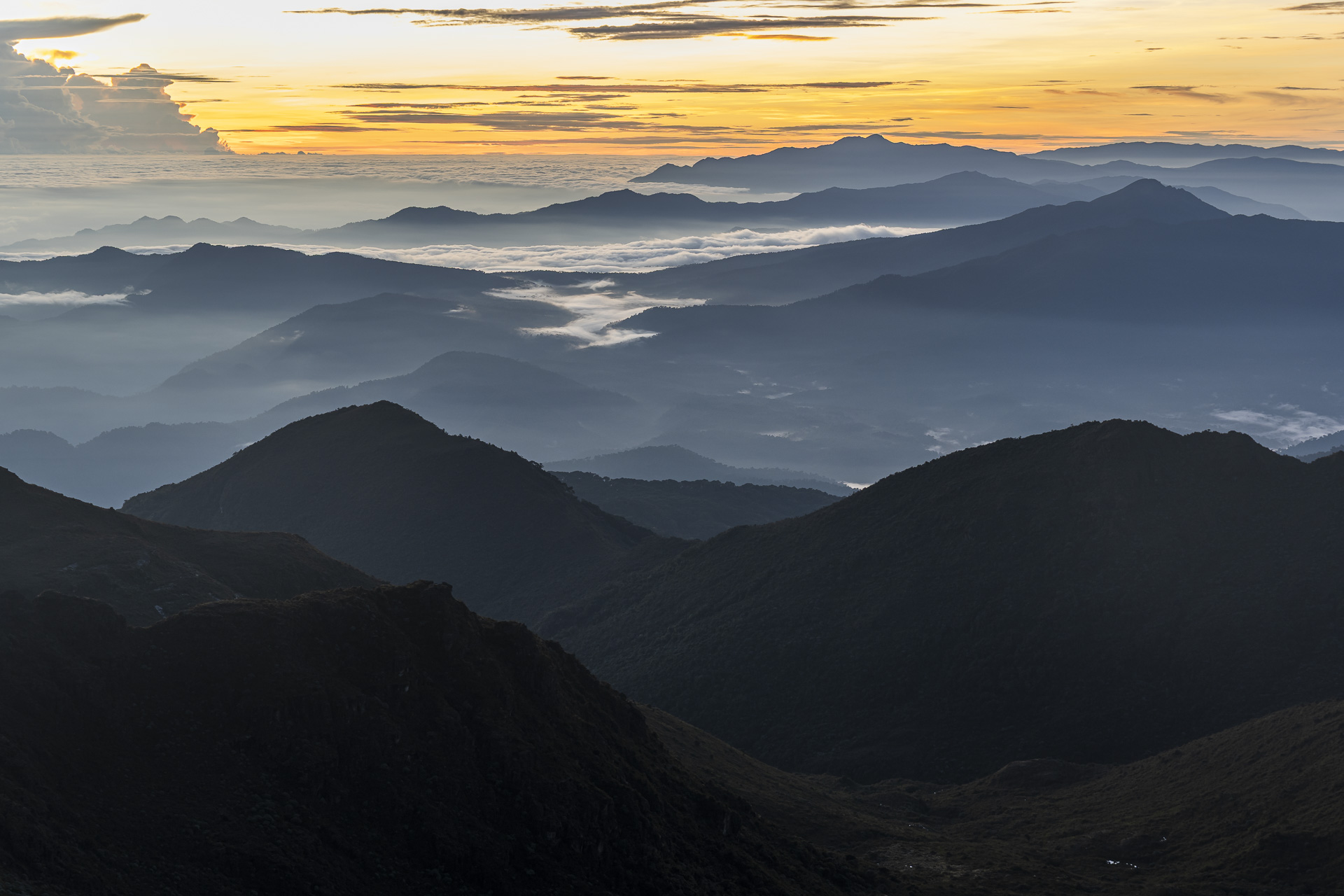
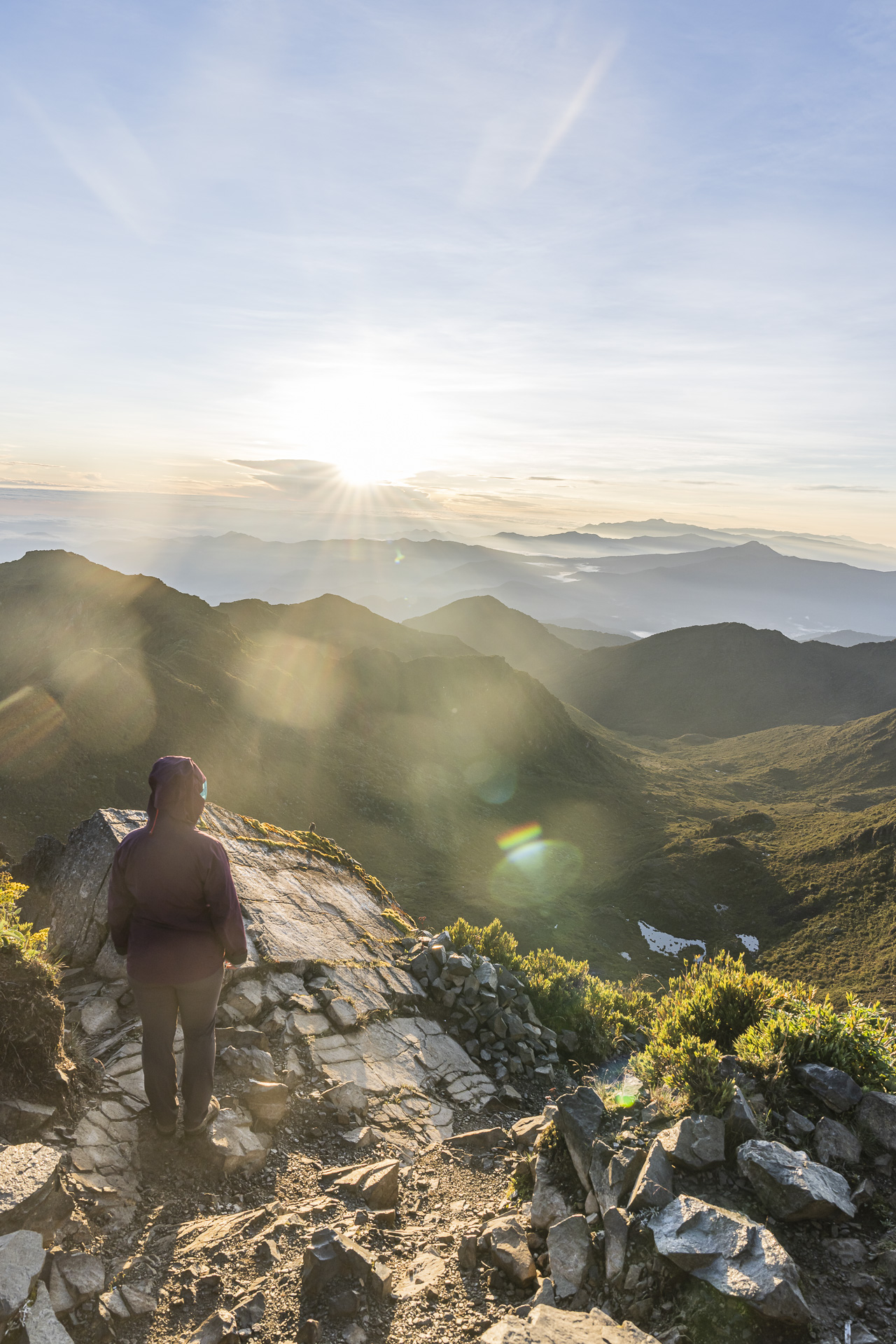
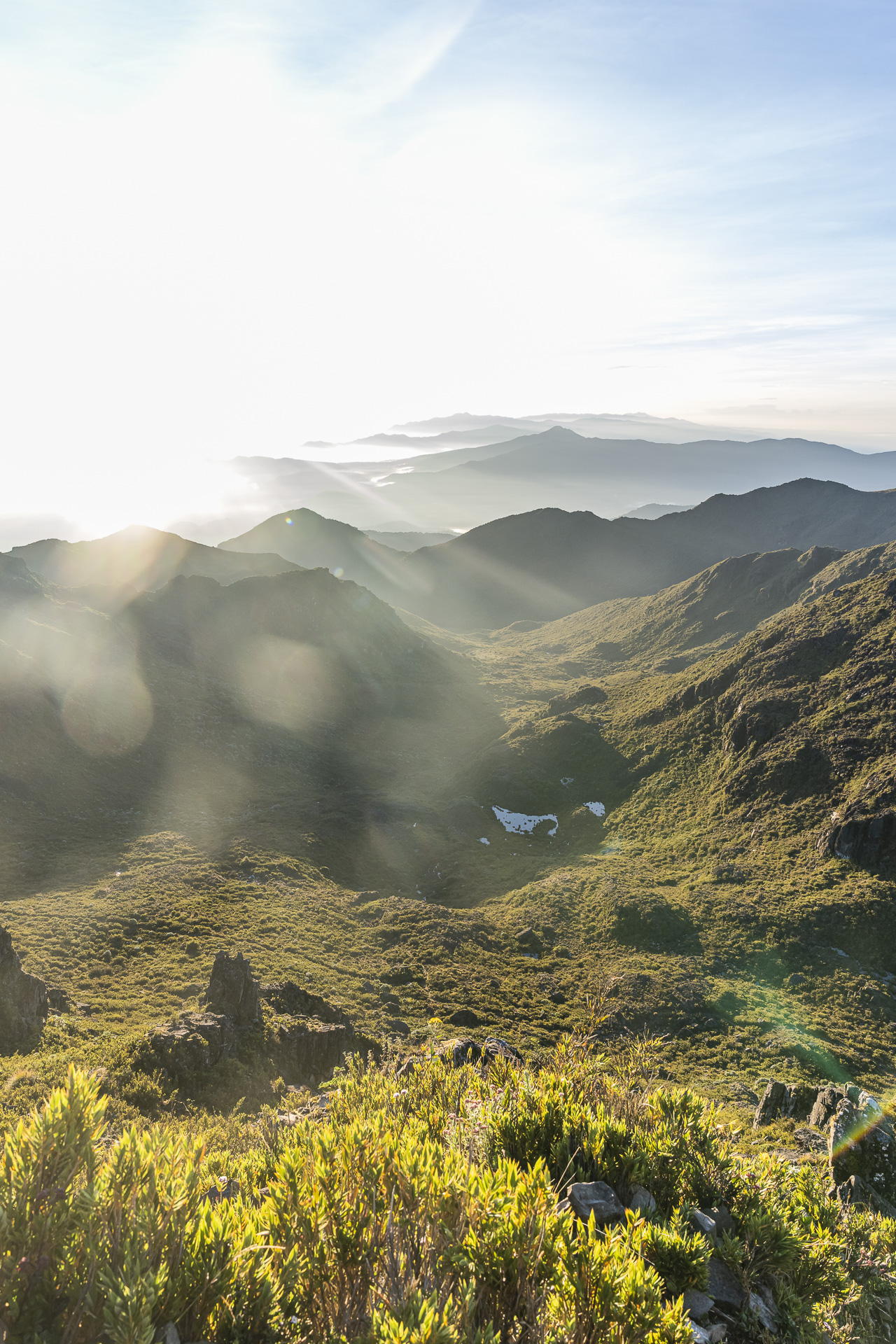
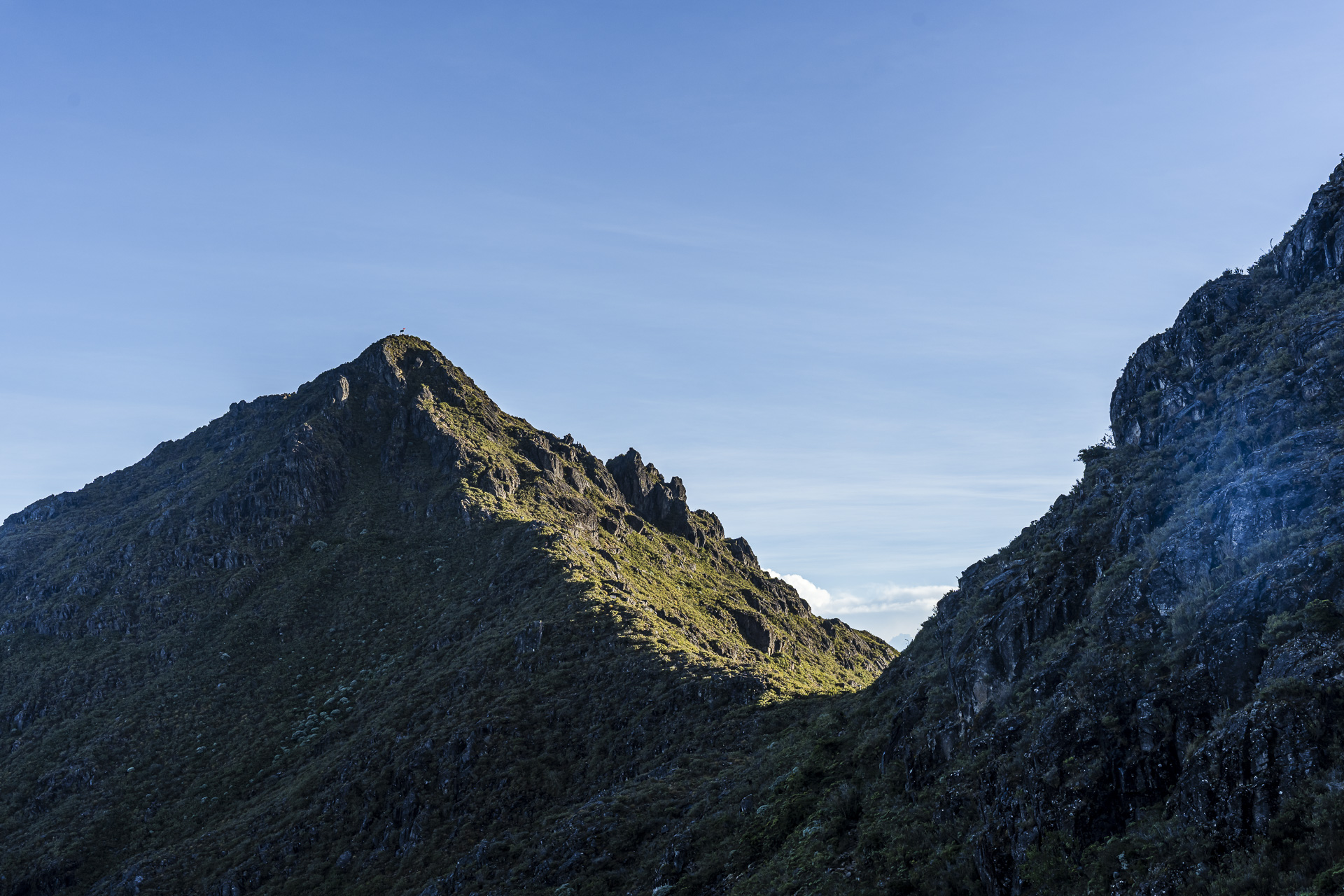
As for our good weather luck, I’ll let the following pictures speak for themselves. As a reminder: we’re traveling in October, so it’s the middle of the rainy season and outside the usual hiking season. The Albergue was at most one-third occupied. According to Jenny, however, we catch a morning that is more typical for January and thus the high season. We can hardly believe our luck and enjoy the panorama that stretches far beyond the Cordillera de Talamanca.
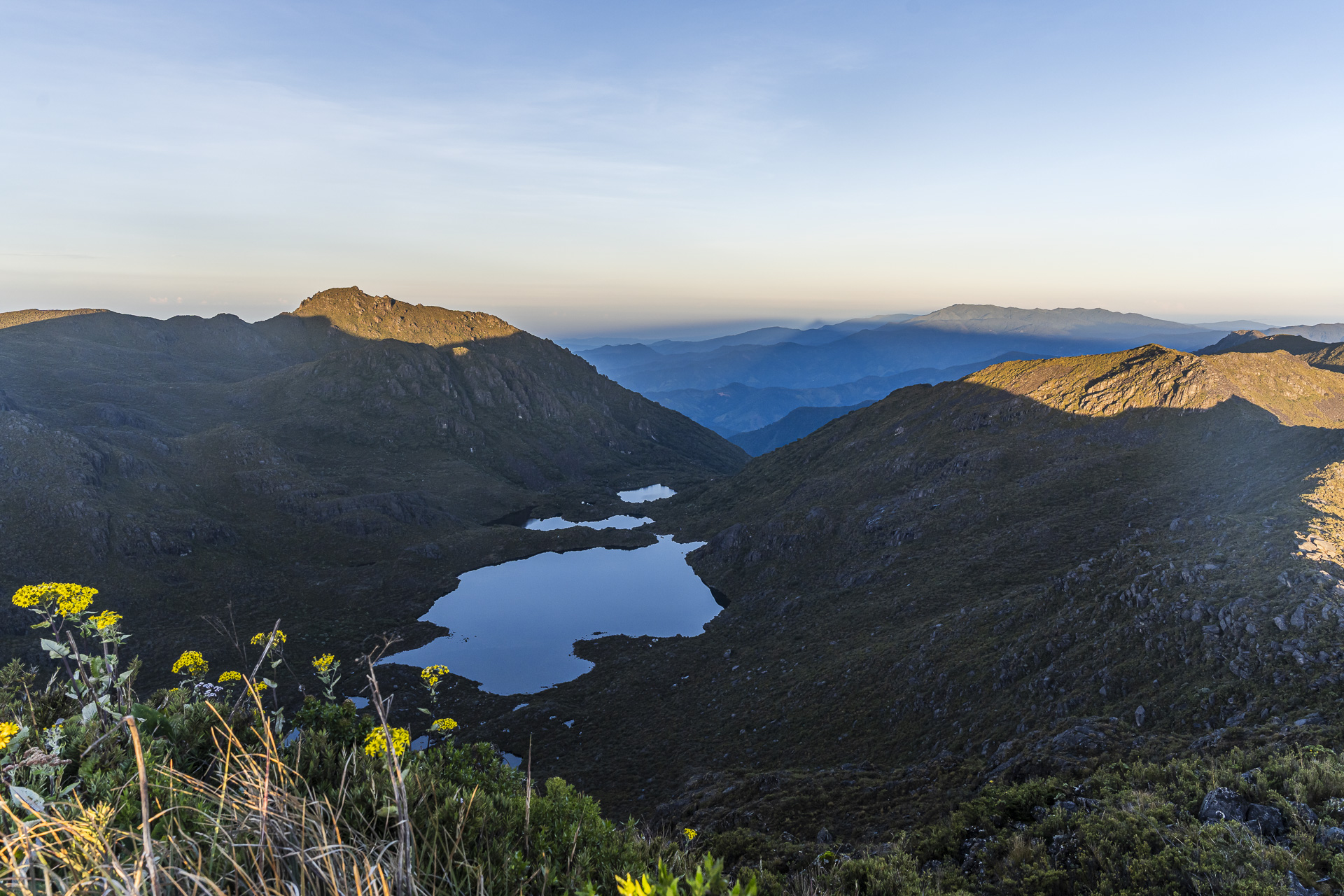

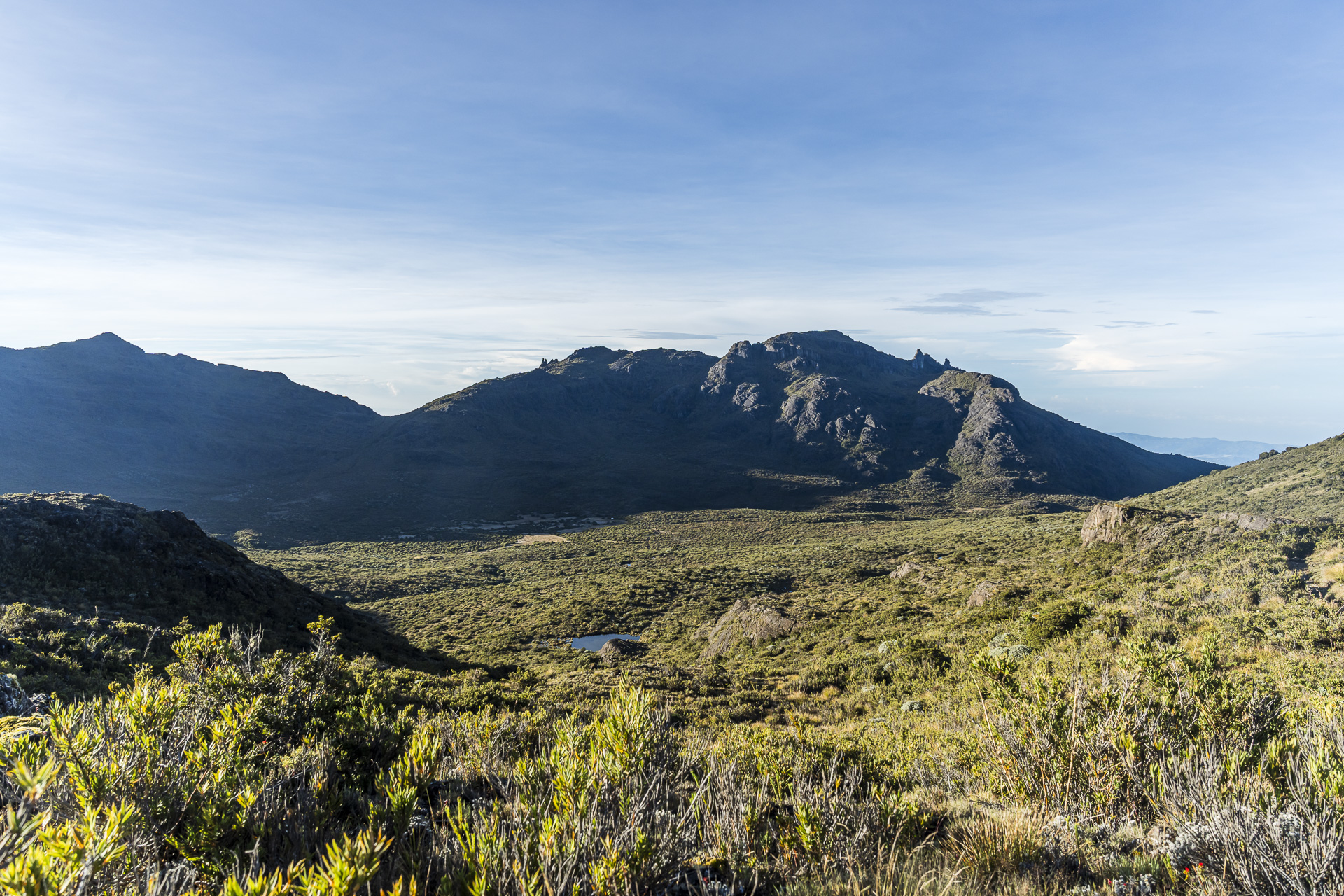
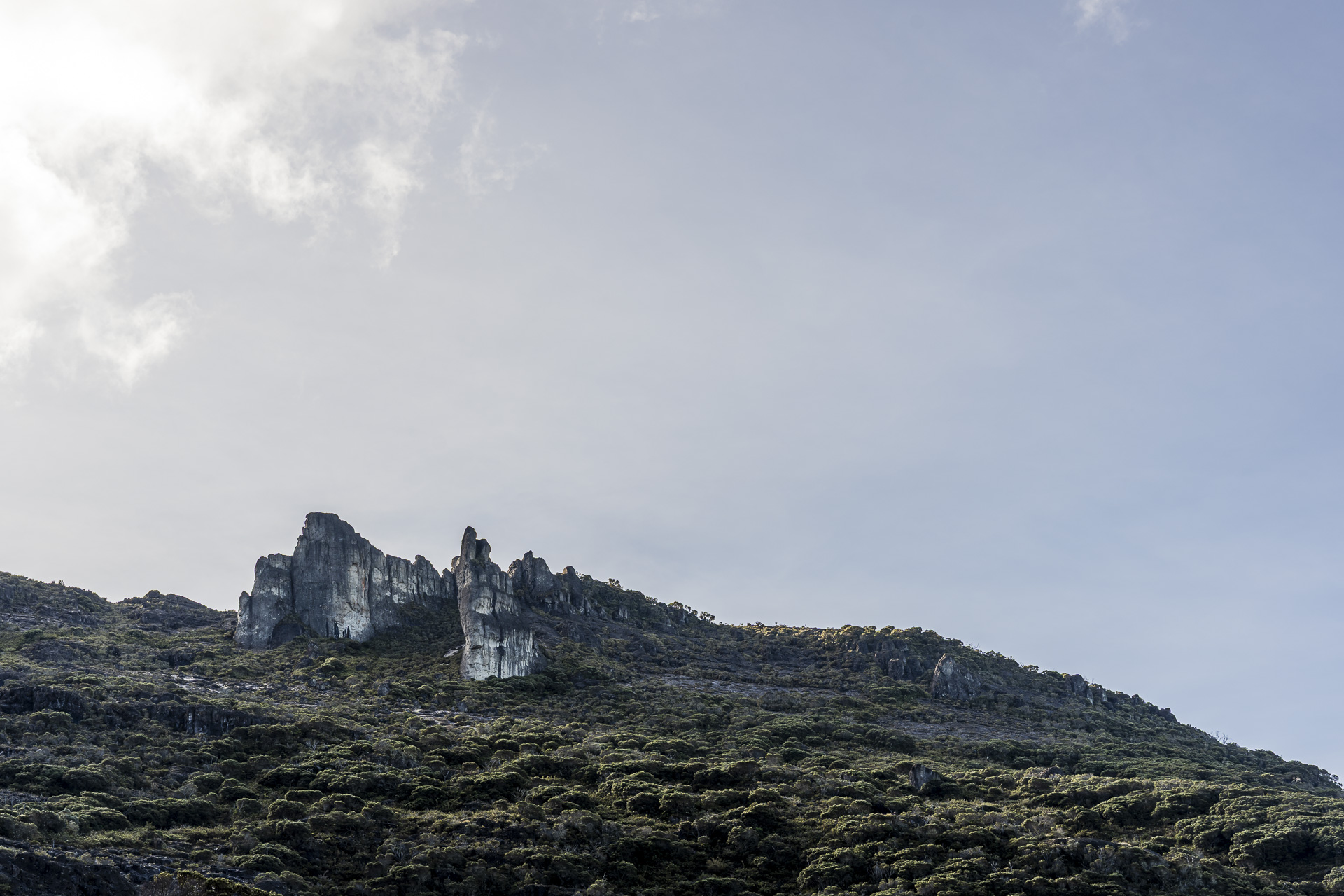
On the way back to the Albergue we also get to see the landscape we passed through during the ascent in the dark. Jenny had guided us along a shorter path to the summit. Now we make a loop across the high plain. Shortly after seven o’clock we’re back at the Albergue and have breakfast.
Descent to San Gerardo de Rivas
After that comes the long descent to San Gerardo de Rivas. This follows the same route as the ascent. Since we had walked the first four hours of the previous day in the dark, at least the second half of the descent still offers new impressions. And we almost would have gone our week in Costa Rica entirely without rain protection. But in the last hour it starts to rain lightly, so I finally pull out the rain cover for my backpack.
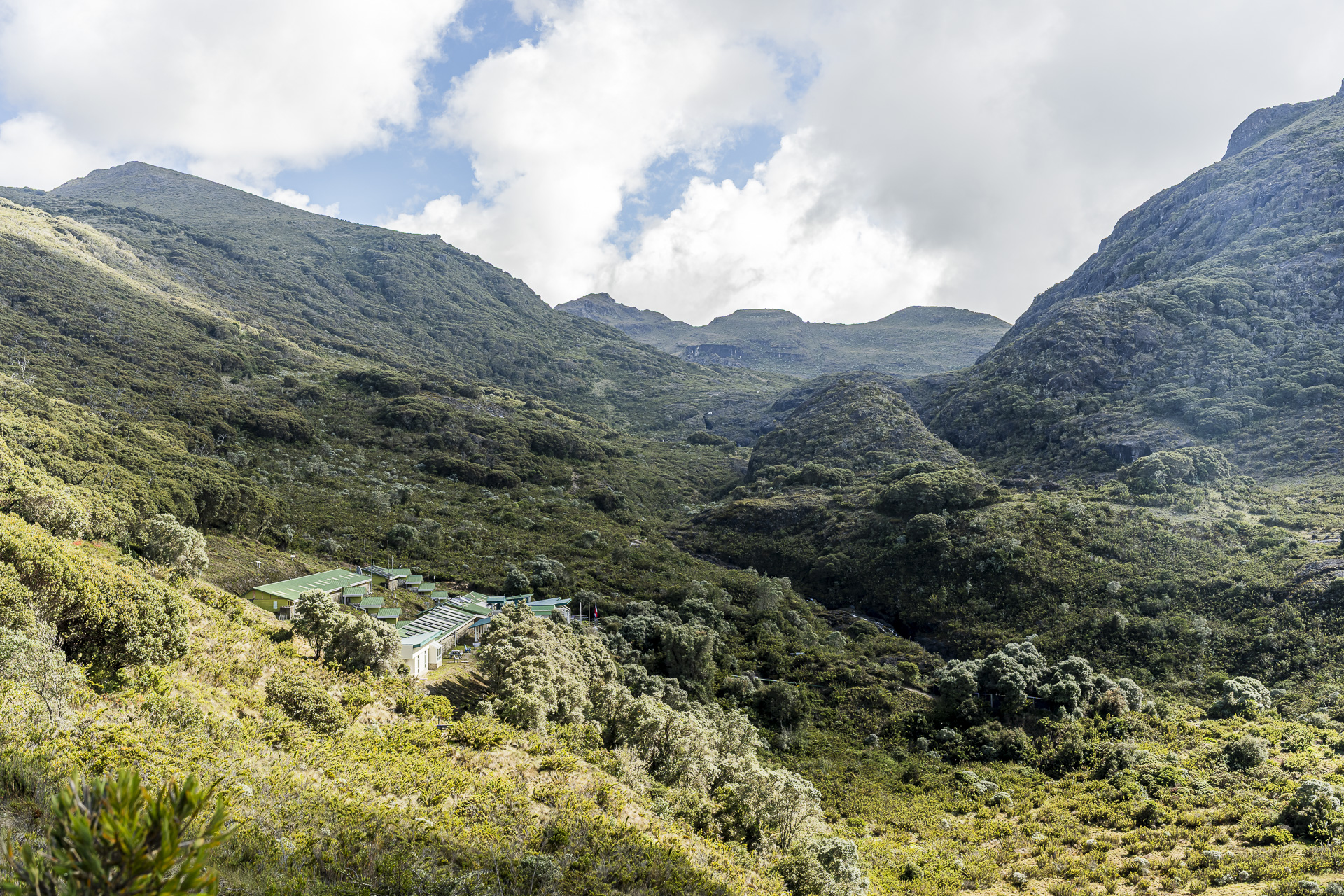
Shortly after 1 p.m. we’re back at the starting point and look forward to a warm shower at Hotel El Pelícano. We spend another night here before heading back to San José the next day.
Practical tips for the Cerro-Chirripó hike
How demanding is the ascent?
The classic route is not overly technically difficult. The main challenges are the long ascents and descents and the altitude. For the two-day tour you should have very good fitness and experience with longer mountain hikes. The second day in particular, with the summit ascent and the subsequent descent into the valley, is tough. The altitude of 3,820 meters should not be underestimated either. Anyone coming directly from the lowlands can feel the thinner air distinctly. Prior acclimatization is therefore advisable.
When is the best time to travel?
The best chances for dry weather and good long-distance visibility are during the dry season from December to April. In the remaining months you should expect more frequent and sometimes heavy rainfall. Regardless of the season, temperatures at higher elevations can drop to around freezing at night. Warm clothing and good rain protection are therefore important.
Do you need a guide?
For the classic ascent route from San Gerardo de Rivas a guide is not mandatory. On the alternative routes via San Jerónimo and Herradura, however, accompaniment by local guides is required.
We hiked with the local guide Jenny Vargas, who was arranged for us through Consorcio Chirripó. Especially for the night ascent and for navigation en route we found the accompaniment helpful. If you also want to hike with a guide, you can inquire with Consorcio Chirripó about available options.
What should you pack and how is catering organized?
For the two-day tour it’s advisable to pack much like for a mountain hike with an overnight in an SAC hut. Warm change of clothes, rain and wind protection, a hat or buff, and a headlamp belong in your pack. I was also glad to have my trekking poles.
You don’t need a sleeping bag, as bedding and blankets are provided in the Albergue. Meals can be pre-ordered. Bring enough water and snacks for the trail. The Albergue also provides drinking water and limited options to charge electronic devices (don’t forget an adapter!). A power bank is therefore recommended.
How much does the 2-day ascent cost?
For a two-day ascent with an overnight stay at Albergue Base Crestones and full board, the cost is approximately 100 CHF per person (converted), including national park entry. You can find the current prices and booking conditions on the websites of SINAC and Consorcio Chirripó.
How do you get to the starting point in San Gerardo de Rivas?
From Zurich, Edelweiss flies nonstop to San José year-round. Depending on the season, there are one or more flights per week. You can find the current flight days in the Edelweiss flight schedule. With a rental car, you drive from San José via the Interamericana Sur to San Isidro de El General and from there continue via Rivas to San Gerardo. If you are traveling by bus, change in San Isidro de El General to the local bus to San Gerardo de Rivas. You can find further information on getting there on the page of Costa Rica Tourism.


Deja una respuesta