

Vale do Pati Trekking: A 3-Day Hike Through Brazil’s Most Spectacular Valley
In October 2024, we spent 23 fantastic days in Brazil. Our route was a varied mix of vibrant cities, a few rainy but still unique beach days, and impressive nature. One of the highlights of this trip was a five-day detour to Chapada Diamantina National Park.
In a group of eight made up of family members and friends, we set out on the trekking adventure through Vale do Pati. Since I know some of you have been waiting a while for more details about this detour into one of Brazil’s most impressive landscapes, I’m finally sharing our impressions here – including practical information and GPX tracks for each hiking stage.
Chapada Diamantina and Vale do Pati: From diamond boom to trekking paradise
Chapada Diamantina is located in the state of Bahia in northeastern Brazil and is now one of the country’s most impressive national parks. The landscape is characterized by table mountains, deeply cut canyons, caves, and countless waterfalls. The region owes its name to the diamond rush of the 19th century, when large deposits were discovered in the rivers of the Chapada and thousands of fortune seekers streamed into the remote mountains. With the end of the diamond boom, the region gradually lost importance and many settlements were abandoned. In 1985, the Brazilian government finally placed large parts of the mountainous landscape under protection and established Parque Nacional da Chapada Diamantina.
Right in the middle of this wild mountain world lies Vale do Pati. In the past, small farmers and former diamond prospectors mainly lived here; today, the valley is considered one of Brazil’s most beautiful trekking regions. Some families still live in the valley and welcome hikers into simple guest rooms. That makes Vale do Pati a special place to this day, one that can only be explored on foot. There are no roads in the valley. The combination of magnificent nature, simple accommodations, and long hiking stages makes Vale do Pati an exciting destination for trekking fans.
Starting point Lençóis: The gateway to Chapada Diamantina
Brazil is huge. That is exactly what did not make planning our route easy. What distances can realistically be covered in what amount of time? How many stopovers can reasonably be built into the itinerary? And on a trip through such a large country, does «less is more» apply, or rather «more is more»? Fortunately, we were able to count on local support, which also helped organize this leg of the trip.
Getting from São Paulo to Lençóis, the gateway to Chapada Diamantina, took an entire travel day. First came a roughly two-and-a-half-hour flight from São Paulo to Salvador. That was followed by an approximately eight-hour minivan ride across the state of Bahia. Pretty exhausted, we arrived late in the evening at Hotel de Lençóis. Even while checking in, we were happy to know that we would be staying here again after the three-day trek. The hotel is highly recommended, and Lençóis itself is also a charming little town with some great restaurants – such as Lampião Cozinha Nordestina right in the lively town center
Day 1: From Guiné to Mirante do Pati – the first highlights of the trek
After a short but quite restful night, we packed our trekking backpacks. Everything we would not need for the next three hiking days in Vale do Pati could be stored at the hotel. Shortly before nine o’clock, we were picked up by our hiking guides from the local agency Nas Alturas. We then had another roughly two-hour drive ahead of us to the small village of Guiné. Part of the route followed bumpy dirt roads, while the first table mountains appeared on the horizon and the vastness of Chapada Diamantina became more and more apparent.
Guiné lies at around 3,280 feet above sea level and is considered one of the classic starting points for trekking tours into Vale do Pati. Along the main road there are a few small restaurants where you can stop one last time before the hike and get surprisingly good coffee. After this final refreshment in «civilization», it was time to shoulder our backpacks. With four liters of water as our daily ration – essential in the barren landscape of the high plateau – we set off on the first ascent toward Mirante do Vale do Pati.
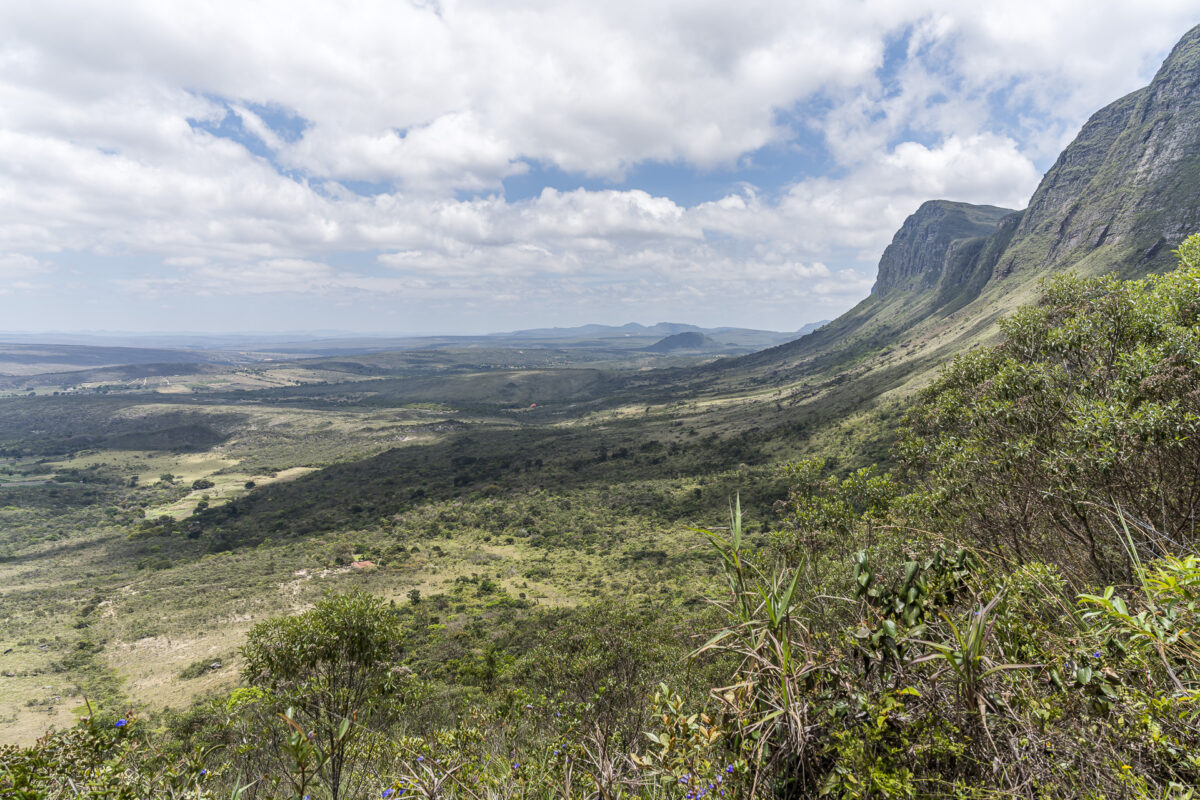
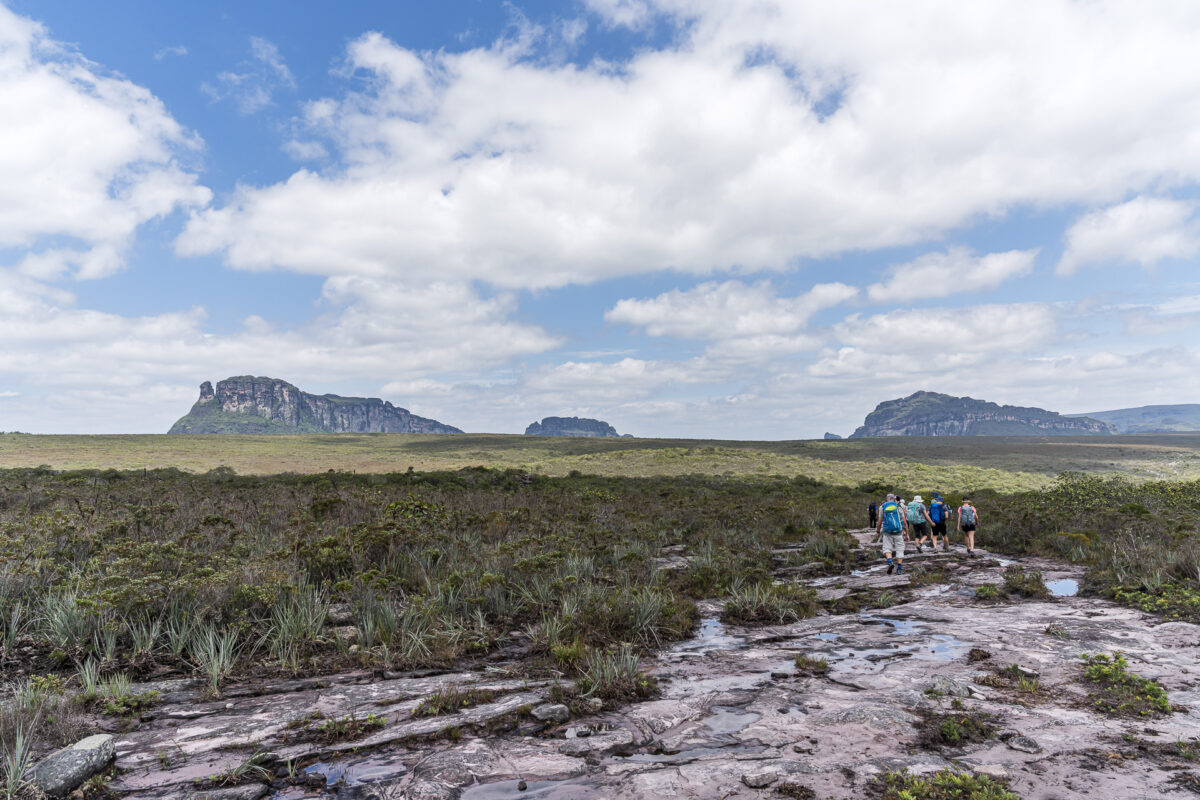
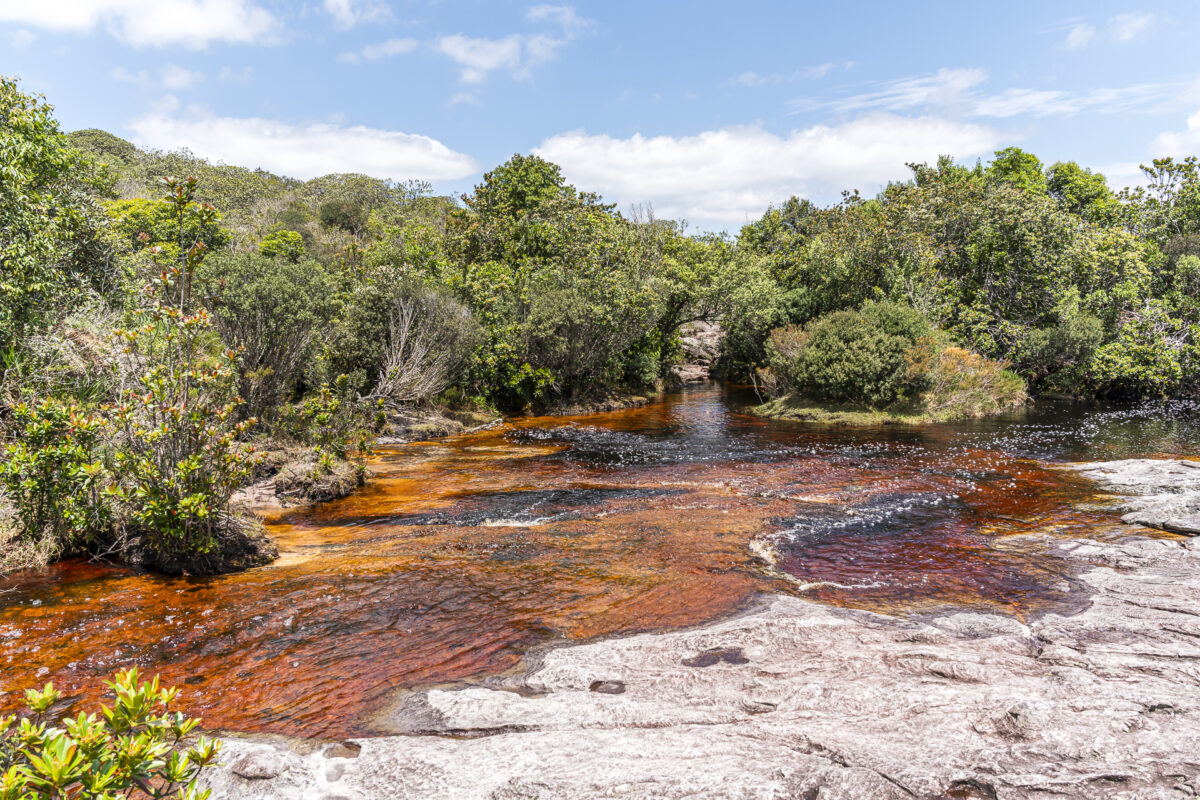
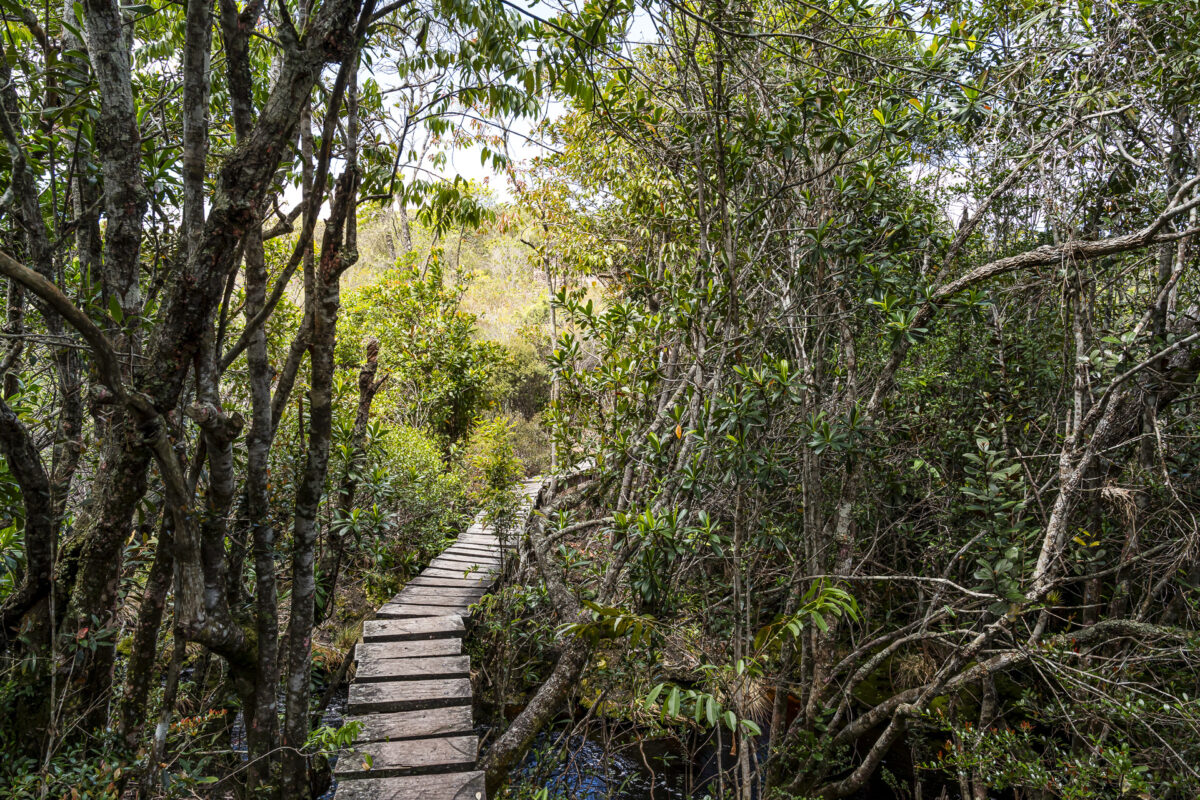
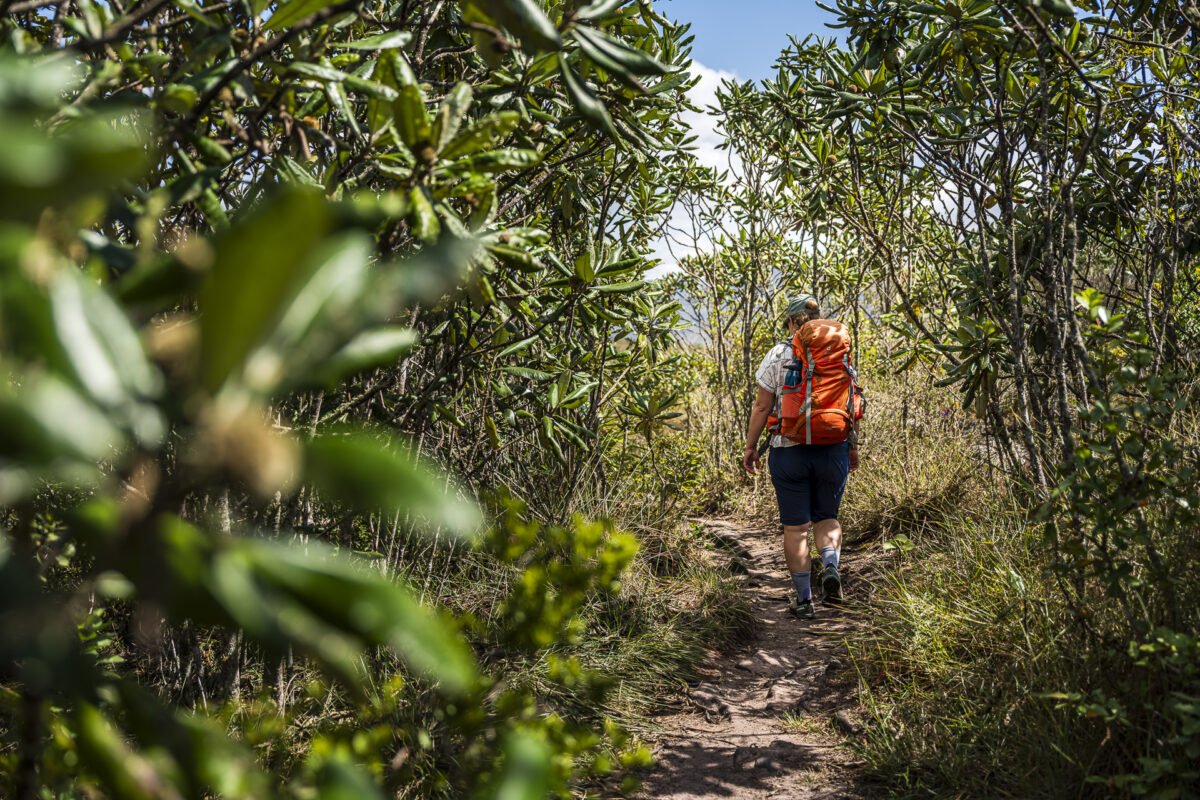
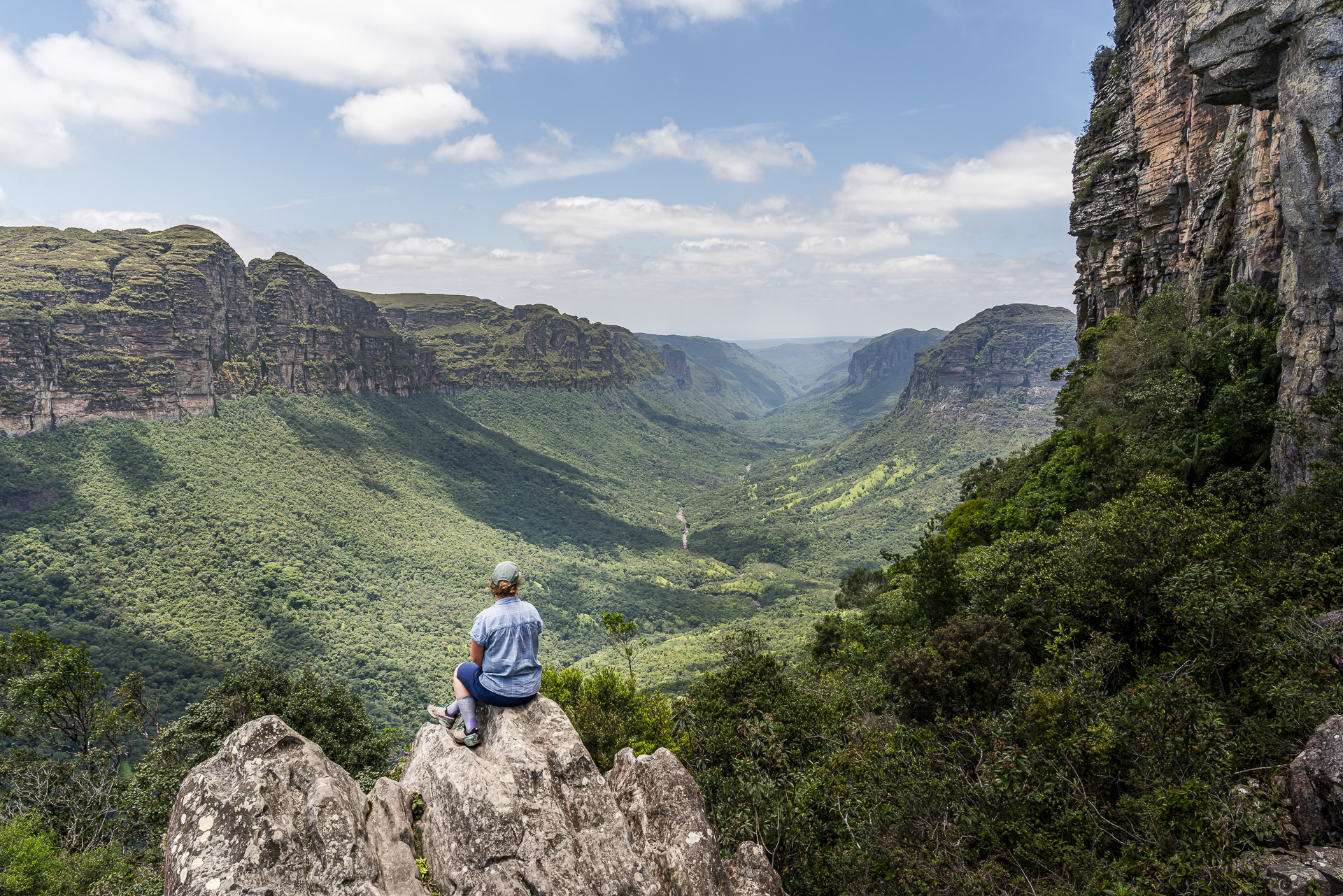
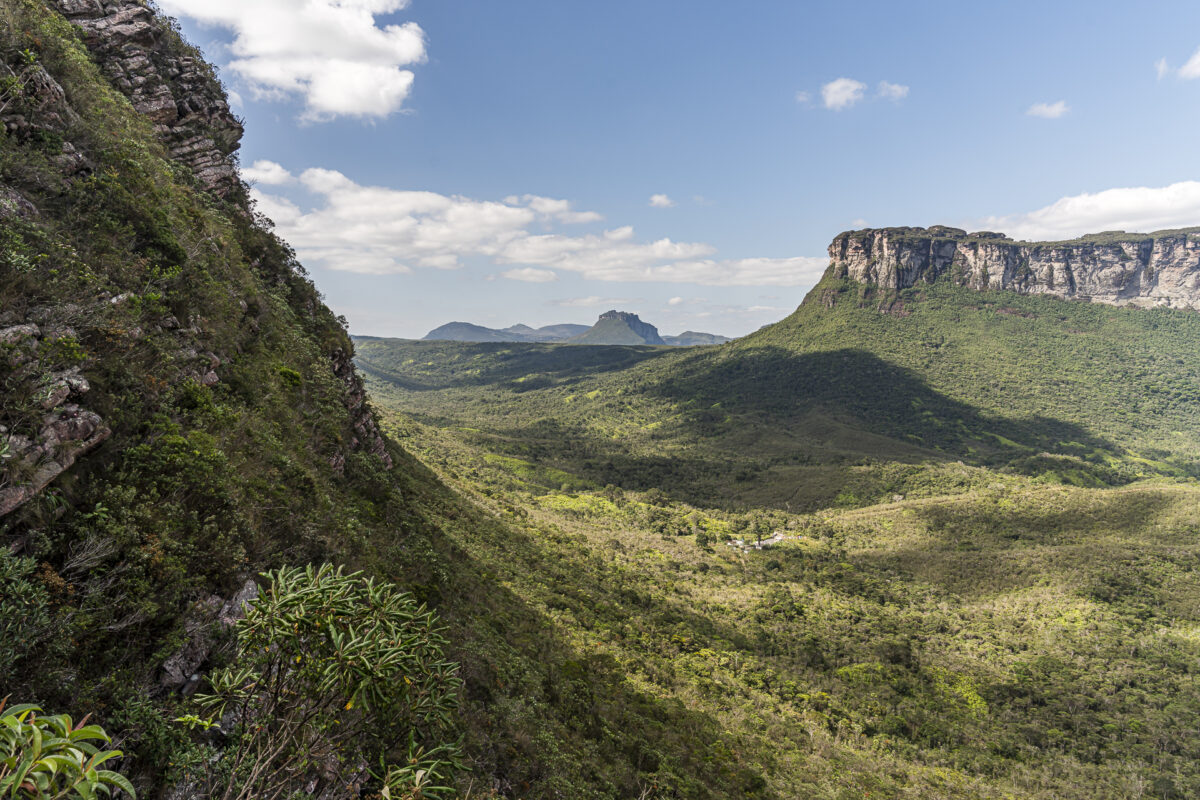
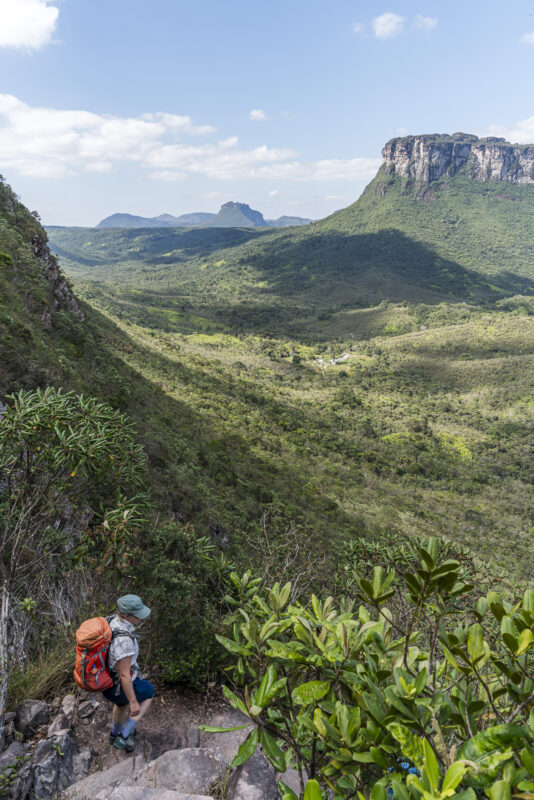
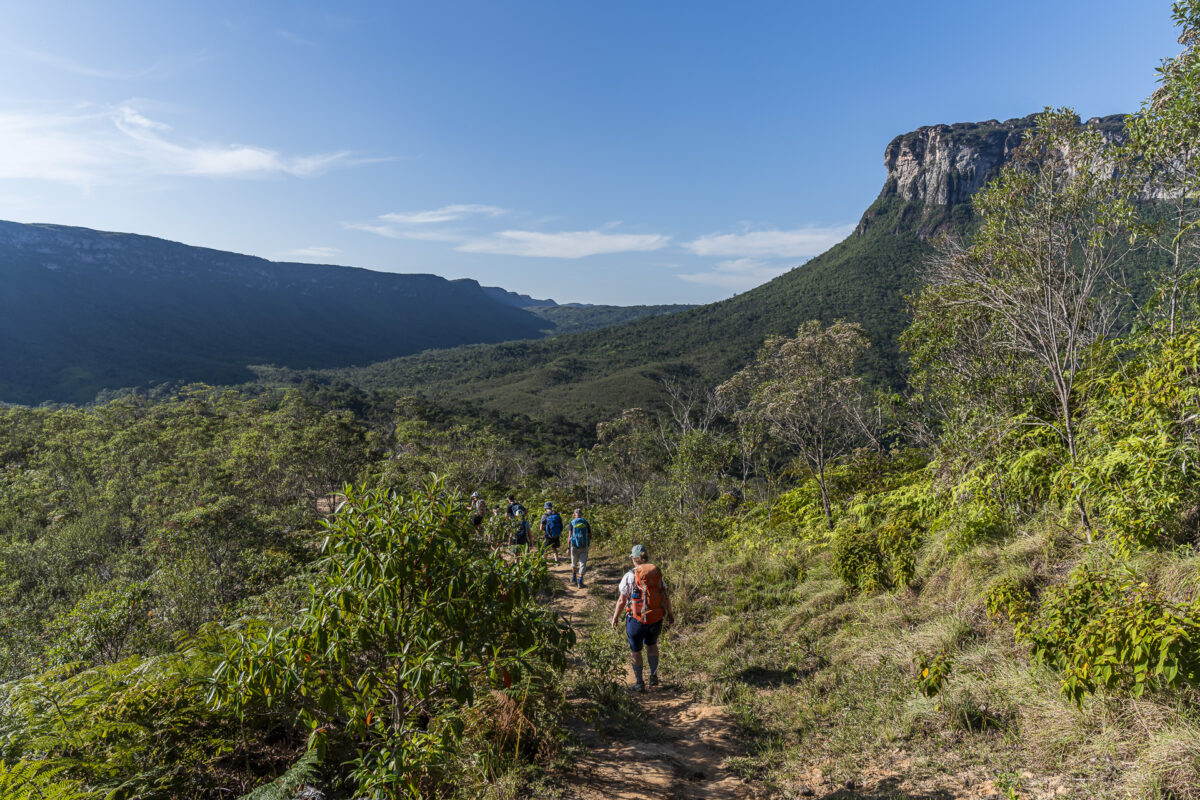
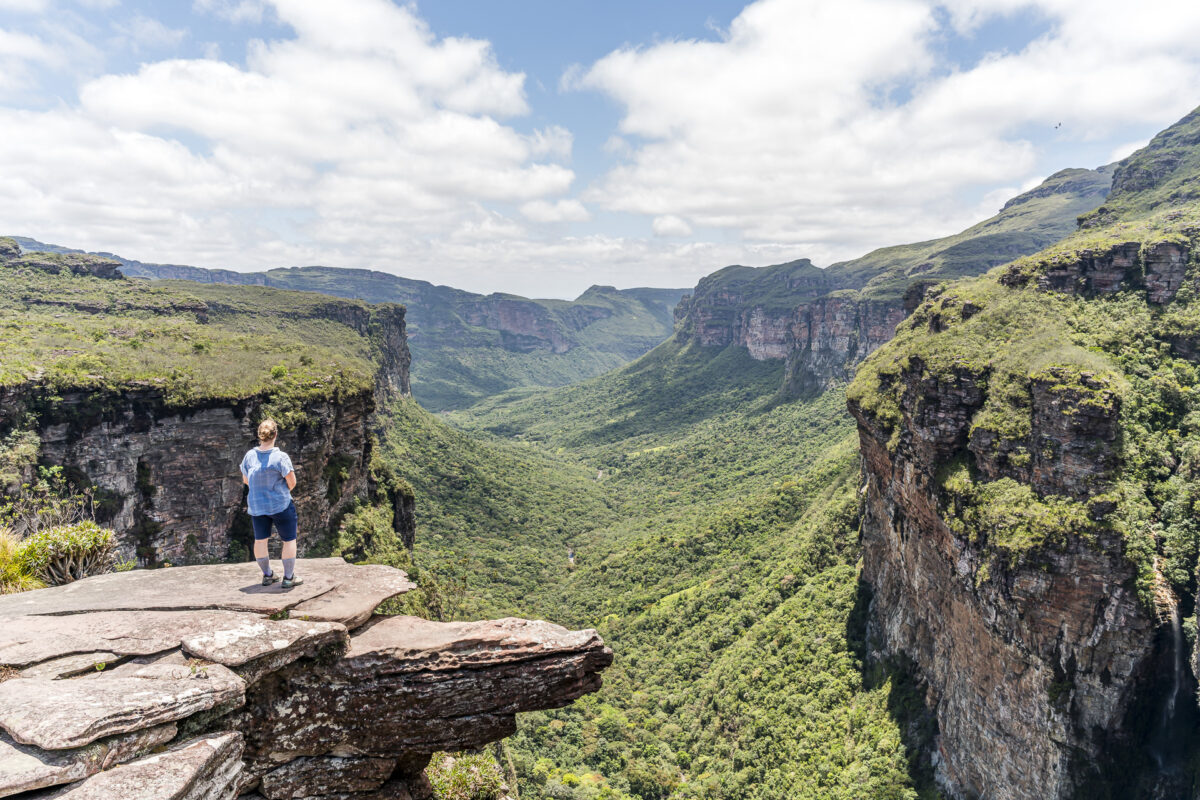
What is exciting about this trekking route through Vale do Pati is that you pass through very different vegetation zones. On the high plateaus of Chapada Diamantina, thorn scrub forests with water-storing plants and savanna-like landscapes dominate. In the lower-lying areas of Vale do Pati, on the other hand, there are still remnants of the Atlantic rainforest. When I look out over this canyon landscape for the first time at Mirante do Vale do Pati, I can’t help but say «Wow.» The view is simply overwhelming.
From the viewpoint, the hiking trail leads down a rather adventurous and steep path to a hidden waterfall that offers a welcome cool-down. Not far from there is Pousada do Wilson, our first overnight stop in the valley. In terms of comfort, it is similar to a mountain hut, though we are quite pleased that we are not facing a dormitory-style room and that the rooms are partitioned. We consistently had very good experiences with the food during our trip through Brazil, and this stop was no exception.
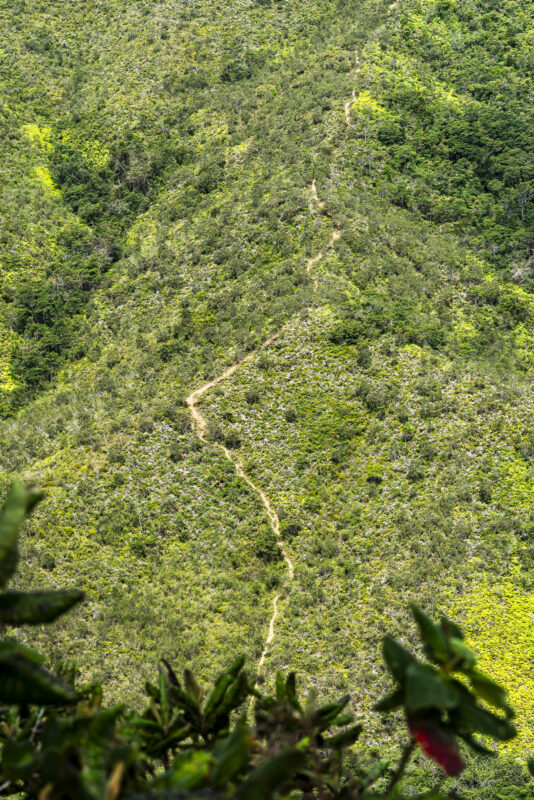
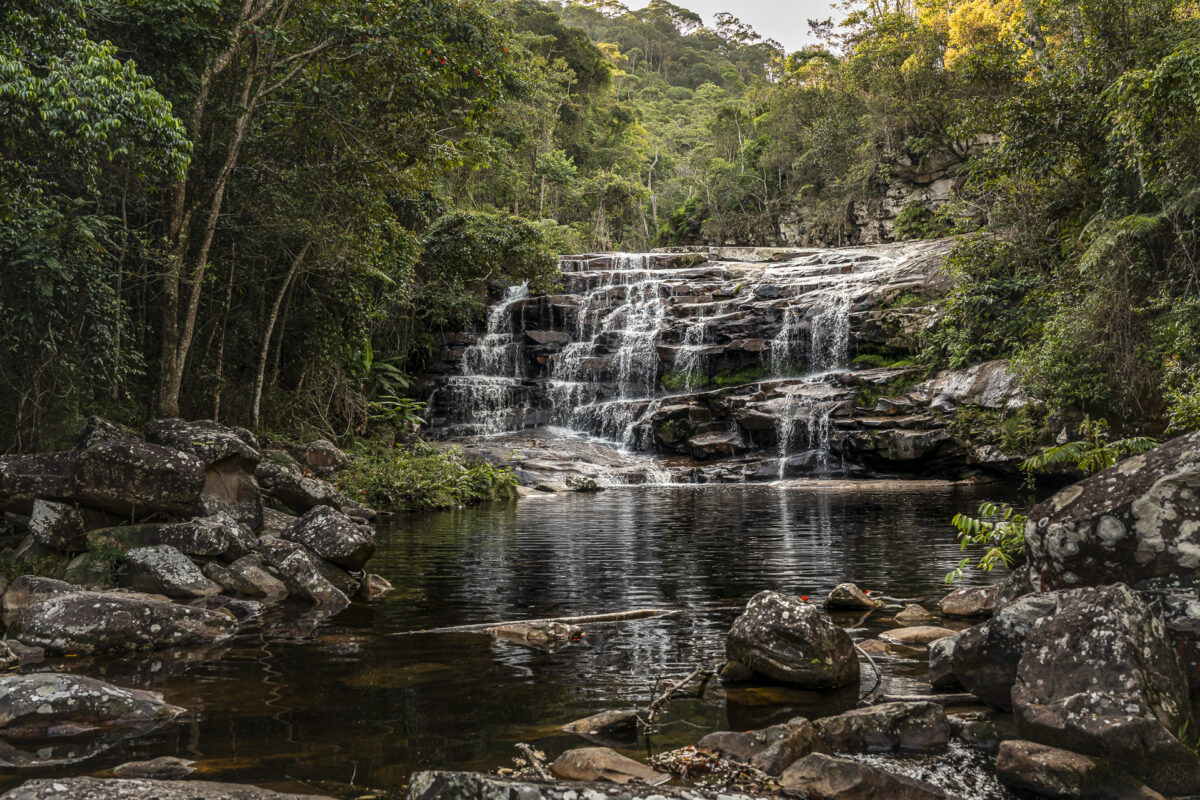
Day 2: Ascent to Morro do Castelo – fantastic panoramic views
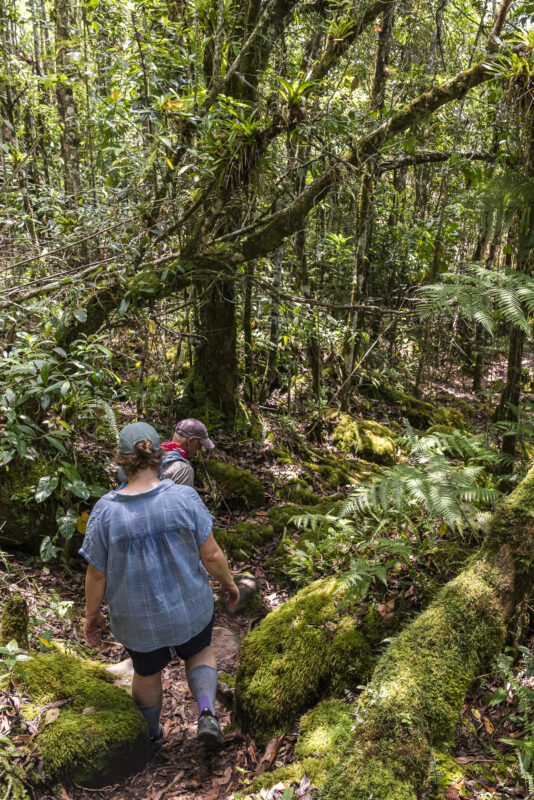
The second day of hiking began with an ascent through the Atlantic rainforest to Morro do Castelo. The trail starts right at Pousada do Wilson. Since we would be returning here before continuing to our next overnight stop, we were able to leave our large backpacks there and tackle the climb without the extra weight. In the humid heat, that was definitely a welcome relief.
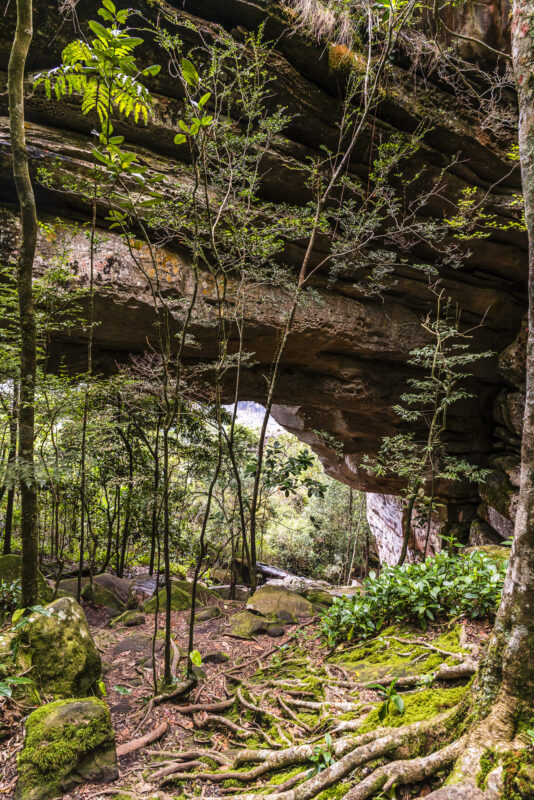
The trail first leads through dense forest and at times follows the course of the Rio Funis. Small streams have to be crossed again and again, and in some places the route continues over slippery rocks. Gradually, the path becomes steeper until we finally reach the rock formation of Morro do Castelo. The last section is a bit more demanding and occasionally requires the use of your hands before you pass through the impressive Gruta do Castelo to the other side of the mountain. Once at the top, a fantastic panoramic view opens up over Vale do Pati and the surrounding mountains of Chapada Diamantina.
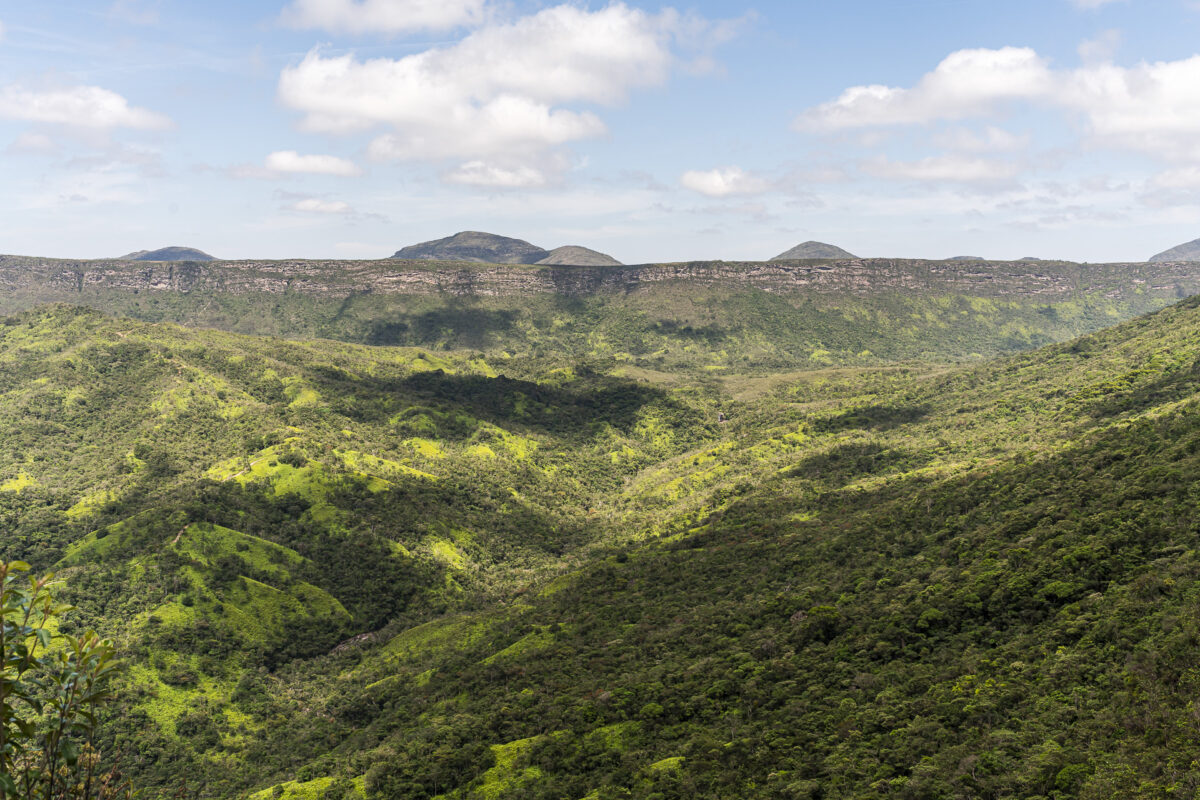
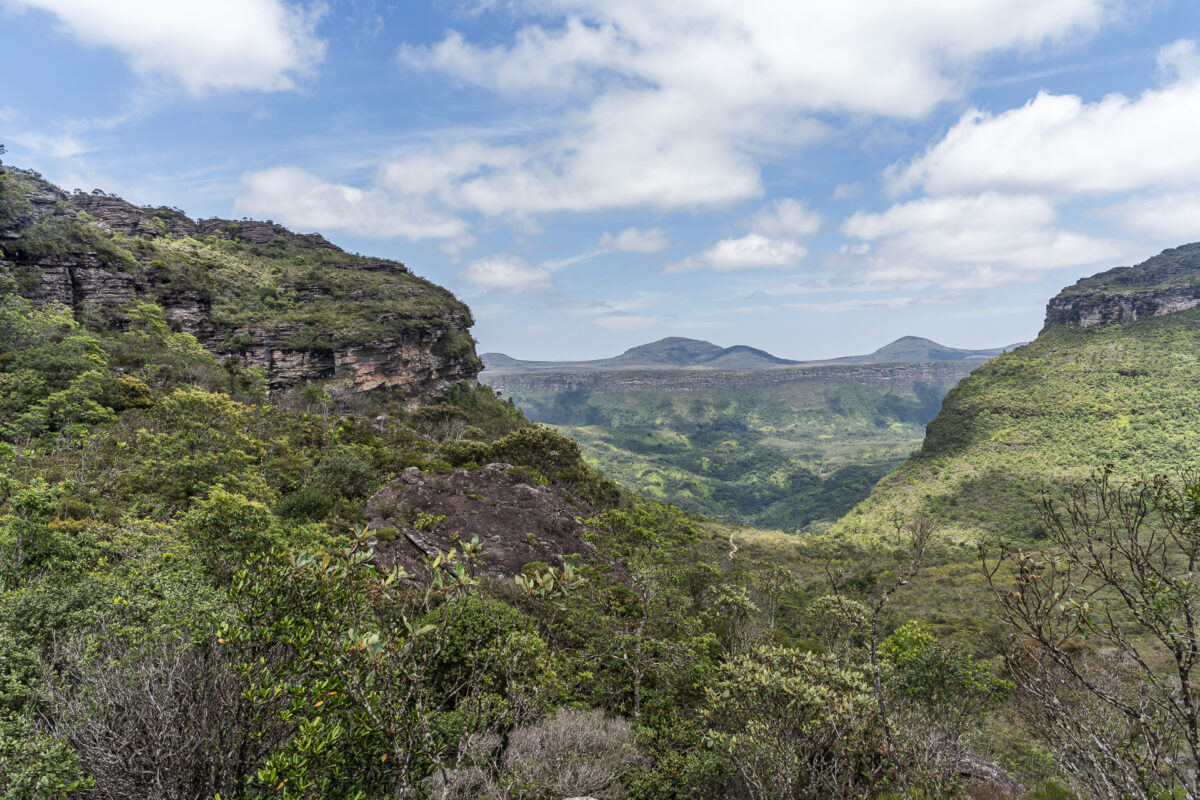
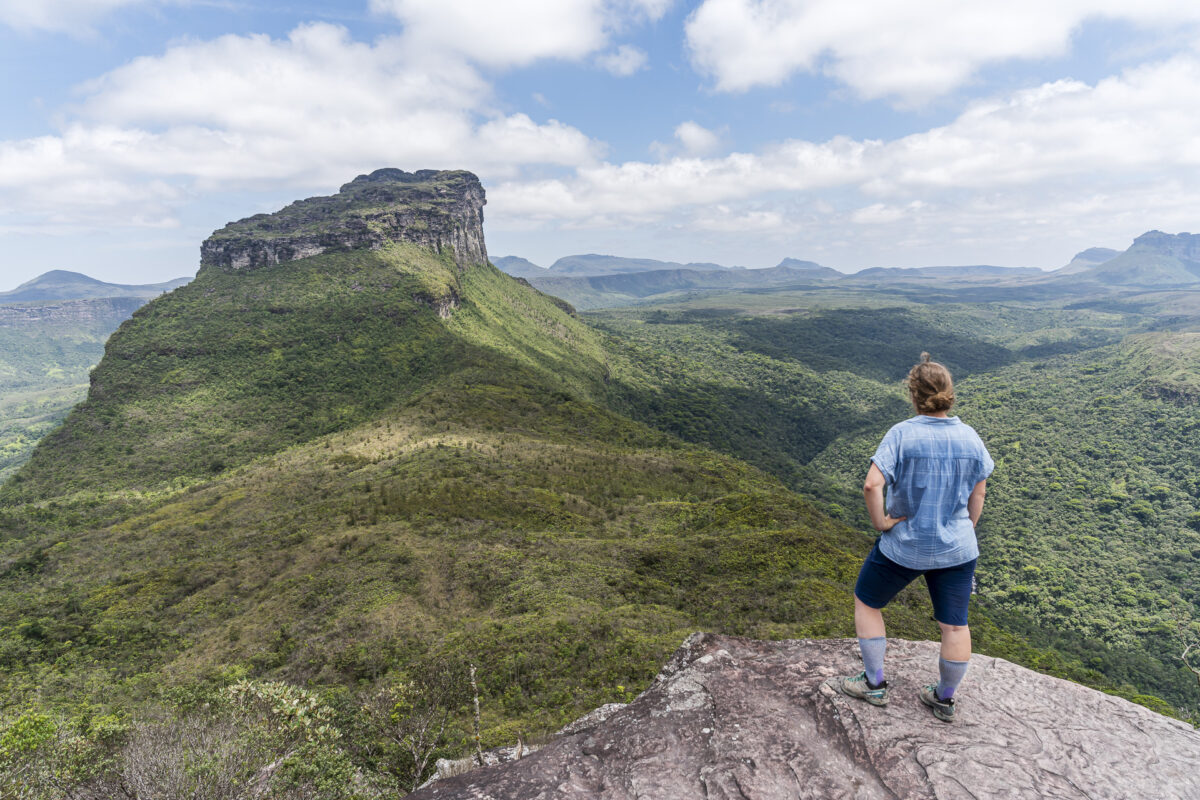
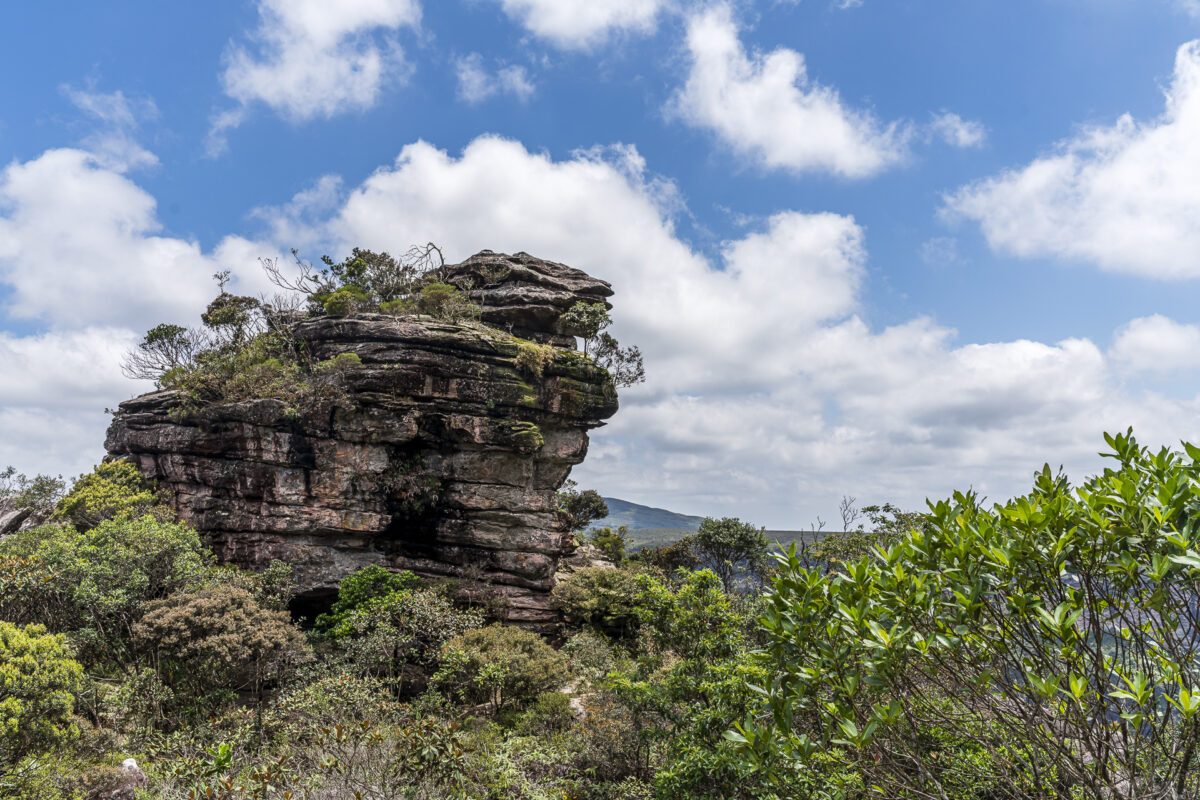
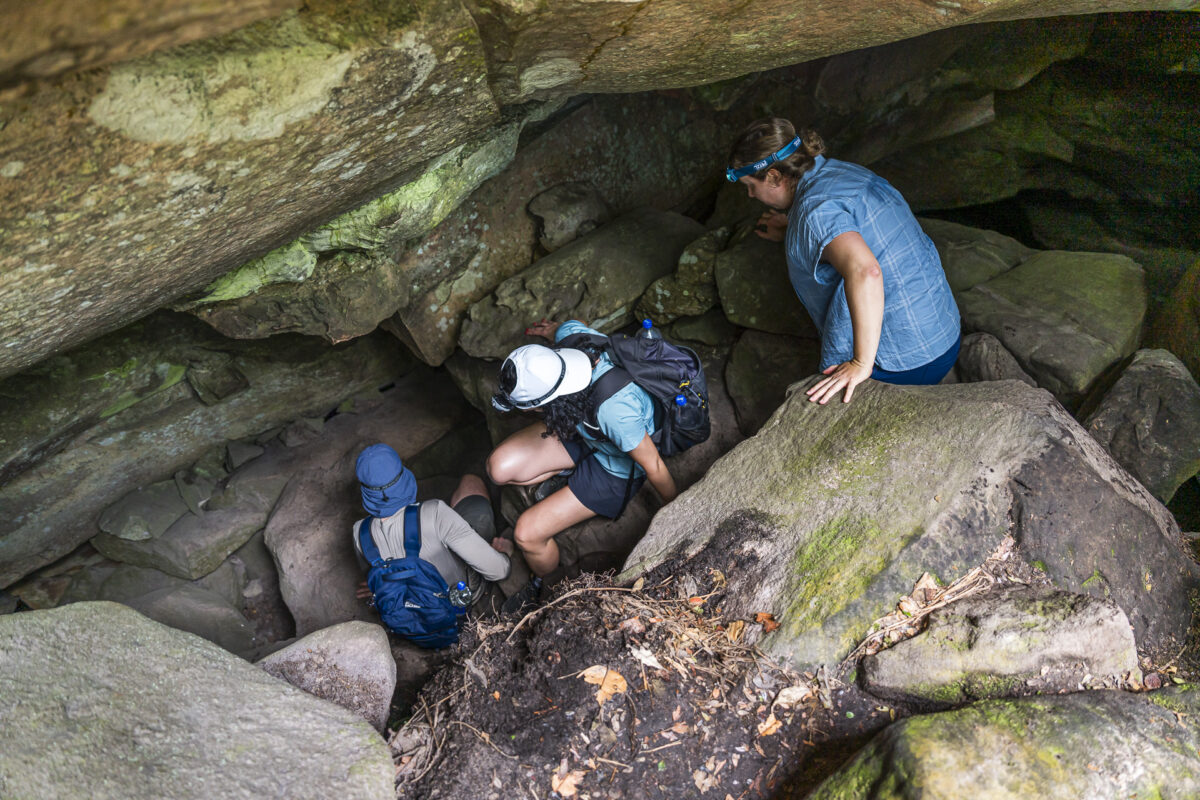
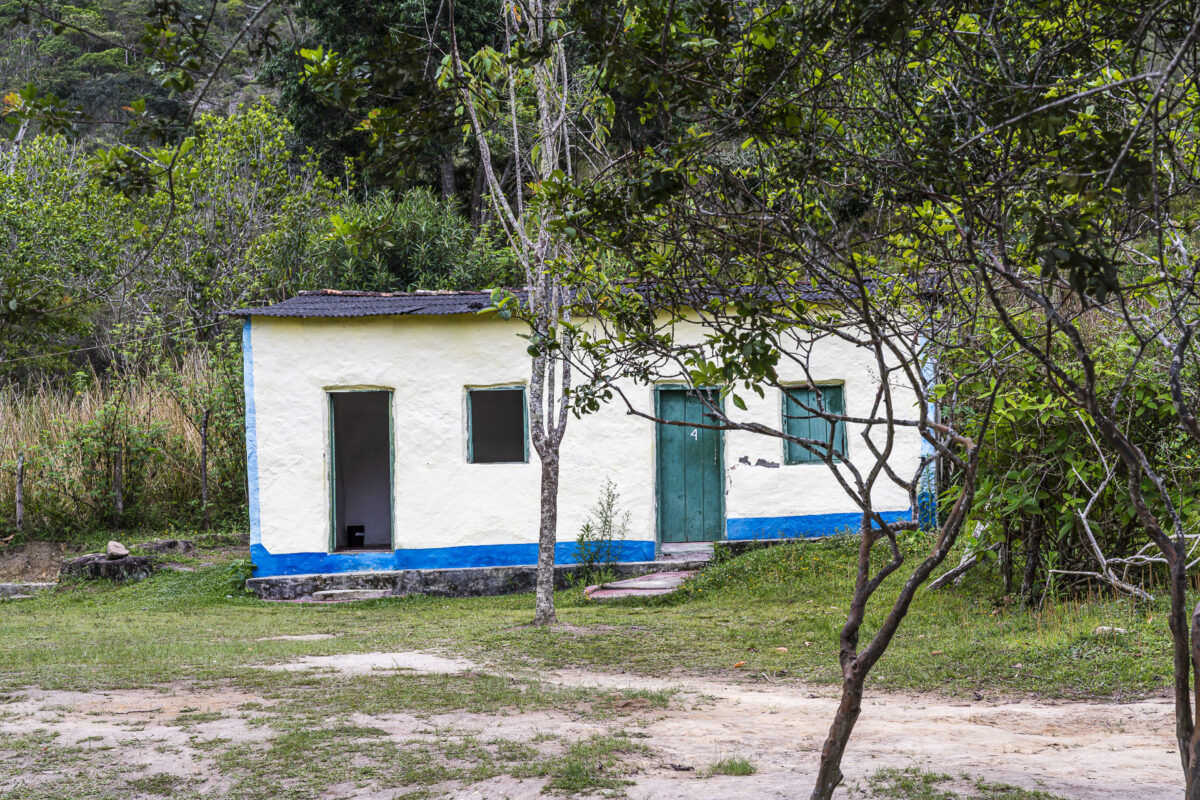
On this day, we cover comparatively short distances. Our second overnight stop, Hospedagem Igrejinha, is only about three miles away. The accommodation is a bit larger and accordingly well frequented. Vale do Pati is not only a popular trekking destination among international travelers, but also among Brazilians. To our delight, there are even simple shower stalls here, which provide a welcome refreshment after two days of hiking.
Day 3: Across the high plateau to Cachoeirão – impressive views into the depths
On the third morning, we are greeted by an overcast sky. We do not mind that at all. Today, another long day of hiking awaits us, and much of the route leads across the high plateau, where shade is scarce.
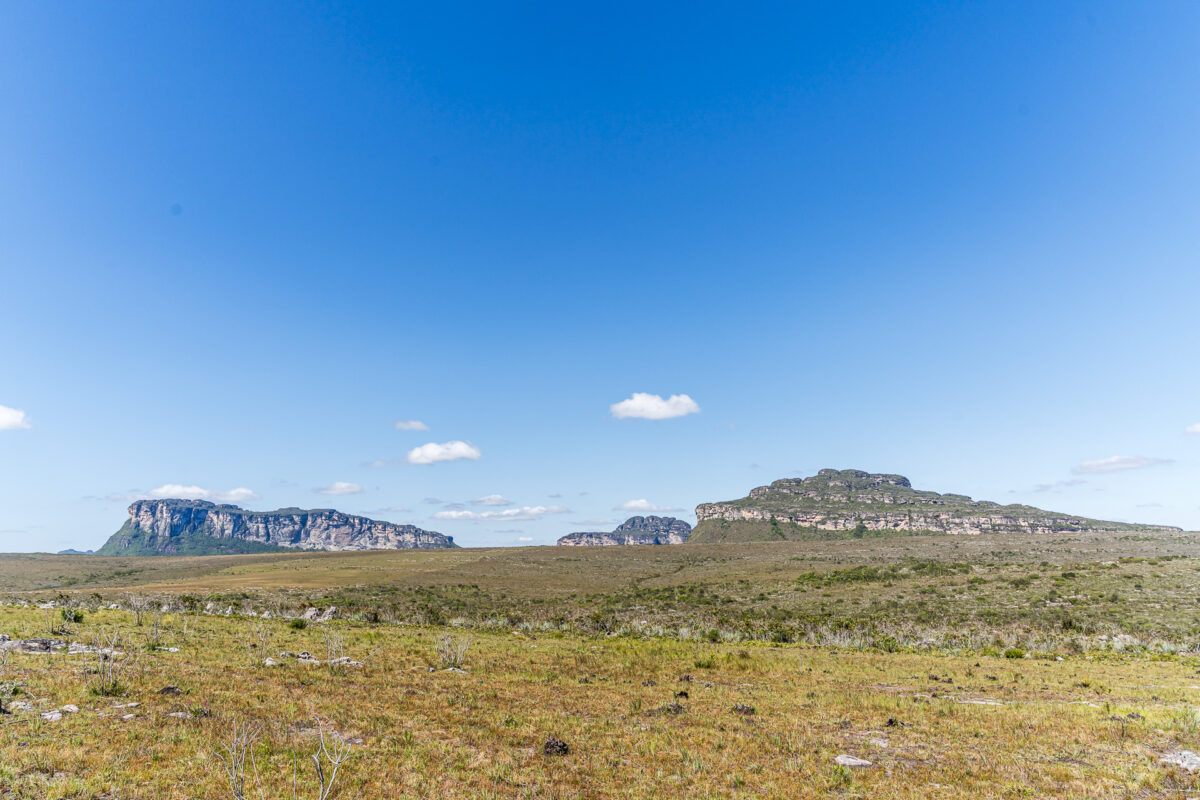
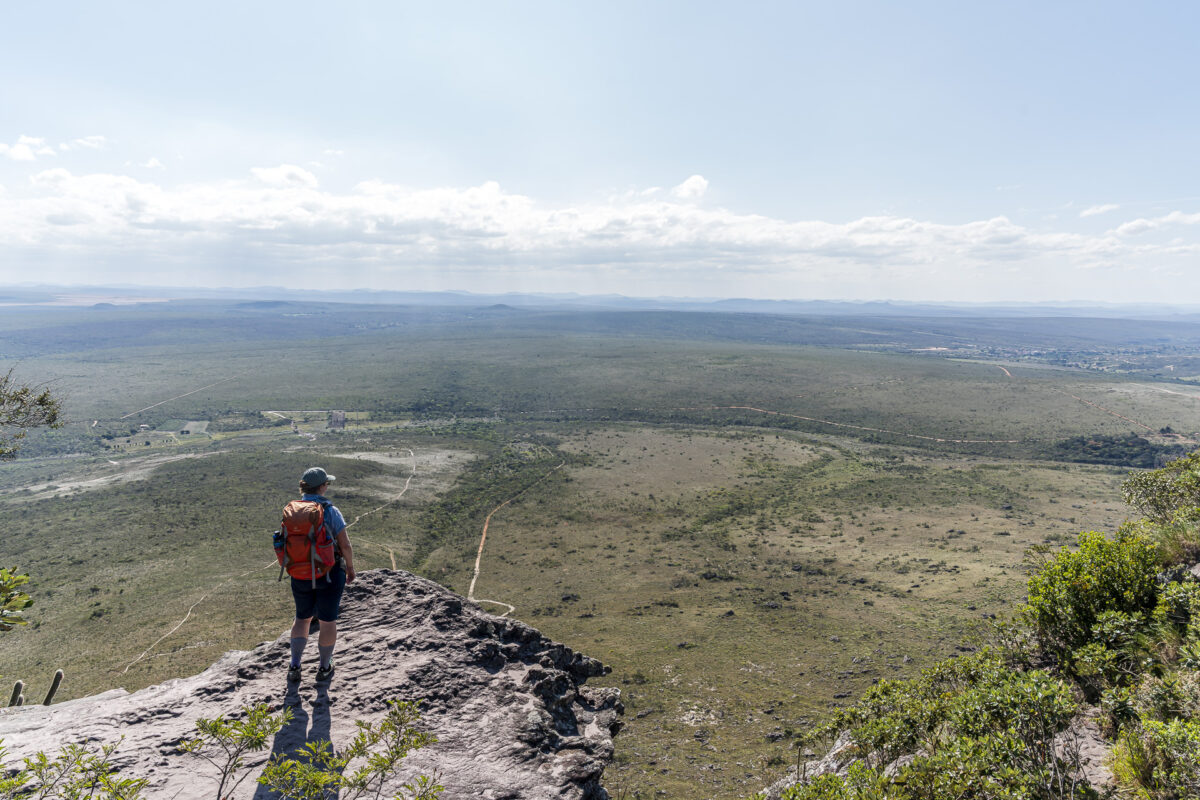
We first follow a narrow mule trail that leads out of Vale do Pati and up to the high plain of Chapada Diamantina. Once at the top, the paths often continue only faintly visible through the rugged and expansive Cerrado landscape. The vegetation is low, the view stretches far across the open plateau, and only occasionally do individual rock formations appear on the horizon.
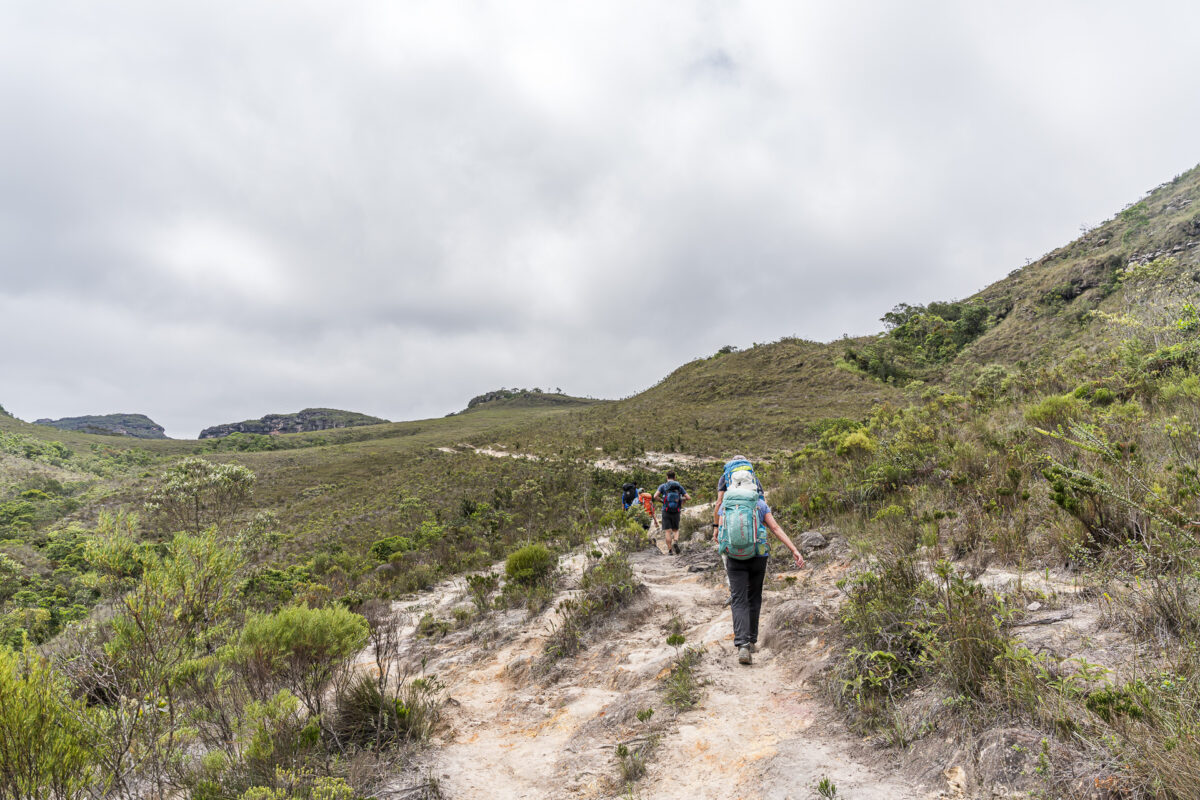
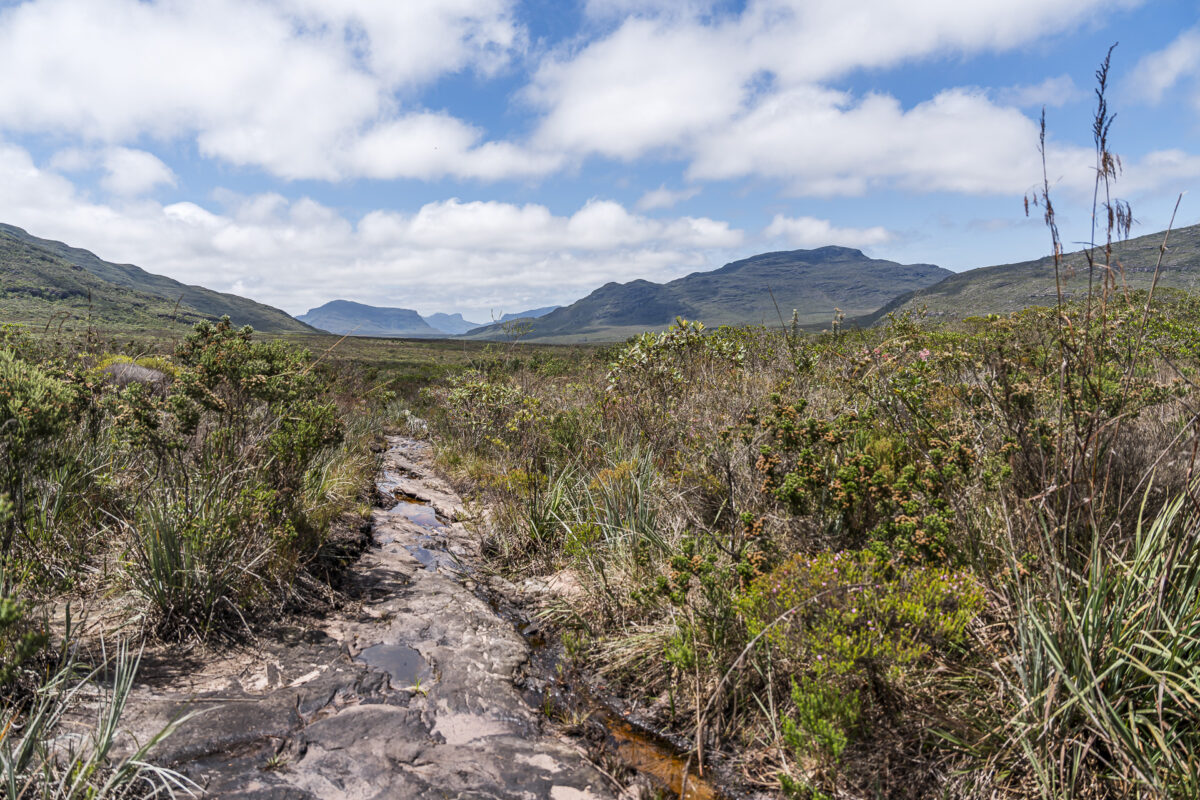
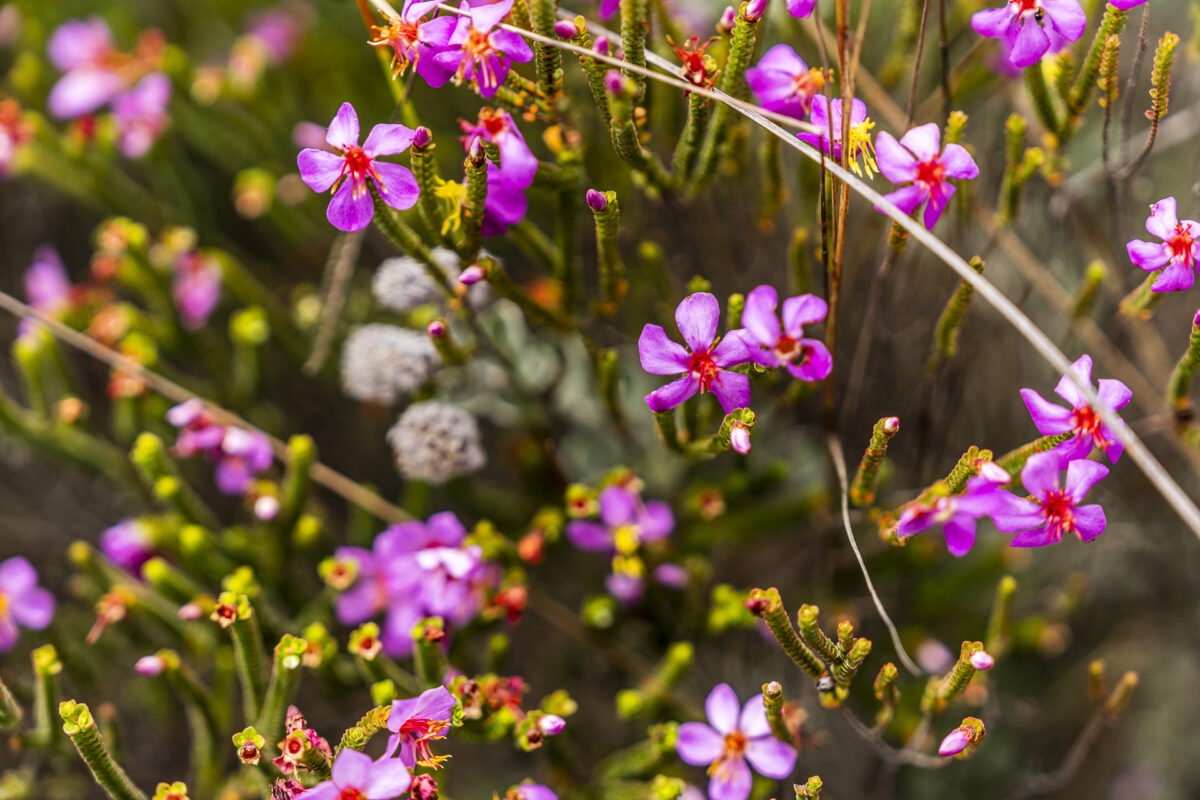
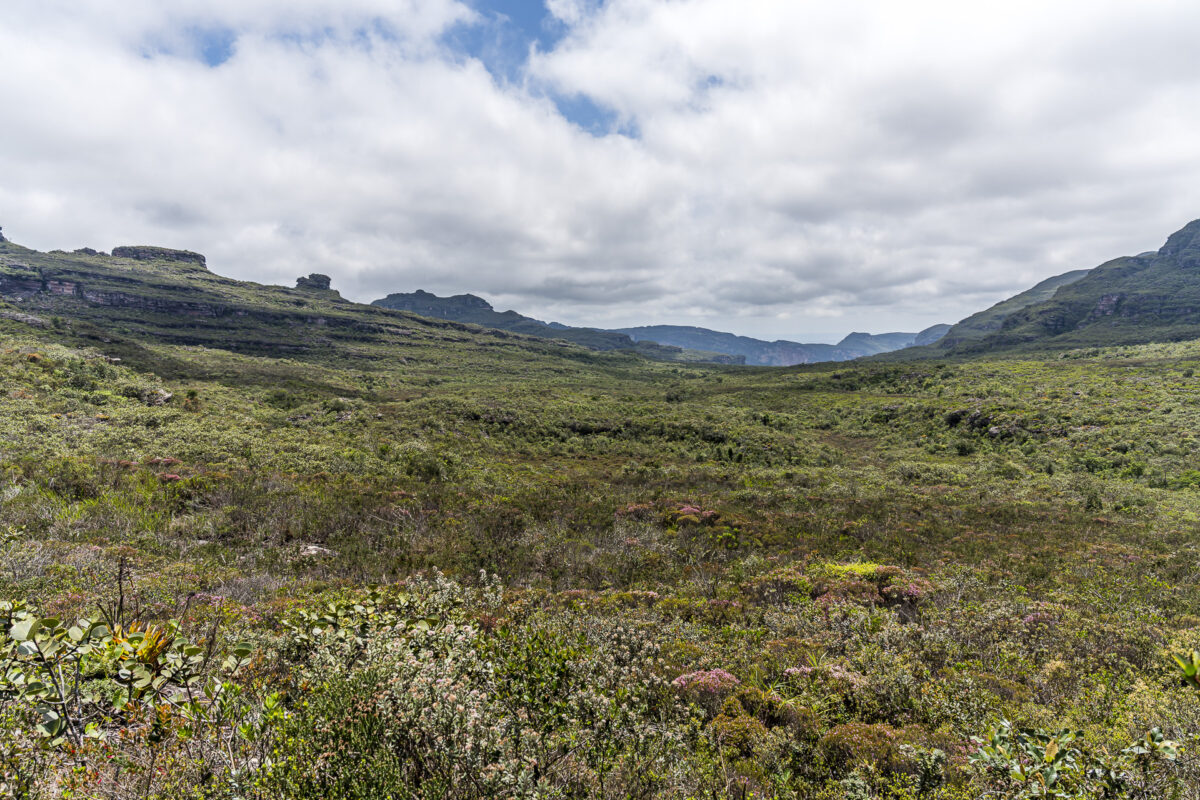
We reach our intermediate destination around noon: Cachoeirão on the edge of the steeply dropping high plateau, one of the most impressive viewpoints in Chapada Diamantina. Far below us, a massive canyon opens up, with several waterfalls plunging down its rock walls. Shortly before the end of the dry season, however, these are only recognizable as narrow trickles. Not far from the viewpoint, we find a shady rest spot by a small stream, perfect for our lunch break.
Afterward, the trail continues across the high plateau back toward Guiné, where our trek finally ends and the transfer back to Lençóis is waiting for us.
Practical information for the Vale do Pati trek
- Starting point: Lençóis is considered the gateway to Chapada Diamantina and is the usual starting point for trekking tours in the region. From São Paulo, you should plan for at least one full travel day. First comes a roughly two-hour flight to Salvador, followed by an approximately six- to eight-hour drive to Lençóis.
- Route and difficulty: The trek starts and ends in the village of Guiné. The total distance is around 25 miles. The route is considered moderate to challenging. A good basic fitness level is essential, and the heat can also be demanding. Everything you need for the three hiking days has to be carried in your backpack. That also includes about three to four liters of water per day as well as your picnic for the trail.
- Accommodations: Overnight stays in Vale do Pati take place in simple guesthouses run by local families. The rooms usually accommodate two to four people, and the bathrooms are shared. We were very well fed in both places. Electricity is only partially available, and there is no cell service / internet in Vale do Pati.
- Guided tour or independent hiking: In principle, Vale do Pati can also be hiked independently. However, many hikers choose a guided tour because navigation on the high plateau can be difficult in places. In addition, organizing accommodations and transfers on your own requires quite a bit of planning and usually some knowledge of Portuguese, since English is only spoken to a limited extent in many places.
- Organization of our tour: Our overall five-day detour to Chapada Diamantina was organized by the local agency Nas Alturas. They took care of all transfers and accommodations. During the trek, we were accompanied by three local guides.
- Best time to visit: In principle, Chapada Diamantina can be visited year-round. From April to October, the months are usually drier and the temperatures more pleasant for hiking. Between November and March, there is more rain, but the waterfalls carry significantly more water. We were there at the end of October, and temperatures were usually around 86 °F.
- Cost: For our five-day detour to Chapada Diamantina, we paid around 3,800 reais per person. Included in the price were transfers, two hotel nights in Lençóis, the three-day trek in Vale do Pati including overnight stays, guide, and meals during the hiking days. Converted, that is about 570 Swiss francs (2025 price level).
- Stopover in Salvador: If you are arriving via Salvador, you should definitely plan some time for the city. The historic center of Pelourinho is a UNESCO World Heritage Site and impresses with its colorful colonial houses, churches, and lively music scene. Salvador is also considered the cultural center of Afro-Brazilian Brazil and offers an exciting mix of history, culture, and excellent cuisine. I would have loved to spend more time there, but unfortunately we only had time for a short one-day visit.



Leave a Reply