


'/%3E%3Cpath%20fill='%23b2b2b2'%20d='M241%20382q0%2016%2017%2026%2017%2011%2042%2011t42-11q16-11%2017-26V269H241'/%3E%3Cpath%20fill='%239f7e00'%20d='M241%20379q0%2014%208%2023%209%209%2021%209%2014%200%2021-9%209-9%209-23V269h-59'/%3E%3Cpath%20d='M241%20339v-70h59v110q0%2014-9%2023l-6%205v-68h-15v72q-8%200-14-4v-68zm59%2040c0%2022%2015%2032%2029%2032%2021%200%2030-18%2030-32v-40h-59'/%3E%3Cpath%20fill='%239f7e00'%20d='M266%20277v5h2v12h-3v-5h2v-5h-9v5h2v5h-4v9h3v18h-5v10h34v-10h-5v-18h3v-9h-4v-5h2v-5h-9v5h2v5h-3v-12h2v-5zm42%20101q0%2010%206%2017%206%206%2015%207%2010-1%2016-7%206-7%206-17v-29h-43'/%3E%3Ccircle%20fill='%230044ad'%20cx='329.5'%20cy='372'%20r='6'/%3E%3Cellipse%20fill='%230044ad'%20cx='300'%20cy='340'%20rx='16'%20ry='21'/%3E%3C/svg%3E)


Ireland Attractions: 18 Highlights on the Wild Atlantic Way (+ Map)
Advertisement: Post in collaboration with Discover Ireland
Rugged cliffs, secluded beaches, scenic hiking trails and charming coastal towns: the northwest of Ireland captivated us from the first moment. Over six days we traveled along the Wild Atlantic Way through Counties Donegal, Sligo and Mayo and discovered some of the most striking landscapes of the Emerald Isle. In this post we show you our personal travel highlights in Ireland’s northwesternmost corner.
Overview of Ireland’s attractions
When we planned our 14-day trip around Ireland, the well-known highlights in the southwest were initially more in focus. In retrospect, however, it was the days in Donegal, Sligo and Mayo that surprised us the most. The route through these three counties is, for us, one of the most beautiful parts of the journey. That’s why we dedicate a separate post to it.
By the way, the sights and experiences presented here also make an excellent source of inspiration for anyone planning a one-week trip to Ireland and looking for a suitable route along the Wild Atlantic Way.
On the map below we have marked all the sights mentioned in this post, notable towns, as well as recommended accommodations and restaurants.
1. Donegal Castle
Our six-day leg through Ireland’s three northwesternmost counties begins on a sunny Monday morning in front of the entrance to the mighty Donegal Castle. The castle is located in the heart of the lively Donegal Town at the mouth of the River Eske. Although the place gives the county its name, Donegal Town is neither its administrative center nor the largest town in the region.
Earlier we spent two travel days getting from Zurich to the Emerald Isle via Paris, London and Holyhead by train and ferry, and on the way from Dublin to the northwest we stopped not far from Carrick-on-Shannon. A truly unhurried trip that let us take in many impressions along the way.
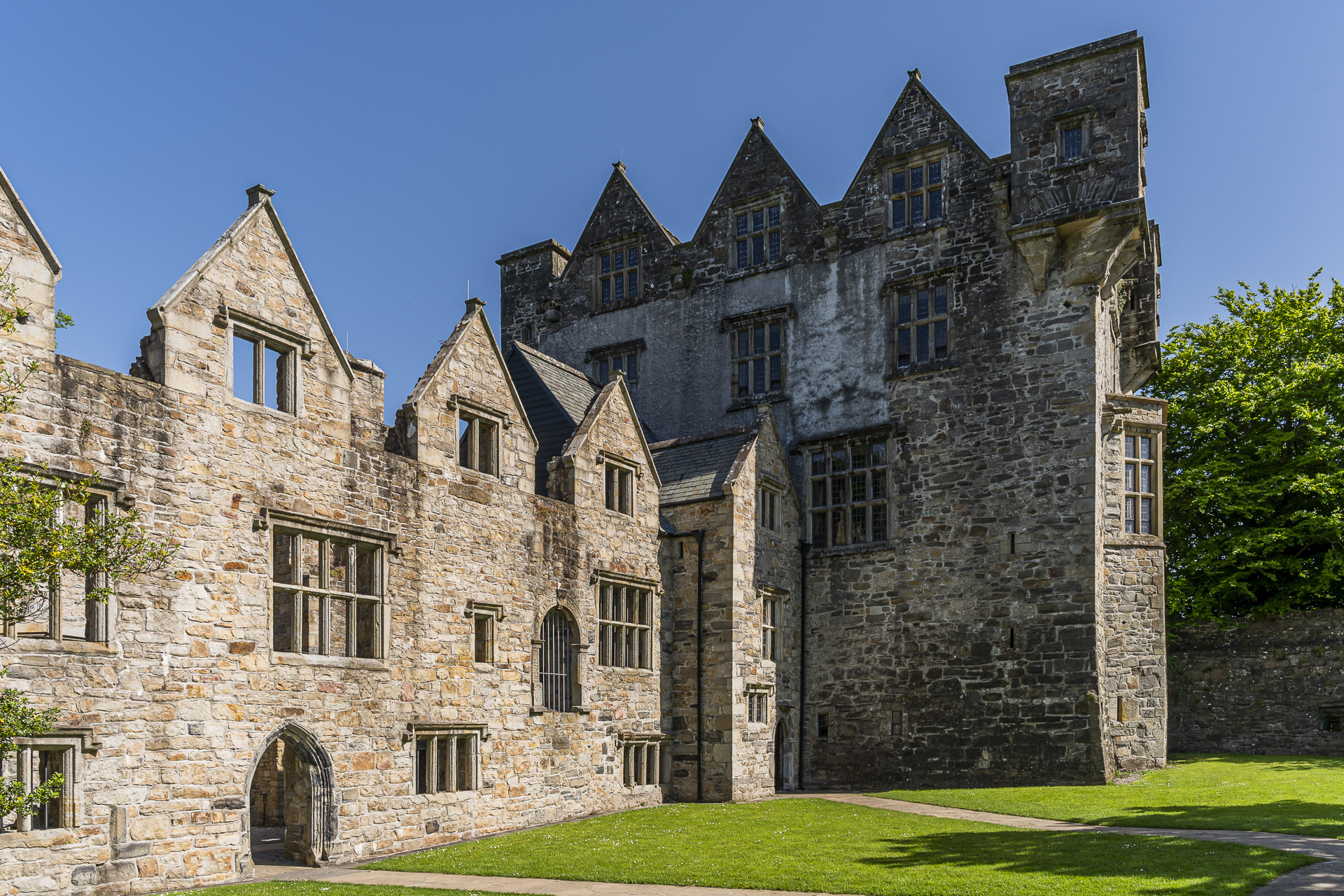
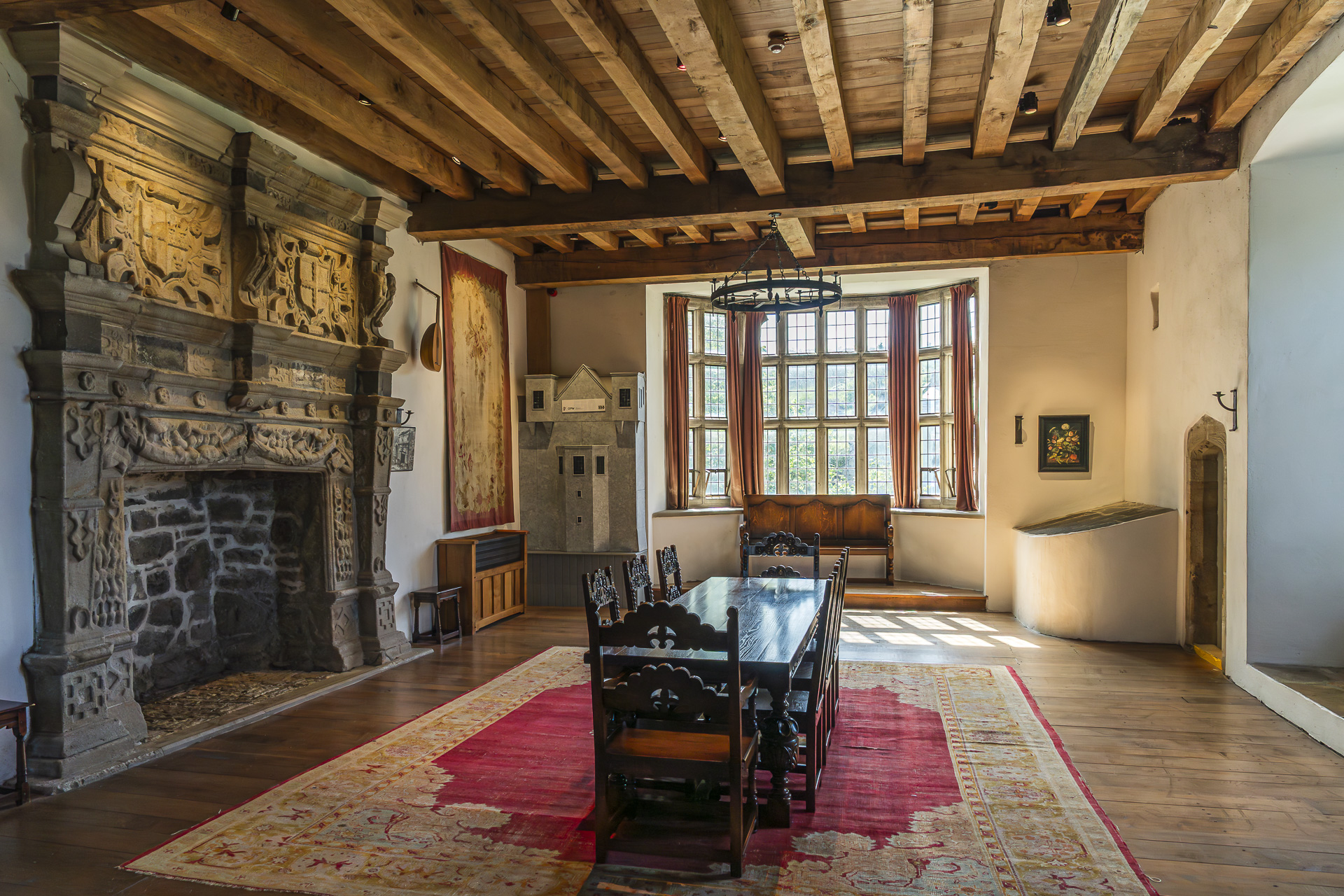
On this Monday morning there is a lot going on in Donegal Town. The fortress is only a few steps from the central town square, around which cafés, restaurants, shops and hotels are clustered. Anyone visiting the town can hardly miss its most significant landmark. Protected by the River Eske on two sides, Donegal Castle was built in a strategically advantageous location. The ancestral stronghold of the O’Donnell clan is considered one of the most beautiful Gaelic castles in Ireland. The current complex was erected in the 15th century under Sir Hugh O’Donnell. After the Nine Years’ War and the subsequent flight of the O’Donnells, the castle came into the possession of an English captain. He had the fortress expanded with a manor house in the English style, which still connects to the original castle as a wing today. The curtain wall and the distinctive corner towers also date from that time.
Good to know: Open daily from 8:00 AM to 6:00 PM | Regular admission adults: 5 euros | More information: Donegal Castle
2. Slieve League Cliffs
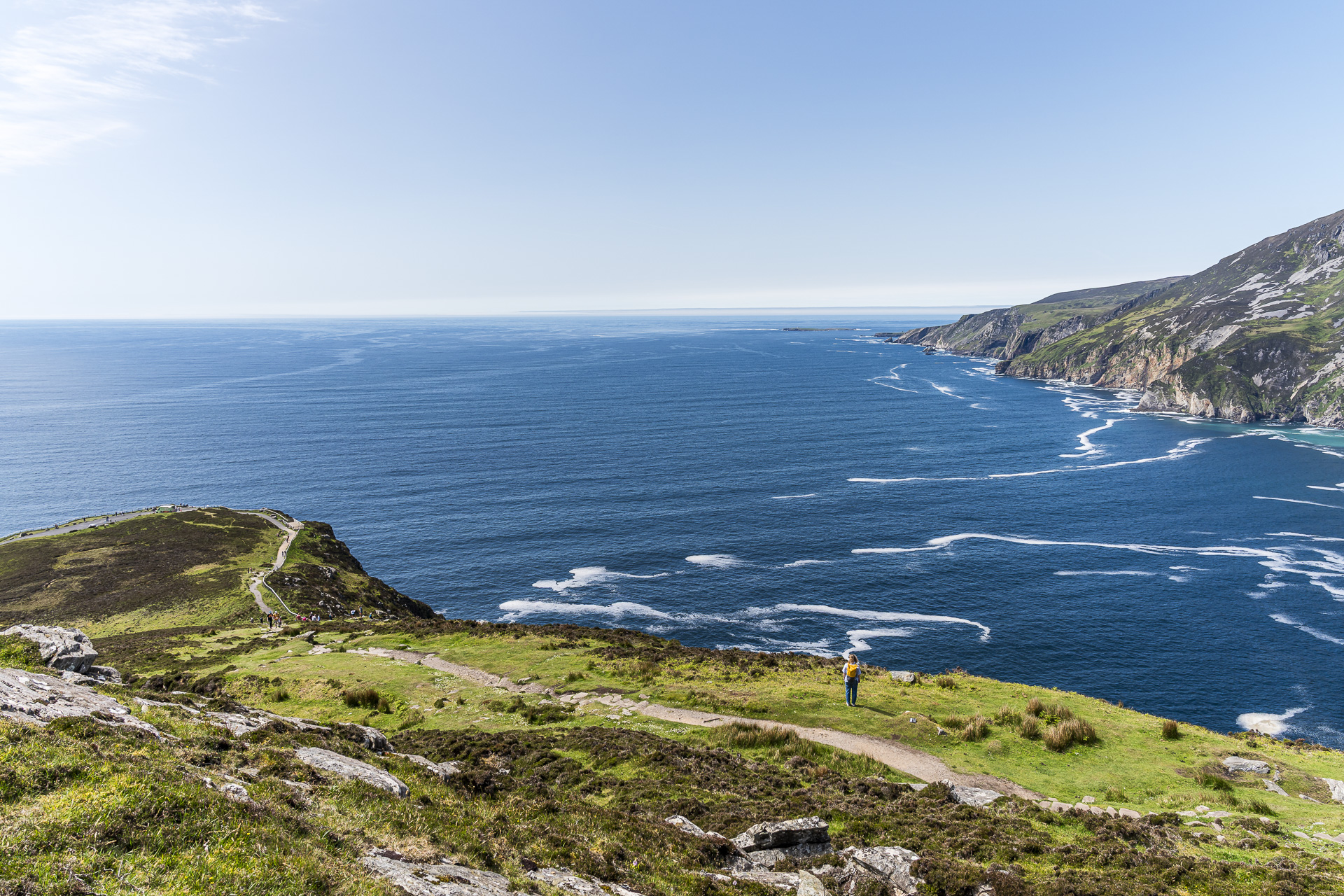
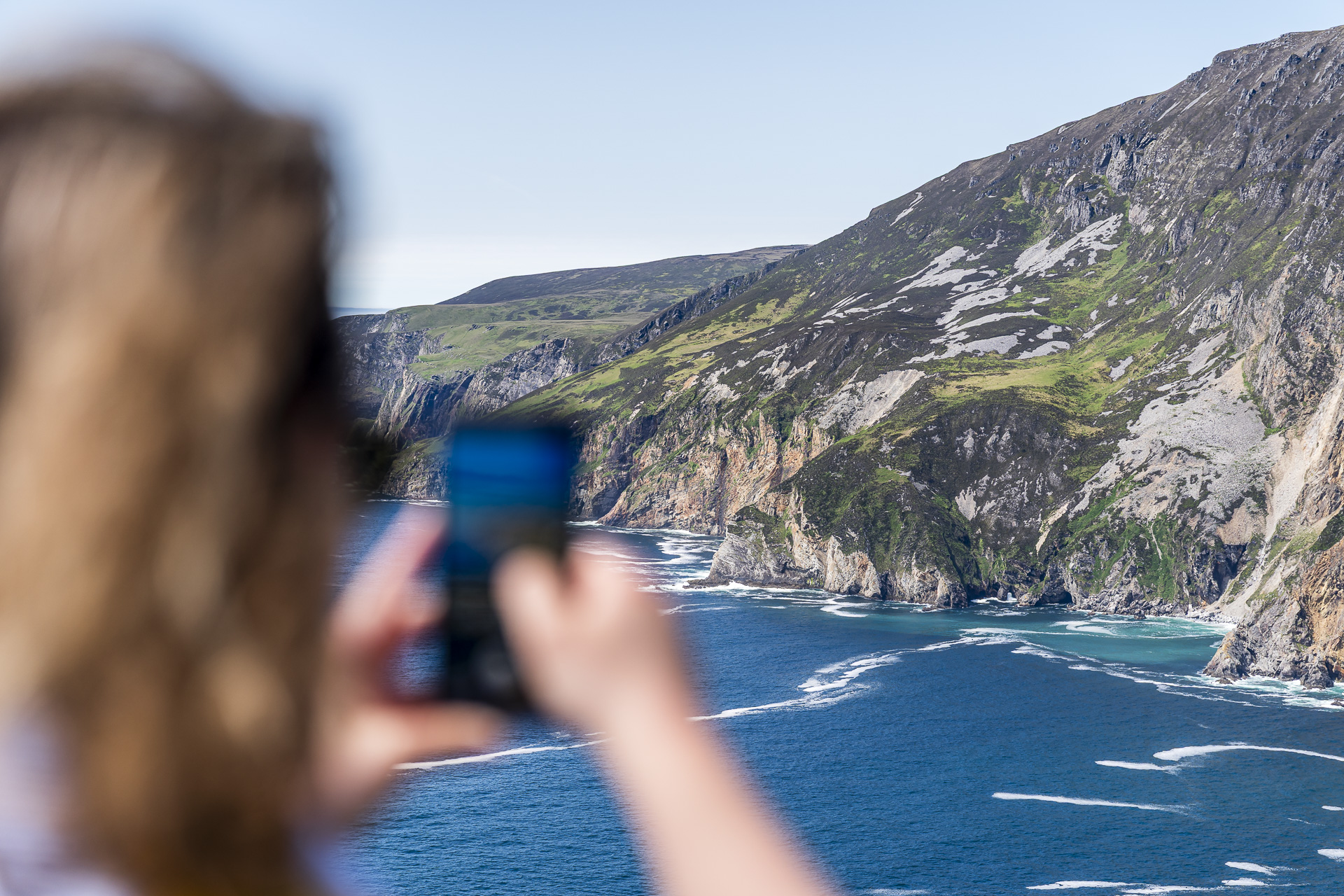
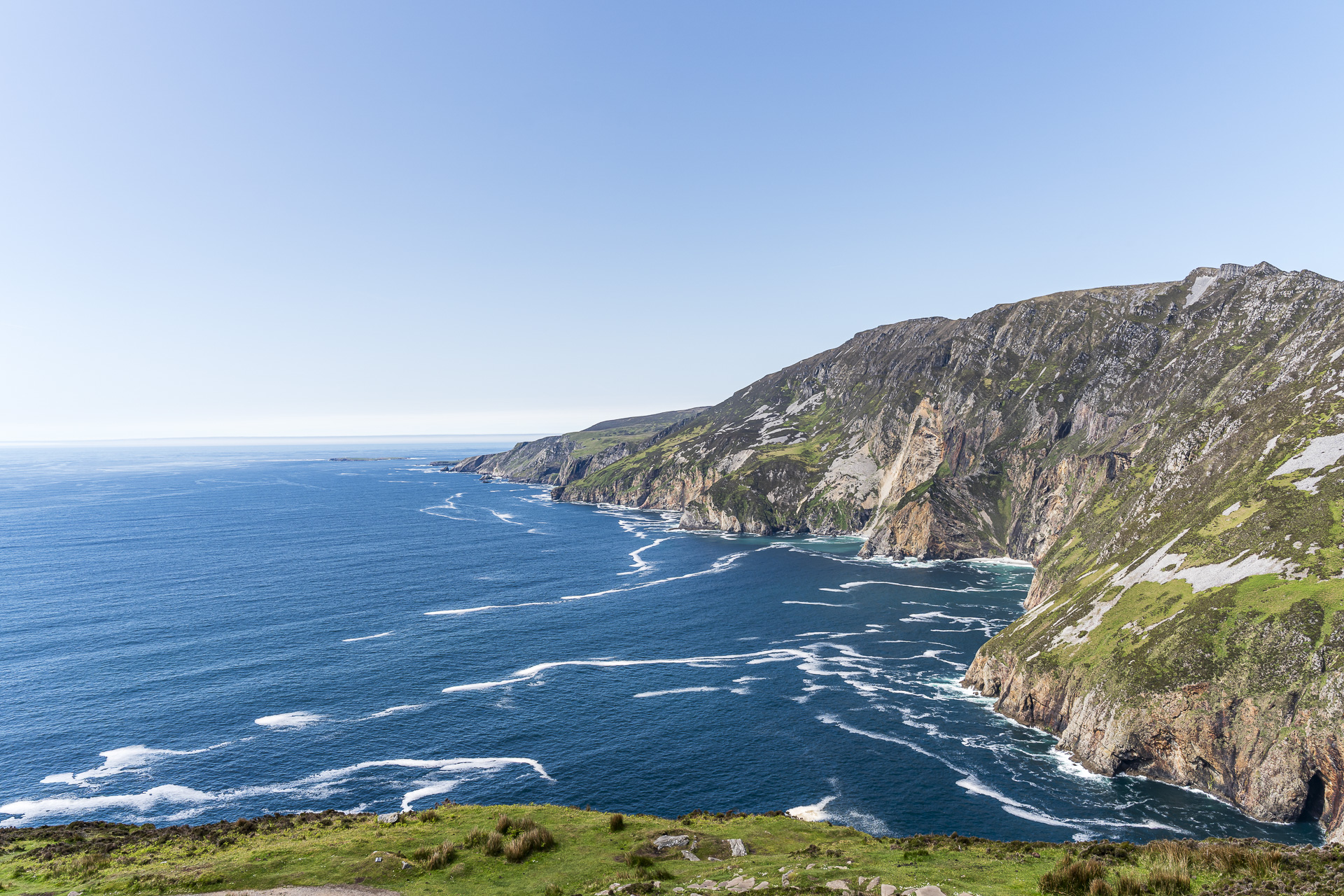
After touring the interior of the fortress, we refuel at Simple Simon’s with two very tasty sandwich creations. The small restaurant with an attached shop is perfect for a short lunch break. Afterwards we drive about 50 kilometers west along the coast to the Slieve League Cliffs (Sliabh Liag). At a height of 601 meters (and thus roughly three times as high as the Cliffs of Moher further south), the cliffs are among the highest sea cliffs in Europe.
We park our car at the Sliabh Liag Visitor Centre. From there shuttle buses run to Bunglass Point, a viewing point with spectacular views of the coastline. Alternatively, the route can be walked. However, the path follows the unattractive, narrow access road that is also used by the shuttle buses. The minibus option is comparatively more relaxed, and you can then use the energy saved on a truly worthwhile short hike that leads up the well-developed cliff path to the crest of Slieve League. And yes: In my view, this spot rightfully ranks among the most impressive sights in County Donegal.
Good to know: The shuttle bus ride (round trip) costs adults €9 | Tickets can be reserved online in advance | More information: Sliabh Liag Cliff Experience & Visitor Centre
3. Silver Strand at Malin Beg
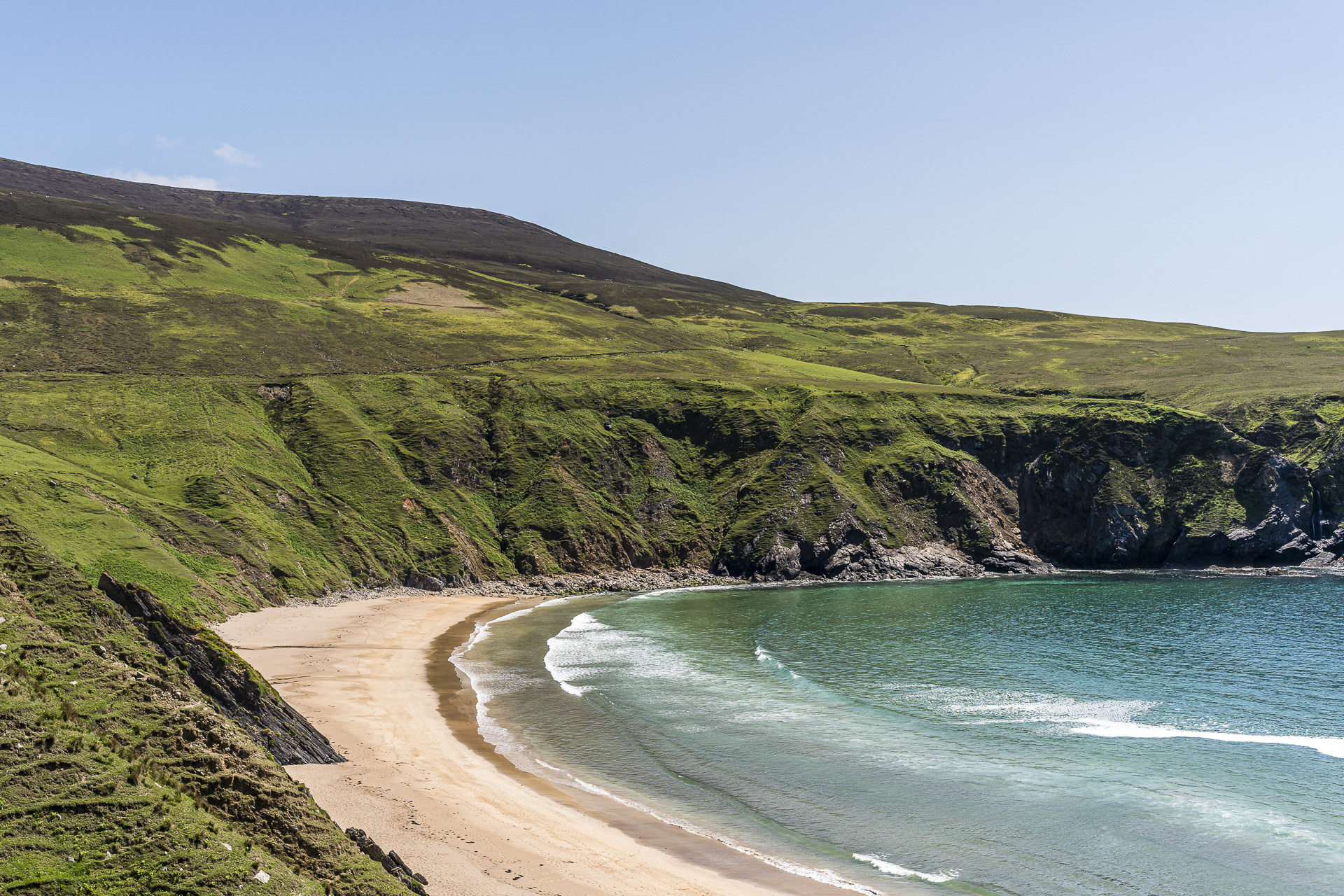
We spend the rest of the afternoon on a scenic coastal drive further north to the small village of Ardara. There is lots to see and discover along this route. This includes the Silver Strand at Malin Beg, one of a total of 15 Signature Points of the Wild Atlantic Way. These particularly impressive places were selected to represent the variety and beauty of Ireland’s west coast.
And yes: The Silver Strand more than lives up to our expectations for such a viewpoint. The horseshoe-shaped beach, with its pristine golden-yellow sand and turquoise-shimmering water, makes the perfect postcard image.
Good to know:The drive to Silver Strand leads along narrow lanes where passing is not always possible. You will also encounter free-roaming sheep along the way. Accordingly, cautious driving is recommended. From the parking lot, 174 steps lead down to the beach.
4. Traditional crafts in Ardara
The onward drive takes us past Glencolmcille Folk Village. In this small open-air museum, embedded in the impressive coastal landscape, you can learn more about traditional Irish village life. In the reconstructed thatched cottages you gain fascinating insights into the life, work and survival of people in rural Ireland in past centuries.
From Glencolmcille we follow the winding road over the Glengesh Pass to Ardara. The town is considered the center of traditional tweed production in Donegal. In the town center you’ll find several small shops dedicated to local craft and design. If you’ve long dreamed of a high-quality wool sweater or a tweed cap, you should definitely pay a visit to Triona Design.
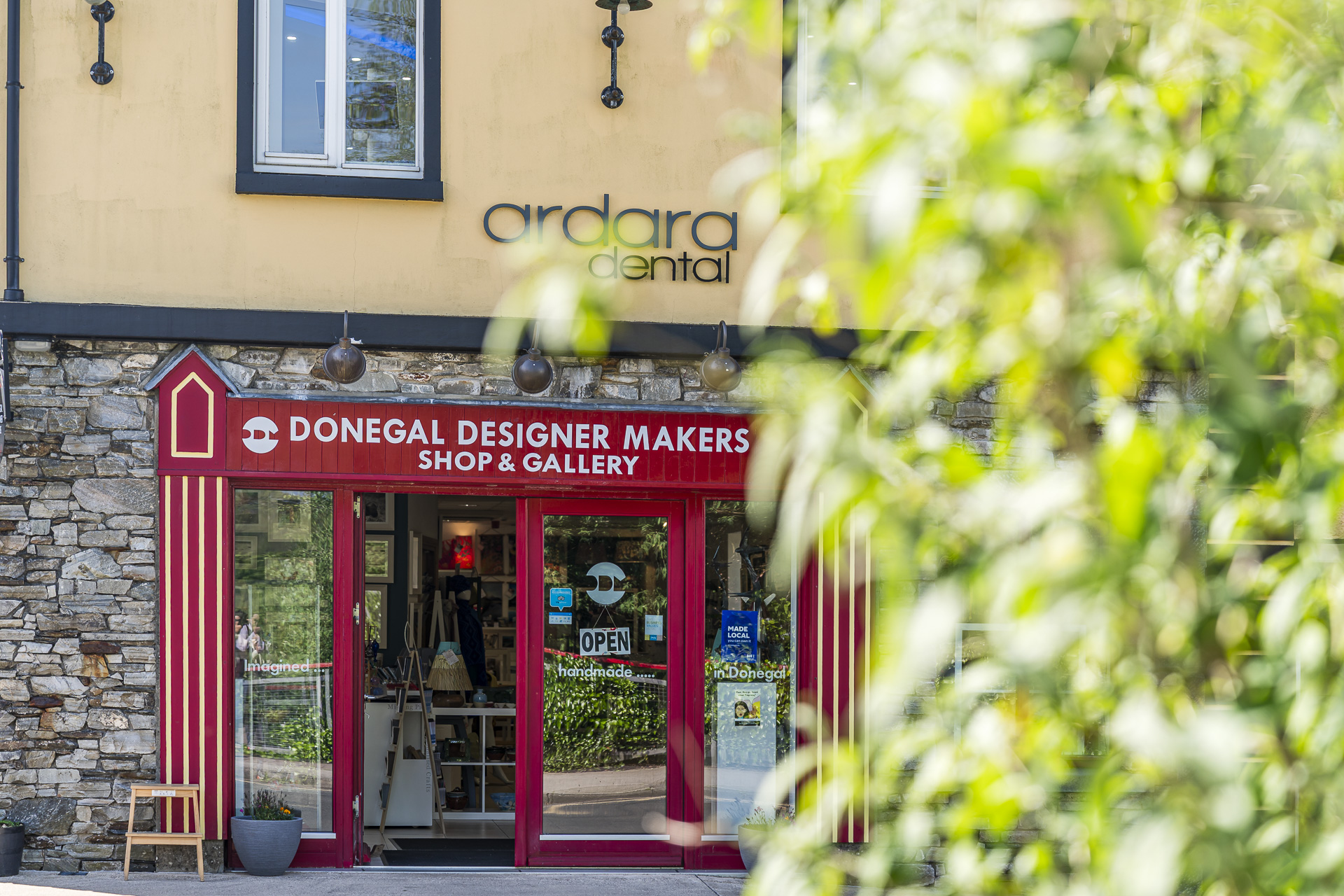
And if, like us, you also stop by Donegal Design Makers, you should expect to leave the shop not only with a lovely souvenir but also with one or two local sightseeing tips. People in Ireland are friendly and curious everywhere, but the warmth we encountered in Ardara was particularly remarkable.
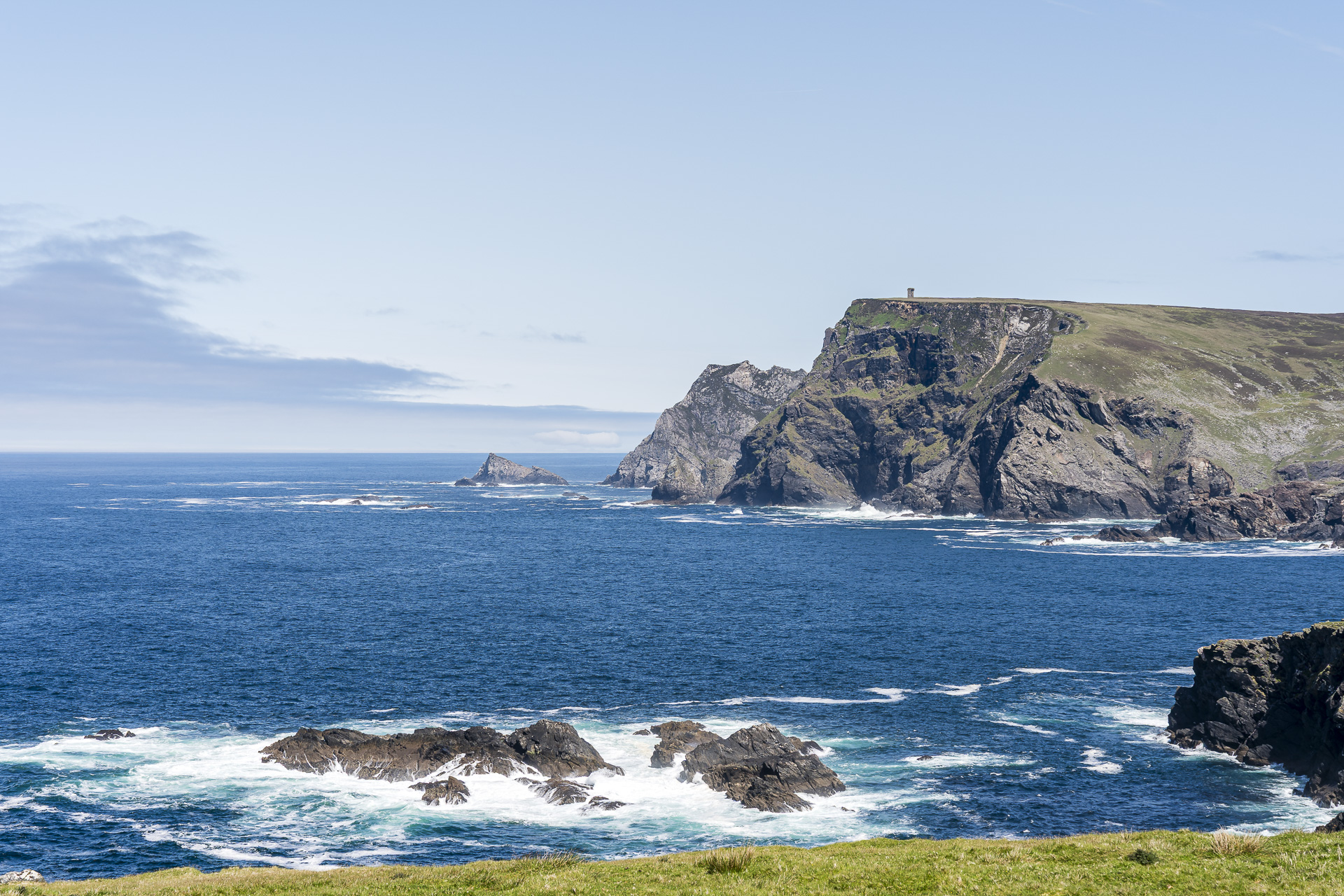

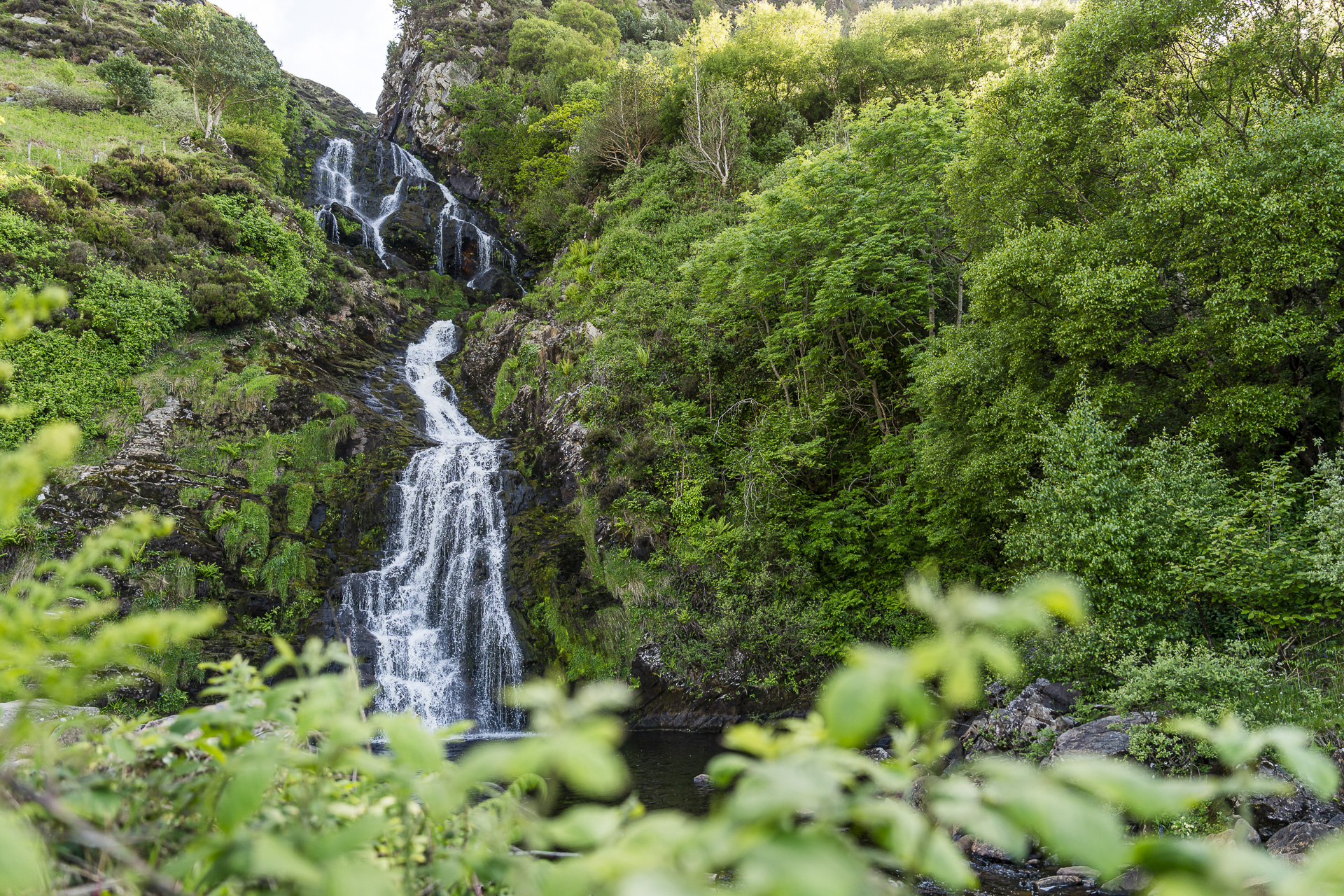
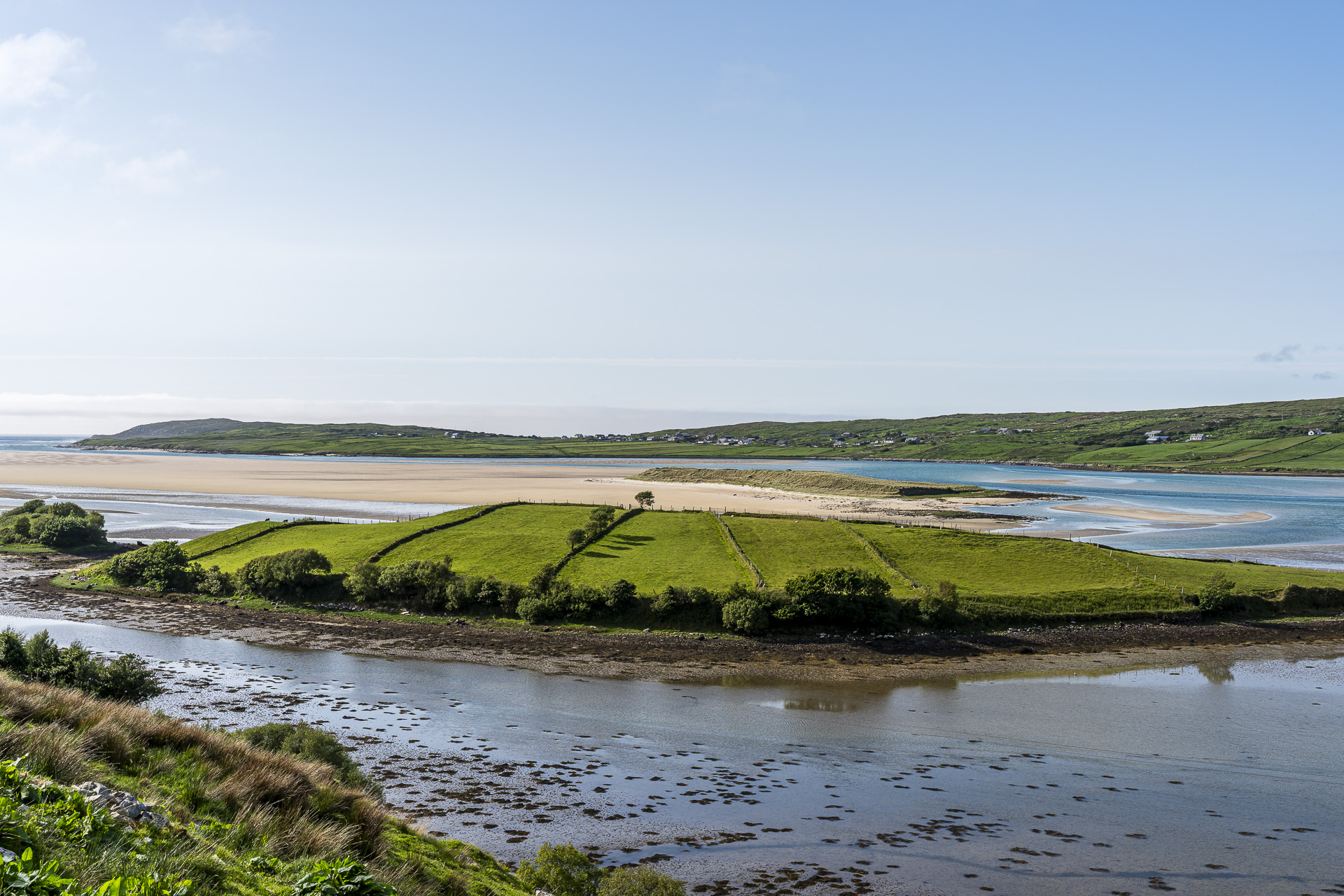
Extra tip:About a 15-minute drive west of Ardara is the noteworthy Assaranca Waterfall. In my opinion, the short detour is worth it not only for the waterfall itself but also for the scenic stretch along the long sea inlet.
5. Rossnowlagh Beach and the Bee Pods
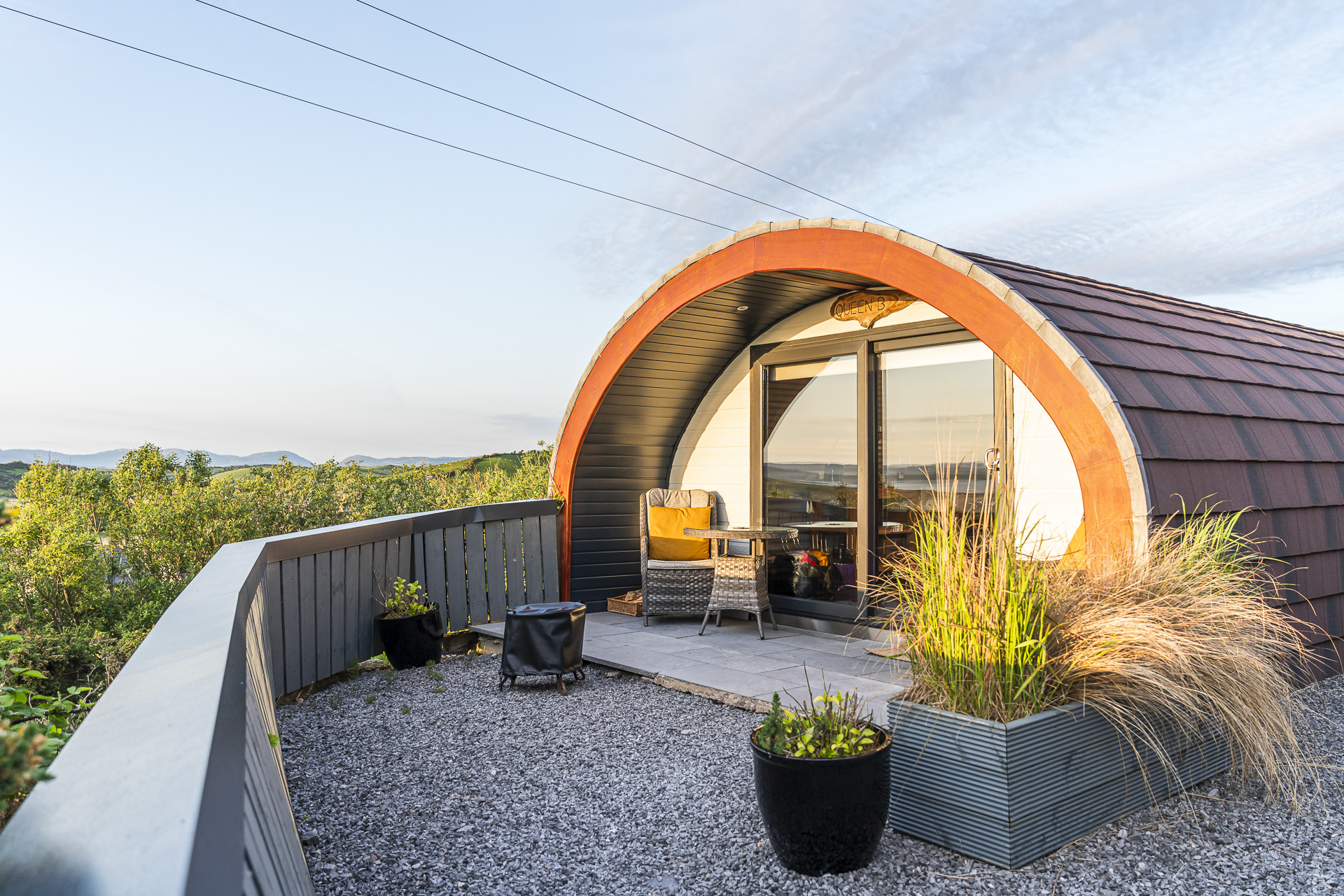
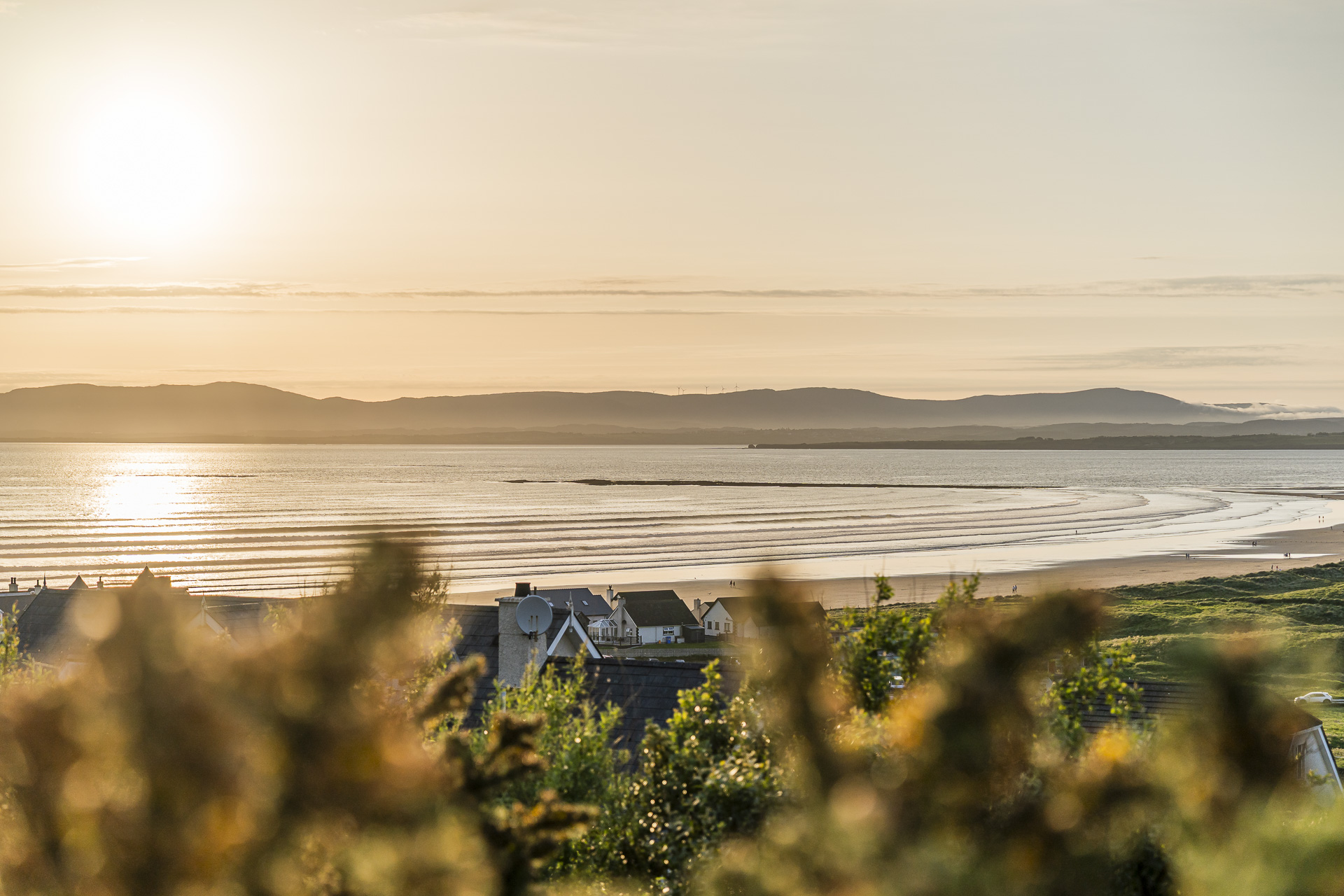
After this first day in northwest Ireland, already packed with highlights, it’s about another 45-minute drive for us from Ardara to the Rossnowlagh Beach. Situated in an elevated location with a wonderful view over the long sandy beach popular with surfers is the small glamping paradise «The Bee Pods».
Siobhan and William McGuckin have created a beautiful site on their expansive property with a great deal of handiwork and attention to detail. It is perfect for anyone who appreciates unique accommodations while wanting to be close to nature. There are five individually designed pods in total, each with its own bathroom with shower and toilet.
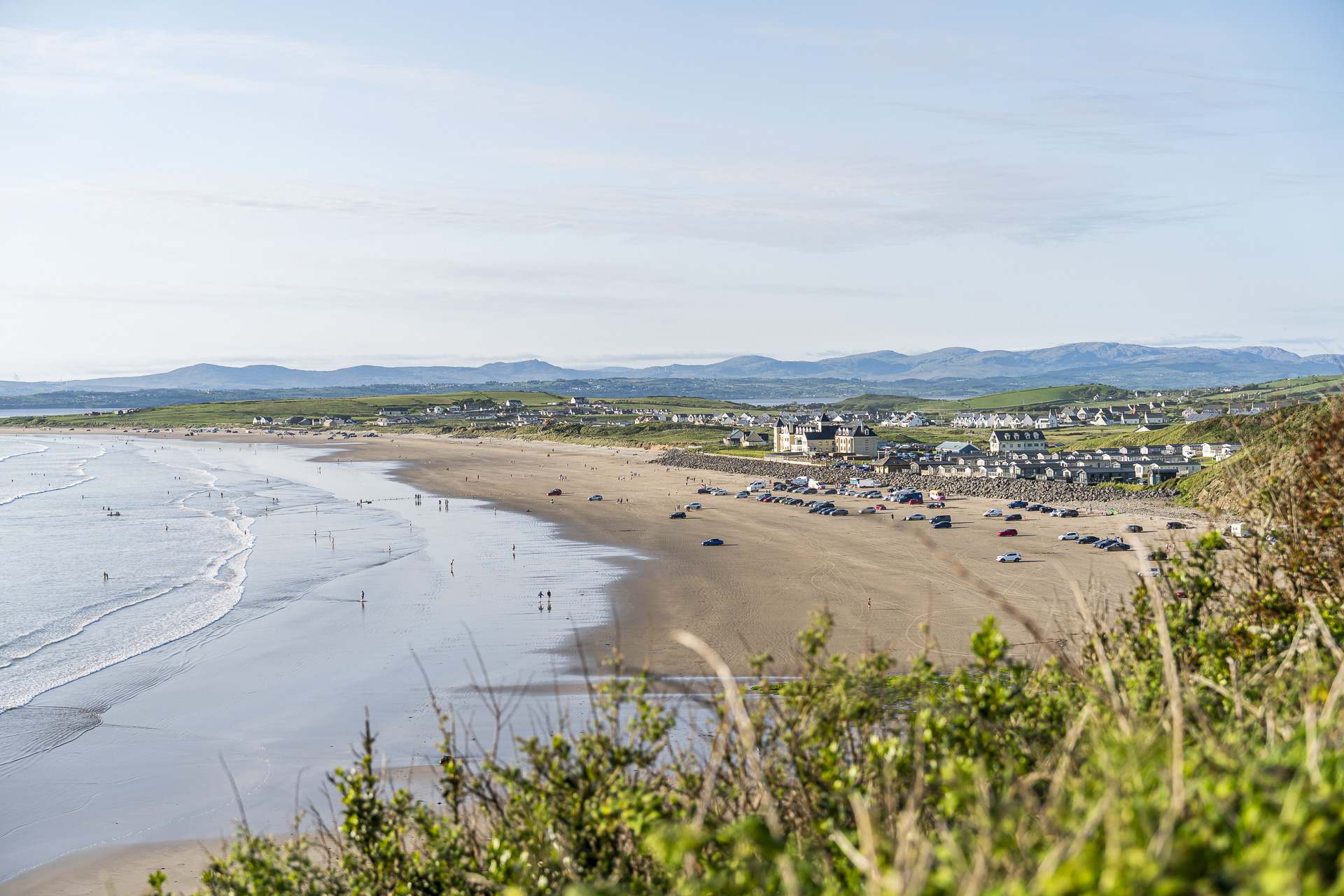
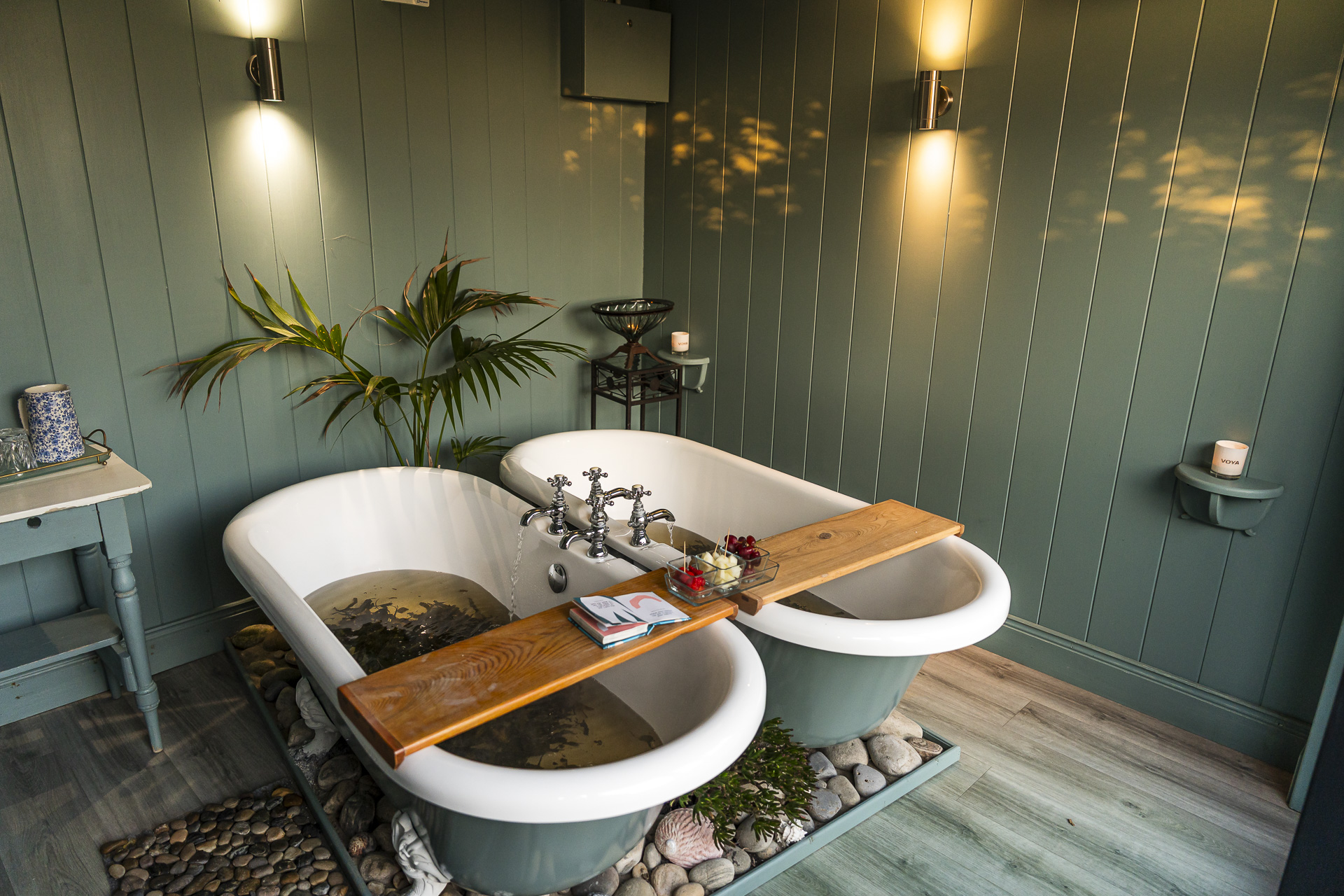
We are staying in the Queen B which boasts a phenomenal view across the bay to the cliffs of Slieve League. And to cap off the day, we finish it with a traditional Irish seaweed bath that Siobhan prepared for us.
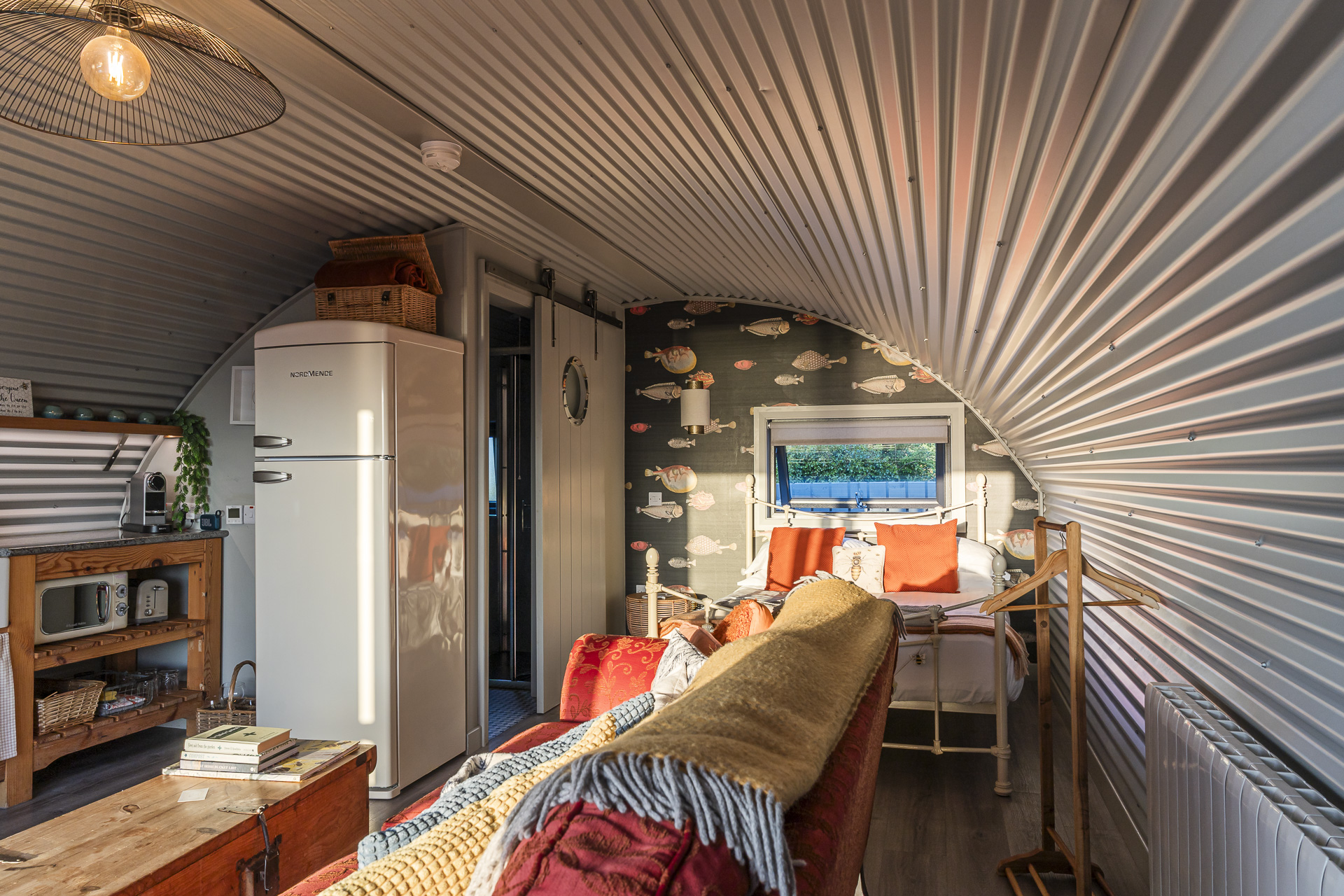
Restaurant tip: The pods have a small kitchen, so you can easily self-cater. Alternatively, a roughly 15-minute walk along the beach leads to the elevated Smugglers Creek Inn. There you can enjoy classic Irish pub fare with a splendid view over Rossnowlagh Beach.
6. Glenveagh National Park
The next morning a freshly prepared breakfast awaits us at the door of «our» Queen B, which we enjoy on the terrace. How lucky that we are staying here for two nights and can already look forward to another such breakfast.

Today we’re heading further north again. We spend the day in the Glenveagh National Park, which lies in the heart of the Derryveagh Mountains. The main attraction of the national park is the Victorian Glenveagh Castle with its extensive garden grounds. From the Visitor Center it’s about 3.5 kilometers to the castle and the gardens. The route can be covered on foot, by shuttle bus, or, as in our case, by e-bike. The e-bikes can be rented directly at the parking lot and are, in my opinion, the most practical way to explore the park. After visiting the castle and gardens, there is plenty of time left to also explore the paths along Lough Veagh.
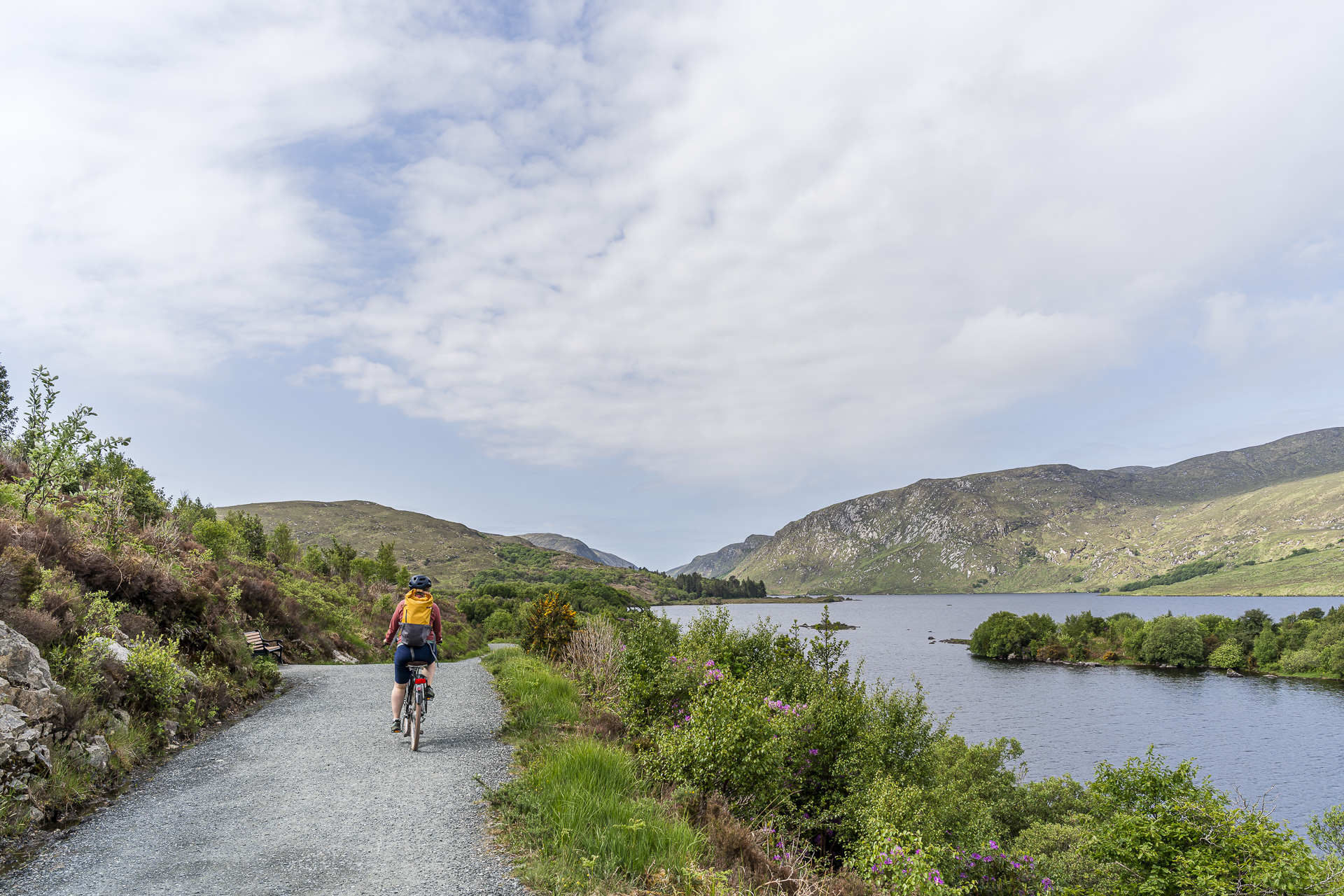
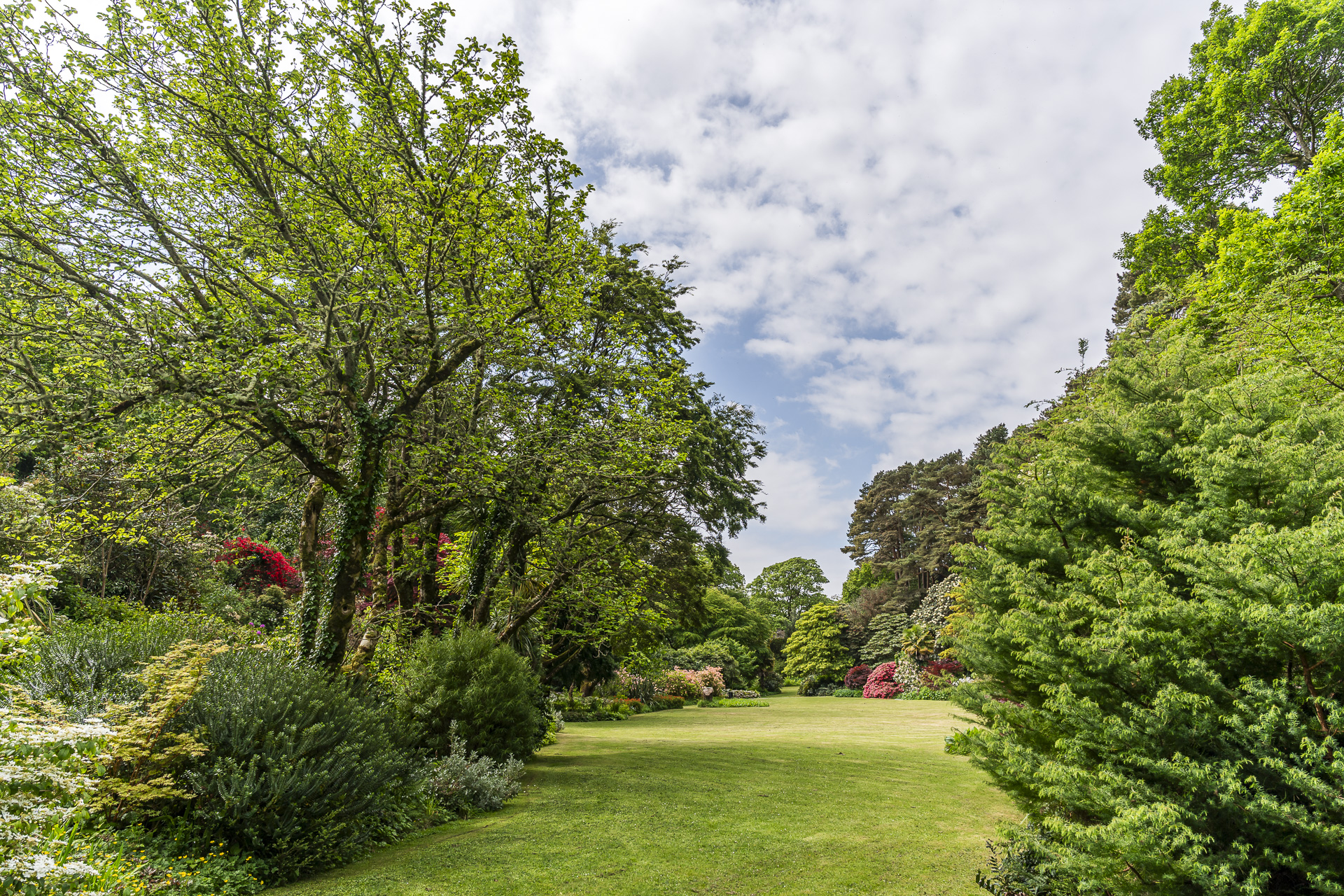
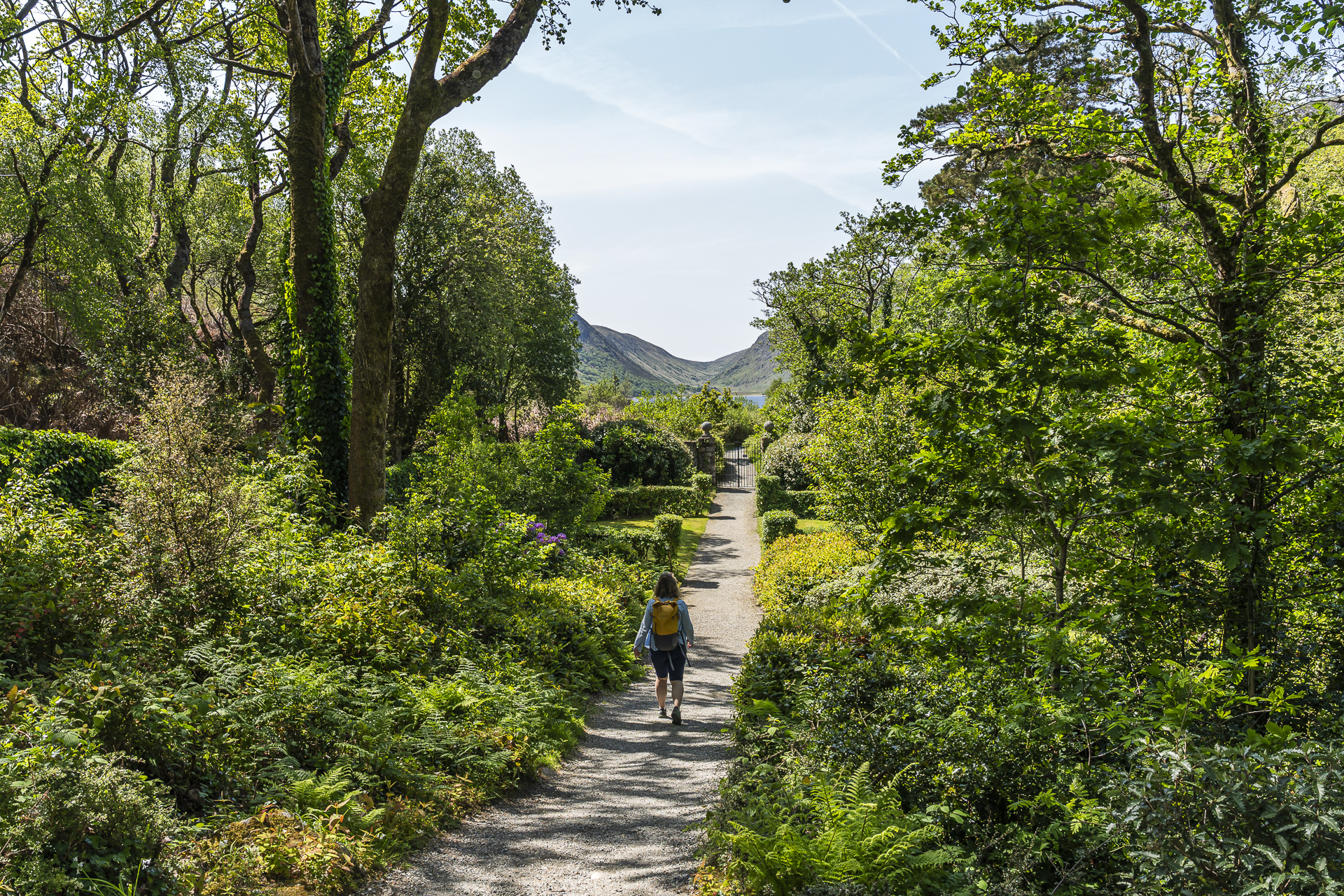
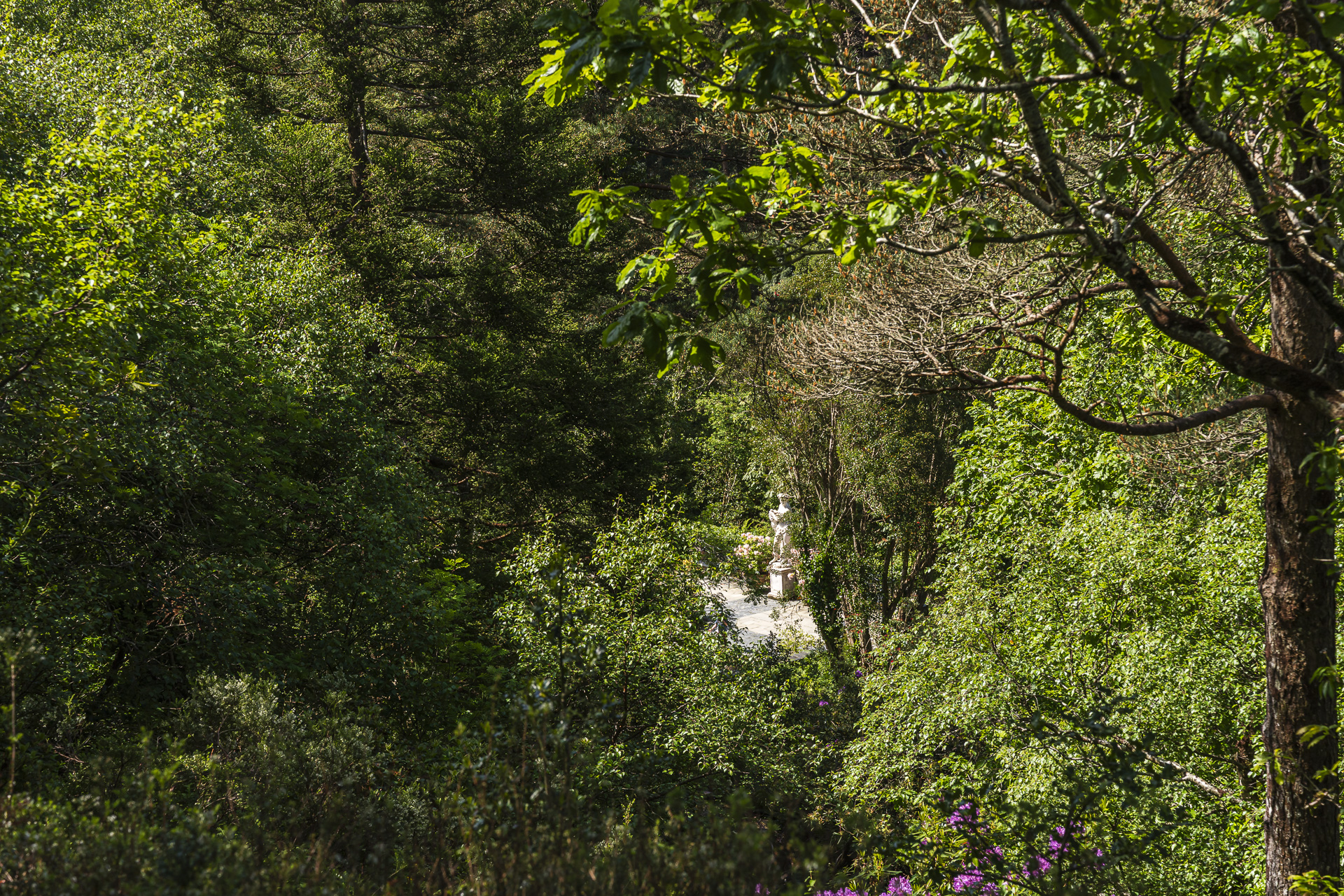
You should also not miss the short hike to the ‘Glenveagh National Park Viewpoint’. The viewpoint is located above the castle and offers a wonderful view of Glenveagh Castle, the lake and the surrounding mountain landscape.
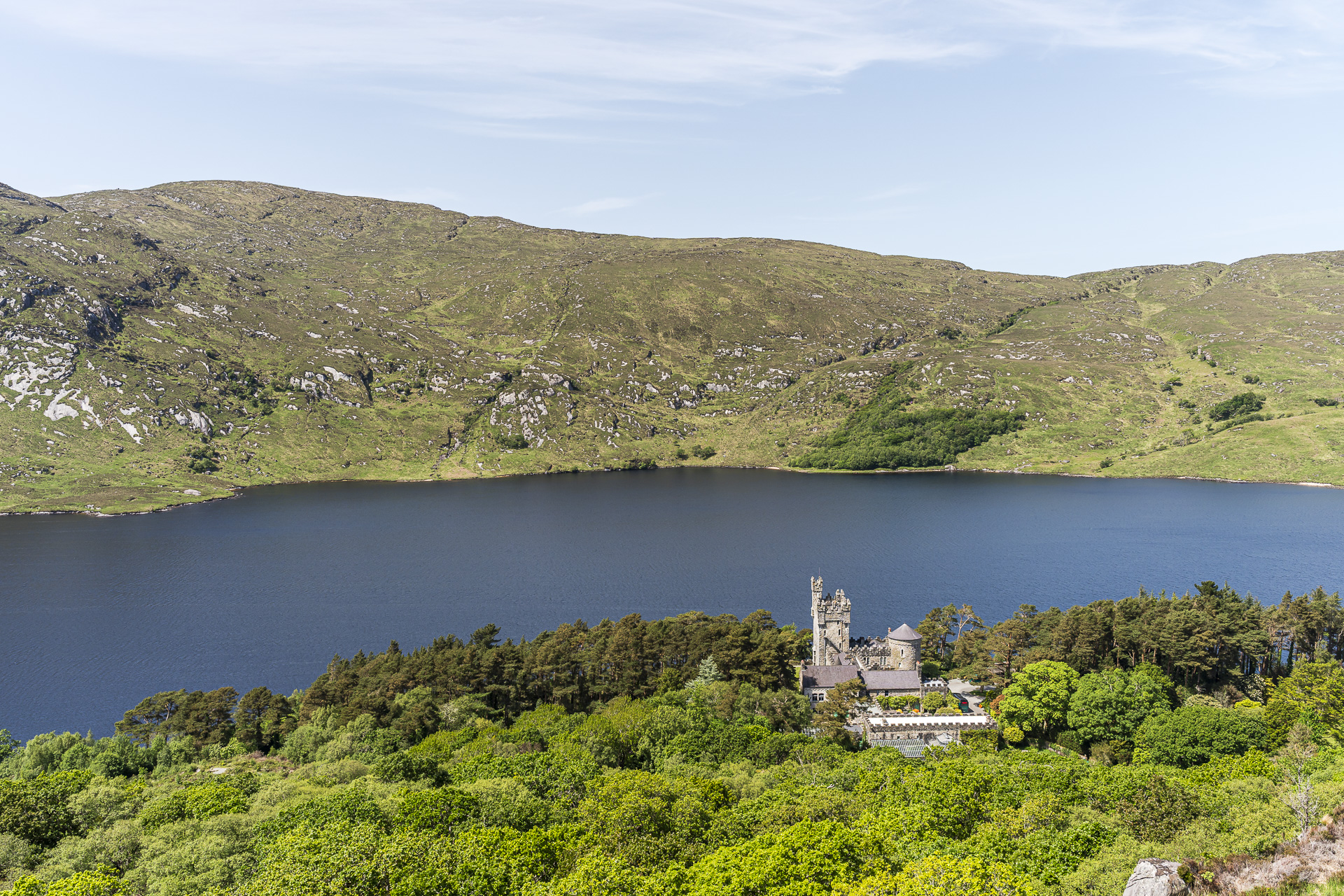
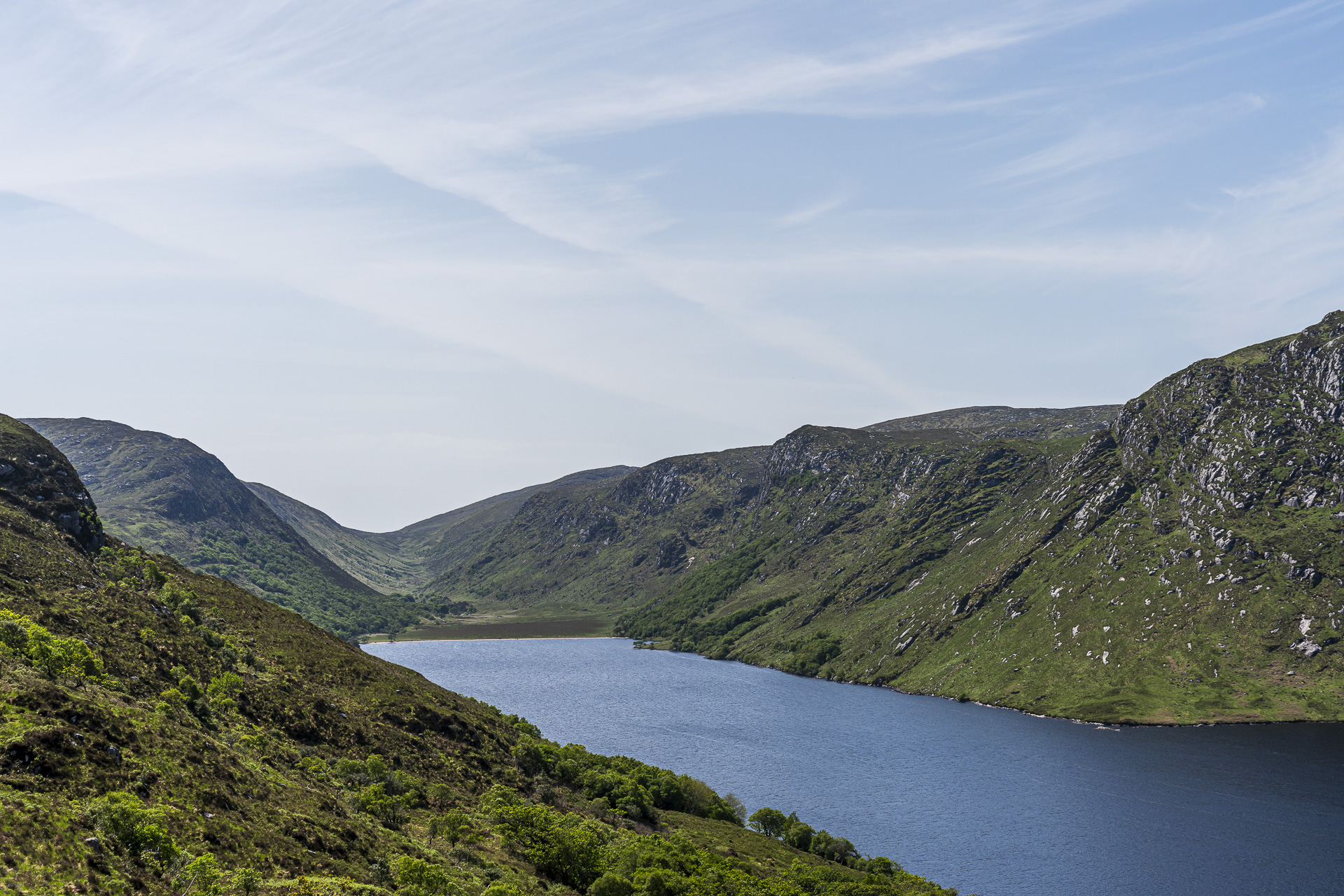
Good to know: The Glenveagh National Park is open year-round and entry is free. You only pay an entrance fee to visit the castle (adult admission 10 Euro). More information: Glenveagh Nationalpark
7. Hike in the Poisoned Glen
To allow enough time for the castle, the extensive gardens and the trails in Glenveagh National Park, I recommend planning at least half a day, if not a bit more. We return our bikes shortly before 4 p.m. and then drive to Billy’s Pit, a small parking area on the R254, about a 30-minute drive from the Glenveagh National Park Visitor Centre. Here we have arranged to meet with Stephen from Awaken Adventures arranged. Stephen offers various guided outdoor activities in Donegal, including hikes. For us he chose a particularly scenic route.
From Billy’s Pit he leads us up a steep mountainside toward Poisoned Glen. There is no waymarked trail for this tour, which is by no means unusual in Ireland. Waymarked paths are, at least away from the tourist hotspots, more the exception than the rule. After just under an hour of walking – and the realization that Irish grassland can be treacherous and carelessness is quickly punished with wet feet – we reach the plateau above the Poisoned Glen. There we are rewarded with a fantastic view of the Errigal rewarded, which at 751 meters is the highest mountain in County Donegal.
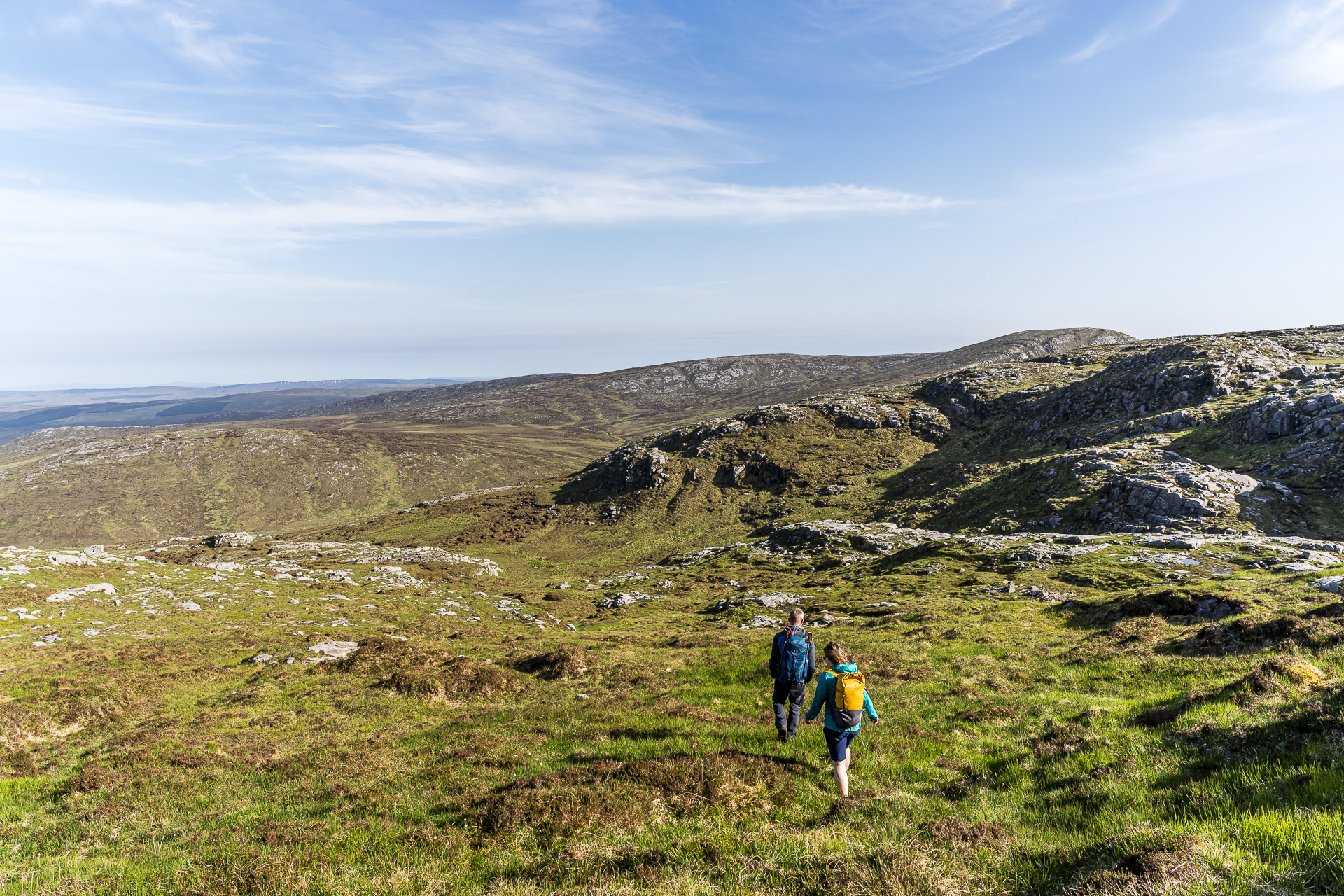
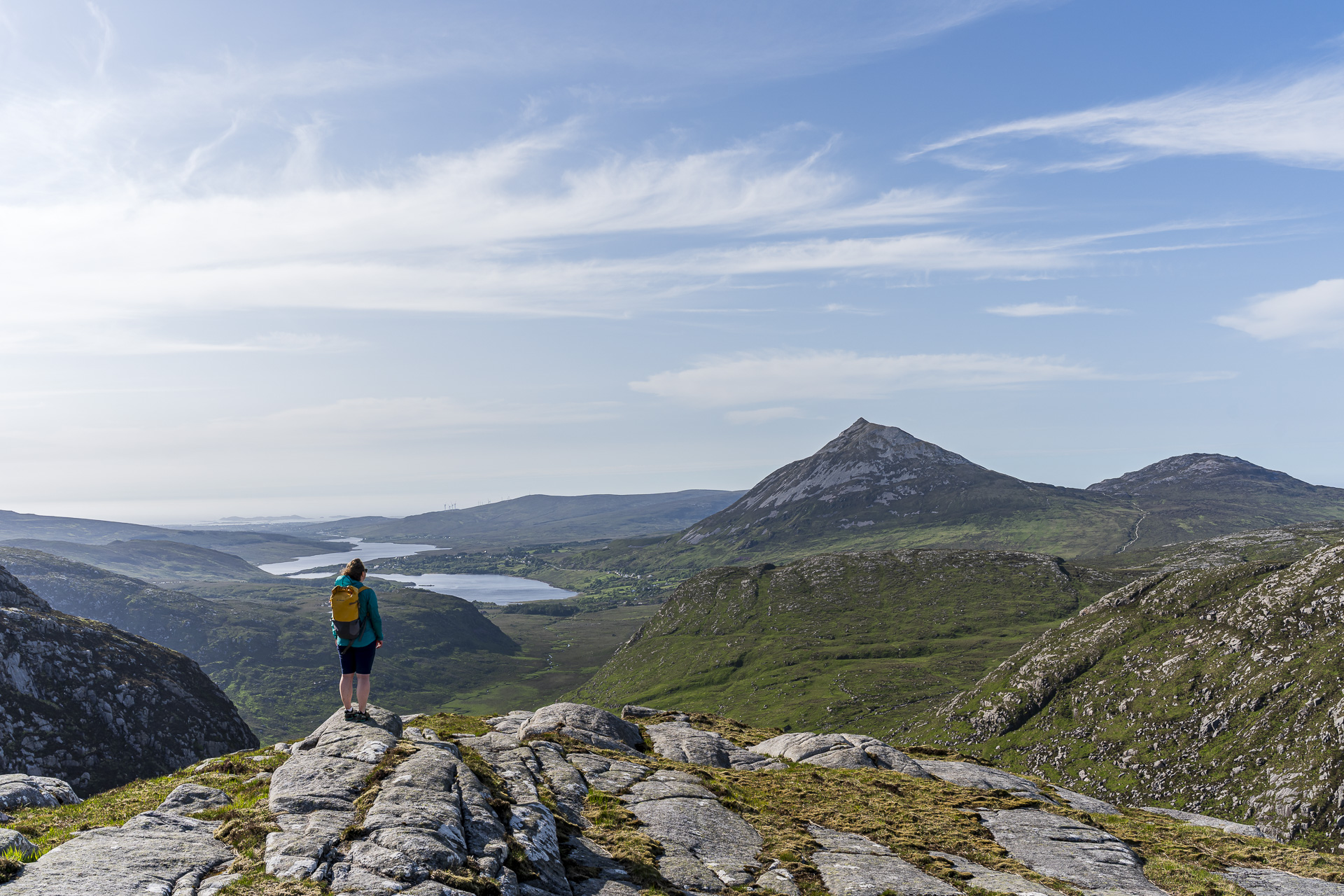
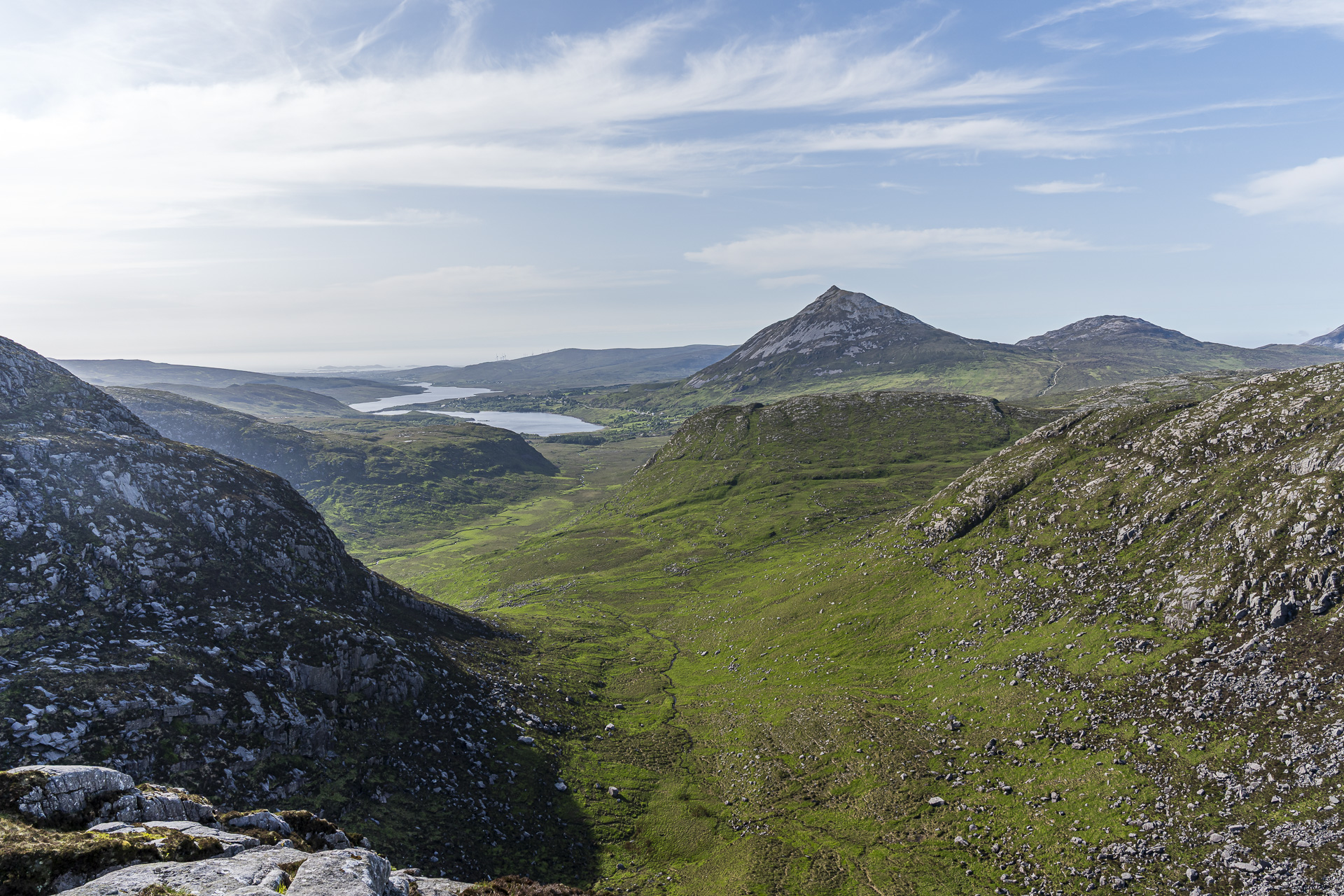
Good to know: If you have a bit more time and plan at least two days for the region around Glenveagh Nationalpark, you should also consider the ascent of Errigal. At 751 meters it is the highest mountain in County Donegal and is one of the region’s most popular hiking destinations. Unlike our short tour above the Poisoned Glen, there is a well-developed and waymarked trail leading up Errigal. You can find the route on AllTrails.
8. Mullaghmore Head – Wild Atlantic Way Signature Point
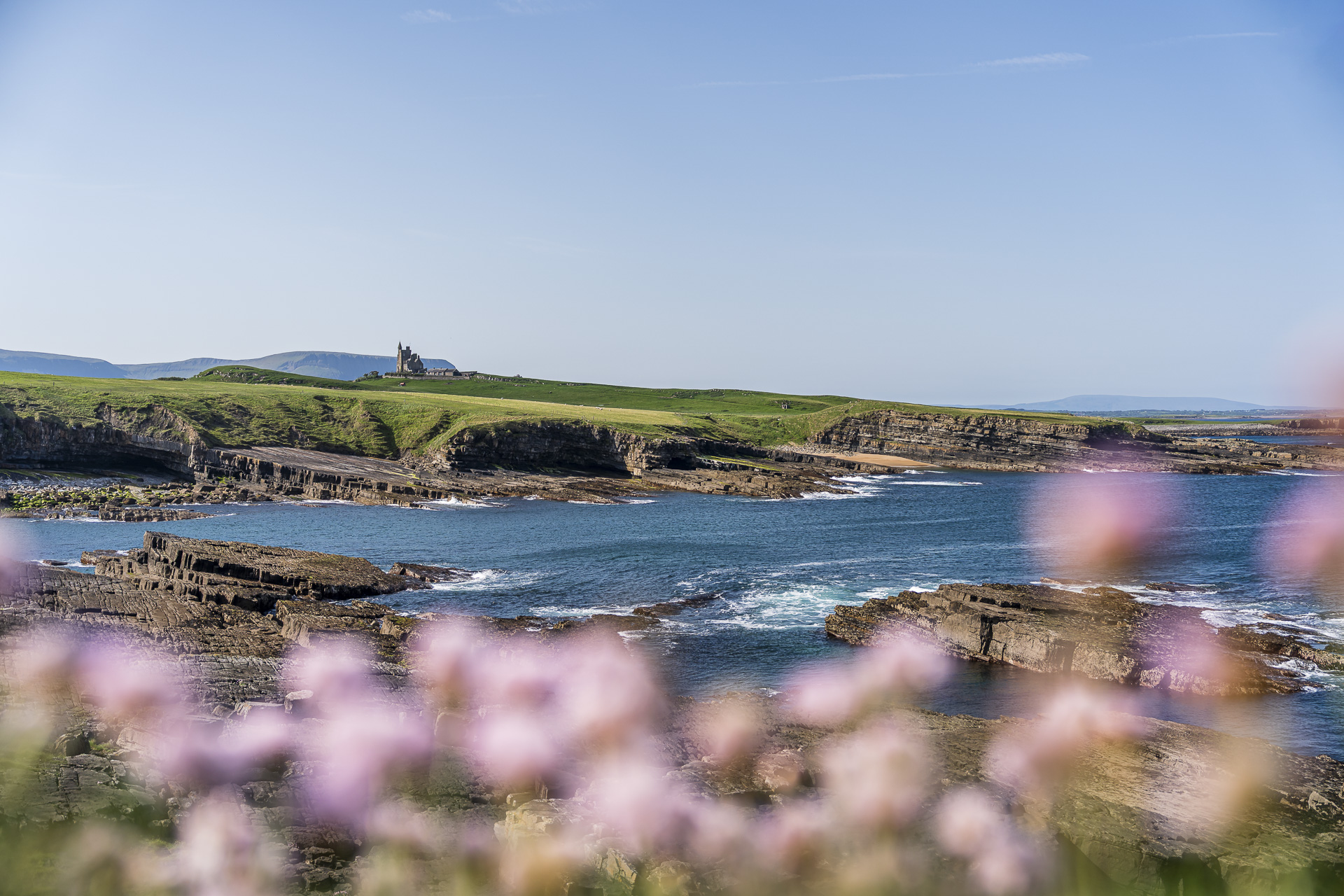
After two days in County Donegal, we continue south along the Wild Atlantic Way. On the route from Rossnowlagh Beach to Sligo there’s another Signature Point that’s definitely worth the short detour: Mullaghmore Head.
The small headland offers a spectacular view of the wild Atlantic coast, the fairytale-like Classiebawn Castle and the distinctive silhouette of the table mountain Benbulben, which we will explore more closely later that same day.
9. Sligo Bay
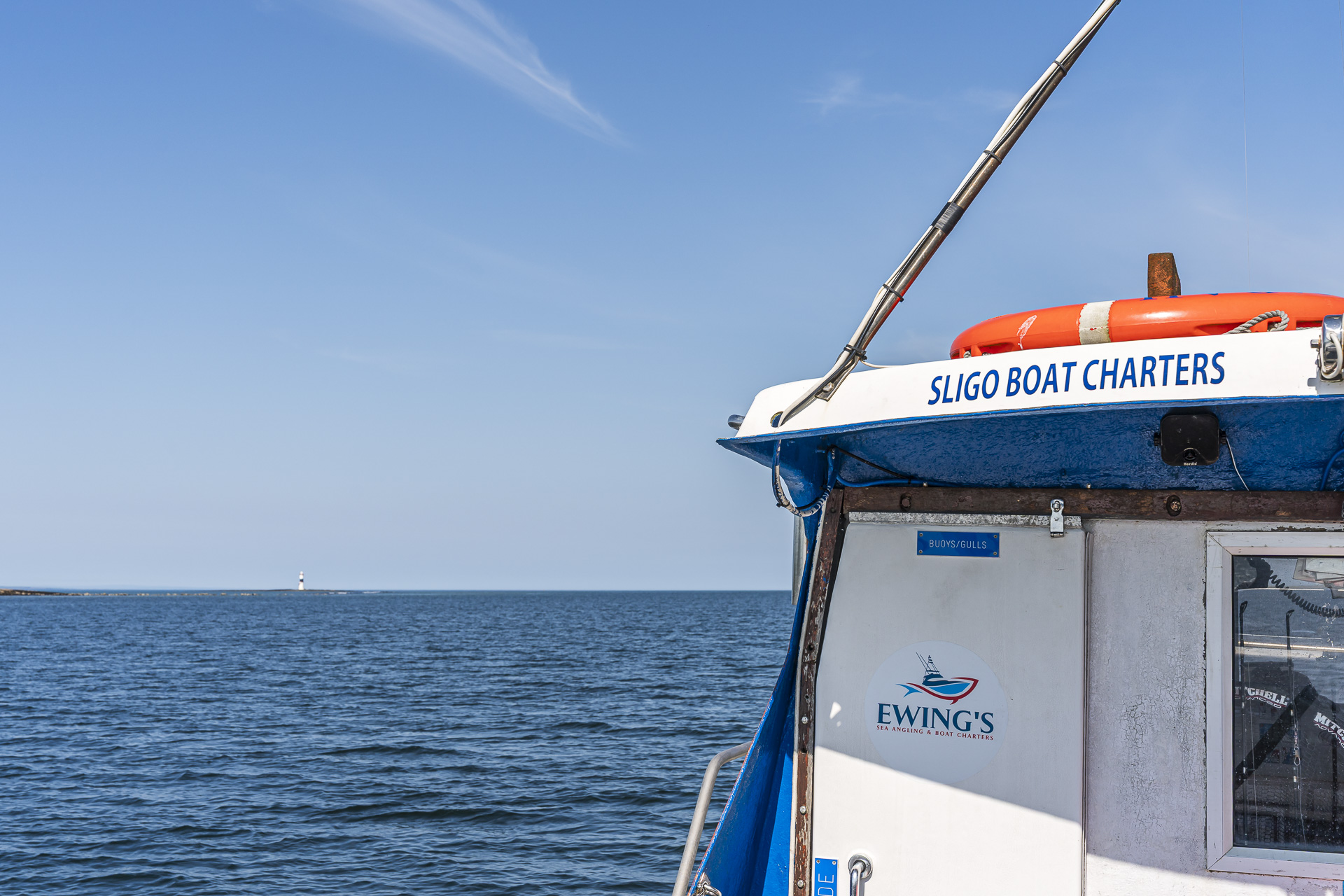
Our next destination is Rosses Point near Sligo. From here we explore the coastal landscape from a completely different perspective: on an approximately two-and-a-half-hour boat tour with Sligo Boat Charters we head out onto Sligo Bay. Owner Daryl Ewing knows the area like the back of his hand.
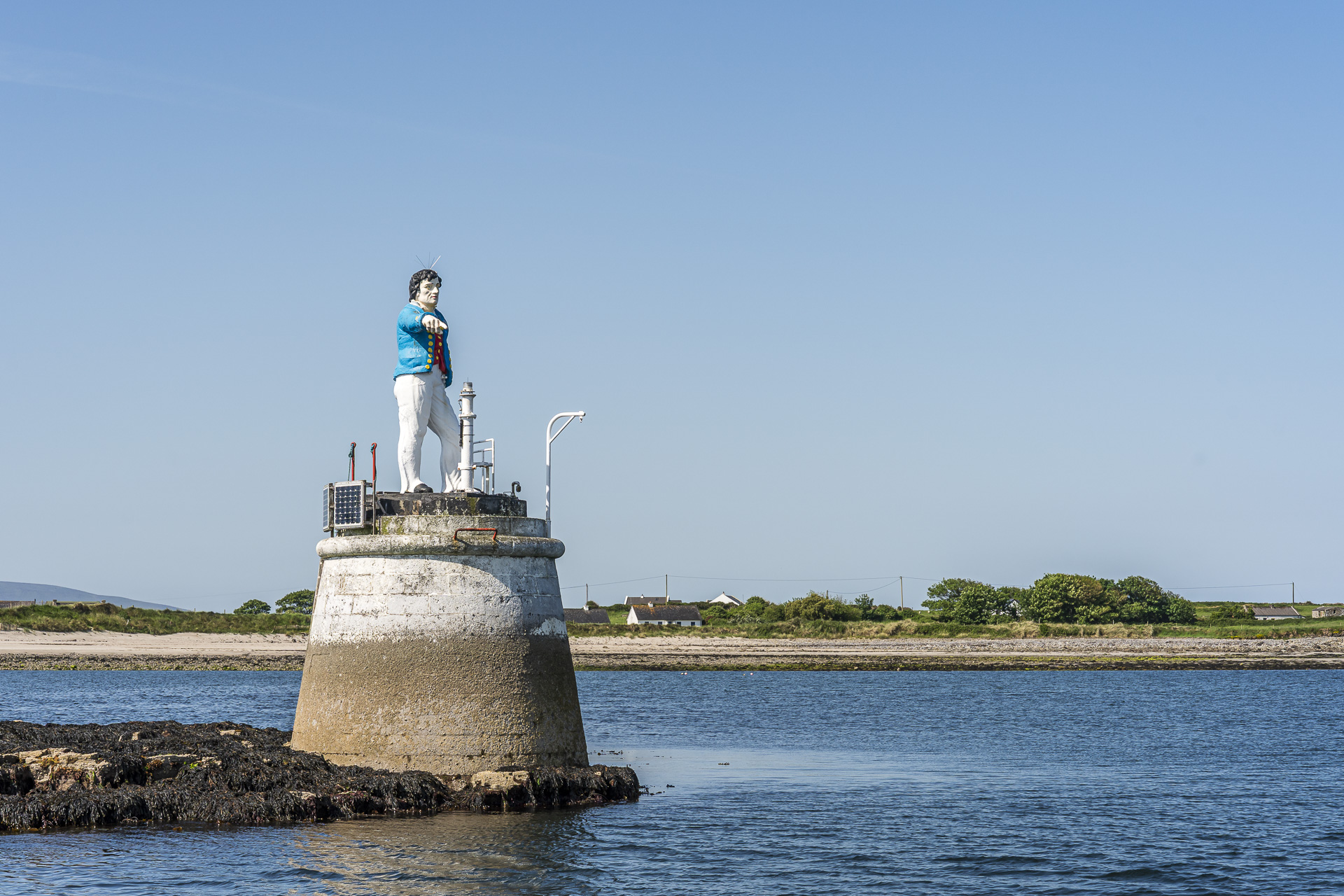
The trip passes by various landmarks of the bay, including the Metal Man and the Blackrock Lighthouse. The view back to the coast is also striking. From the water you can really see how impressive the mountain backdrop around the bay is. We are also lucky enough to spot some grey seals in the distance, which are resting on the offshore islets.
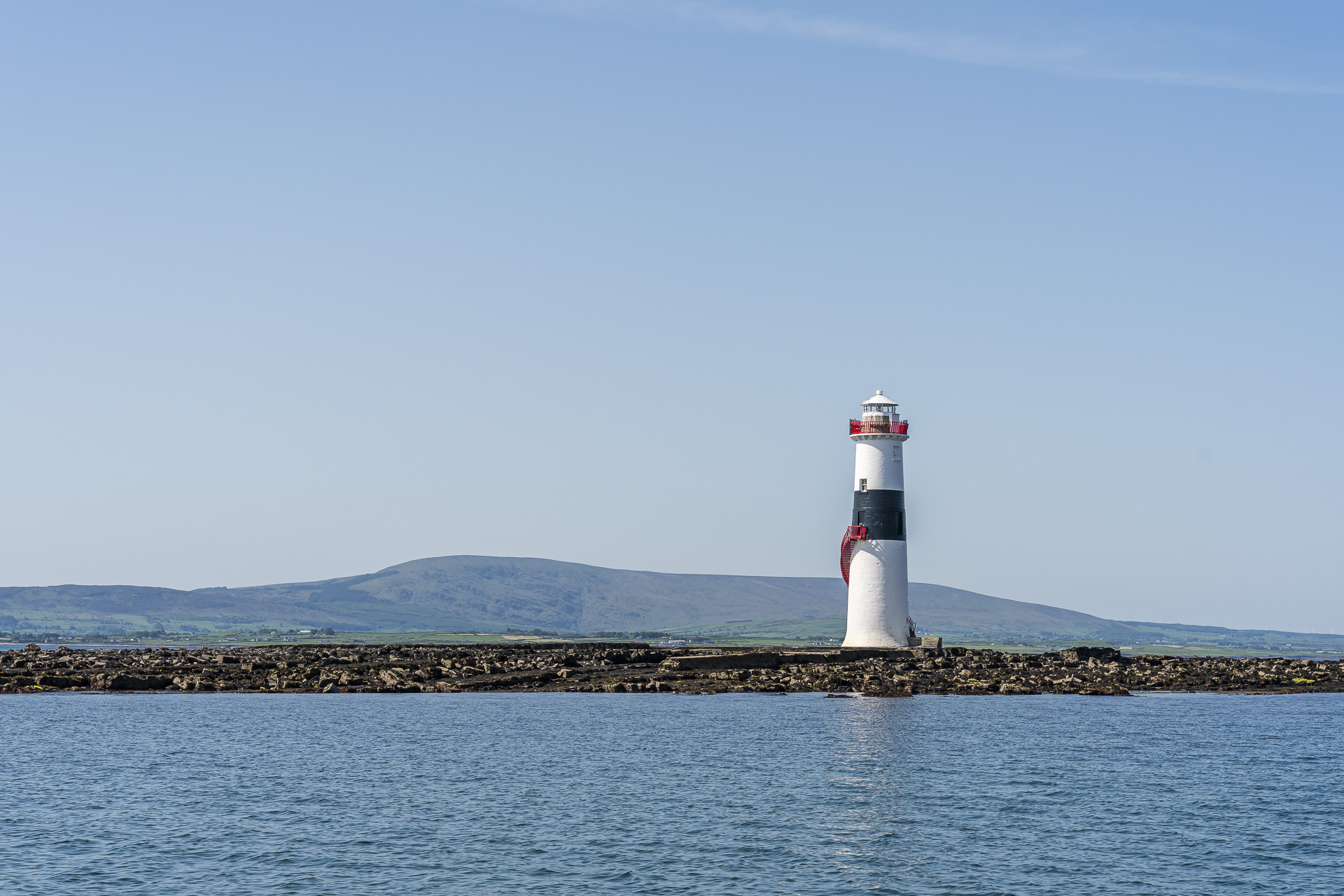
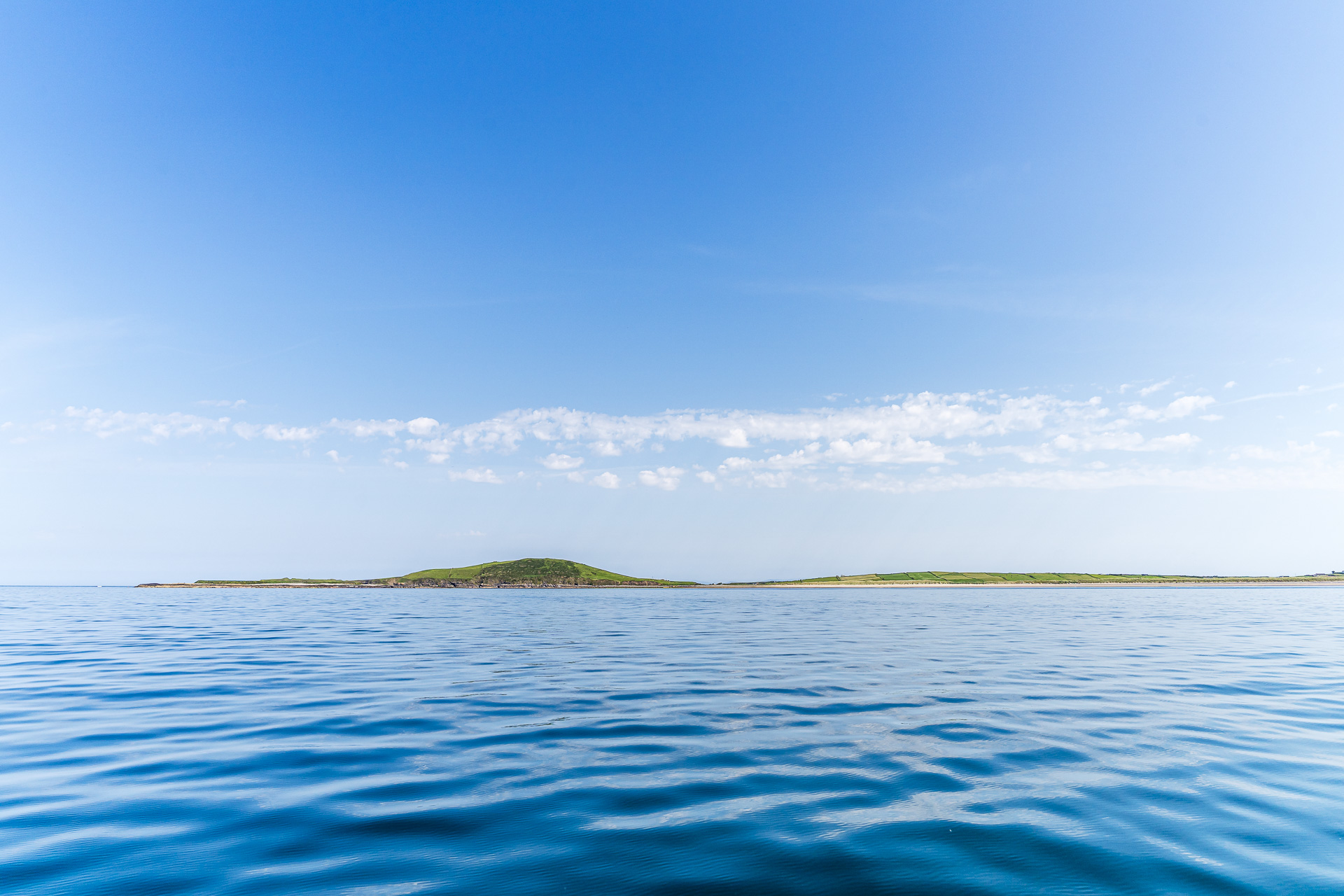
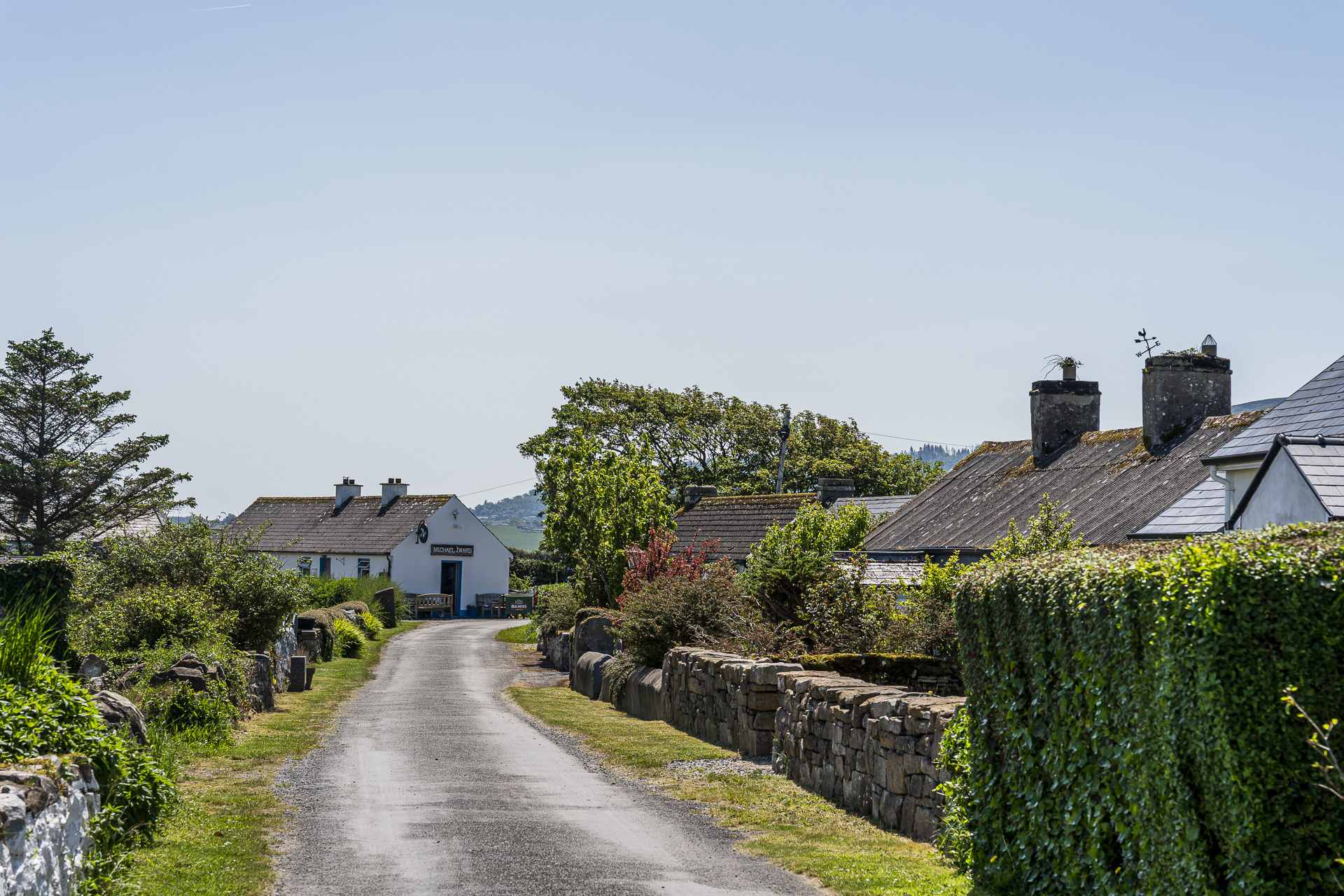
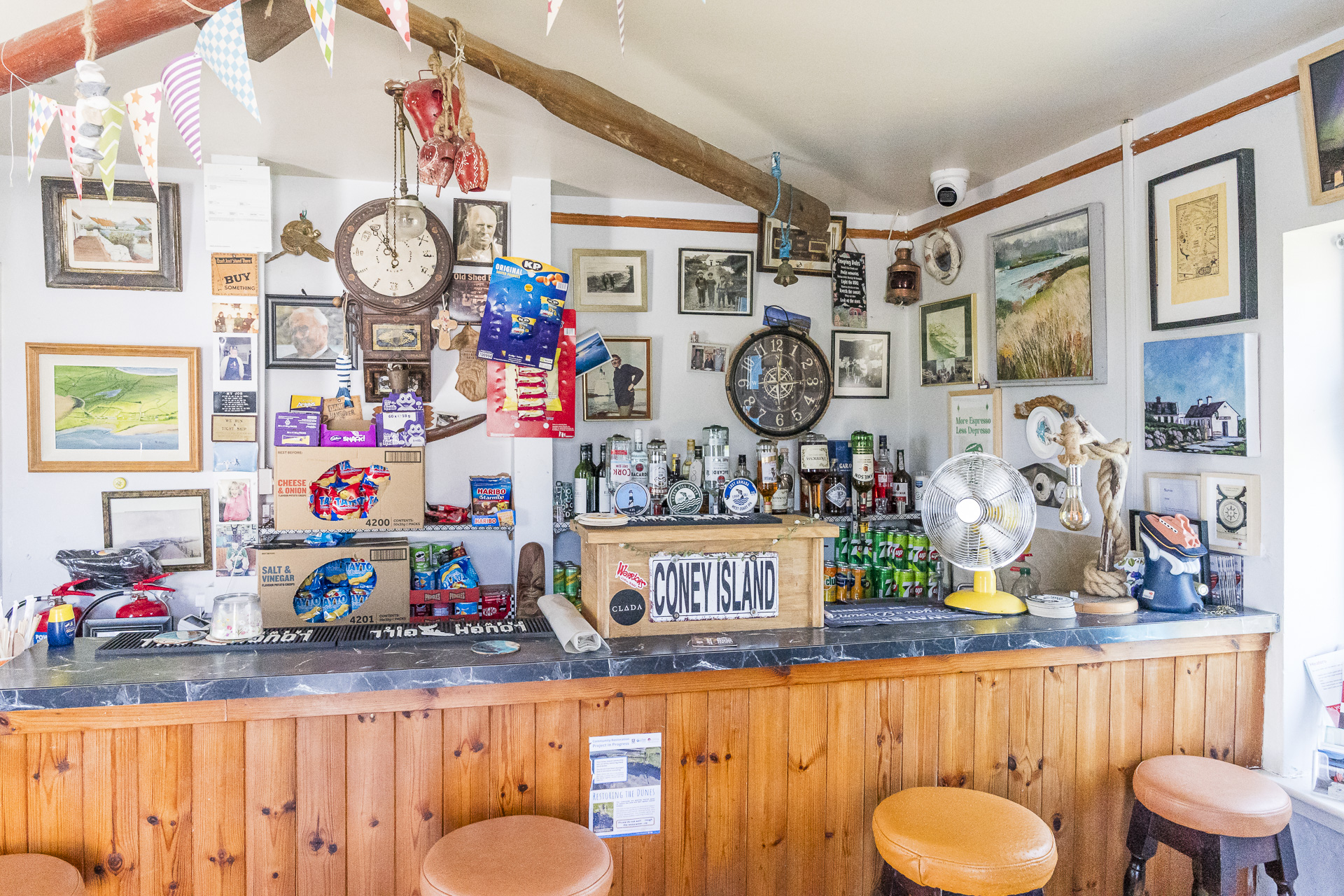
On the way back Daryl Ewing makes a stop at Coney IslandThe small island lies in the middle of Sligo Bay and is especially known for its unique tidal causeway, which makes it reachable by car at low tide. What stays with us most is a visit to the island’s only pub, which has been run by the Ward family for generations. To preserve this important meeting place for the island community, the great‑niece of the former owner, Marie Perret, has decided to continue running the pub part‑time. A very special place where you can learn a lot about the island’s history and the close bond the people have with their home.
Good to know:An overview of the tide-dependent sightseeing routes through Sligo Bay can be found on thewebsite of Sligo Boat ChartersThere you can also book tours or request individual tours.
10. Hike up Benbulben, the table mountain
Around midday we were back on land and took the opportunity to combine a sight with lunch on the way to our next item on the itinerary. About a 15‑minute drive from Rosses Point is the final resting place of Ireland’s most famous poet W. B. Yeats in the cemetery of the Drumcliff Church. Right next to the cemetery and church is thePink Clover Café also a recommended place for a quick lunch.
And yes: we could really use the energy. With hiking guide David Bourke from High Hopes Mountain Treks we then take on the 521-meter-highBenbulben. The striking table mountain, with its deeply incised flanks, is visible from afar and shapes Sligo’s landscape like few other mountains. Its characteristic form was created during the last Ice Age, when massive glaciers pushed through the landscape and formed the now so striking steep slopes as well as the expansive summit plateau.
Similar to the previous day’s hike above the Poisoned Glen, there is no continuously waymarked trail here either. However, the route is walked regularly, so the course of ascent and descent is easy to make out. On this tour we benefit above all from David’s local knowledge of culture, flora and fauna, and along the way we also compare hiking in Ireland with hiking in the Alps.
The following images show it: If you’re as lucky with the weather as we were, you’ll be rewarded after the climb to the summit plateau with sweeping views across the coastal landscape of Sligo.
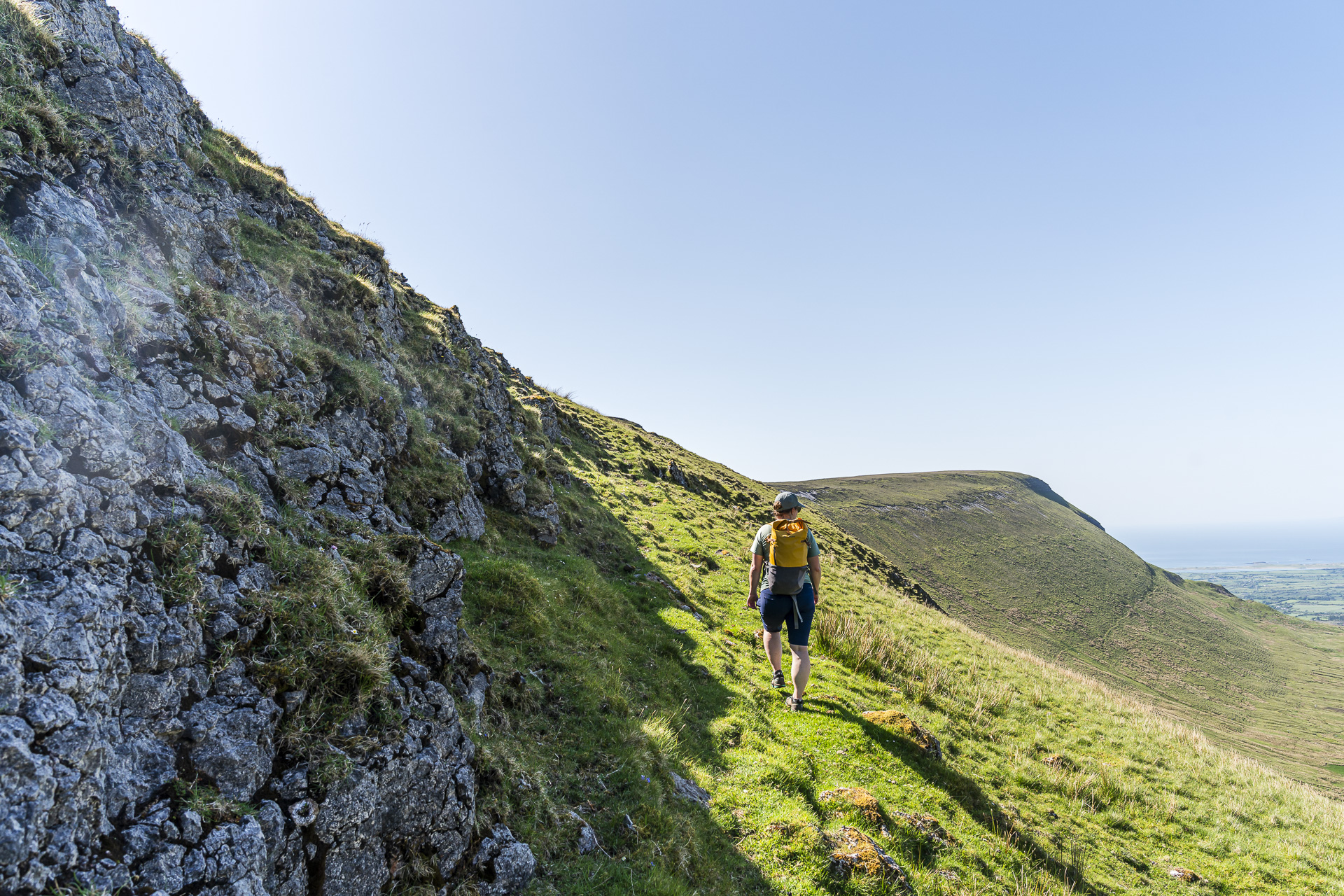
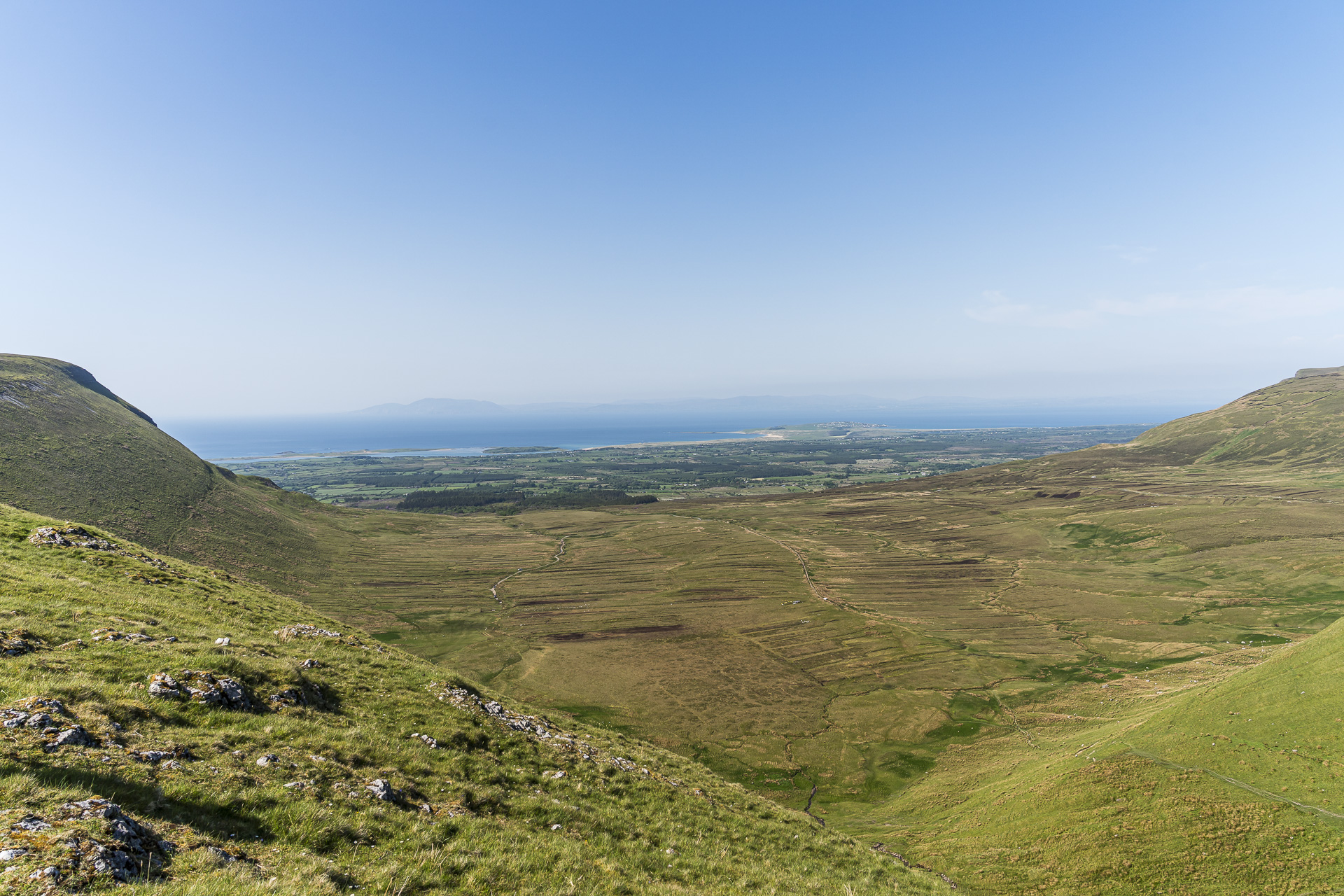
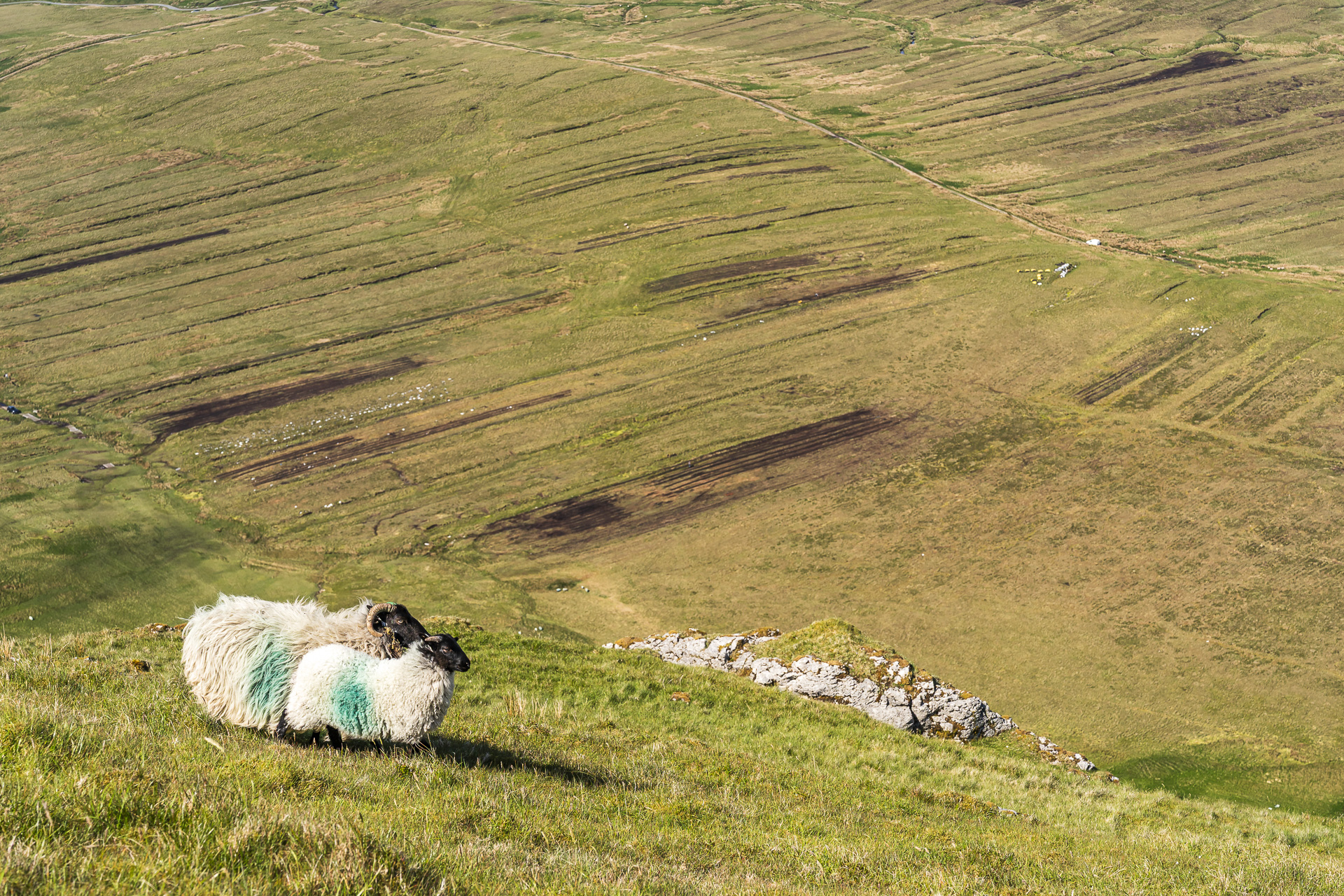
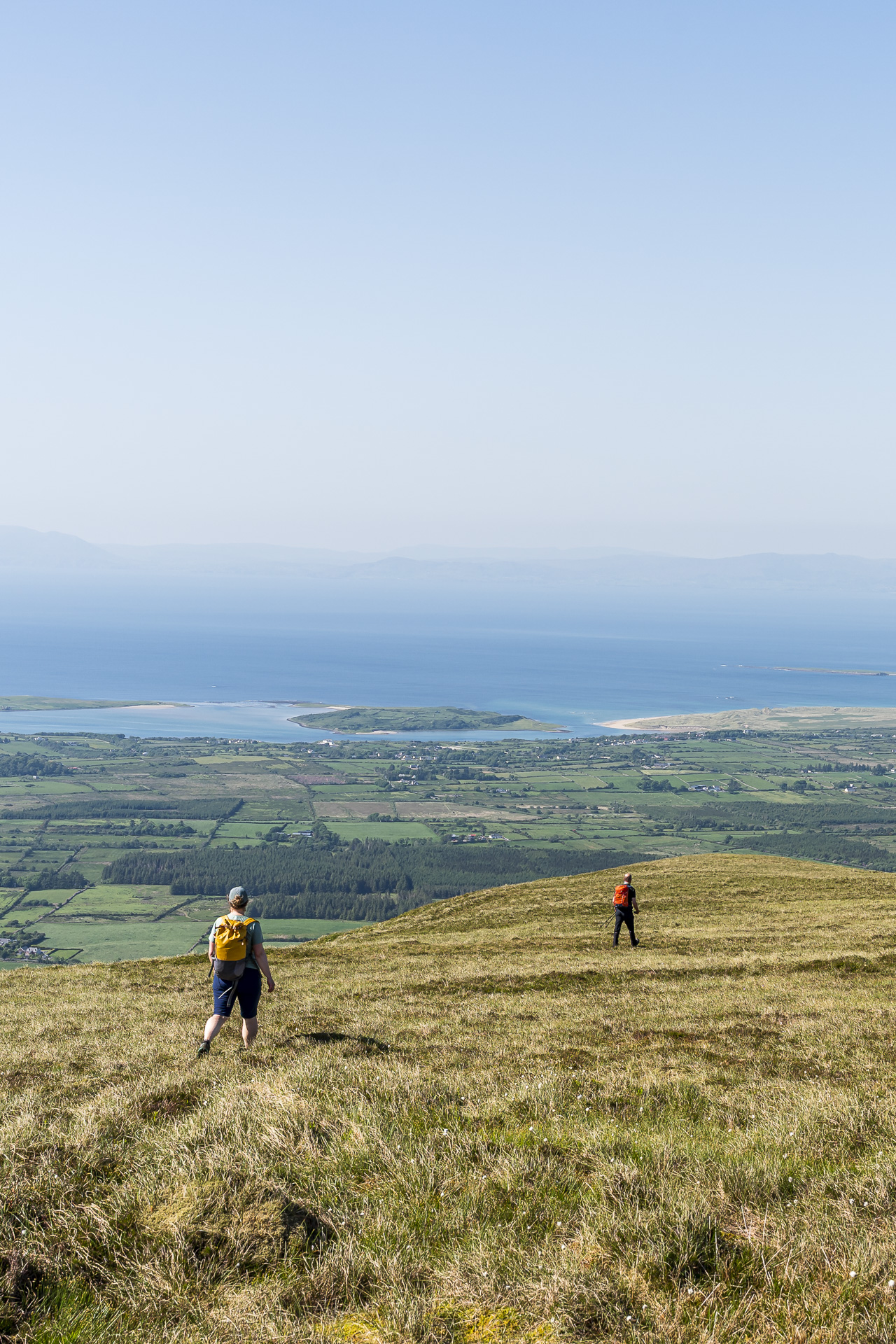
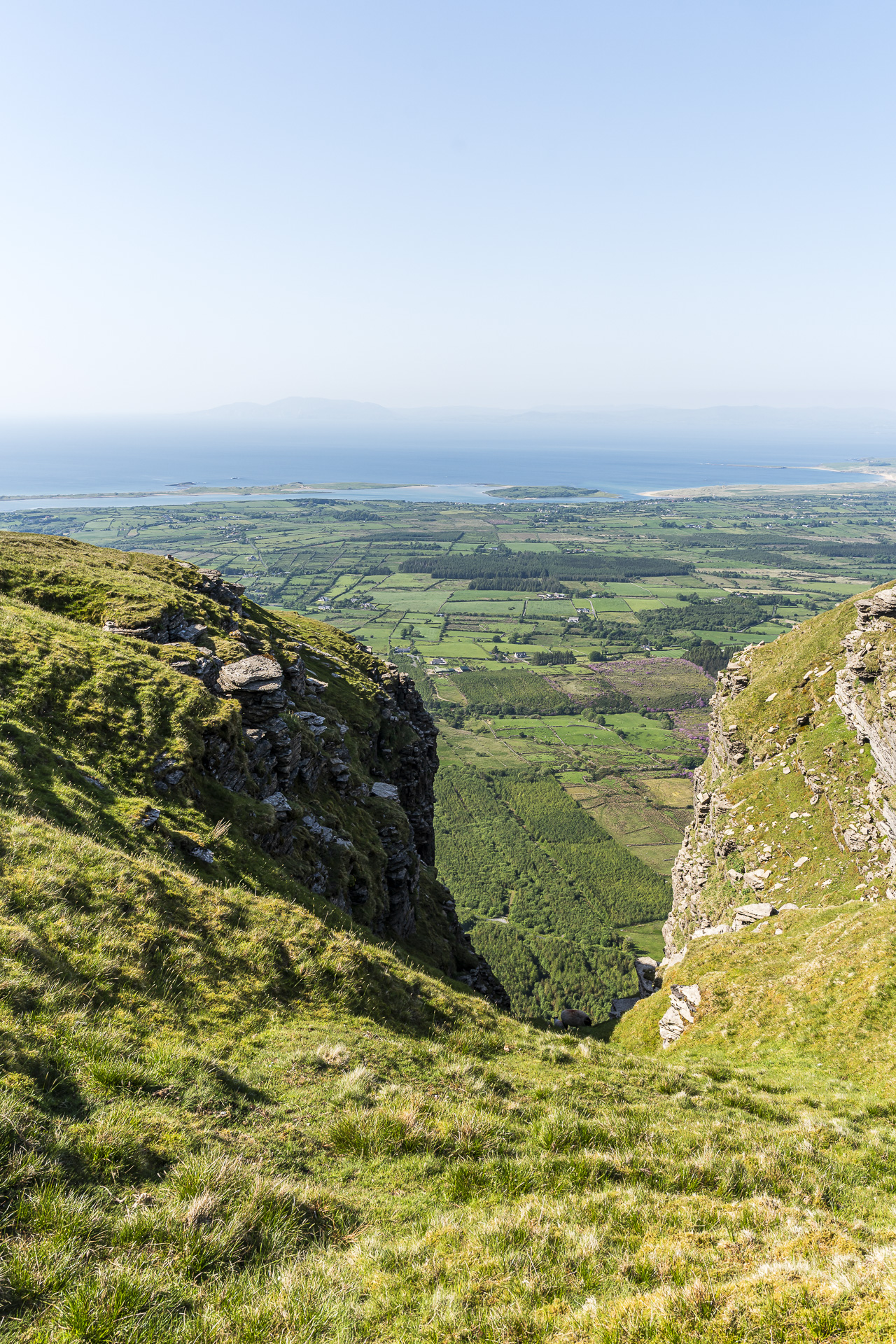
Good to know:The hike to Benbulben starts at the “Luke’s Bridge” parking lot. The circular route requires a good basic level of fitness and takes about three to four hours.
11. Markree Castle
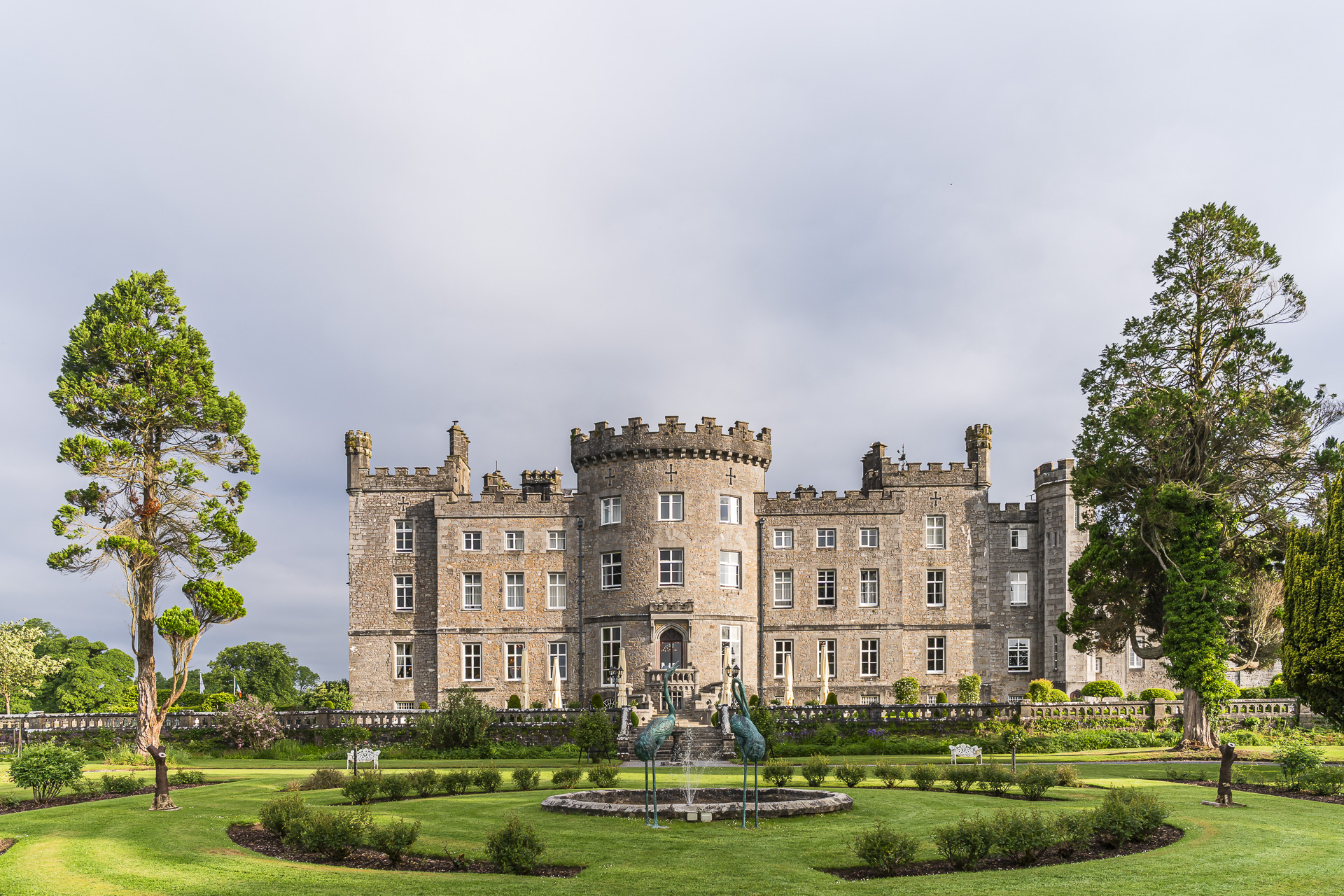
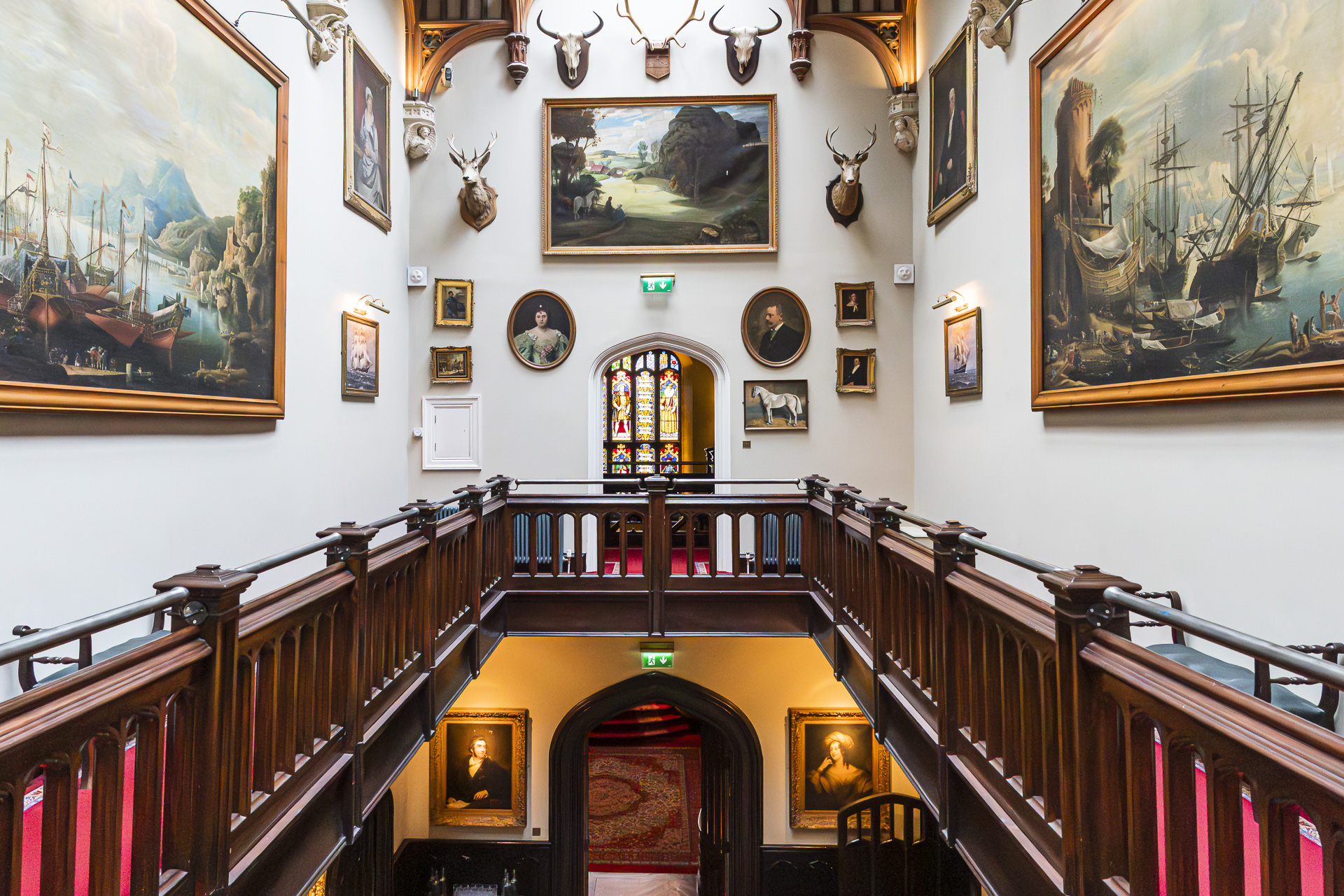
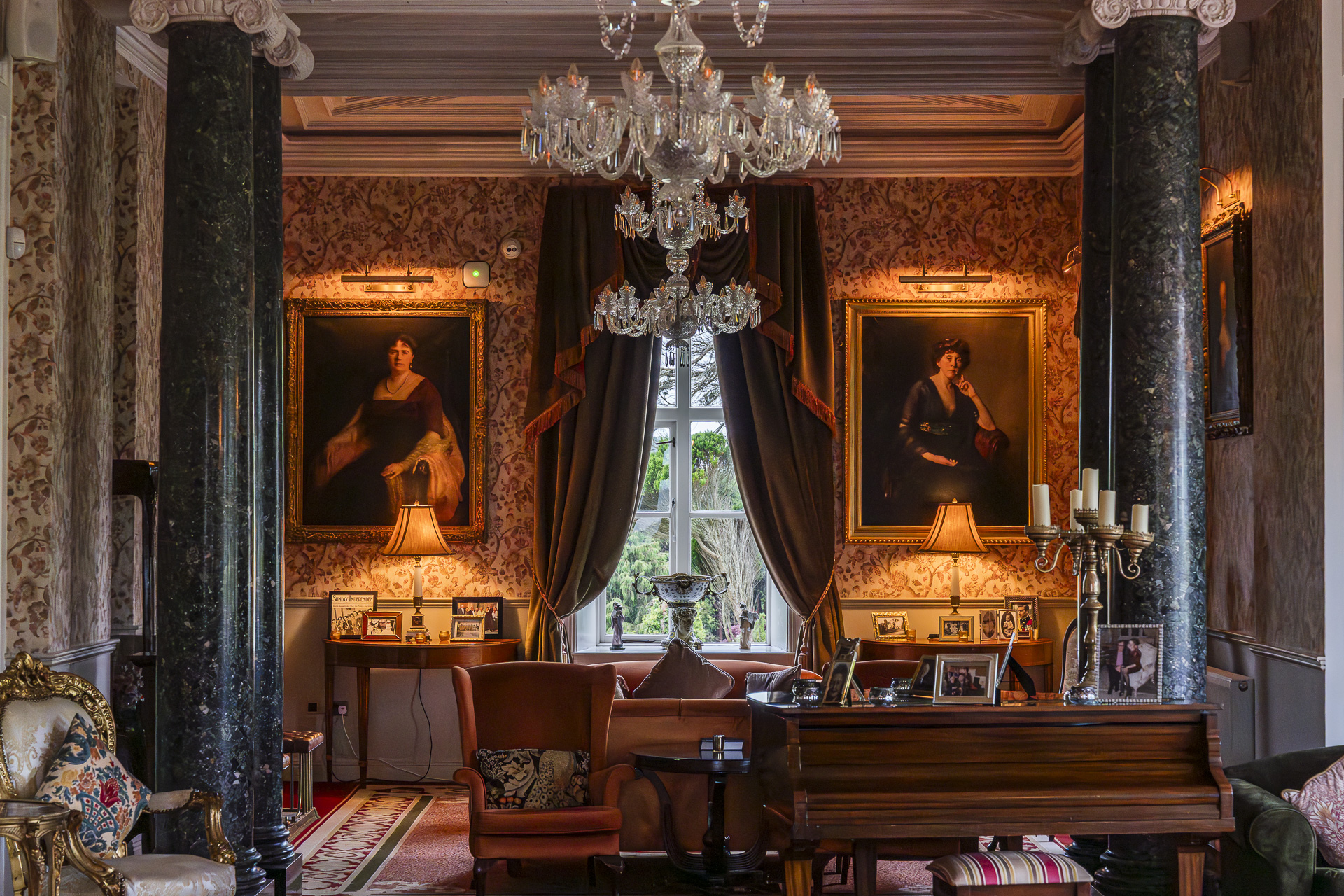
After this active day we look forward to a pleasurable end to the day in a fairytale setting. Ireland has many beautiful castle hotels. One of the most impressive isMarkree Castlein County Sligo, which was extensively renovated in 2017 and has since made a name for itself especially as an exclusive wedding venue.
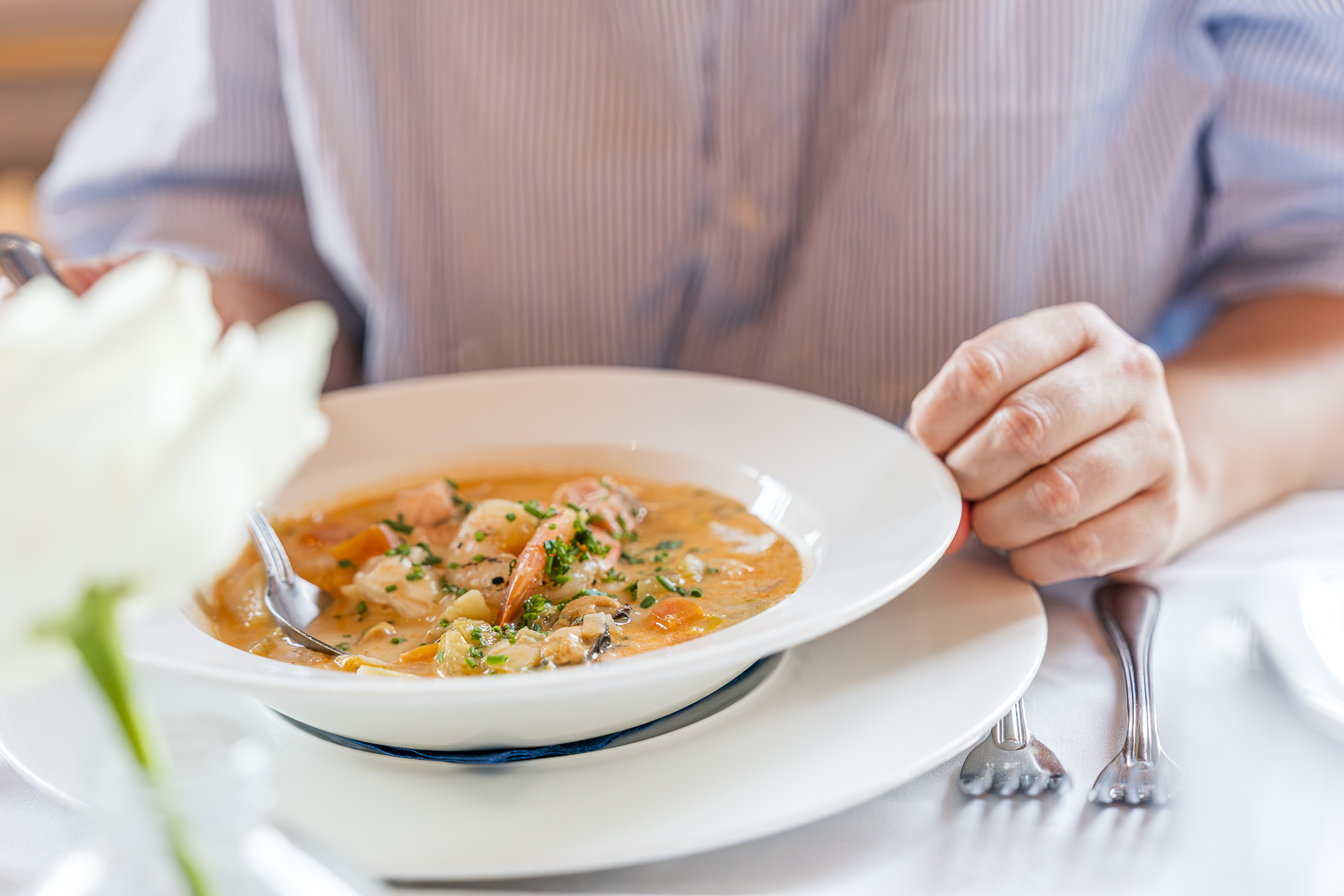
Here we check in for one night and finish the day with a fine dinner in the lavish Rococo dining hall.
12. Seaweed Walk at Streedagh Beach
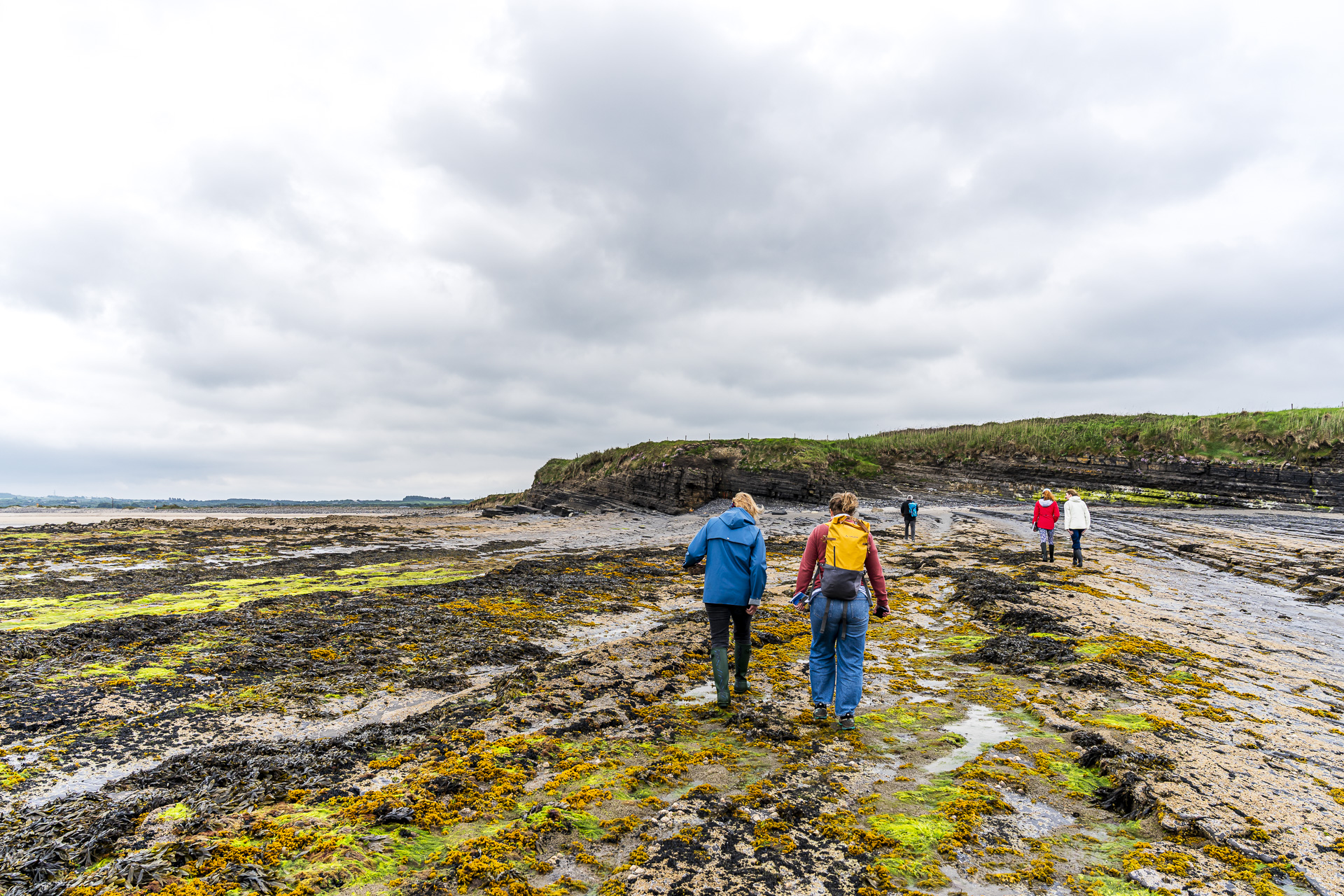
For the first time on this trip the sky is overcast and there’s rain in the air. Fitting for our excursion to theStreedagh Beach. We could already make out this long stretch of beach from Benbulben the day before. Today we are here to meet withPrannie Rhatigan. The Irish doctor and author is one of the country’s best-known seaweed experts and has long been committed to sharing knowledge about Ireland’s seaweed culture.
Prannie grew up collecting and processing seaweed. The nutrient-richSuperfoodgrows directly off the coast of Ireland and has played an important role in local culture for centuries. Today she passes on her knowledge through recipe books, cooking classes, lectures and guided seaweed walks. It is one such walk that we now take with her, diving into the fascinating world of marine algae. Over 600 edible species can be harvested by hand. The astonishing variety of colors, shapes and textures is actually even more pronounced under an overcast sky than in bright sunshine.
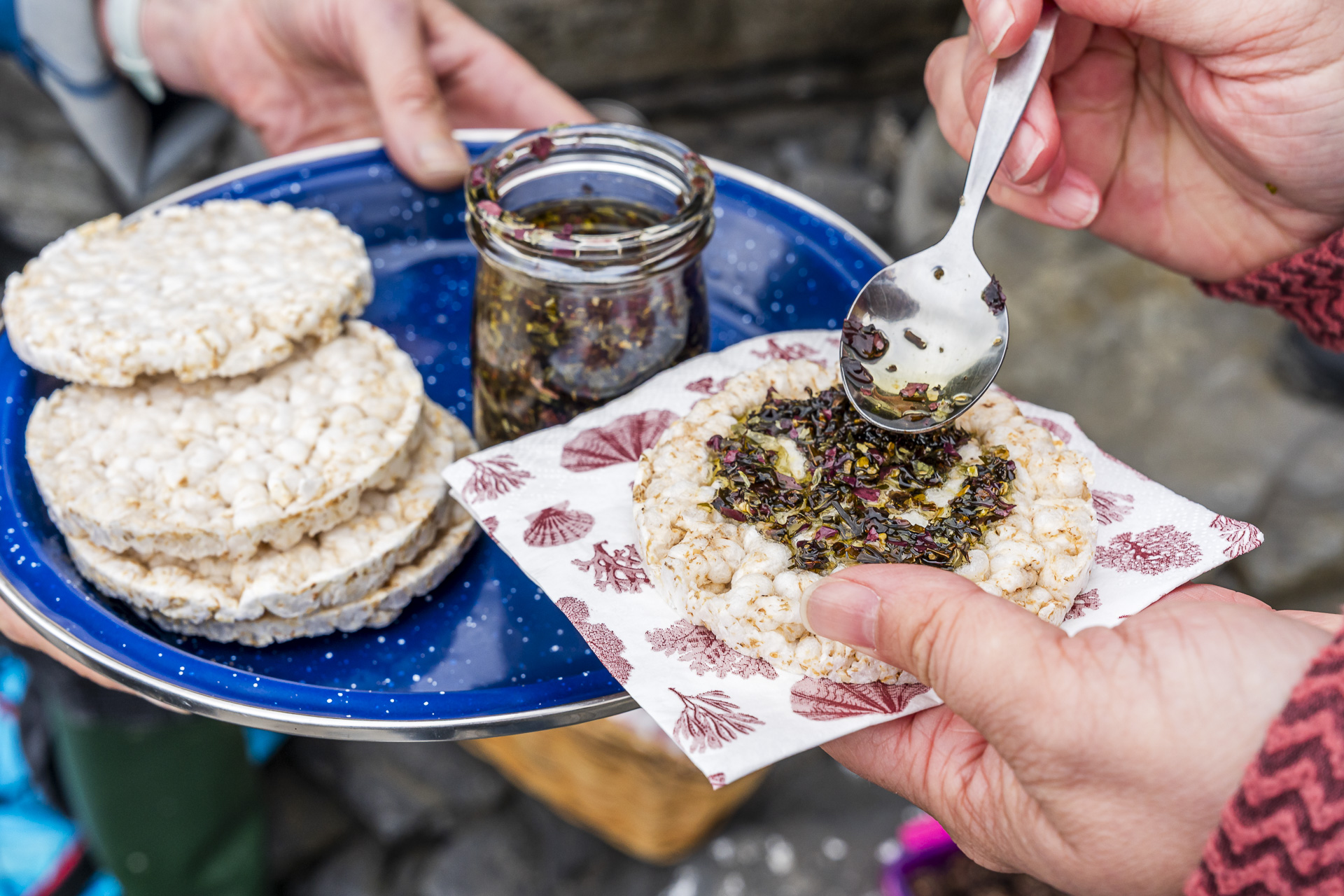
First we learn the most important rule when collecting seaweed: never tear it out, but always harvest it with scissors so the plants can regrow. On a seaweed walk with Prannie you not only learn all kinds of interesting facts, but you are repeatedly given freshly harvested seaweed to taste — for example the native “sea spaghetti” or the invasive gulfweed (Sargassum), originally from the Pacific. Prannie also brought her seaweed pesto for us to try.
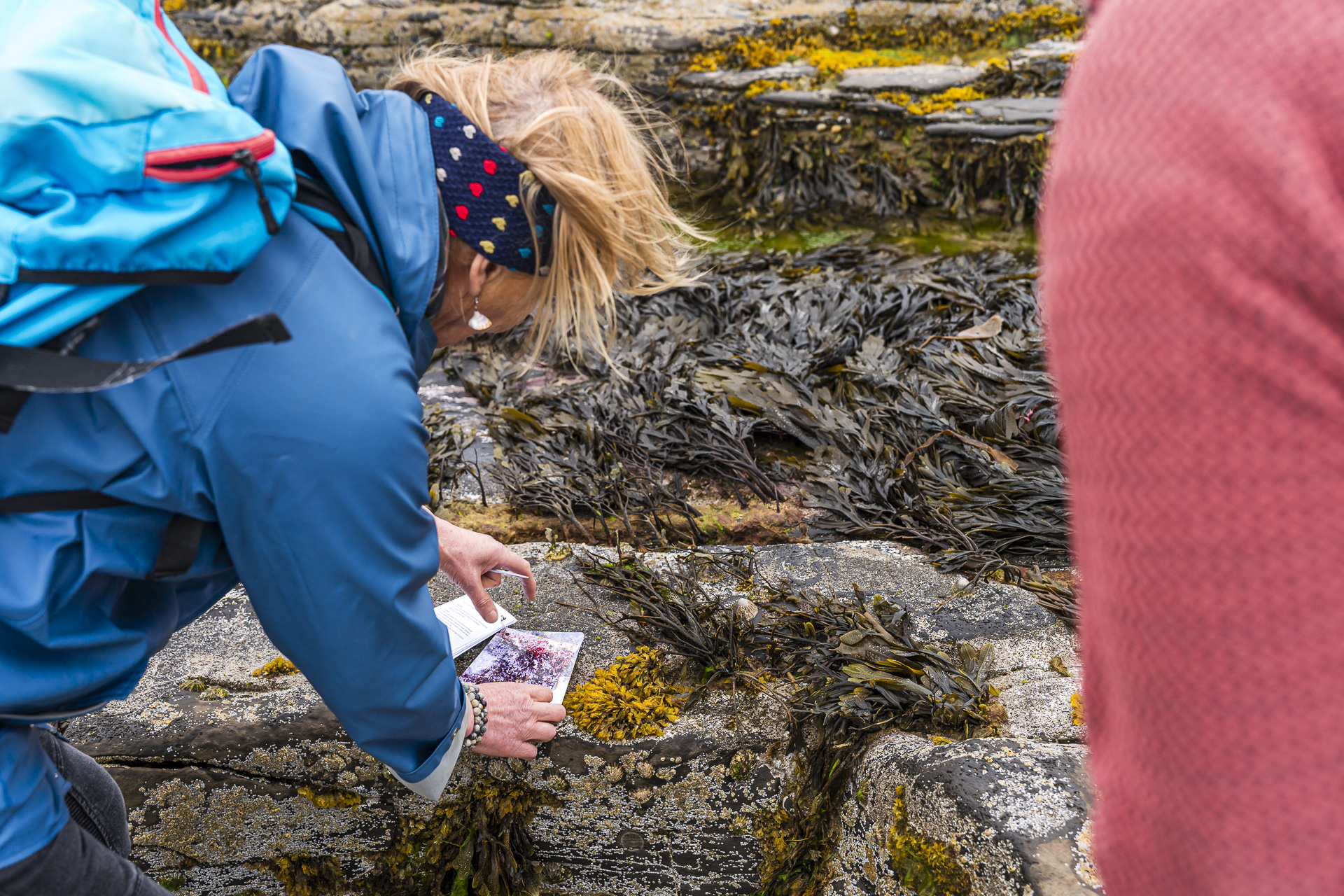
Extra tip: On Prannie’s website you will find not only numerous recipes but also a compact seaweed guide. This gives you an initial overview of the different species and allows you to search for edible seaweeds yourself.
13. Downpatrick Head – Wild Atlantic Way Signature Point
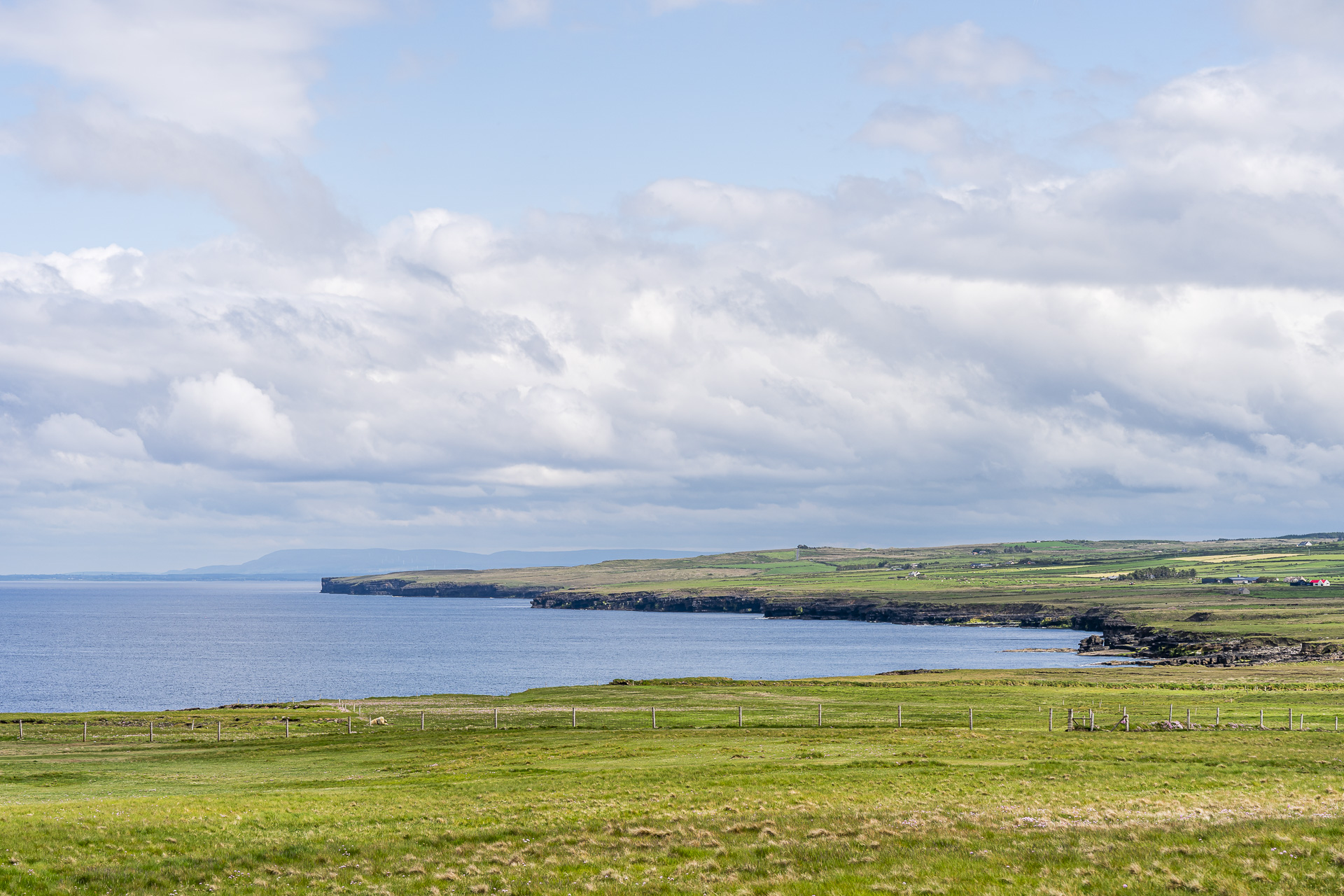
After this morning beach detour our journey continues toward Westport. Of course not via the most direct route, but first following the coast further west. We still have another Signature Point on our list that we want to include in the route. On the way there we stop in the small town of Ballina for a lunch break at Daniel’s Kitchen . The restaurant impresses with its stylish ambiance, open kitchen, and an intentionally concise menu with dishes that change daily.
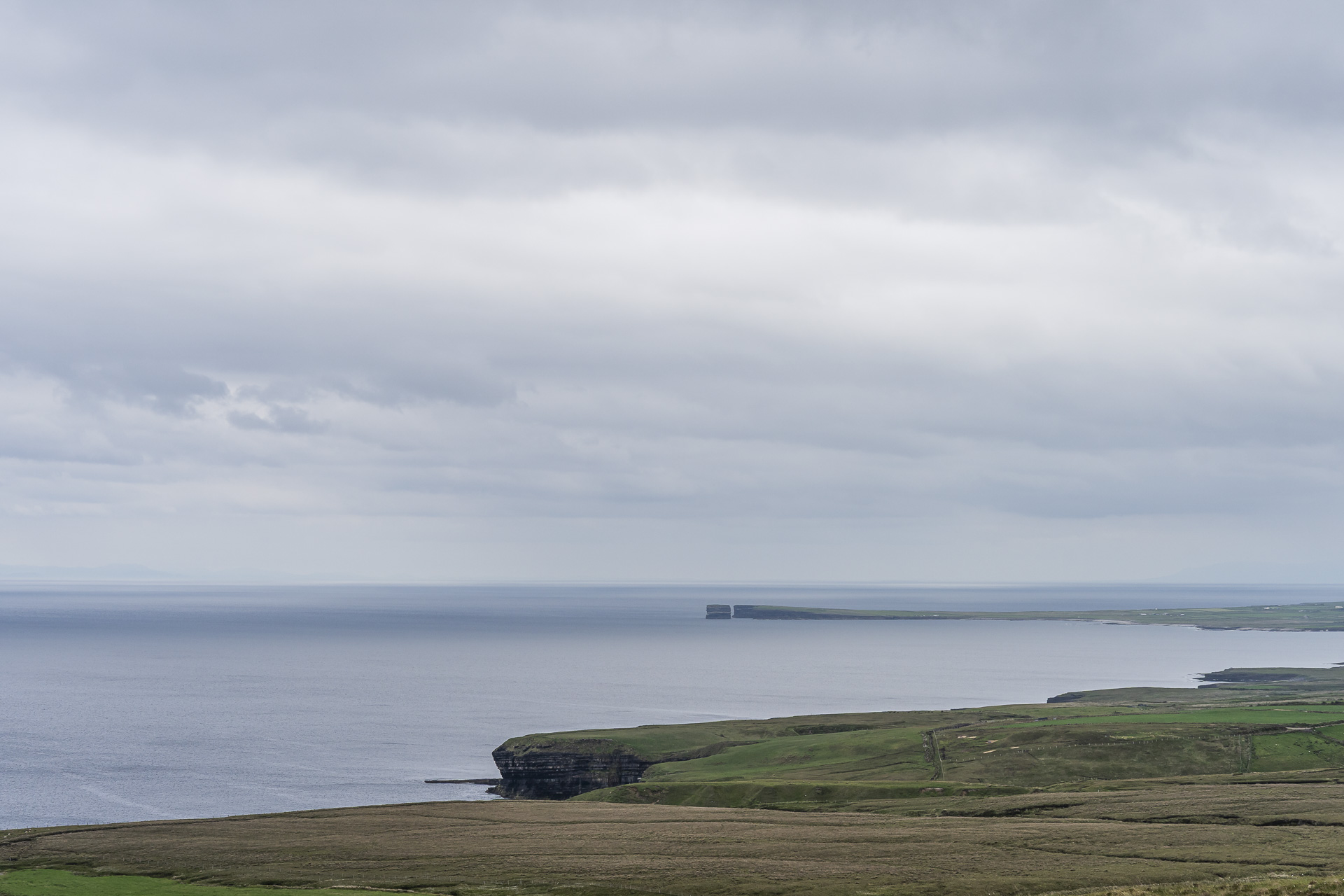
From here it’s just under a 40-minute drive to the Wild Atlantic Way Signature Point Downpatrick Head. The name of the headland dates back to the time when St. Patrick founded a church on this coast. Centuries later, Downpatrick Head served as an observation post during World War II. The small stone building is still preserved today. Also visible is the stone-laid aerial marking ‘ÉIRE 64’, which signaled to Allied pilots at the time that they were over Irish territory.
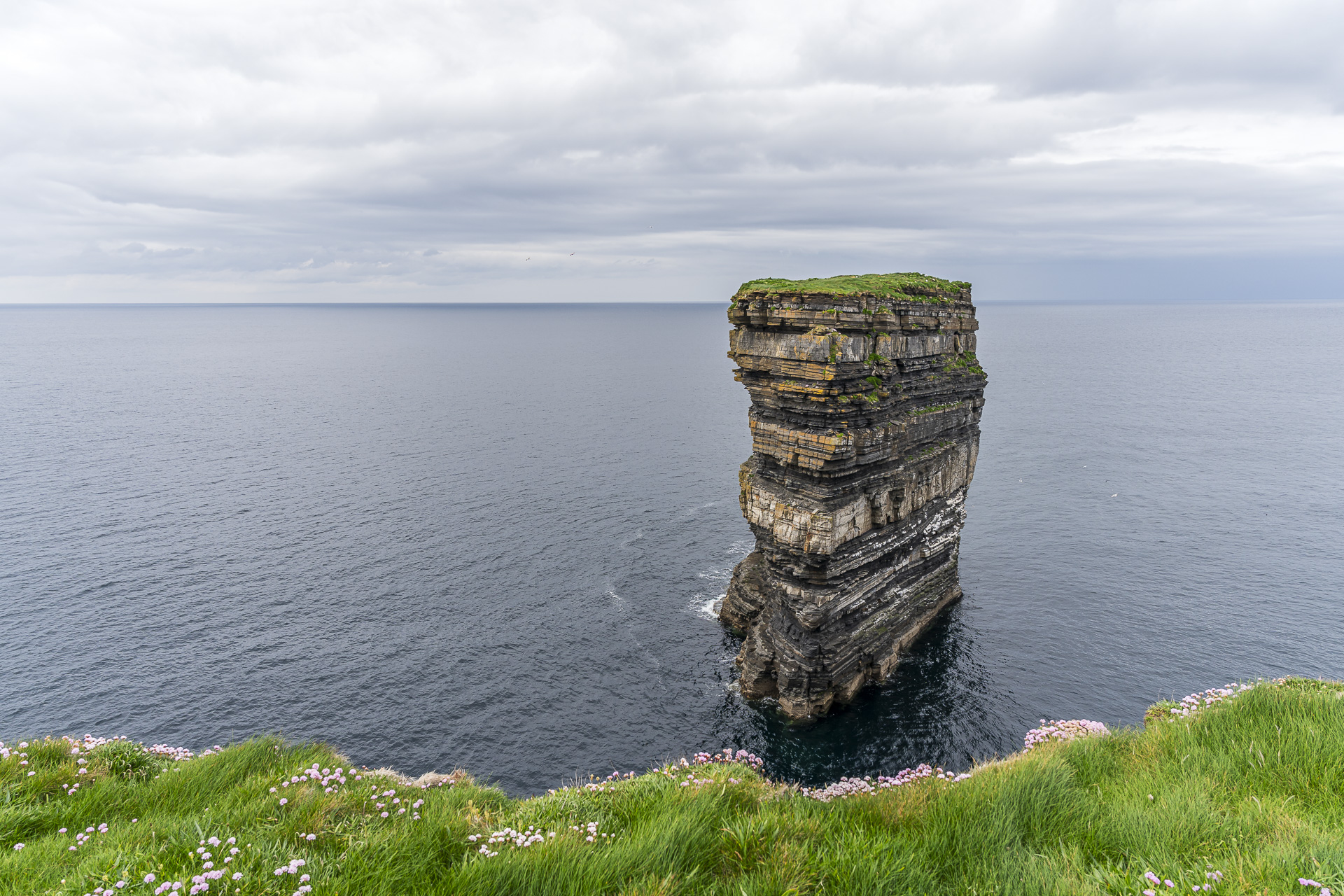
The most famous photo subject of Downpatrick Head, however, is the offshore sea stack Dún Briste. The striking rock formation rises spectacularly out of the Atlantic and is especially photogenic at sunset.
14. Céide Fields – 6,000 years of history under the bog
We still have time for a short walk along the headland, then we must move on. The afternoon is already well advanced and we really want to take a look at the Céide Fields which are located a short distance from Downpatrick Head.
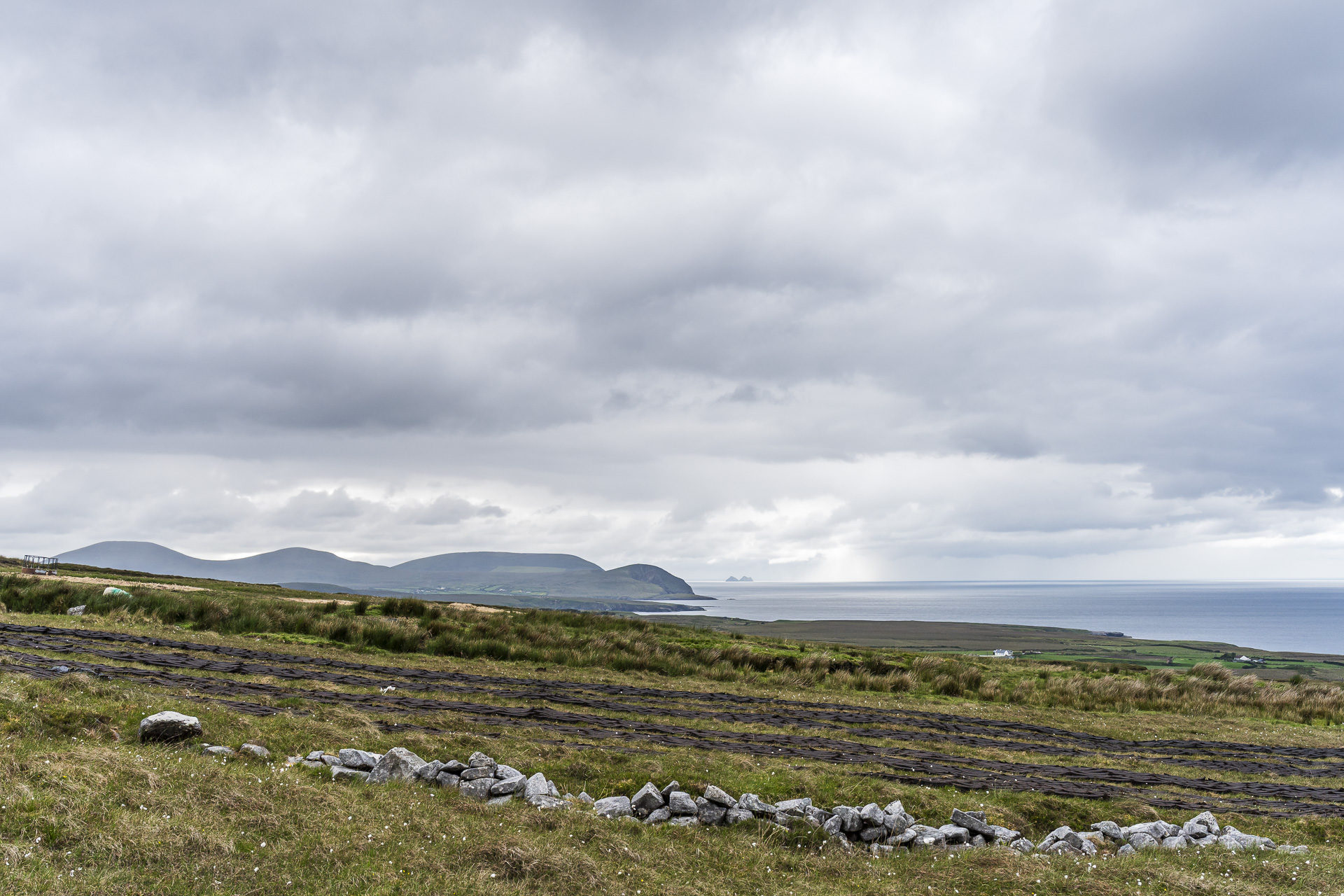
Near the village of Ballycastle Near Ballycastle, one of the most significant Stone Age monuments in the world was discovered. Beneath the peatlands of North Mayo lies an extensive system of fields, settlements and megalithic tombs. The stone-walled fields are around 6,000 years old and are considered the oldest known fields in the world. Most of this unique cultural landscape remains hidden beneath a thick layer of peat to this day.
The archaeological site includes an award-winning visitor center that clearly presents the story of the discovery and the background of this extraordinary find. Afterwards, parts of the exposed stone walls can be seen on a short circular walk. Also worth seeing is the viewing platform next to the visitor center, which offers an impressive view over the cliffs and the coastal landscape of Mayo.
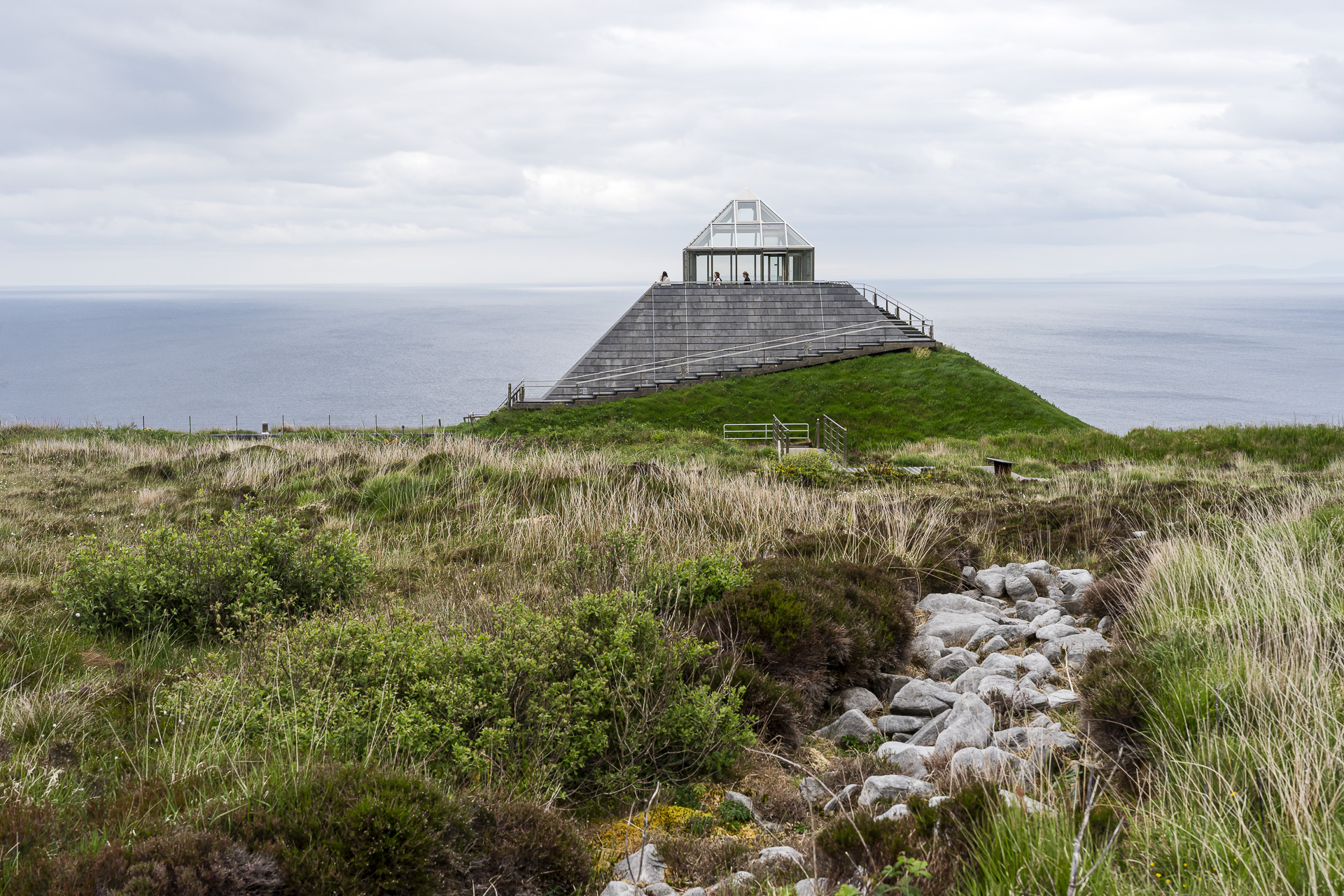
Good to know: The visitor center is open daily from 10:00 a.m. to 6:00 p.m. | Admission costs 5 euros for adults | More information: Céide Fields
15. Westport
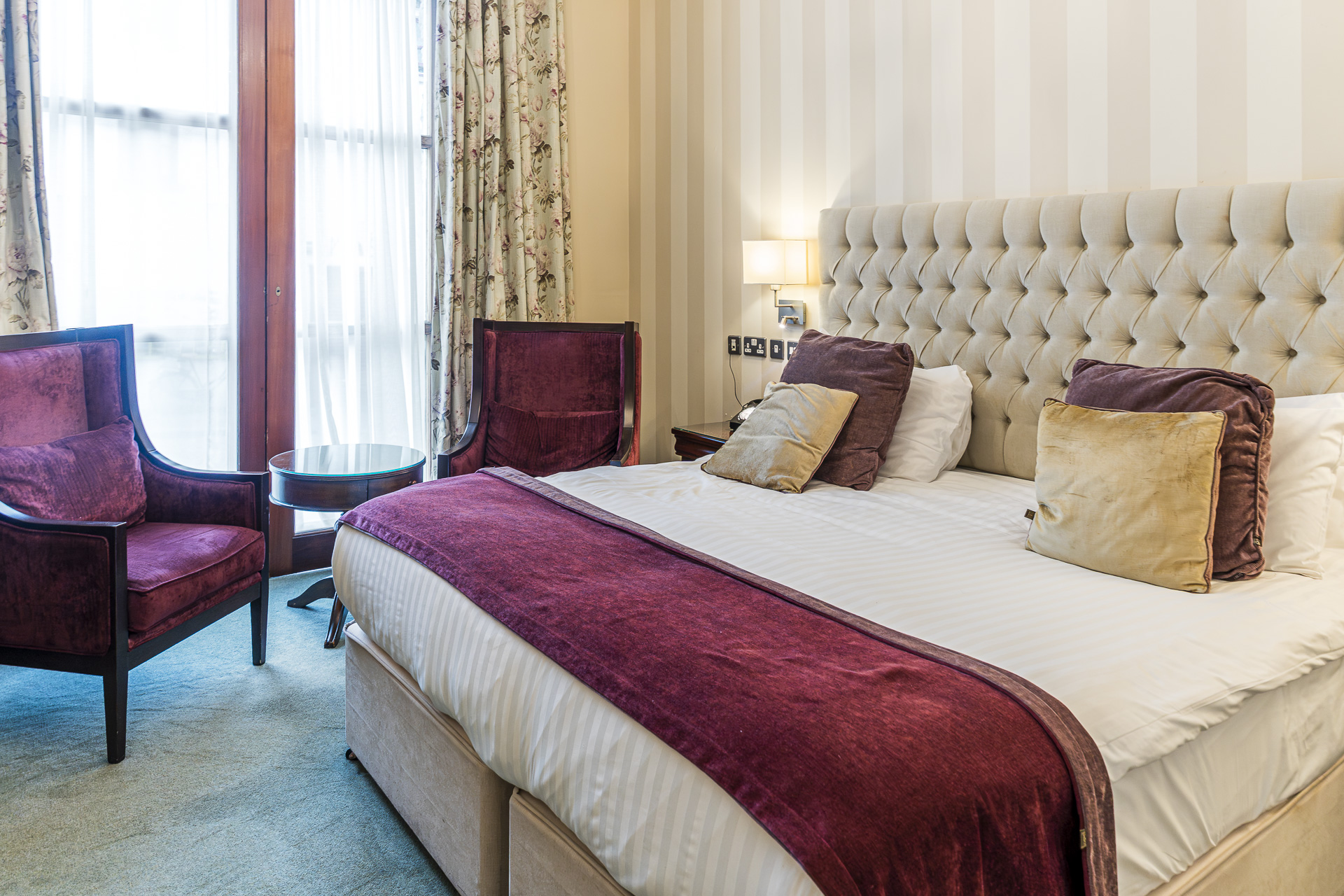
Our fourth day of travel ends in the charming small town Westport, which is located directly on the Wild Atlantic Way. Here we check in at the centrally located The Wyatt Hotel , which will serve us over the next two days as an ideal base for our excursions to Achill Island and Croagh Patrick.
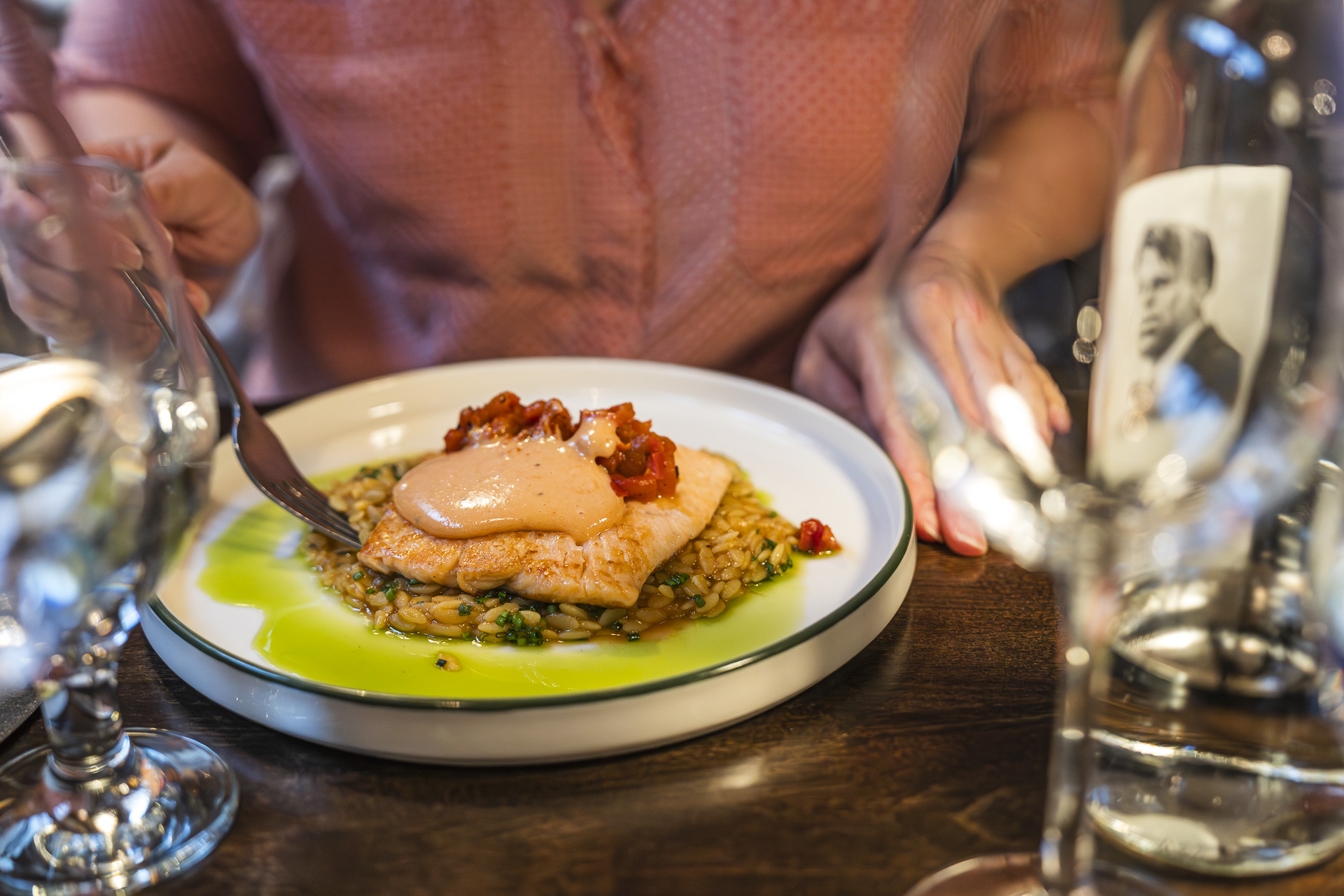
We particularly liked the lively atmosphere in the town center. Along the Carrowbeg River, cafés, shops and traditional pubs line the street and invite you to take a stroll through the lanes after an active day. There are therefore numerous dining options. We tried both the Jw’s Brasserie, which belongs to the hotel, and the Restaurant An Port Mór and can recommend both.
16. Achill Island: Keem Beach and Croaghaun Cliffs
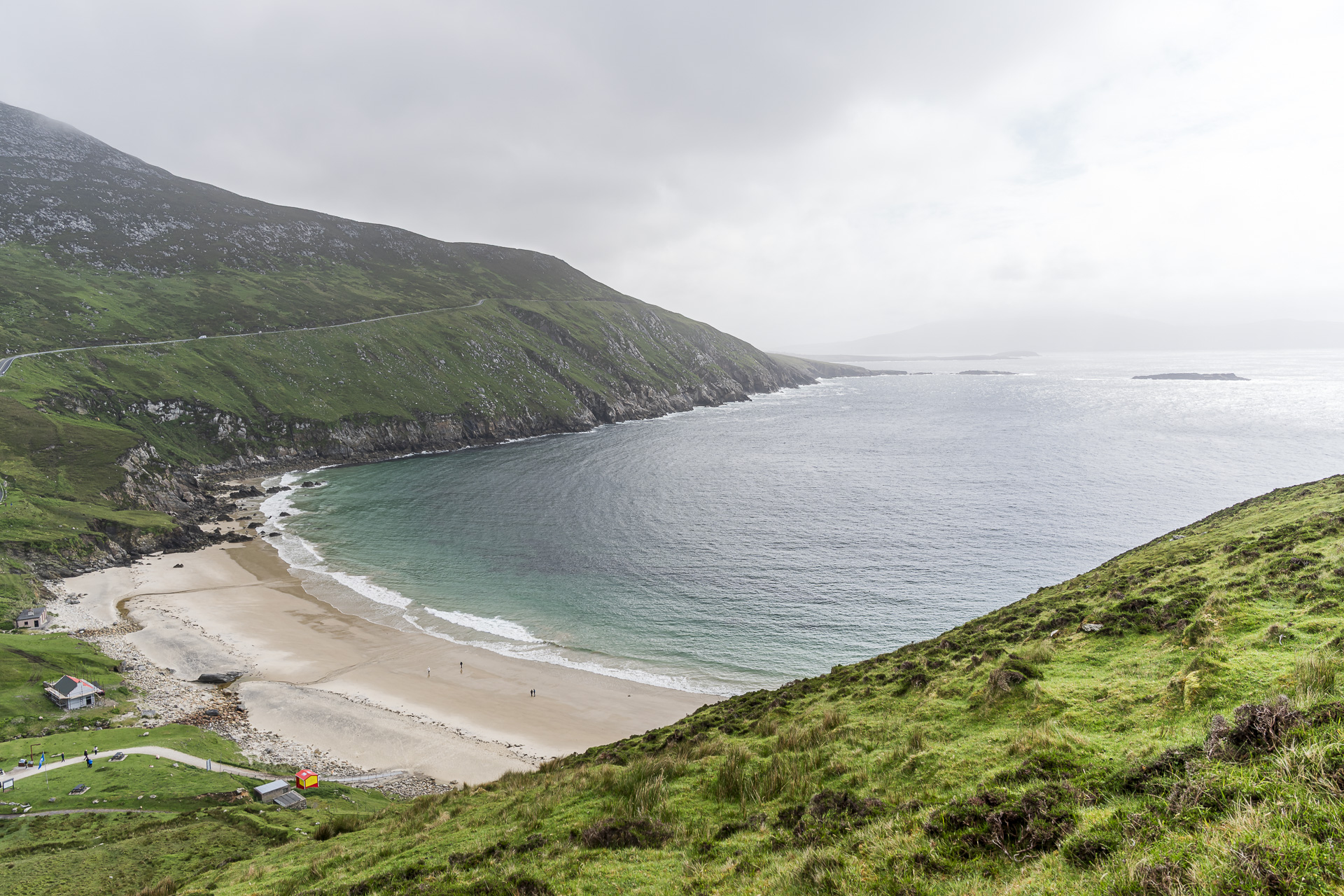
Something that, in my opinion, should definitely be included when planning a trip through northwest Ireland is a detour to Achill Island. Ireland’s largest island is reachable from Westport in just under an hour and impressed us with its mix of rugged cliffs, peatlands and dreamlike beaches. From Westport we drive directly to the island’s westernmost tip. Where the road ends is the beautiful Keem Bay, which Lonely Planet even named one of the 100 best beaches in the world. The car park at Keem Bay is also the starting point for the hike to the Cliffs of Croaghaun. The cliffs rise up to 688 meters above sea level and are thus the highest in Ireland.
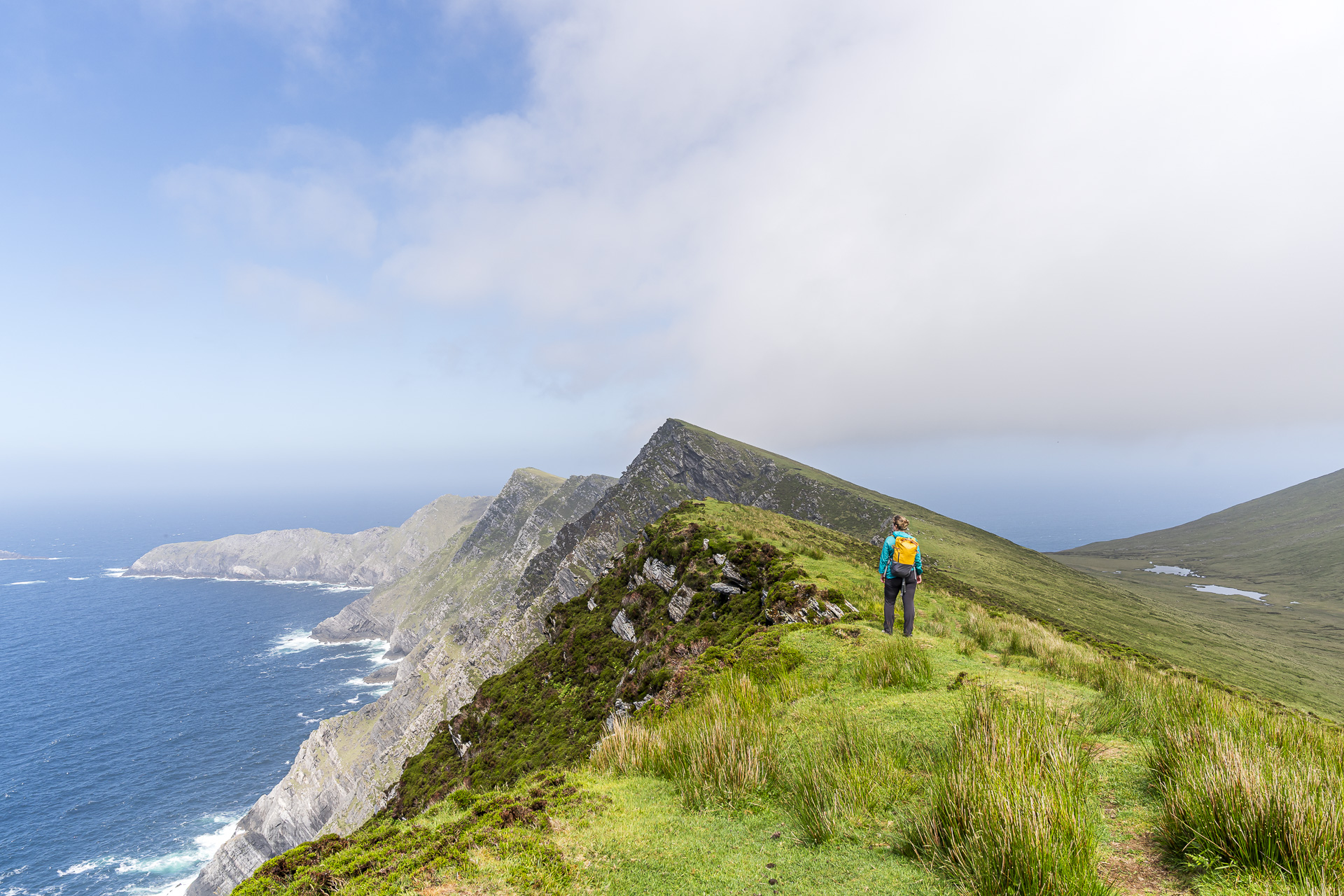
As with some hikes before, there is no continuously signposted path here either. First you climb steeply toward Achill Head and then follow a narrow path that runs along the cliffs. We were lucky with the weather: for a brief moment the clouds broke, revealing the impressive cliffs.
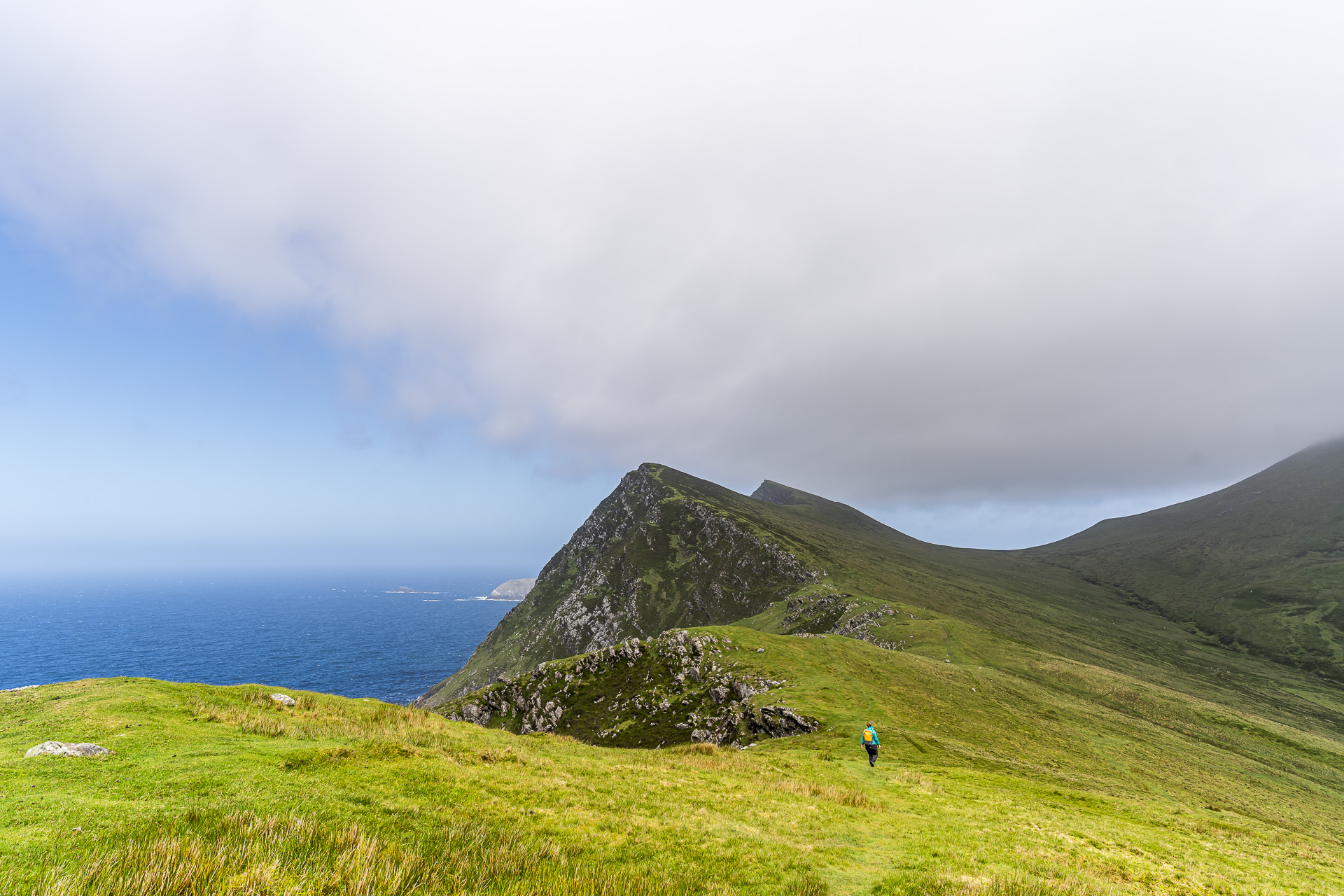
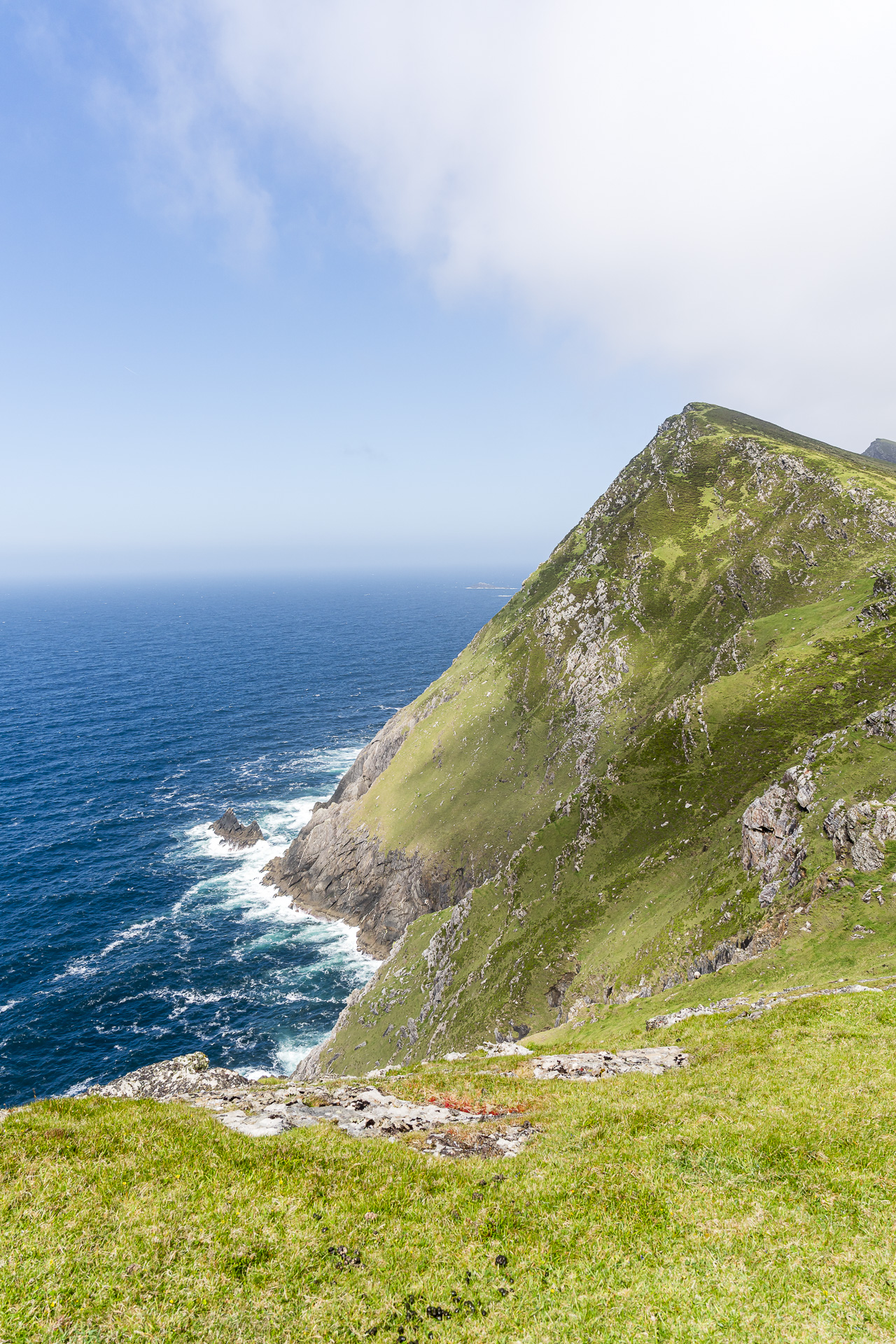
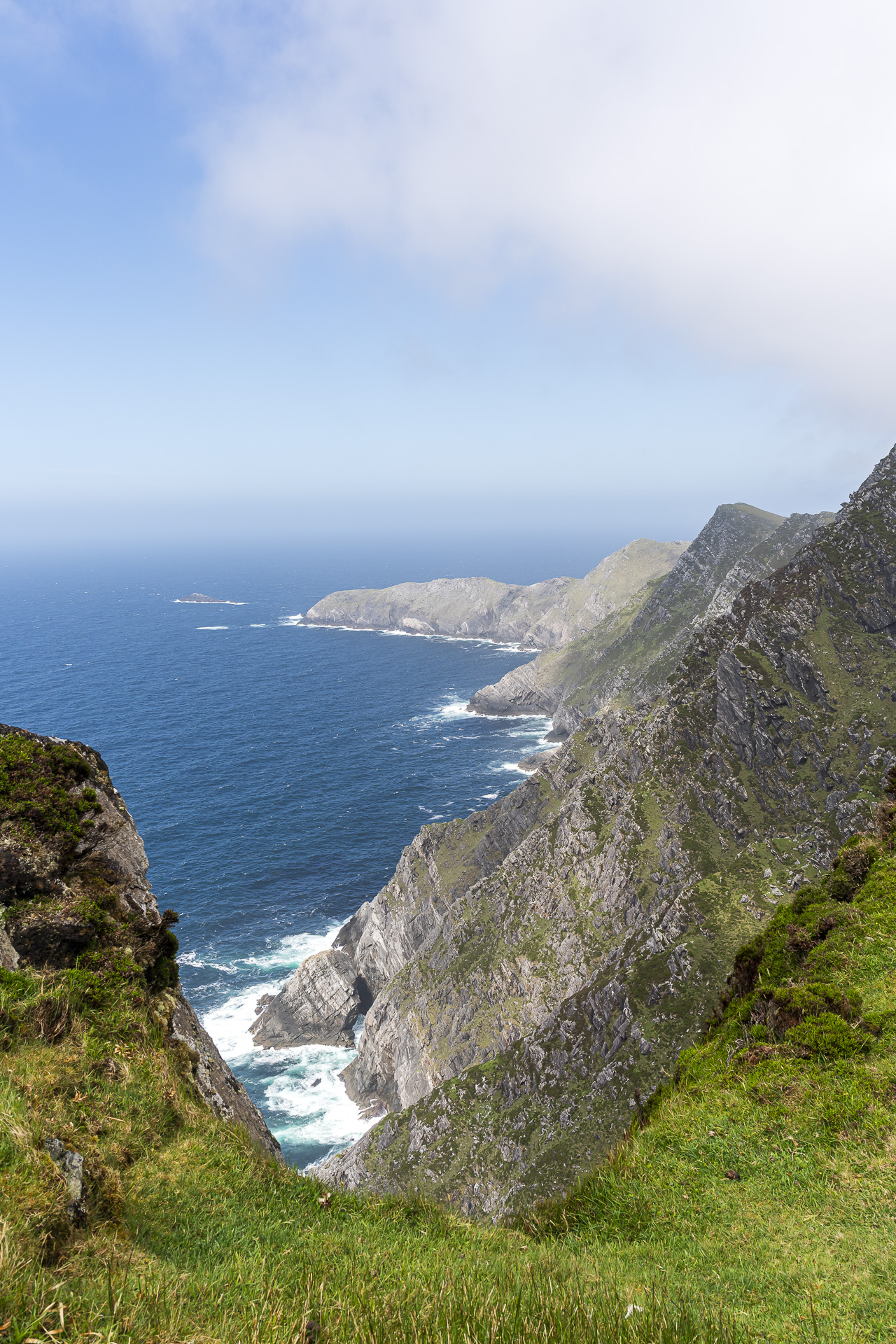
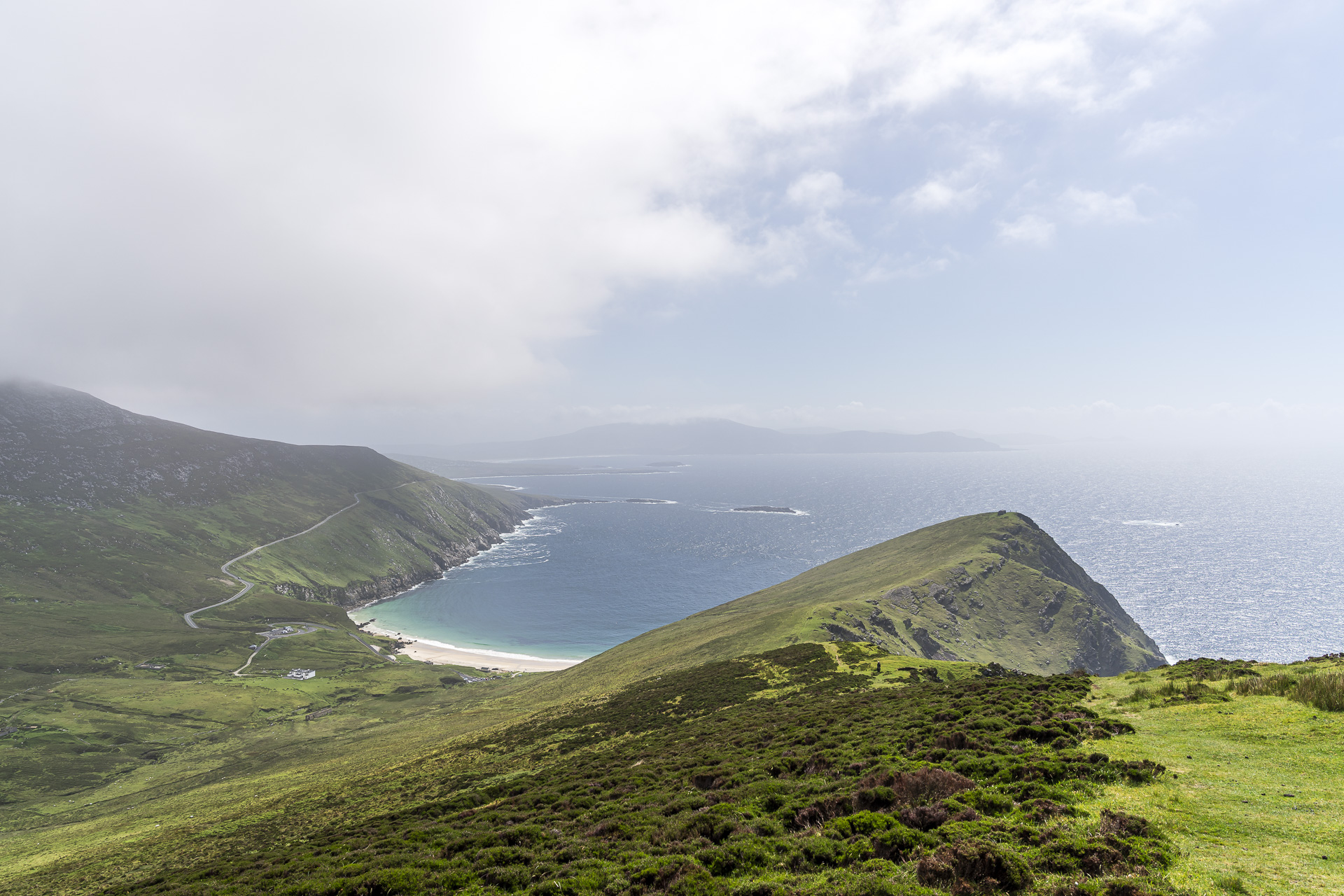
I recorded a Komoot track for this route. Note that on the second summit we spent a good hour waiting in vain for the clouds to clear a second time — pure walking time is about 2 hours. On the way back it’s advisable to watch the ground a bit. If you want to keep your feet dry, you should bypass the boggy sections as generously as possible.
If I had to choose a single hike that belongs on every bucket list for a trip along the Wild Atlantic Way, this would be it!
17. Beach sauna at Keel Beach
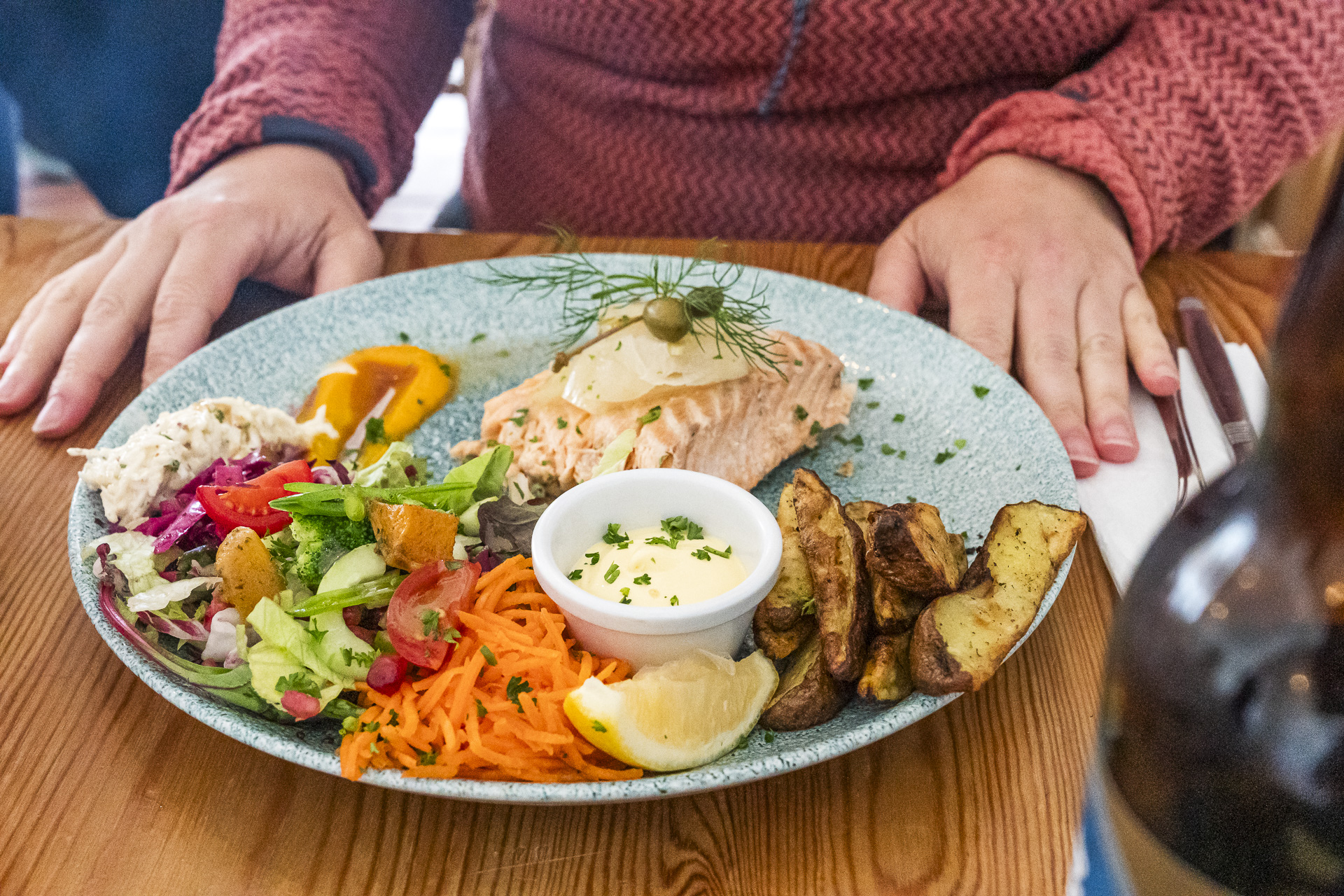
Shortly after noon we returned from the hike. Keem Beach would actually be ideal for a picnic in a dreamlike setting. Due to the uncertain weather forecast, however, we refrained from buying a lot and instead headed to the place about a ten-minute drive away Beehive Café in Keel EastWe stop there. The house specialties include fish cakes and smoked salmon, served with a mix of fresh salads and potatoes – very tasty!
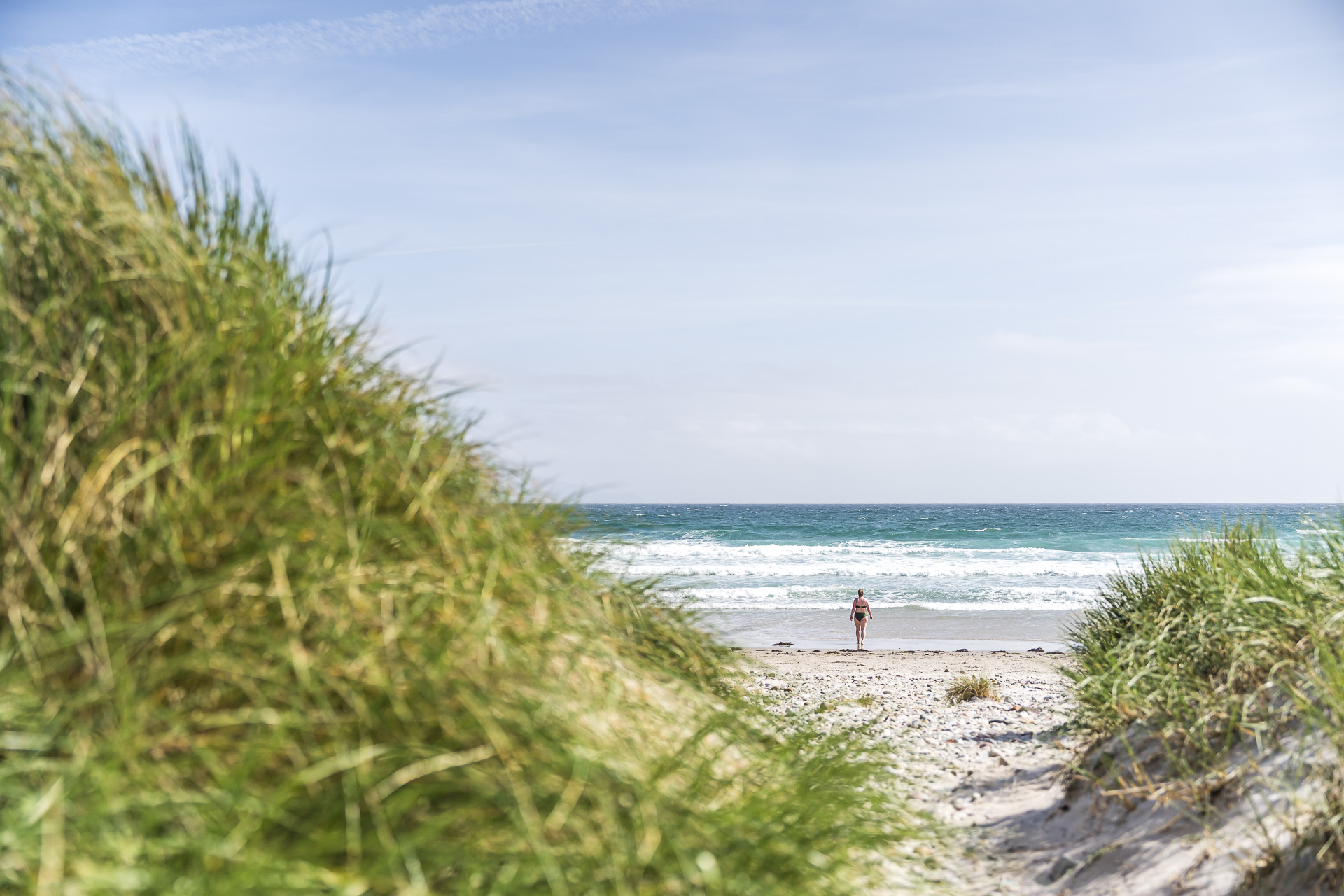
After that, a very special form of relaxation is on the agenda: sauna bathing on the beach. The Sabhna Saunas run mobile wood-fired saunas at selected coastal locations in the west of Ireland. And exactly such a place is the Keel Beach. The wood-fired sauna stands right on the beach. For an hour we enjoy alternating sensations between cozy warmth with a view of the Atlantic waves and a refreshing dip in the sea.
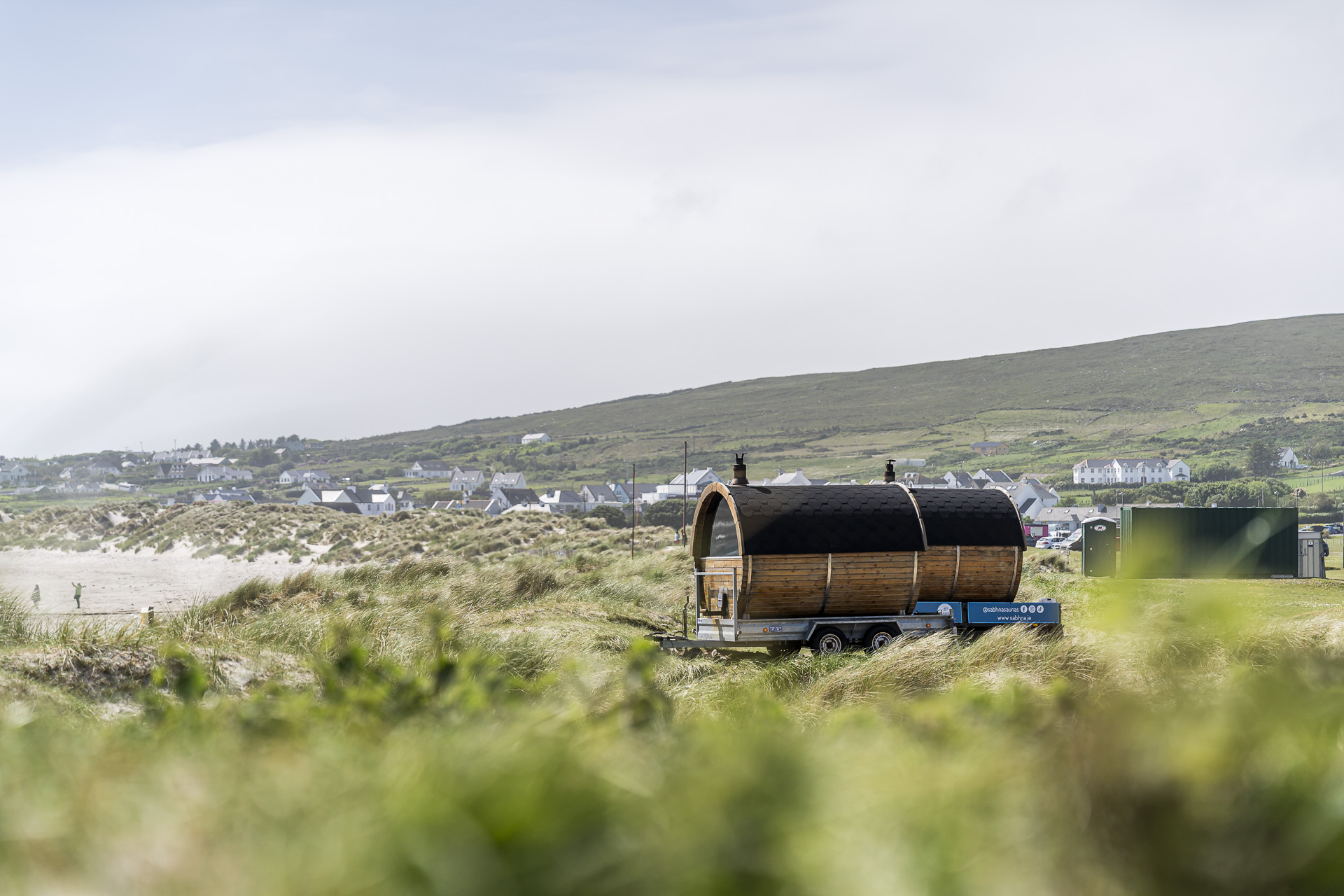
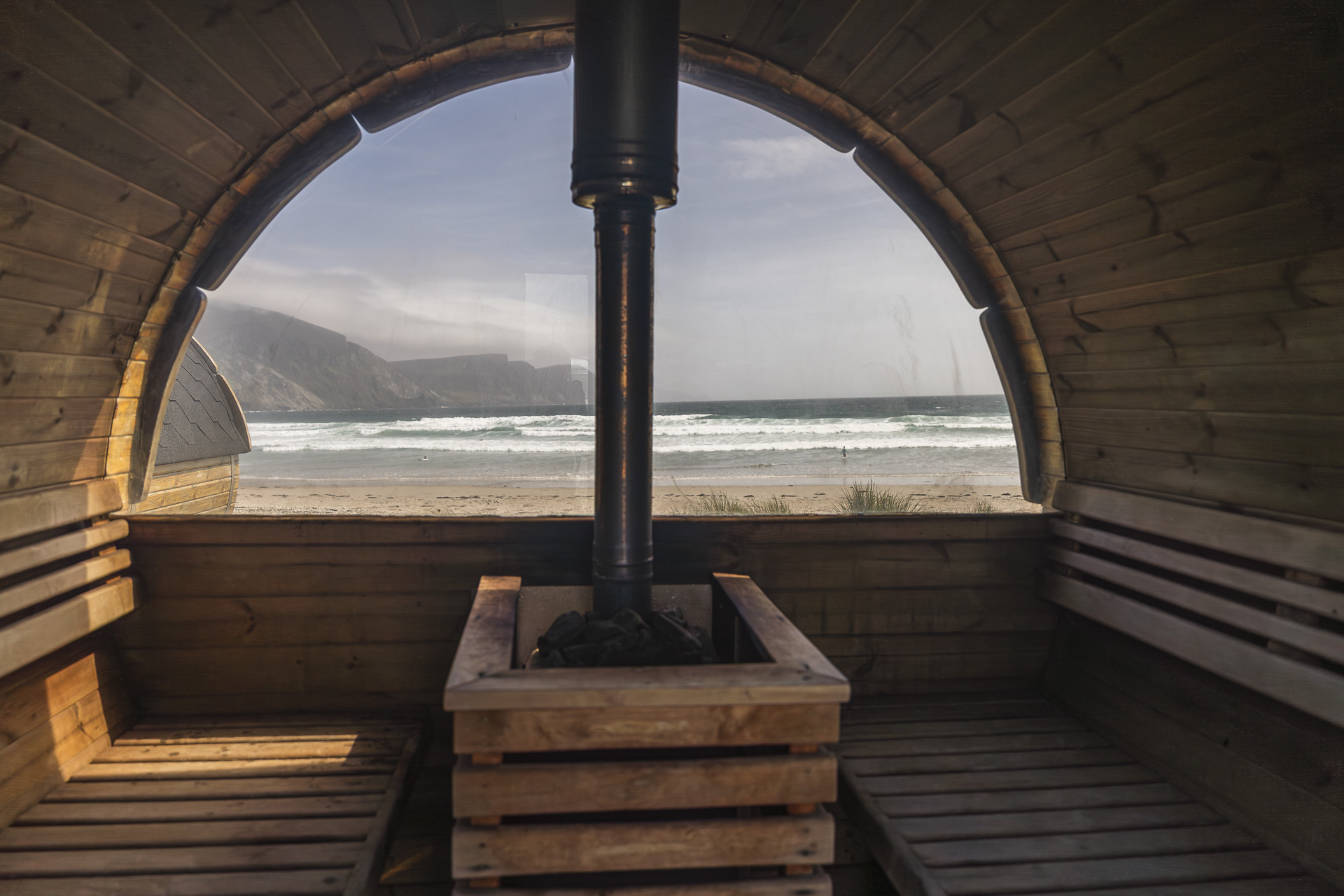
Good to know: For a 60-minute ‘shared’ session you pay 20 Euro per person | You can also rent the saunas for a private session; prices here start, depending on the number of people, at 90 Euro | Bring flip-flops or beach shoes, as the path from the sauna to the beach is rather rocky | More info: Sabhna Achill Saunas
18. The pilgrimage mountain Croagh Patrick
The Croagh Patrick is one of Ireland’s best-known mountains and is considered the country’s most important pilgrimage mountain. According to tradition, St. Patrick is said to have stayed and fasted on the summit for 40 days in the 5th century. To this day thousands of people still make a pilgrimage to the 764-meter mountain every year, especially on the last Sunday in July, the so-called ‘Reek Sunday’. Ideally you’d want better weather for this hike — the view is supposed to be magnificent. But after so many sunny days we don’t want to complain that the weather didn’t quite cooperate on this last day of our first Ireland stage.
Even so, the ascent will stay with us for a long time. At the start it initially seemed as if the sun would prevail. But over the following roughly 1.5 hours we fought our way through wind, rain and fog to the summit. At least we weren’t the only ones. We found that the locals are hardly impressed by the weather. Even on a day when in Switzerland you’d probably have encountered only a few hikers, many people undertook the long and steep ascent.
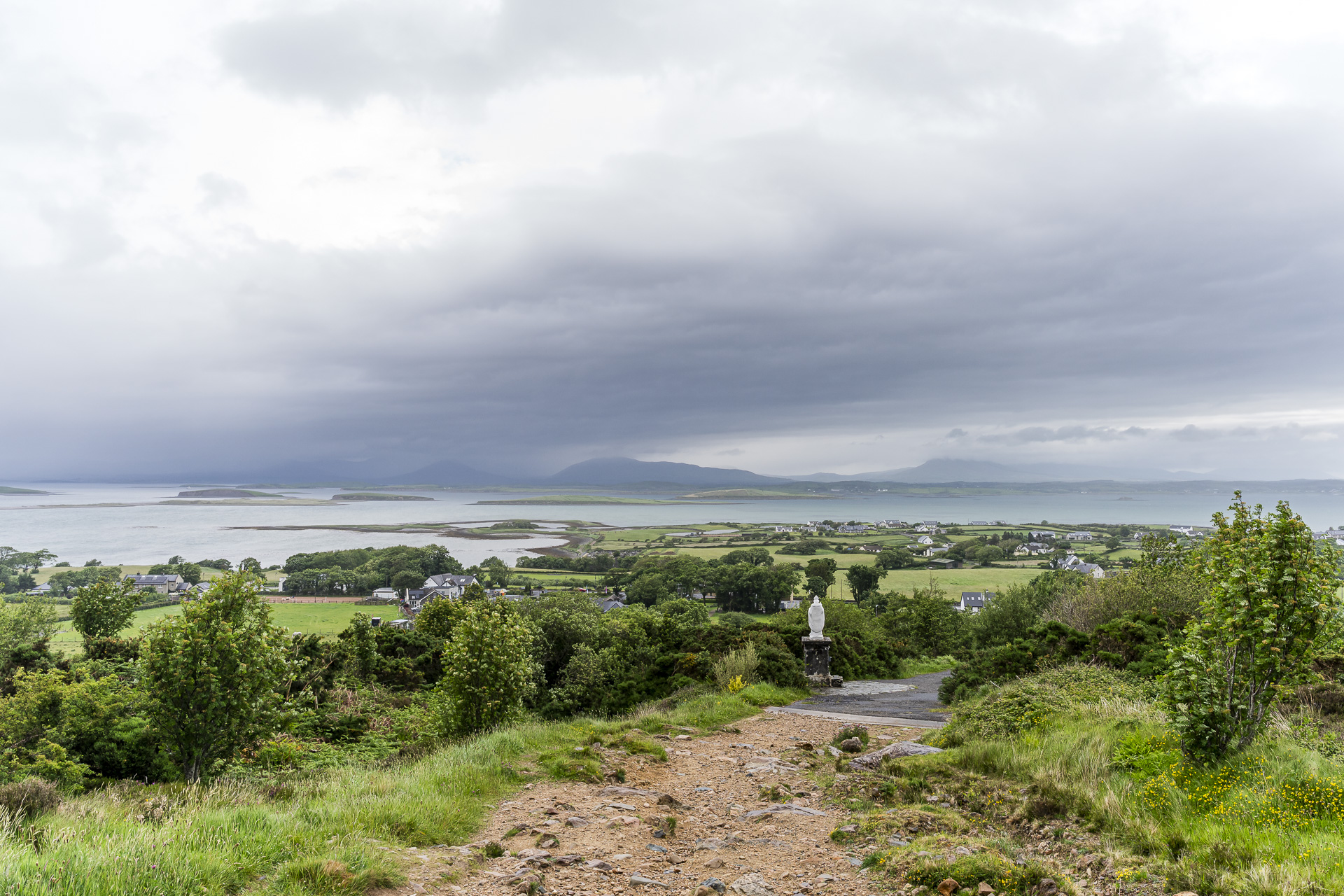
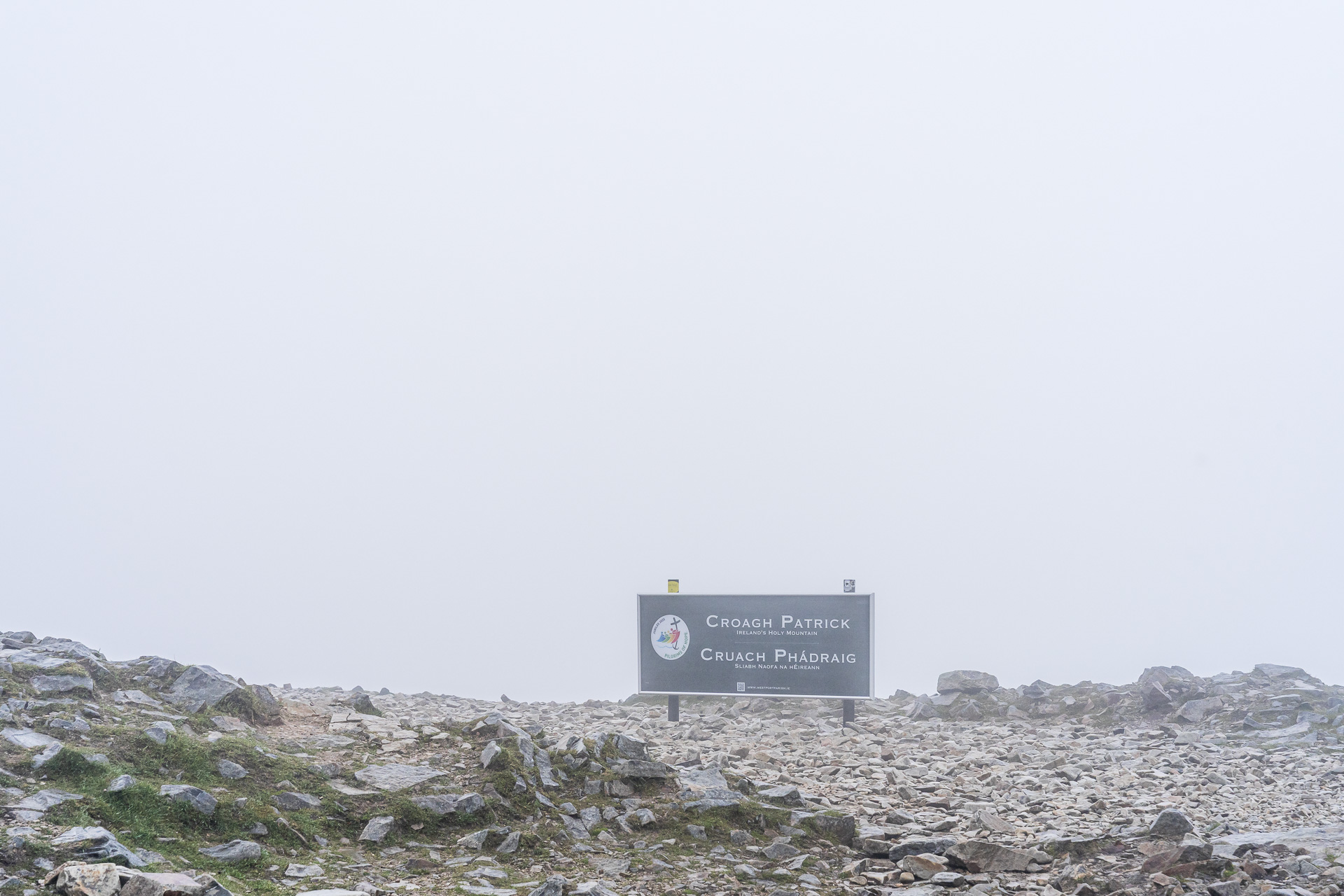
I also recorded a Komoot track for this hike. In terms of fitness the tour is quite demanding. On the plus side, the path is continuously marked and signposted, which is definitely an advantage in fog.
Practical tips for your trip along the Wild Atlantic Way
- What’s the best way to get to northwest Ireland?
There are regular direct flights from Switzerland to Dublin. Alternatively, as we did, you can also travel by train and ferry. Plan on two travel days for this option. From Dublin, Westport is about a three-hour drive. If you plan to continue directly toward Donegal and want to avoid additional costs, make sure your route doesn’t include any stretches through Northern Ireland. With rental cars, some providers may charge extra fees for driving across the border into Northern Ireland. - Do you need a rental car for this route?
Yes. Many of the attractions featured in this post are located away from larger towns and are difficult to reach by public transportation. For a flexible trip along the Wild Atlantic Way I therefore recommend a rental car. - What time of year is best for a trip to western Ireland?
Ireland’s climate is strongly influenced by the Gulf Stream and is characterized by mild winters and pleasantly warm, but rarely hot, summers. We traveled at the end of May and the beginning of June and would choose that period again any time. Late spring and early summer are considered particularly sunny and relatively dry. However, it’s rare for the Irish west coast to be completely rain-free. Even in the summer months, weather changes can occur at any time. A rain jacket should therefore be part of any trip along the Wild Atlantic Way. - How much time should I plan for a trip along the Wild Atlantic Way?
When planning a trip to Ireland there’s a risk of underestimating the distances. The Wild Atlantic Way stretches about 2,500 kilometers along the entire west coast of Ireland. If you don’t just want to drive the route but also want time for hikes, sights and spontaneous stops, don’t pack the schedule too tightly. For the leg presented in this post through the counties Donegal, Sligo and Mayo we spent 5 nights, or 6 days. We found this time ideal for exploring the region at a relaxed pace and having enough room for hikes, excursions and special experiences. If you also want to explore the southwest of Ireland with Kerry and the Cliffs of Moher, plan at least two to three weeks for a trip along the entire Wild Atlantic Way. - Which attractions should you not miss in northwest Ireland?
Our personal highlights include the Slieve League Cliffs, the Silver Strand, Glenveagh National Park, Benbulben, Achill Island with the Cliffs of Croaghaun, and Croagh Patrick. - Is Achill Island worth visiting?
Yes. Achill Island is, for us, one of the most beautiful regions of Ireland. The combination of spectacular cliffs, beautiful beaches and scenic hikes makes the island one of the highlights along the Wild Atlantic Way.


Leave a Reply