



Short Trip to Vorarlberg: 10 Day-Trip Ideas Between Lake Constance and the Bregenz Forest
Sponsored: Article in cooperation with Vorarlberg Tourism
The westernmost state of Austria is always a worthwhile destination for a short weekend trip. After all, Vorarlberg has surprisingly much to discover in a small area: pretty small towns like Bludenz, diverse Alpine valleys like the Montafon, art and culture in Bregenz, innovative timber architecture in the Bregenzerwald and, across the board, a pronounced sense of enjoyment.
At the end of August we spent another long weekend in Vorarlberg, just on the last weekend of the long-running Bregenzer Festspiele. We came away with 10 day-trip ideas between Lake Constance and the Bregenzerwald, each of which on its own is a good reason to make a detour to Vorarlberg.
The Bregenz Forest—known locally as the Bregenzerwald—is at the heart of this itinerary, alongside Bregenz on Lake Constance.
1. Take a walking tour of Bregenz
Bregenz may be compact with its roughly 30,000 inhabitants, but the state capital of Vorarlberg certainly doesn’t lack sights. And the best part: Many of the most beautiful spots can be easily linked on a leisurely stroll through town.
If, like us, you travel to Bregenz by train, it’s best to follow Sankt-Anna-Strasse from the station toward the city center. From Römerstrasse the pedestrian zone begins. At Leutbühel it’s worth taking a brief look back at the pretty lakeside chapel before following the Mauerachgasse steeply up into the Oberstadt stroll. With its narrow, cobblestone-paved lanes, it’s an absolute gem and definitely worth the short climb.
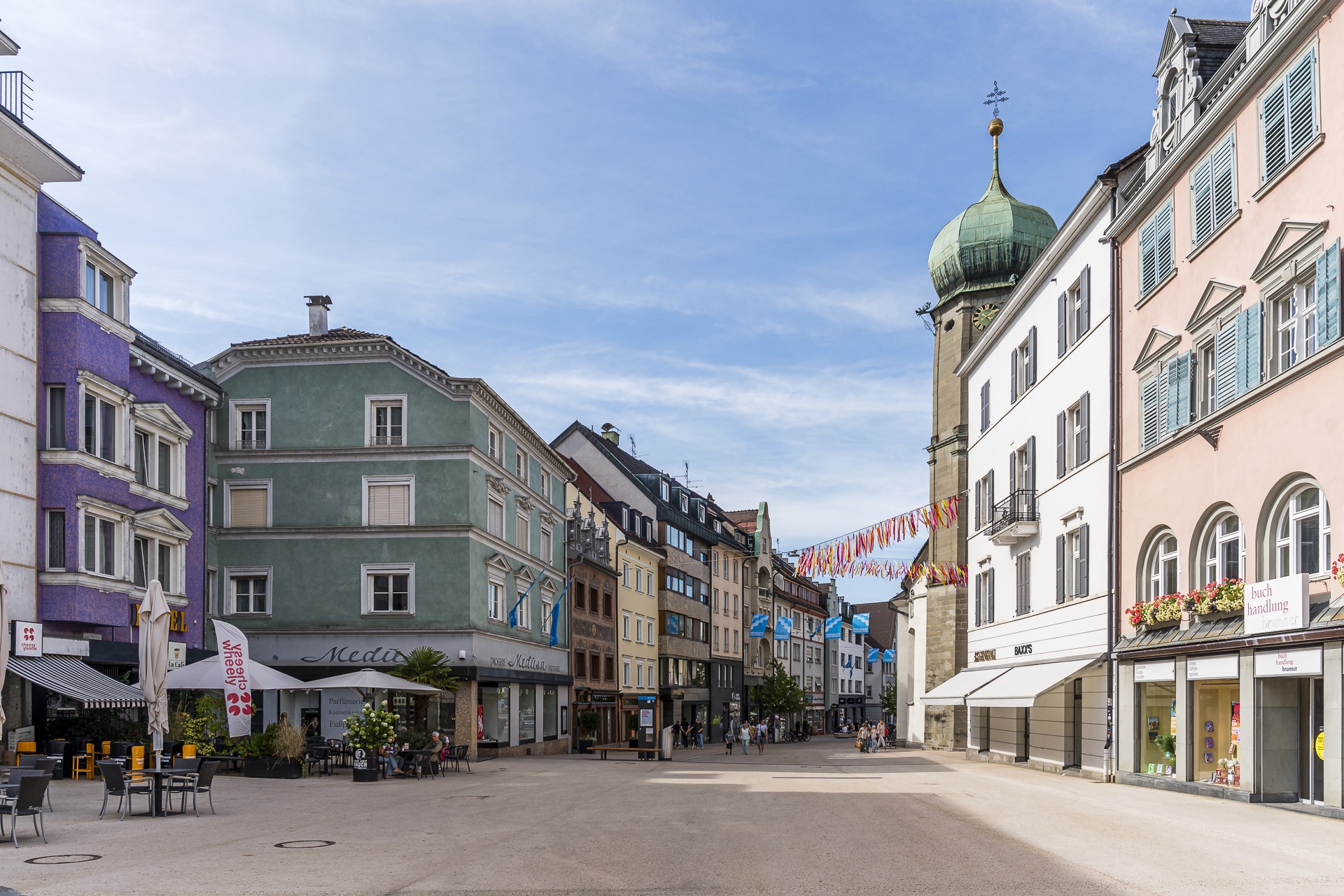
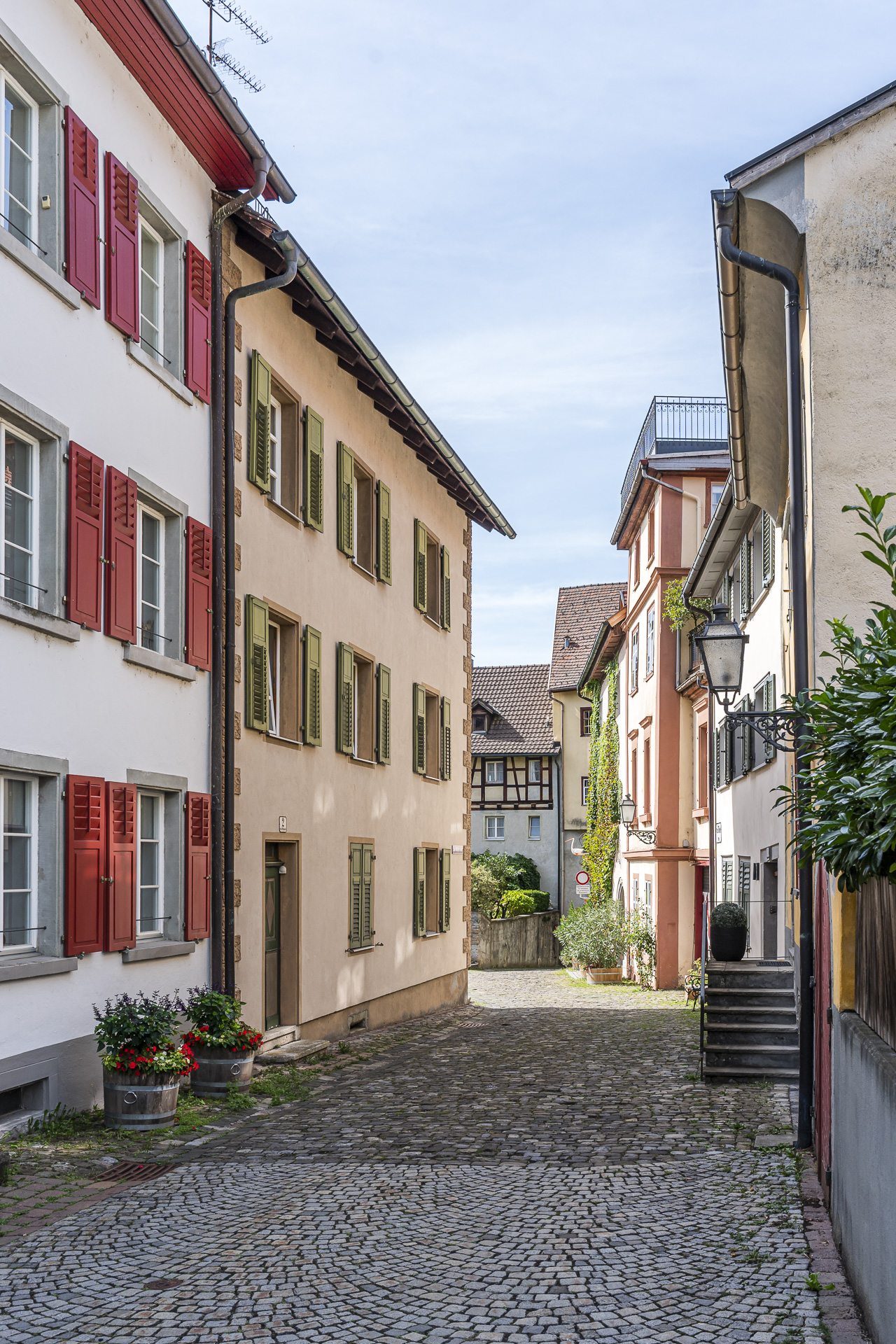
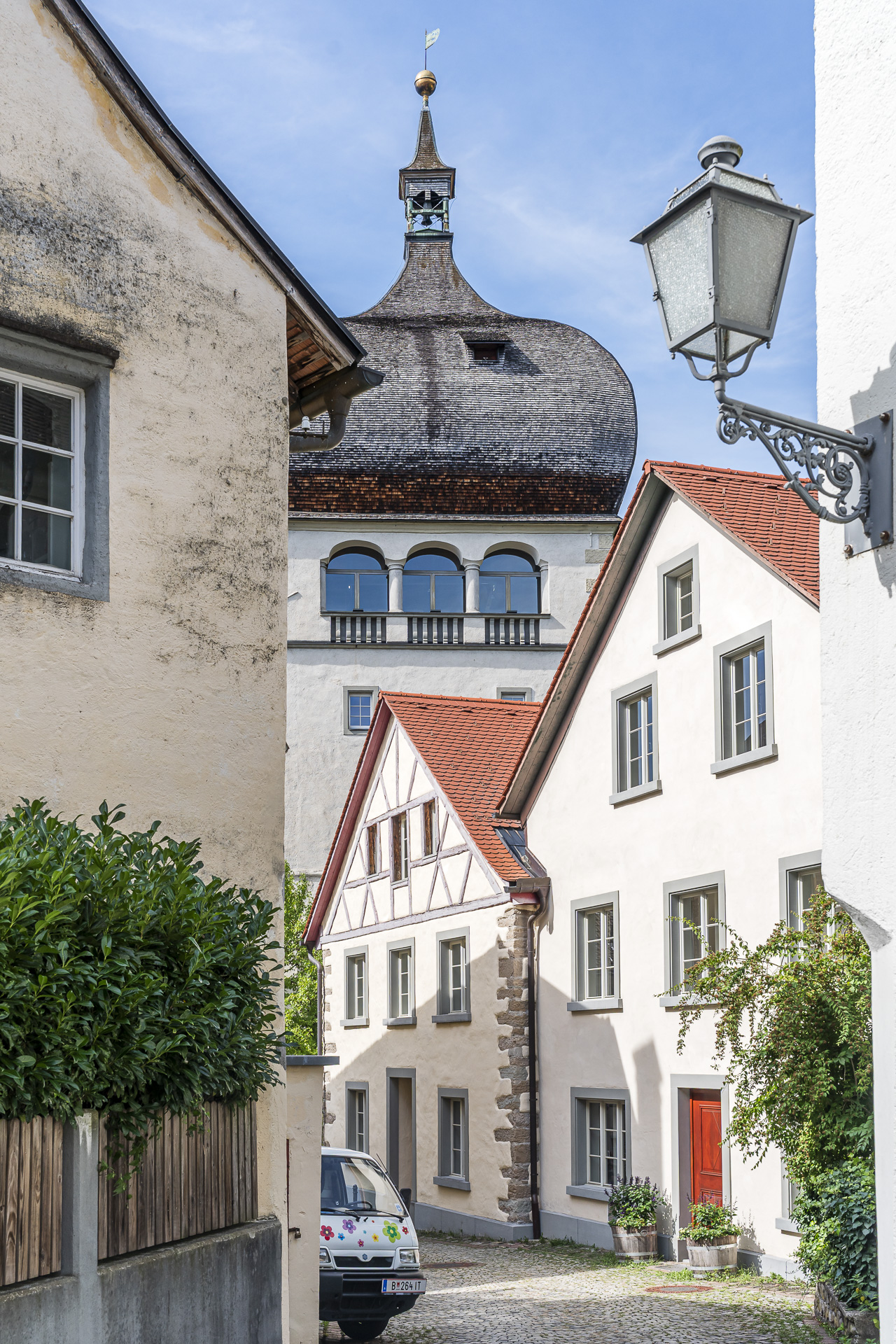
The main attraction up here is Bregenz’s landmark: the Martinsturm. From May to October the tower can be climbed from Tuesday to Sunday between 10:00 and 18:00. The view over the town, Lake Constance and the surrounding green rolling hills is said to be beautiful. Unfortunately we didn’t have time to see it for ourselves.
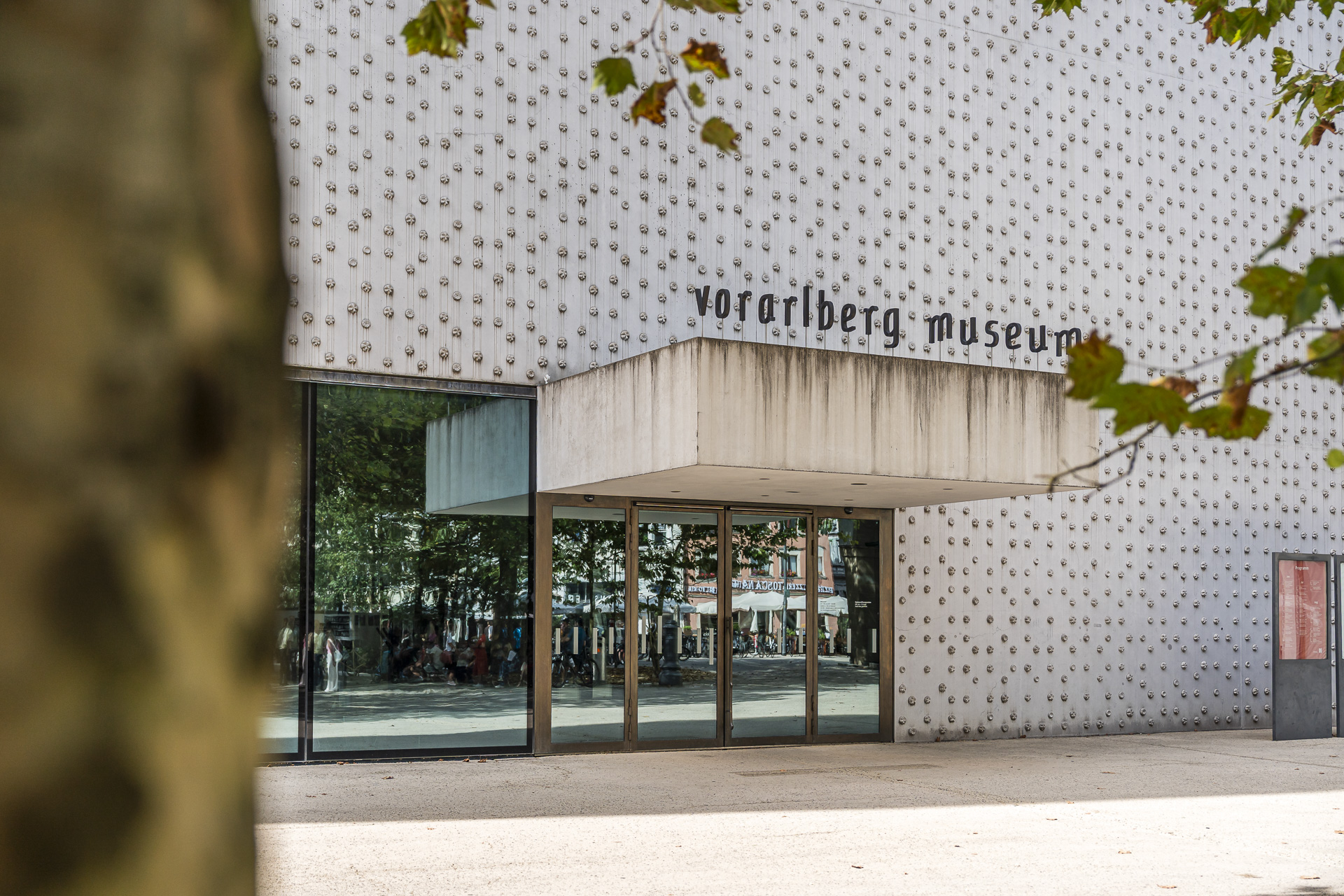
Instead, we took a look inside the vorarlberg museum. The museum is not only architecturally interesting, but it also impresses with engagingly presented exhibitions about the region’s history and present day. Just a few steps away is the Kunsthaus Bregenz a second museum that, in my opinion, is definitely worth a visit.
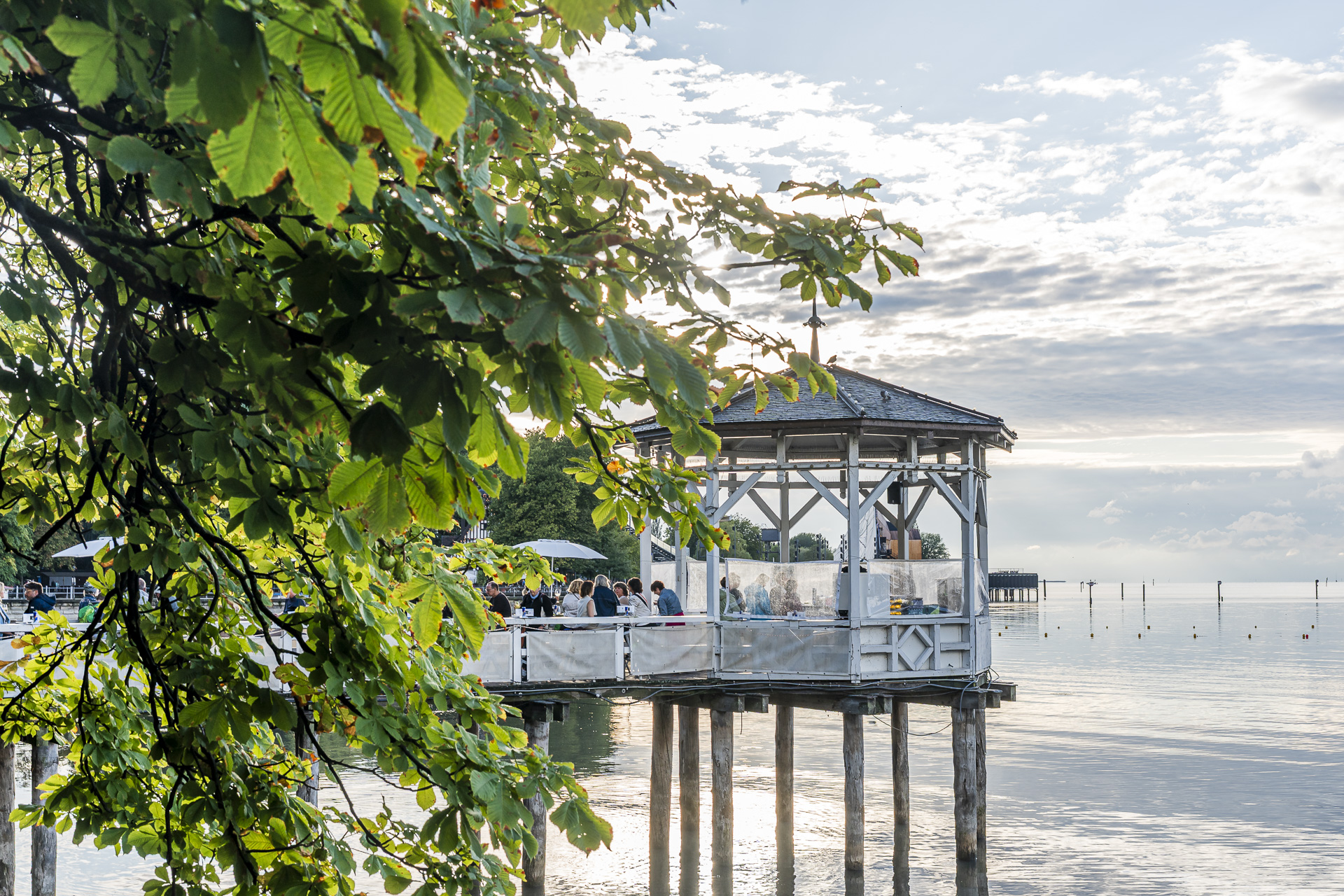
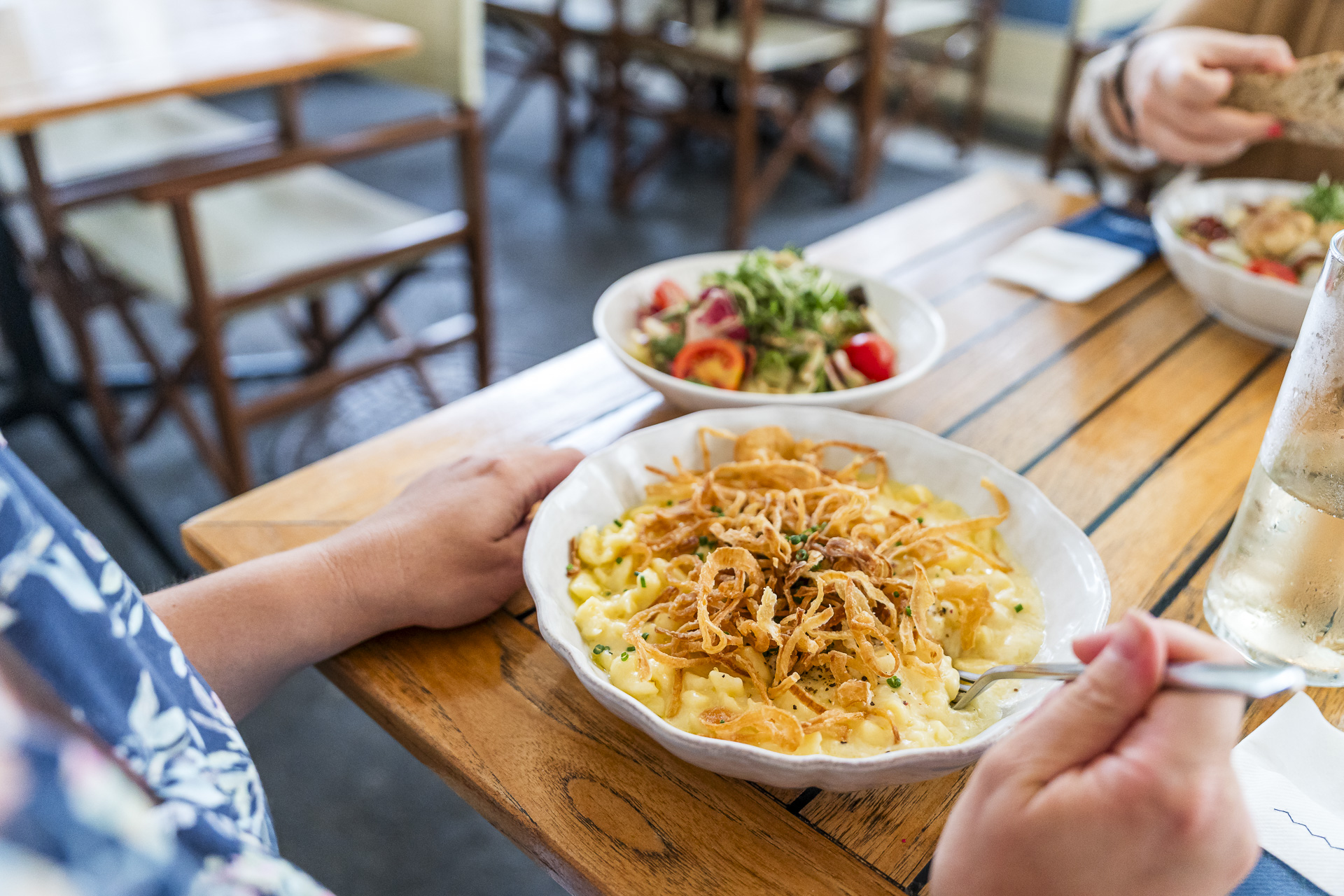
Our city walk then takes us to the Restaurant Pier69 right at the Bregenz Hafen station. After a hearty meal of Vorarlberger Kässpätzle, we follow the lakeside promenade to the Fischersteg. The white pavilion on wooden piles in Lake Constance is not only a popular photo motif, but in good weather also one of the most beautiful places in Bregenz to watch the sunset with an aperitif.
Good to know: At Bregenz station there are lockers where luggage can be stored temporarily. Practical if, like us, you make a stopover in Bregenz but don’t stay overnight in the town itself.
2. Go behind the scenes of the Bregenz Festival
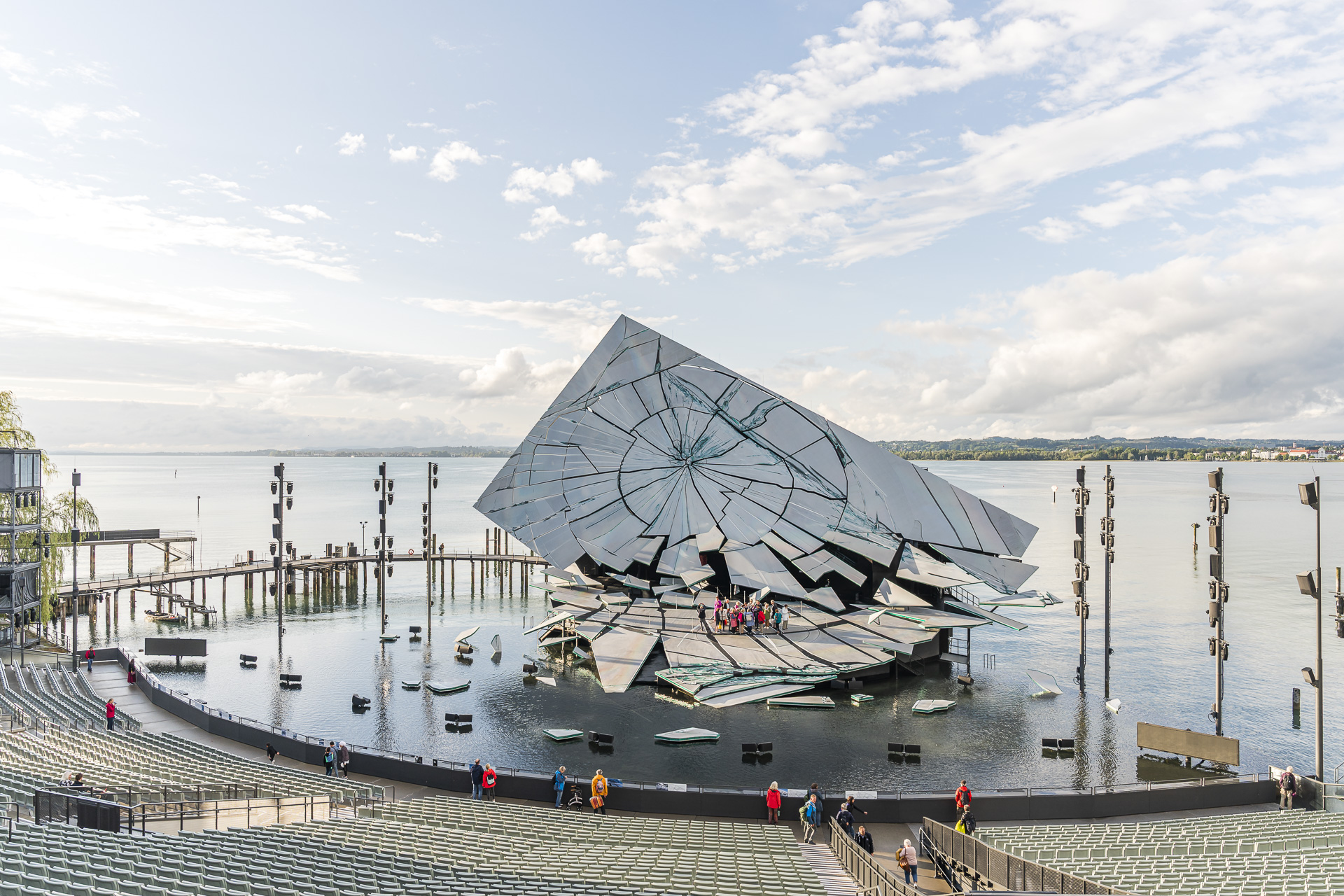
Anyone who visits Bregenz in July or August can hardly miss them: the Bregenz Festival and its spectacular lake stage. This year the festival celebrated its 80th anniversary and brought one of the great classics of the operatic repertoire, Giuseppe Verdi’s “La traviata”, to the lake stage. The production by Damiano Michieletto will be staged again in summer 2027. So there will once again be an opportunity to experience this performance against the spectacular backdrop.
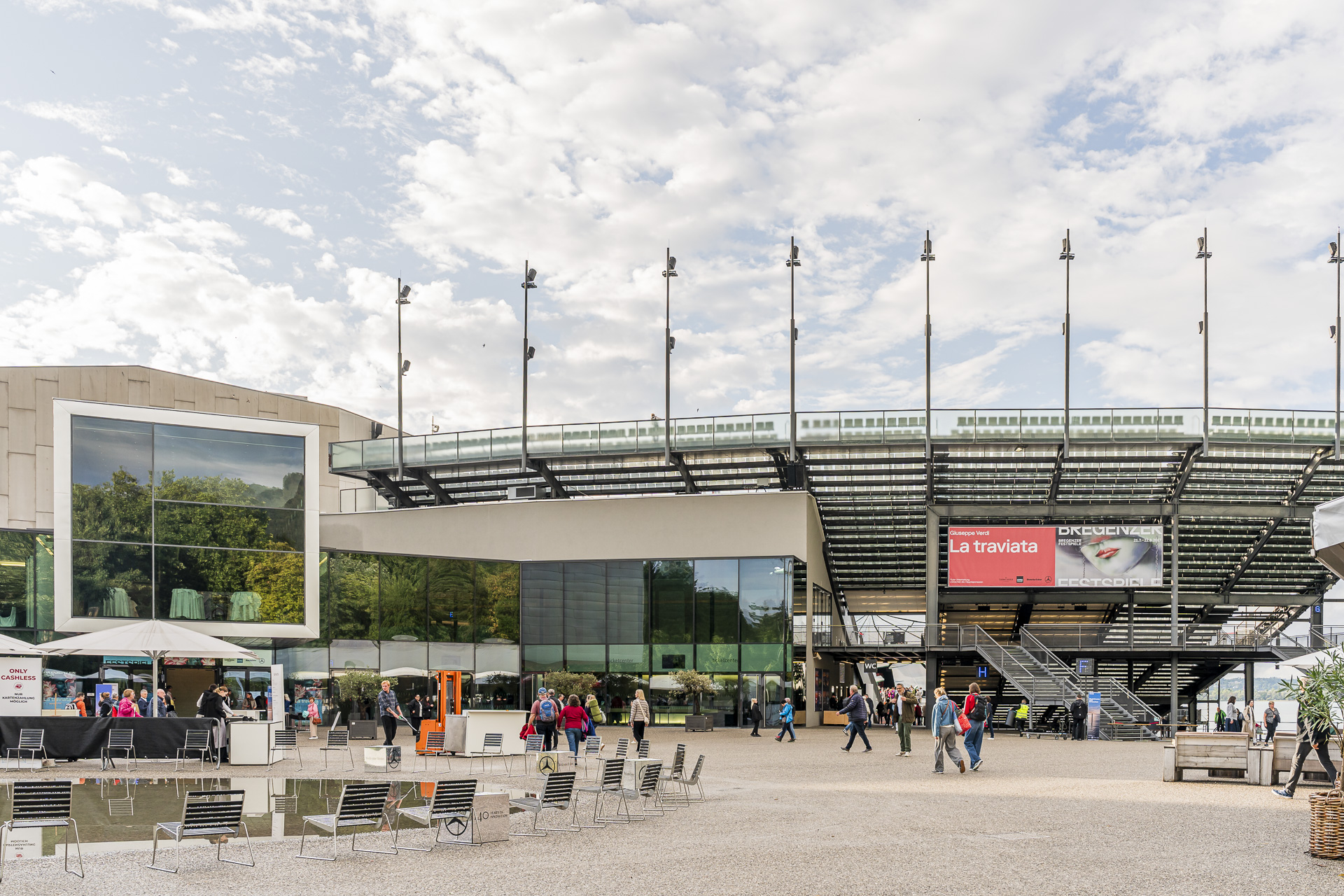
But even without a ticket for an evening performance, a visit to the festival theatre is worthwhile. The audience seating of the lake stage is generally open to the public during the day and can be viewed free of charge. Those who want to dive deeper into the world of the Bregenz Festival can take a roughly 50-minute tour to get a behind-the-scenes look. On it you’ll learn interesting facts about the festival’s history and the current production, gain insights into theatre operations and, provided rehearsals and performances and the weather permit, can even enter the lake stage or the backstage area.
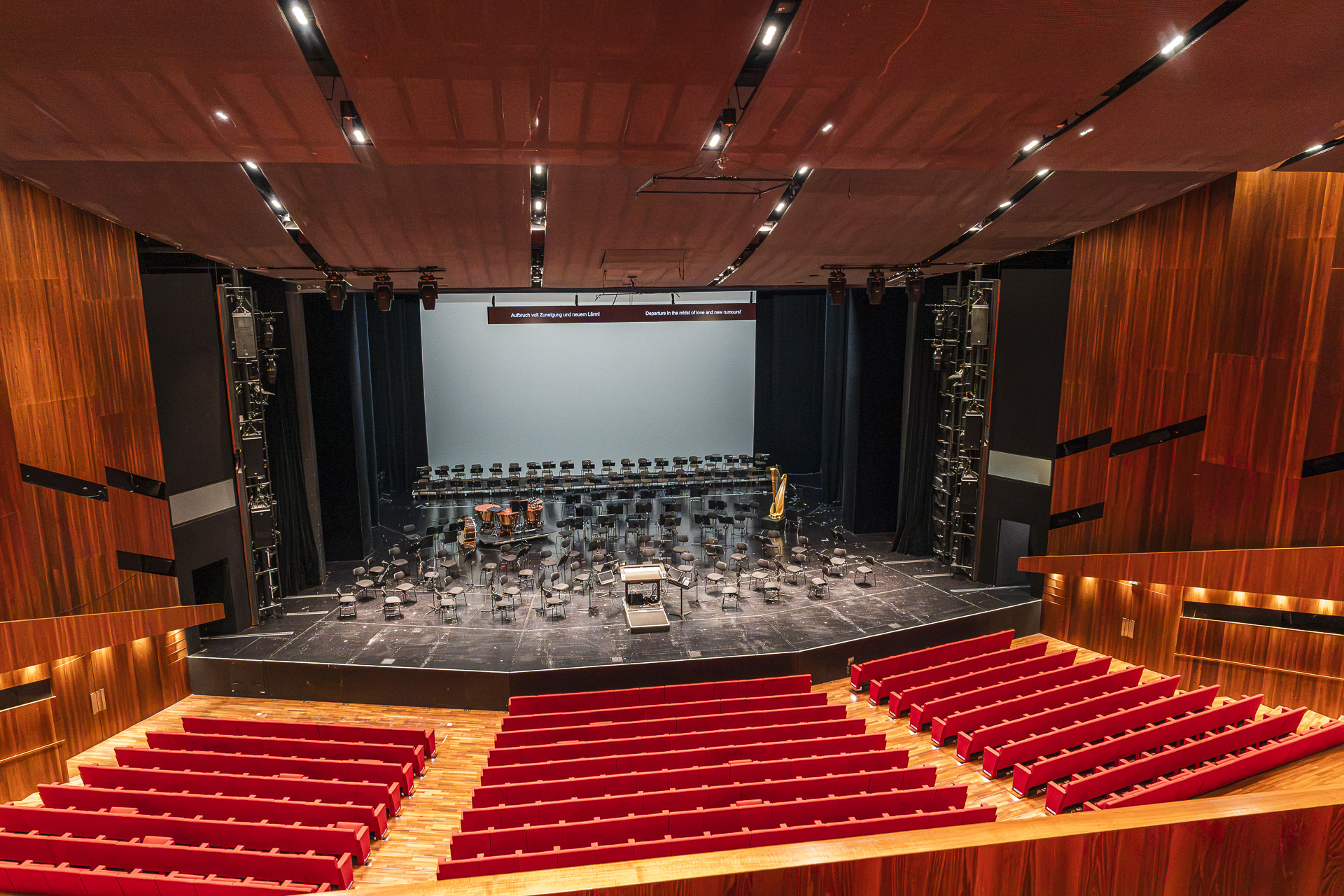
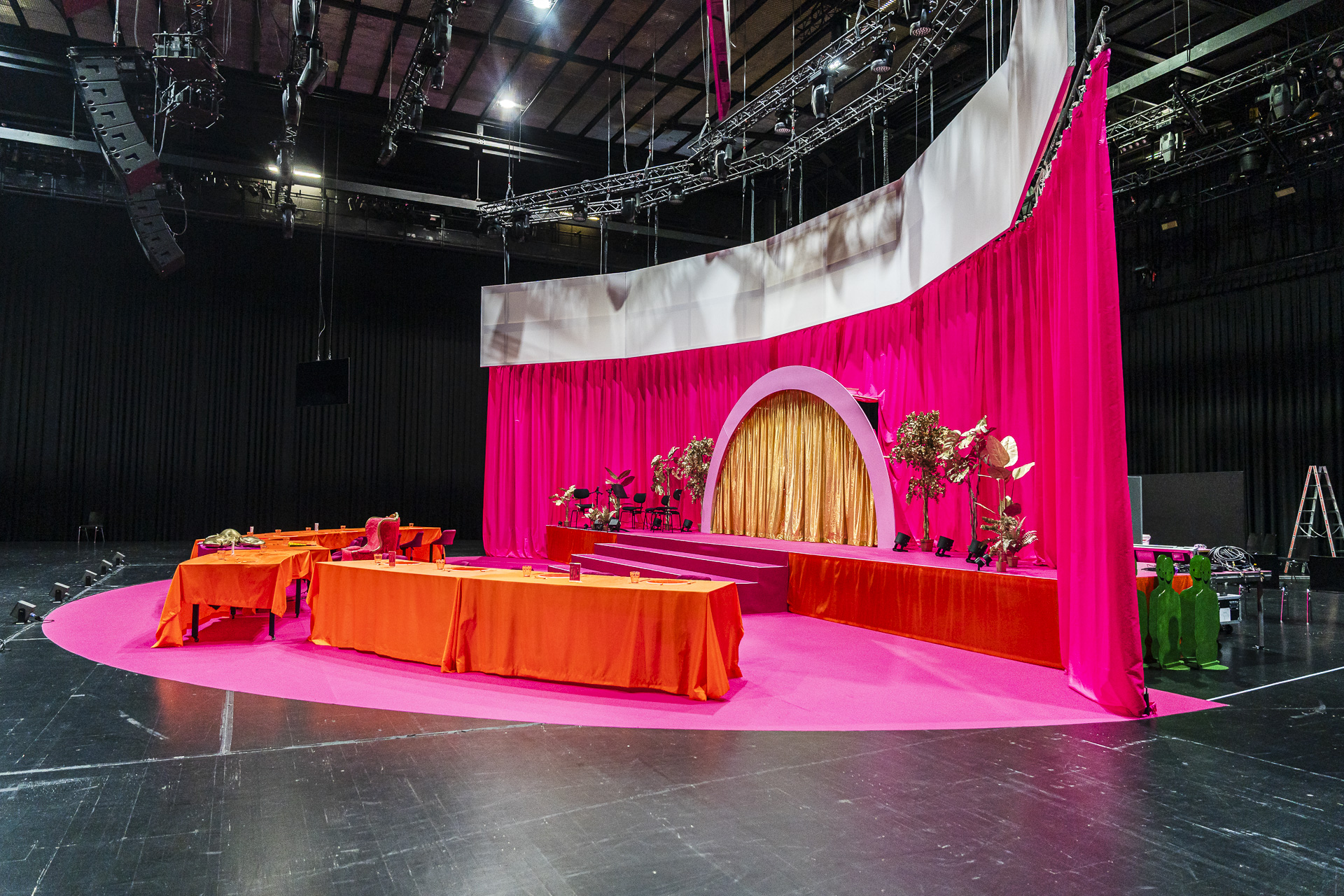
Good to know: In summer 2027 the Bregenz Festival takes place from July 21 to August 22. Further information about the program and the backstage tours can be found on the Bregenz Festival website.
3. Discover Dornbirn as the gateway to Vorarlberg
If, like us, you don’t want to limit yourself to a single region on a short trip to Vorarlberg, Dornbirn is a good choice as a “base.” From Dornbirn station you can reach Bregenz in about ten minutes, and there are also good public transit connections to the Bregenzerwald and Montafon.
A conveniently located option for this is the hotel FLINT, which is situated directly next to the station. The hotel, opened in 2023, is housed in a modern new building by Marte.Marte Architekten that, with its concrete façade, deliberately creates an architectural contrast to the adjacent listed villa. Also worth mentioning is the breakfast buffet, which impresses with an unusually large selection and many homemade products and is also open to outside guests.
And if you’re staying in Dornbirn, it’s worth planning a short stroll through Vorarlberg’s largest town. Around the market square with the parish church of St. Martin and the striking Red House, Dornbirn is surprisingly cozy.
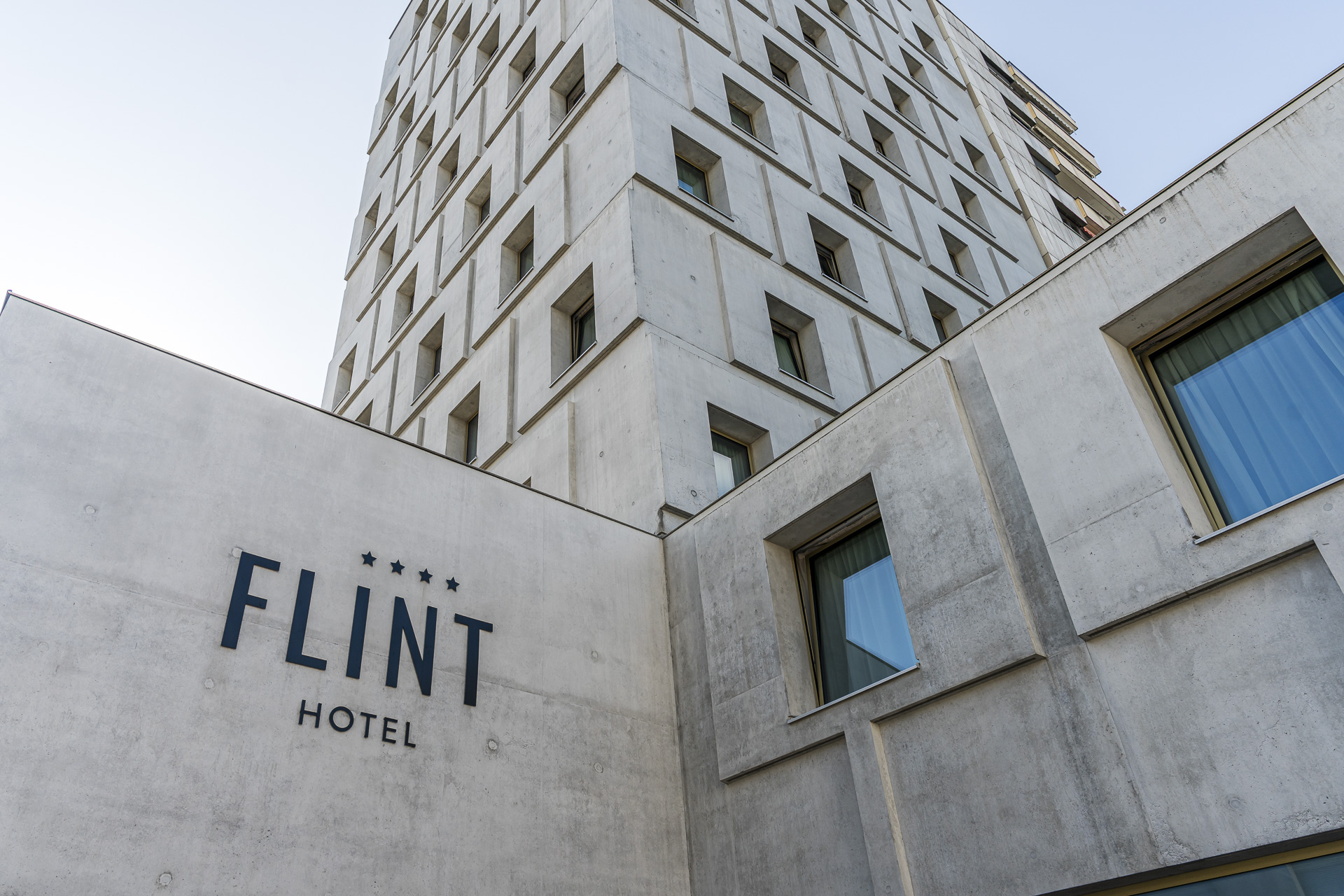
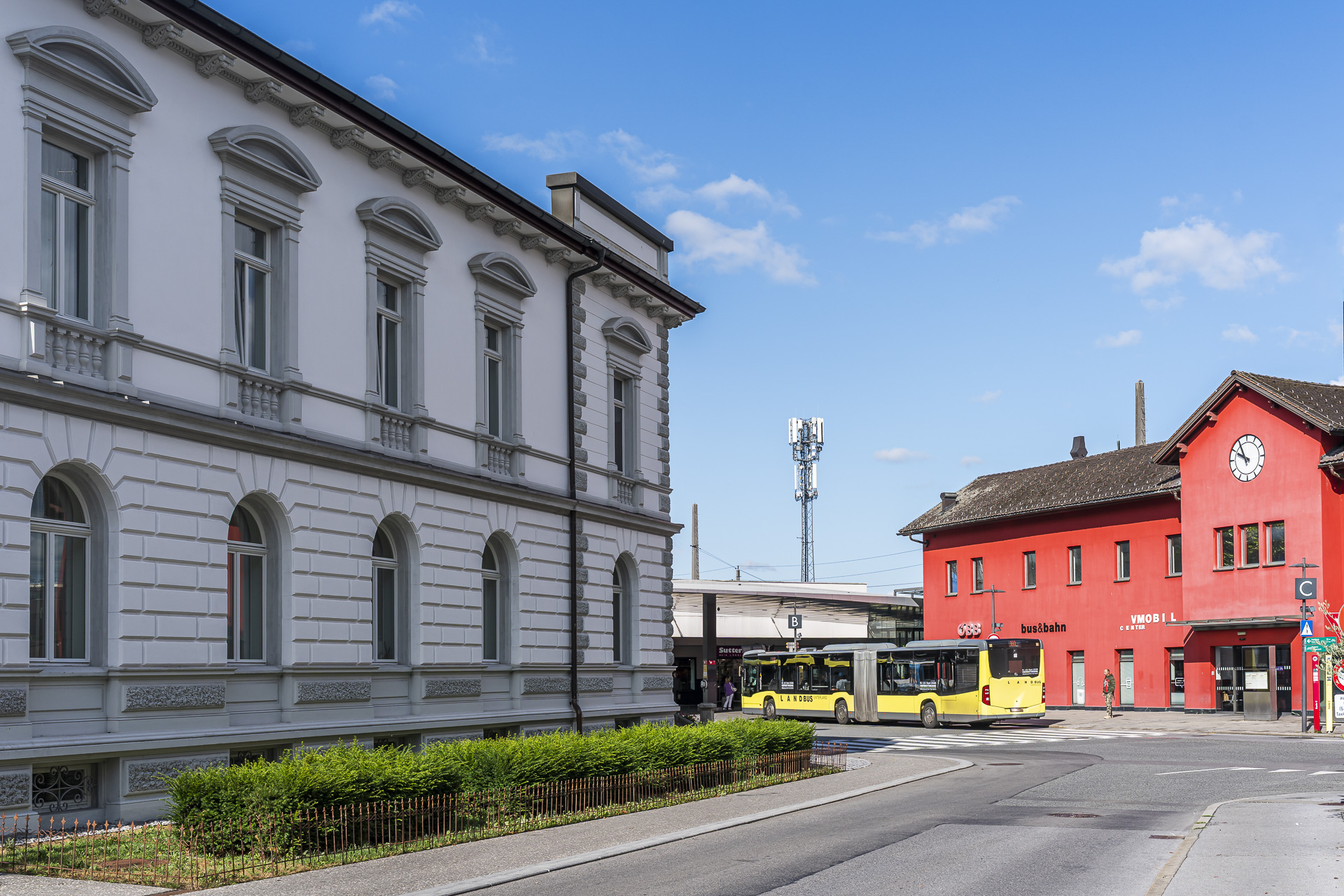
Good to know:Overnight guests receive at Hotel Flint (and other participating establishments in the Vorarlberg.Bodensee region) the Guest Card for Explorers. This allows buses and trains to be used throughout Vorarlberg at no additional cost during the stay. The guest card is valid from the day of arrival through the day of departure and is issued either digitally or as a physical card, depending on the accommodation.
4. Hike through the Fohramoos at the Bödele
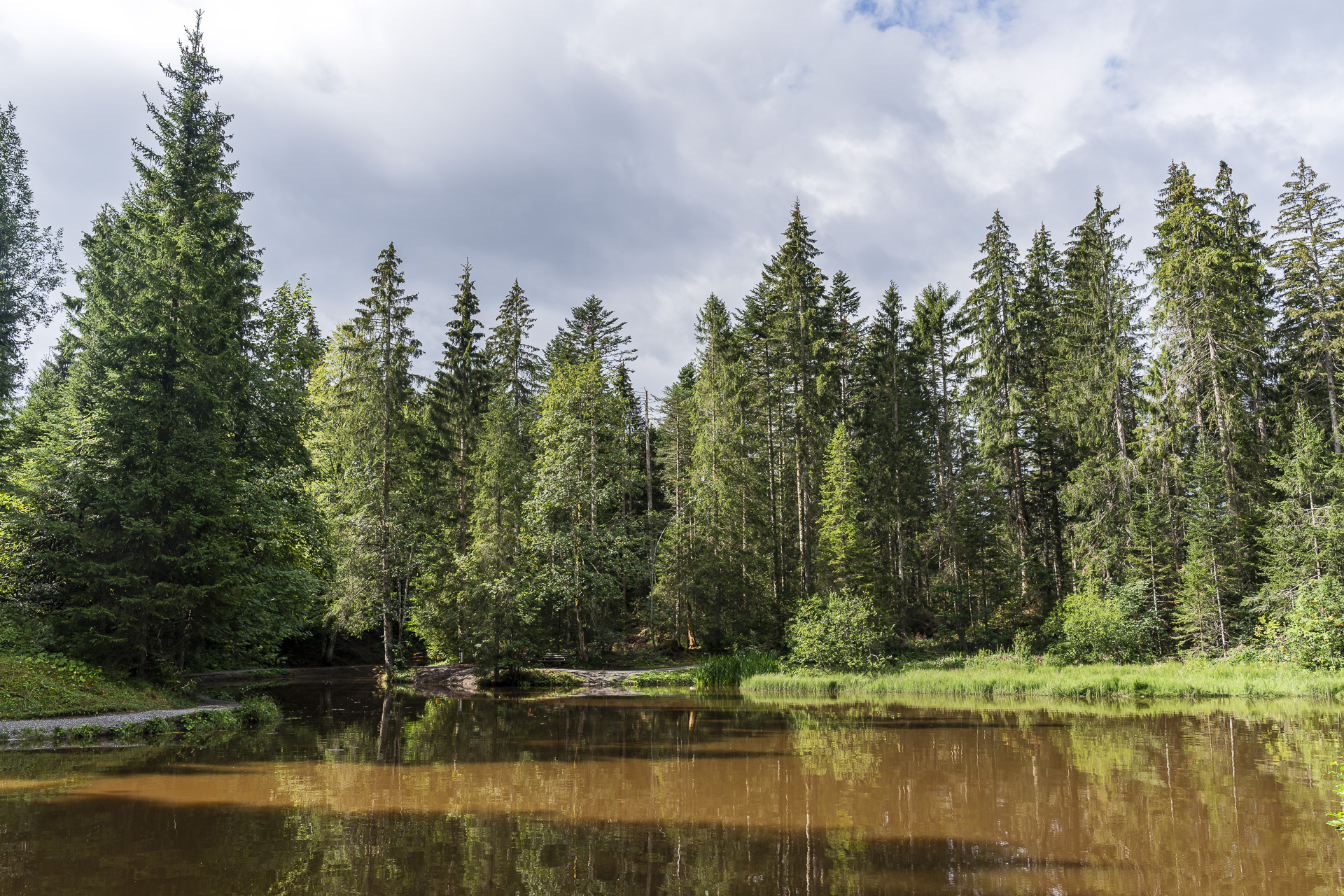
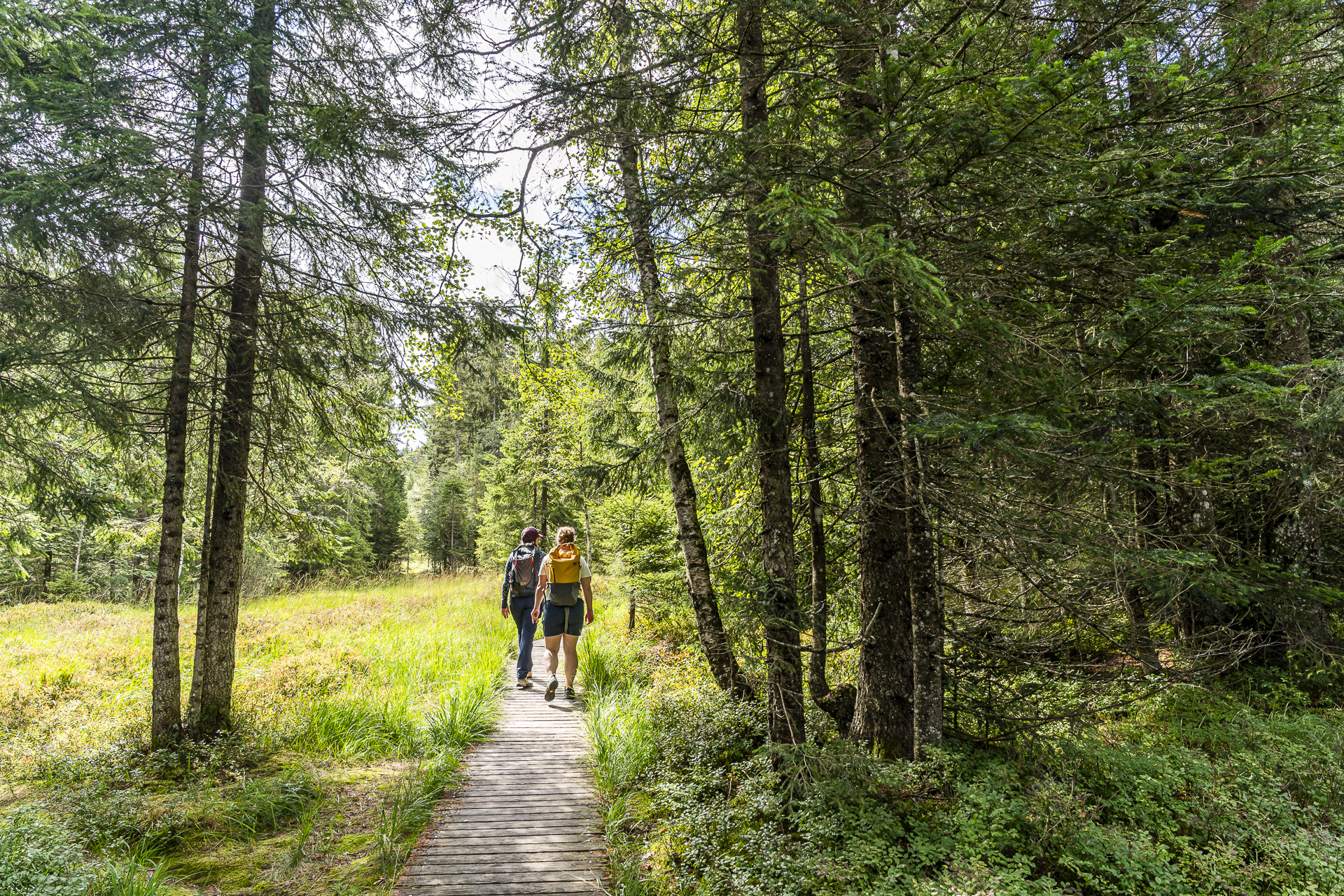
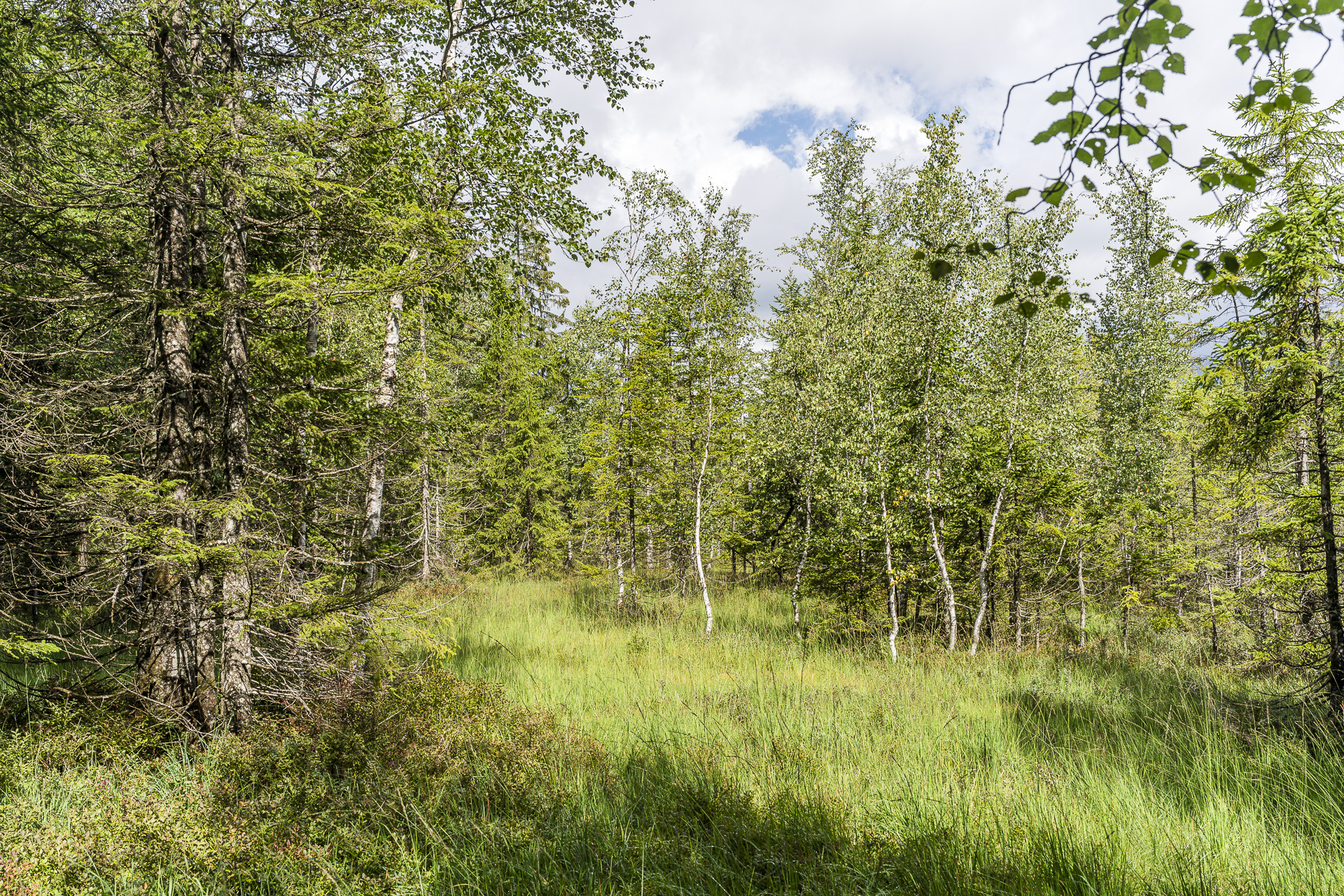
From Dornbirn, take bus line 870 up a winding road to the Bödele, a mountain pass between the Rhine Valley and the Bregenzerwald. Up here the Fohramoos is a special raised-bog landscape that can be explored on an easy circular hike. The roughly 3.5-kilometer path leads from the Bödelesee through bog forests, past birch, pine, and mountain pine. Plan on about an hour for the leisurely loop.
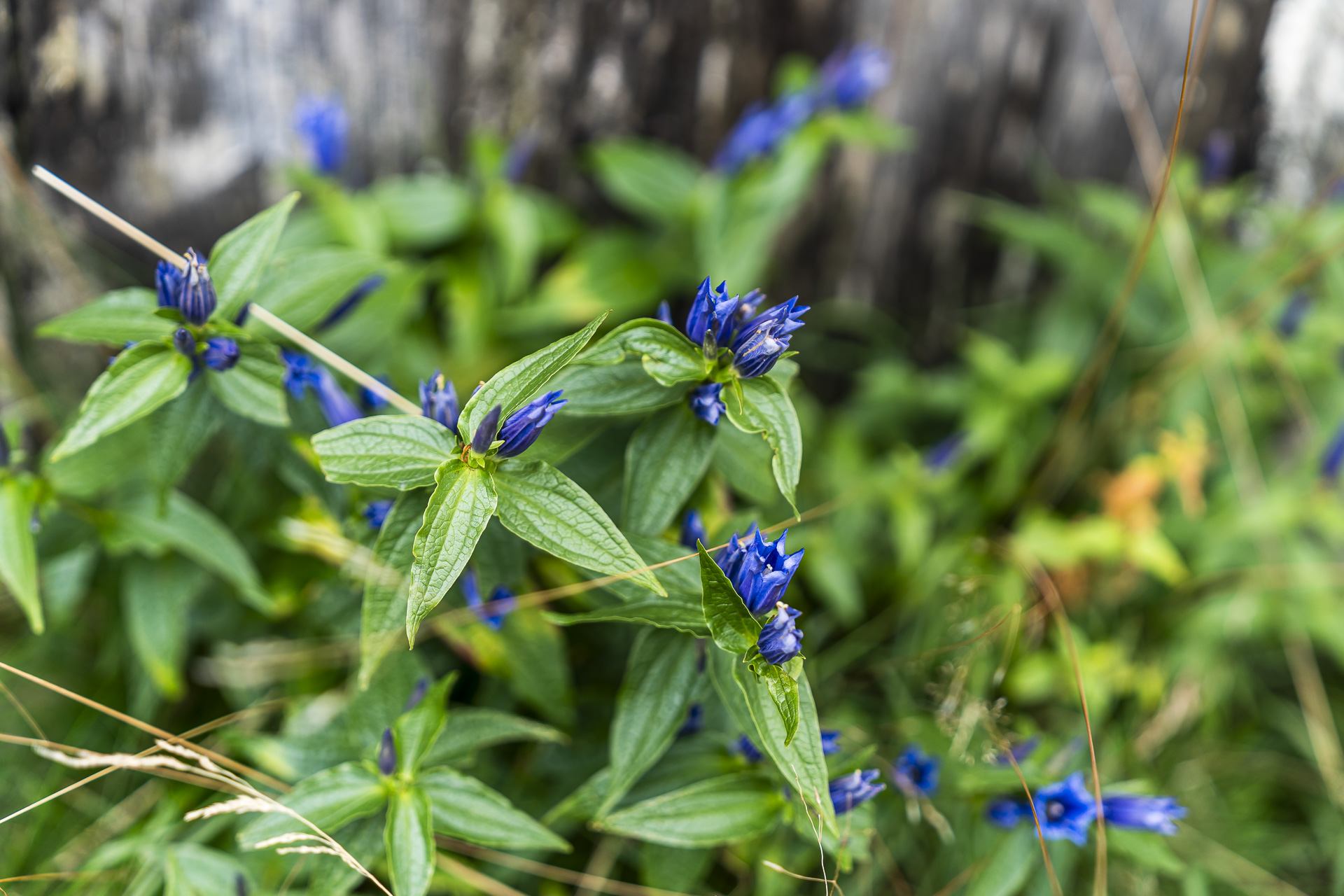
The outing gets even more exciting if you let Katharina Moosbrugger guide you through the Fohramoos. The trained herbal educator and state-certified hiking guide grew up on the Bödele and has known the bog area since childhood. On our tour she draws attention to all the small things we would probably have walked past cluelessly on our own, such as the rare Schwalbenwurz gentian, which glows a beautiful blue. She also shows us that some of what grows at the side of the trail is indeed edible and can be made into teas, salves, or spices. And it doesn’t stay at theory: along the way we’re even allowed to sample a plant or two.
Incidentally, Katharina also gives us practical mnemonics to take along. Thanks to “Tofu” — Tanne oben, Fichte unten — I should from now on be able to tell by the cones whether a fir or a spruce is in front of me: on the fir they stand upright, on the spruce they hang down.
Good to know: Here goes to the route description of the circular hike through the Fohramoos. You can find out more about Katharina Moosbrugger’s guided herb and bog walks at naturerfahren.at.
5. Make a stop in the “most beautiful village” of the Bregenzerwald
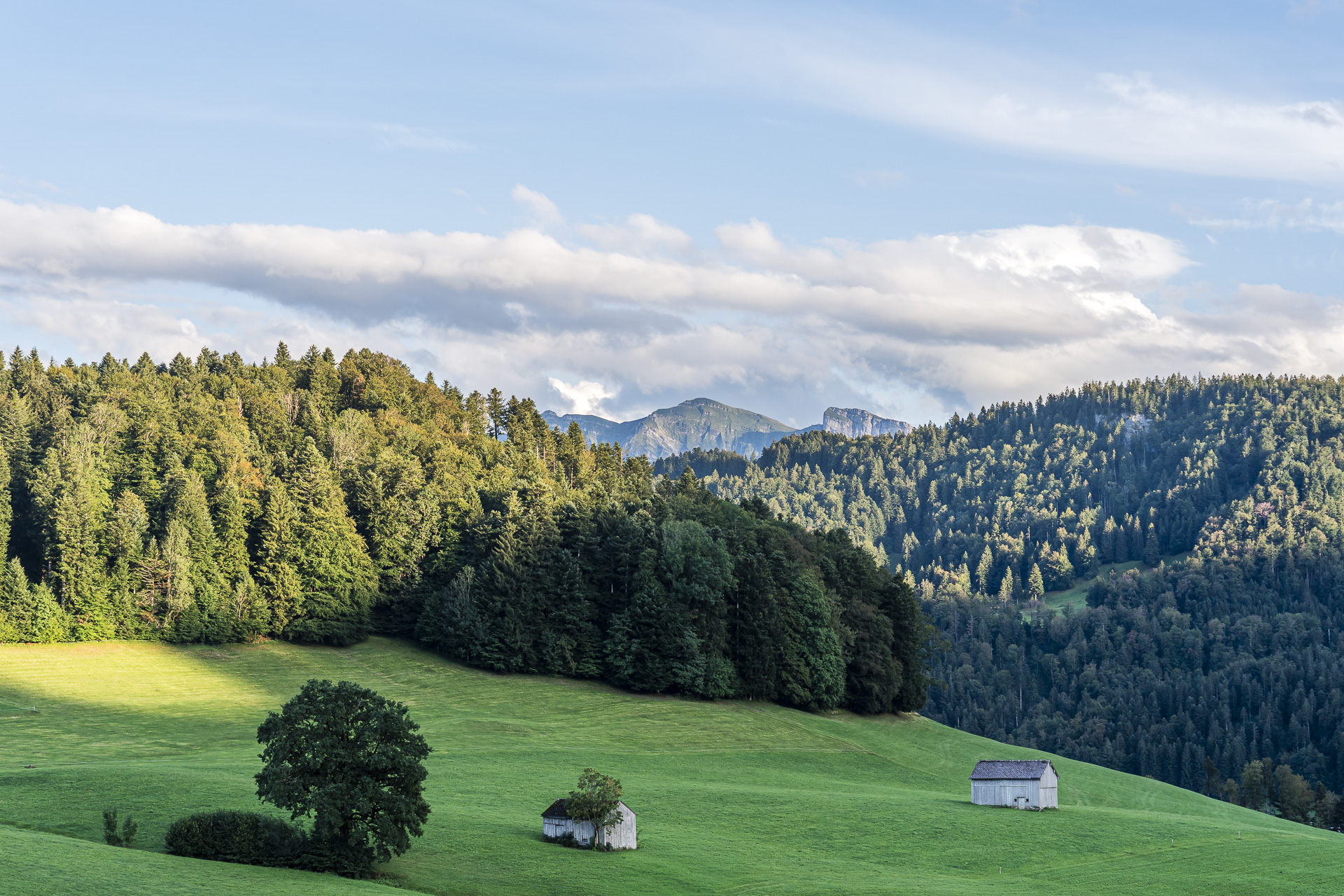
From the Bödele our journey continues into the Bregenzerwald. Next stop: Schwarzenberg. Conveniently, the bus stop is located right in the protected village center with its stately Bregenzerwald houses and inns. We already passed through here in spring 2022 on the Architecture Trail hike and even then admired the historic village center with its traditional Bregenzerwald houses.
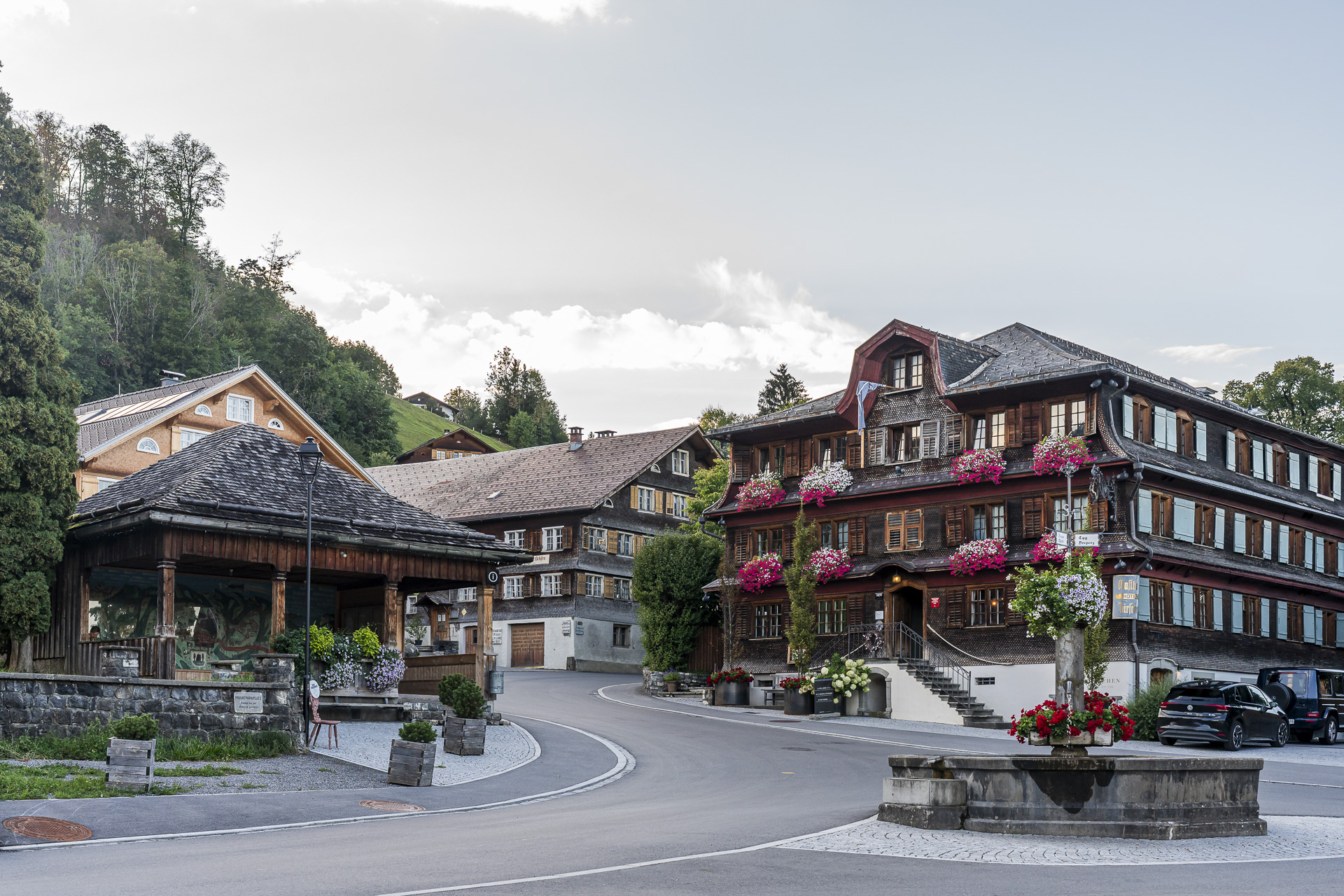
For a village of this size, Schwarzenberg also has an astonishing amount of culture to offer. The painter Angelika Kauffmann spent several months here in 1781 and is still present today with her own museum and frescoes in the parish church. Schwarzenberg may also be familiar to music lovers: since 1976 the village has been the venue for the internationally renowned Schubertiade.
6. At Hirschen Schwarzenberg, discover how regionality tastes
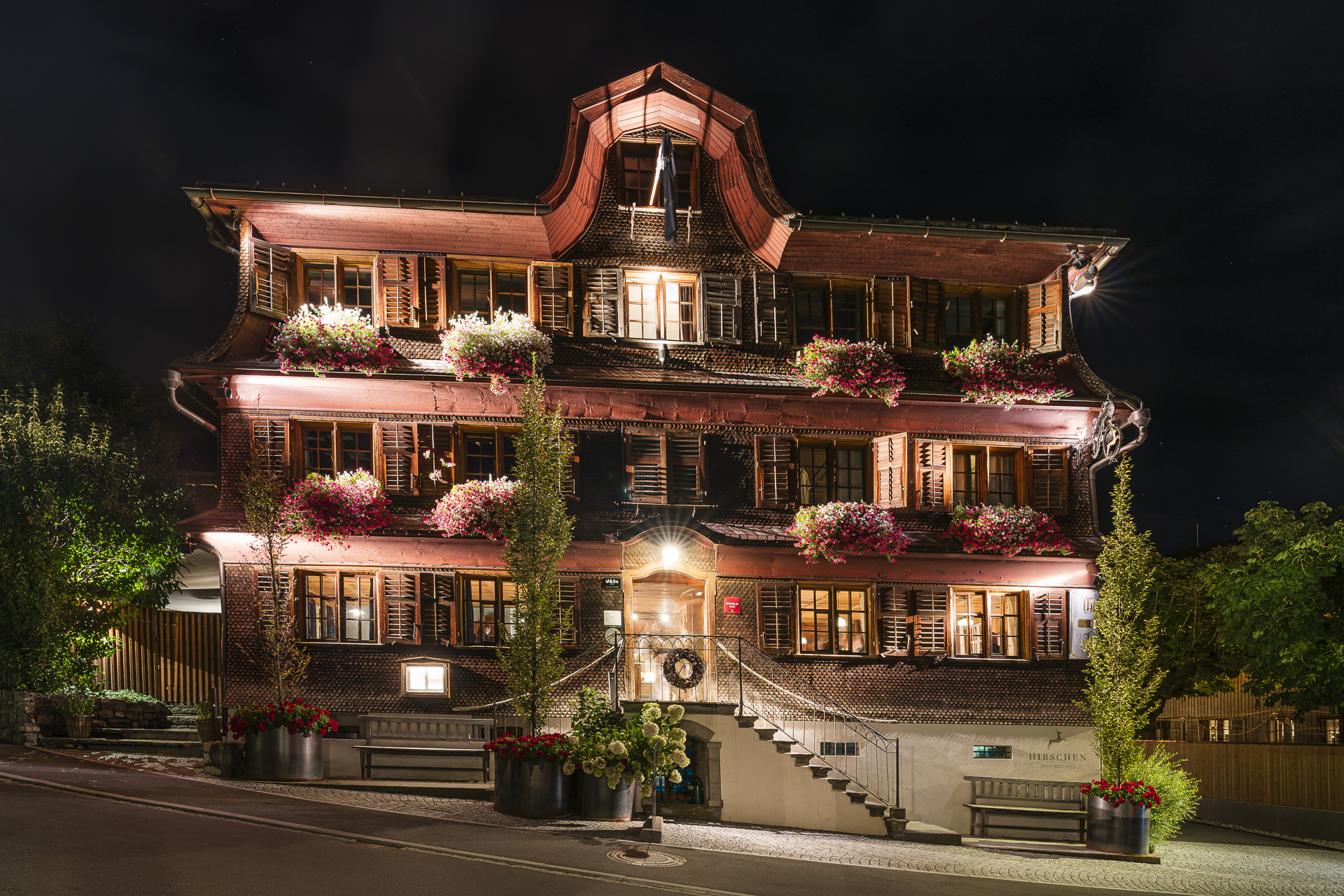
Behind one of the impressive wood‑shingled façades on the village square is theHirschen, Fine Hotel, Restaurant & Spa. Here, Bregenzerwald tradition meets cosmopolitanism and innovative ideas. An exciting mix that has long made me curious about the Hirschen. How this connection looks in practice is shown, among other things, in the fermentation cellar, which we get to take a look into this weekend. Here the kitchen crew experiments with traditional preservation and fermentation techniques to extract as much flavor as possible from regional products while wasting as little as possible.
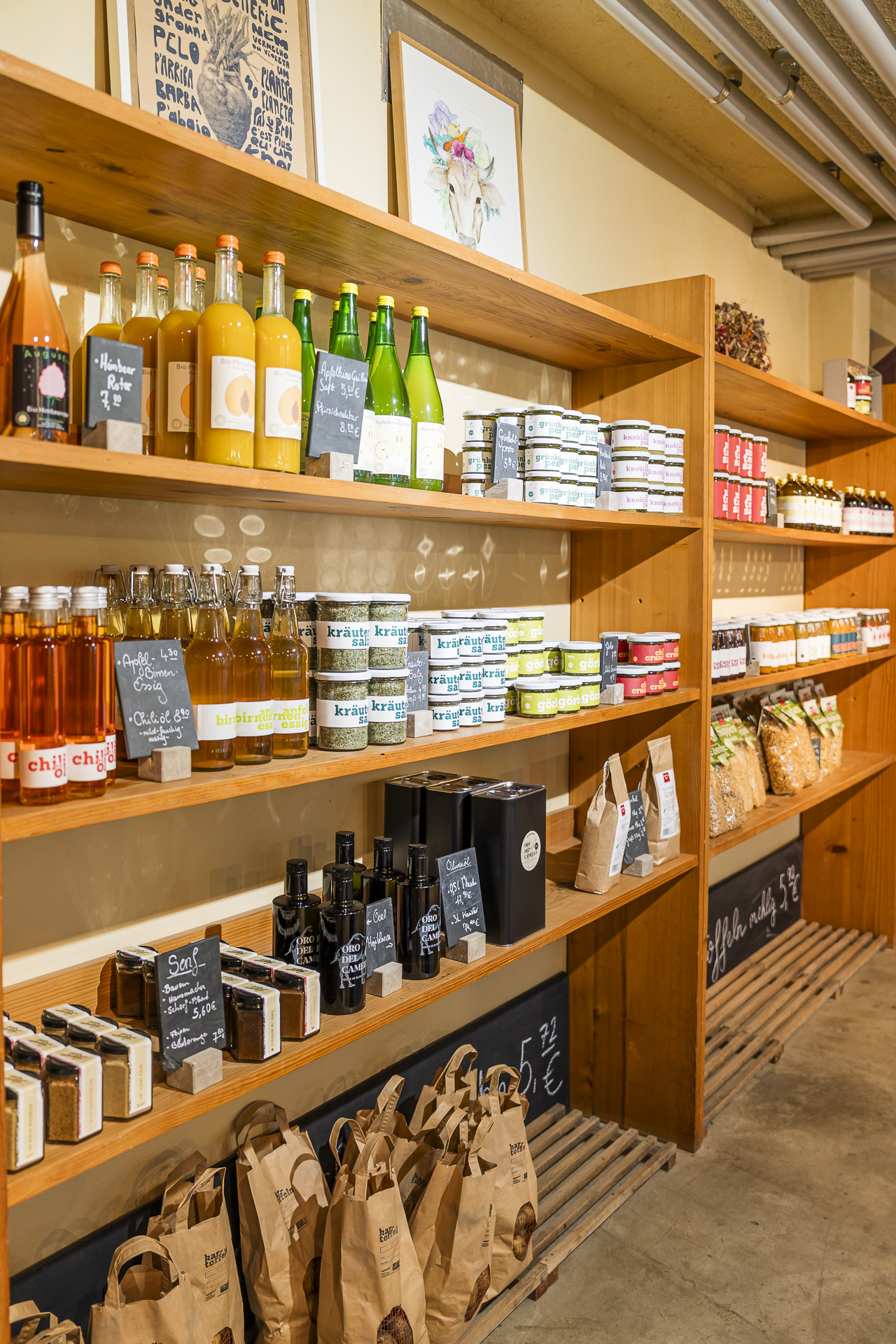
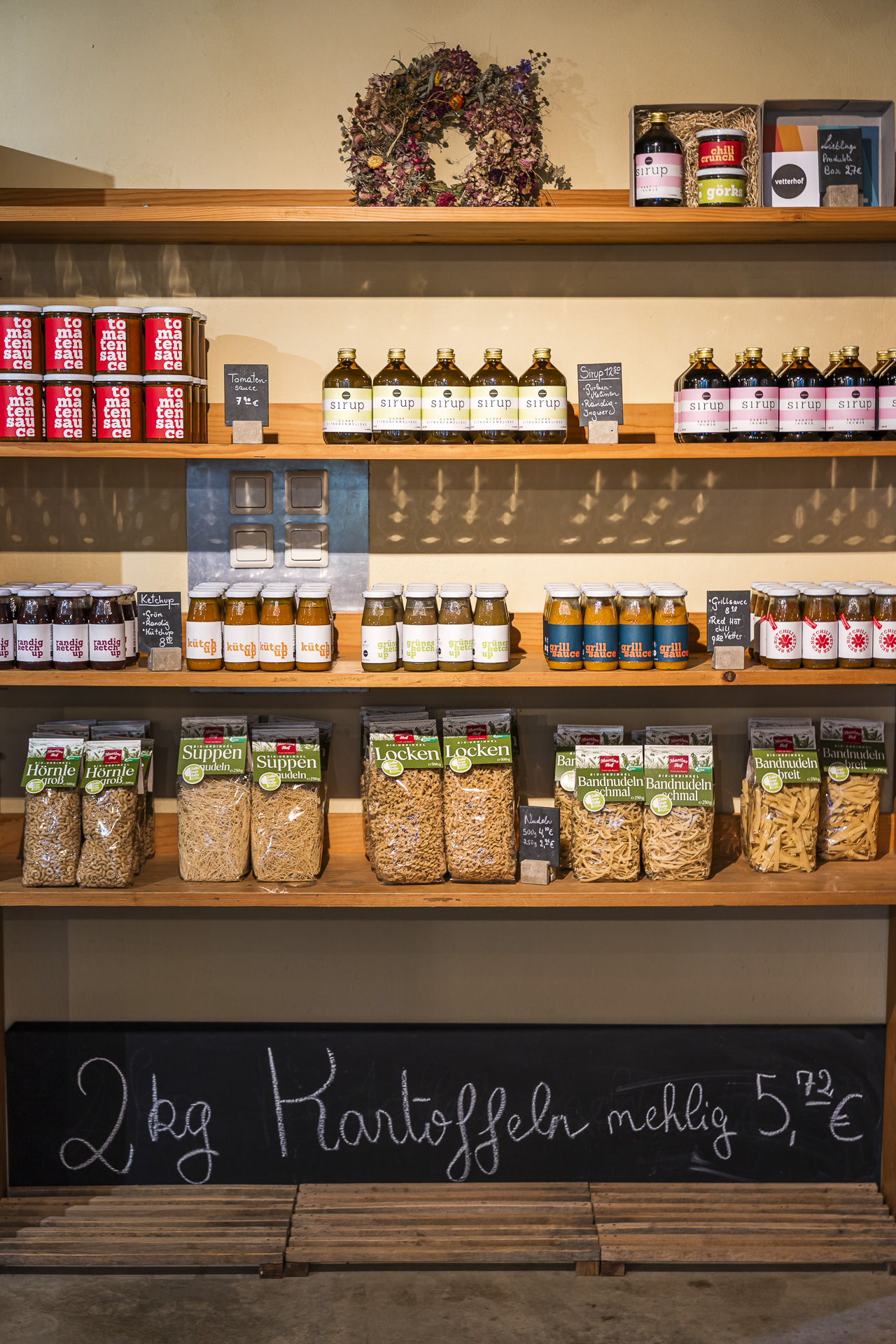
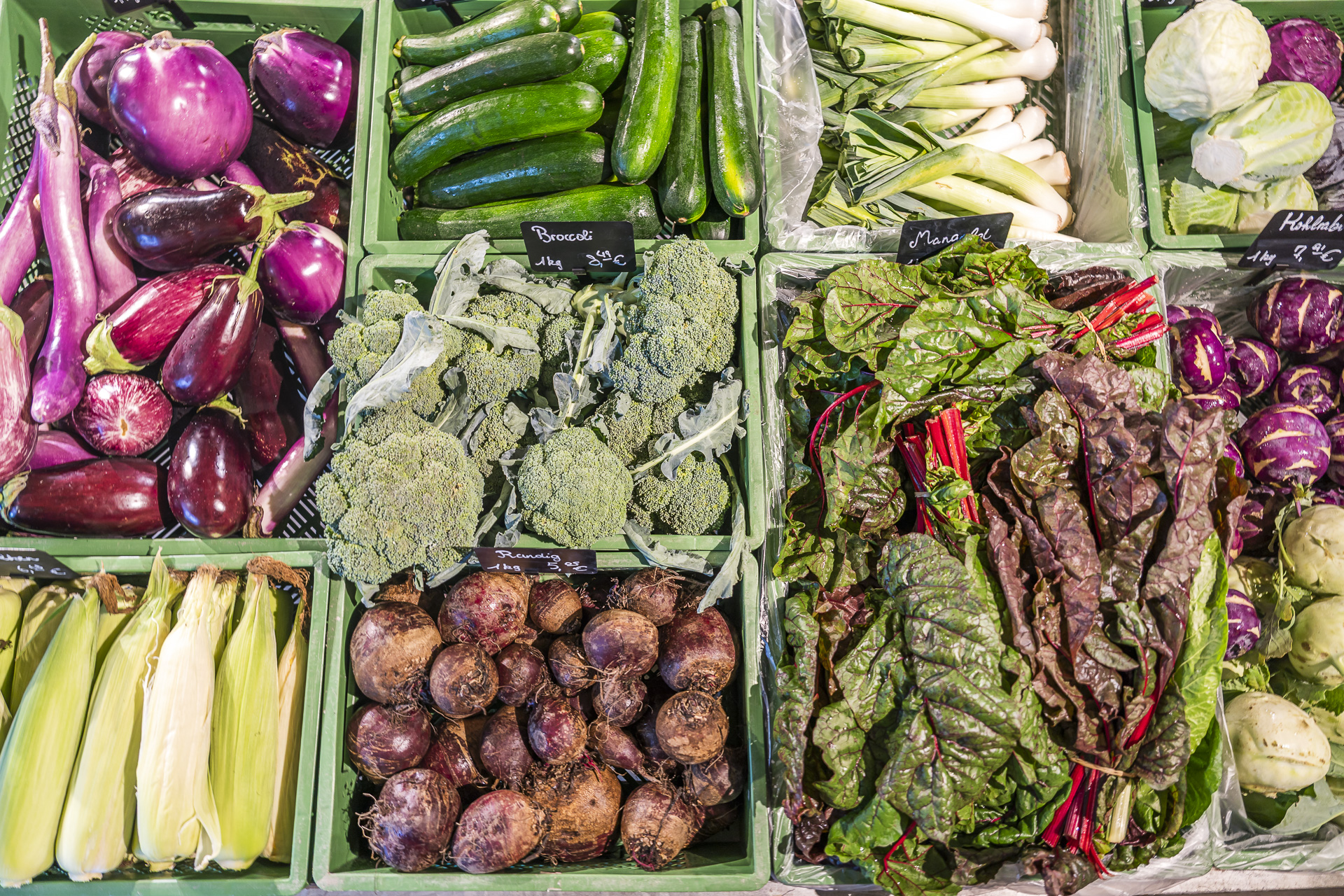
How closely the Hirschen works with a local producer, we already found out the day before at theVetterhof in Lustenau from Simon Vetter. Simon Vetter, who runs the family’s organic farm together with his brother, showed us the farm and explained the philosophy behind it and its direct‑marketing approach. The busy farm shop offers a colorful selection of freshly harvested vegetables. But not everything that grows in the fields goes straight to sale: together with partners like Jonathan Burger, head chef at Hirschen Schwarzenberg, surpluses are processed into new products. This is how, for example, Randig‑Ketchup, young garlic paste, or sweet‑and‑sour chili sauce are created.
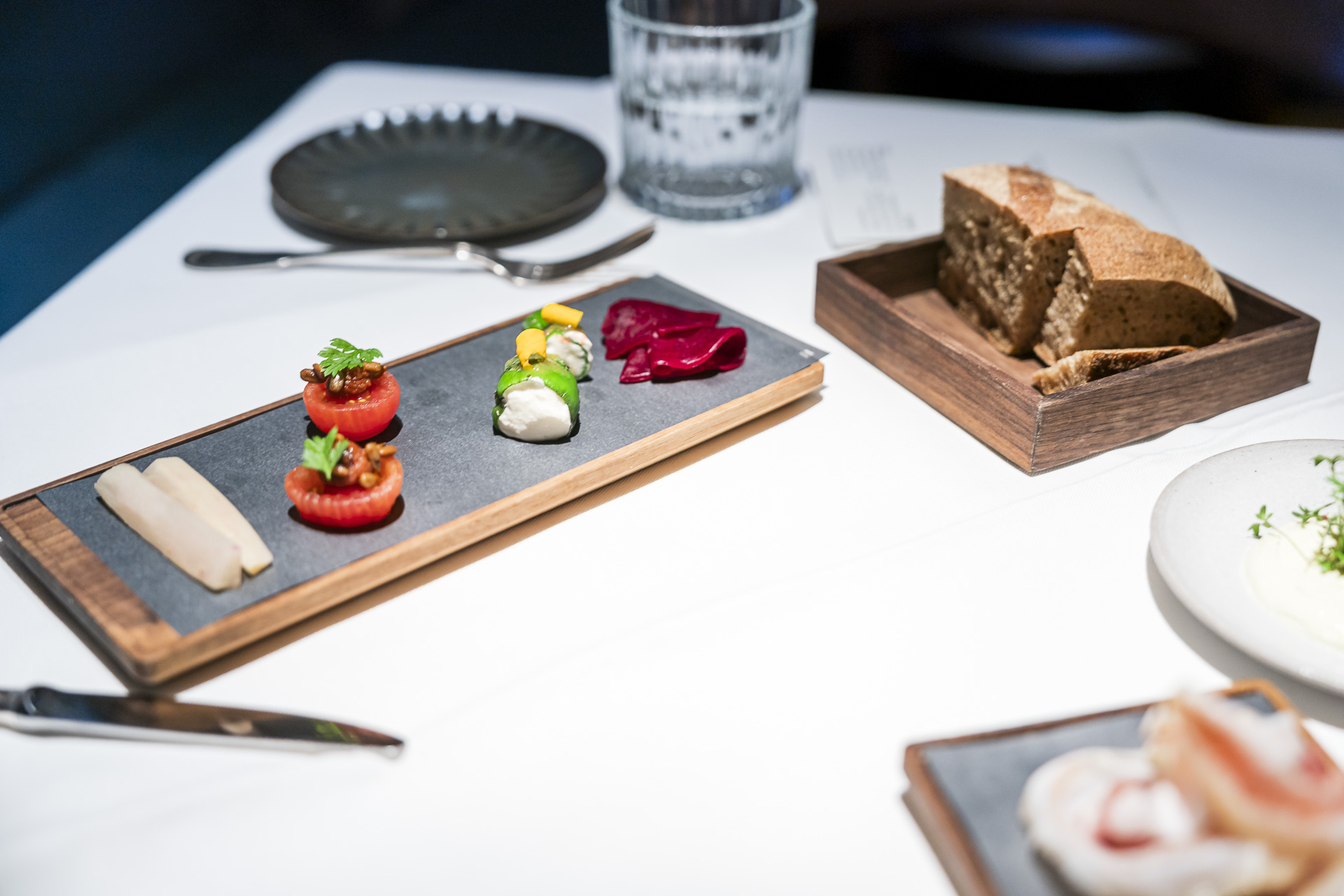
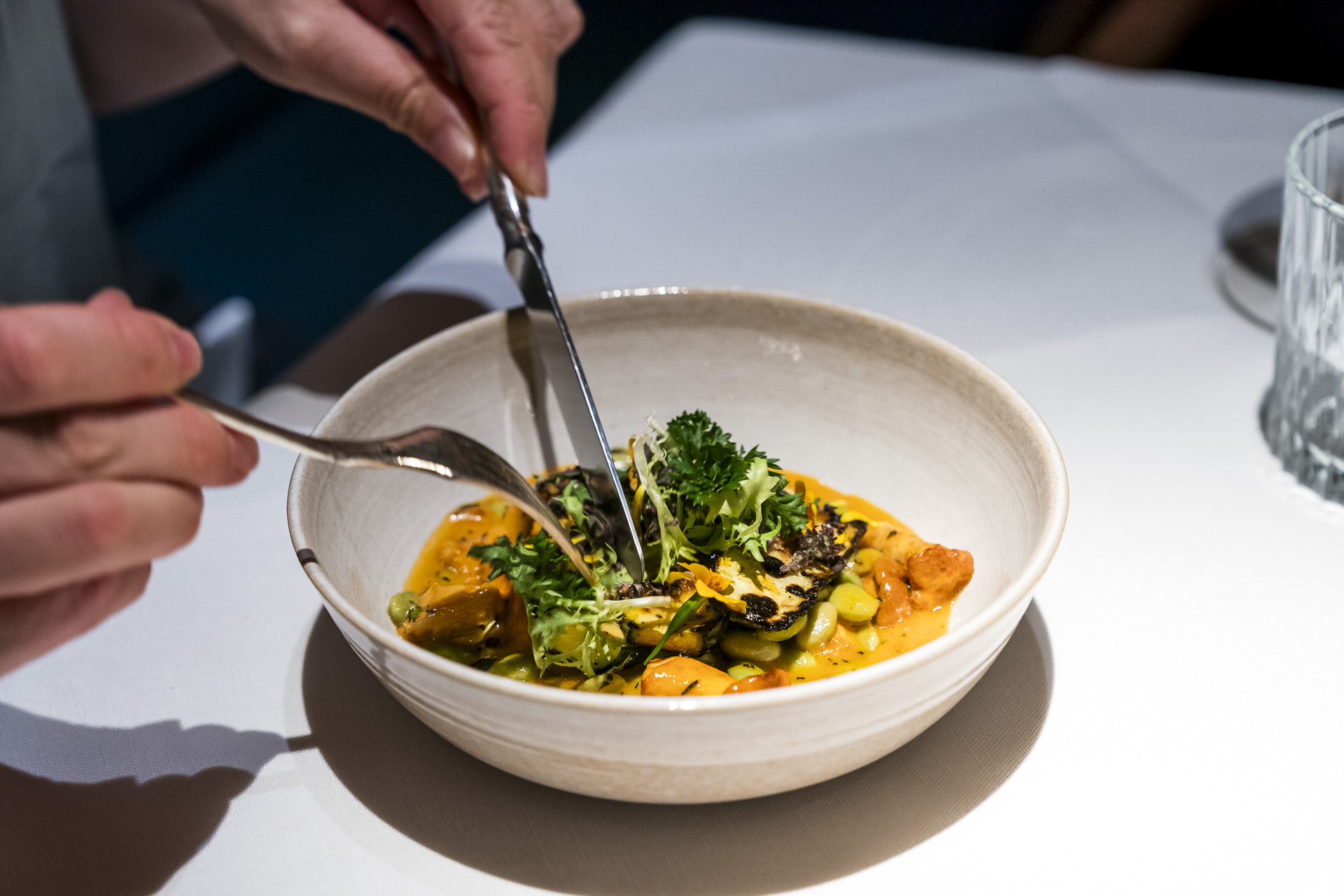
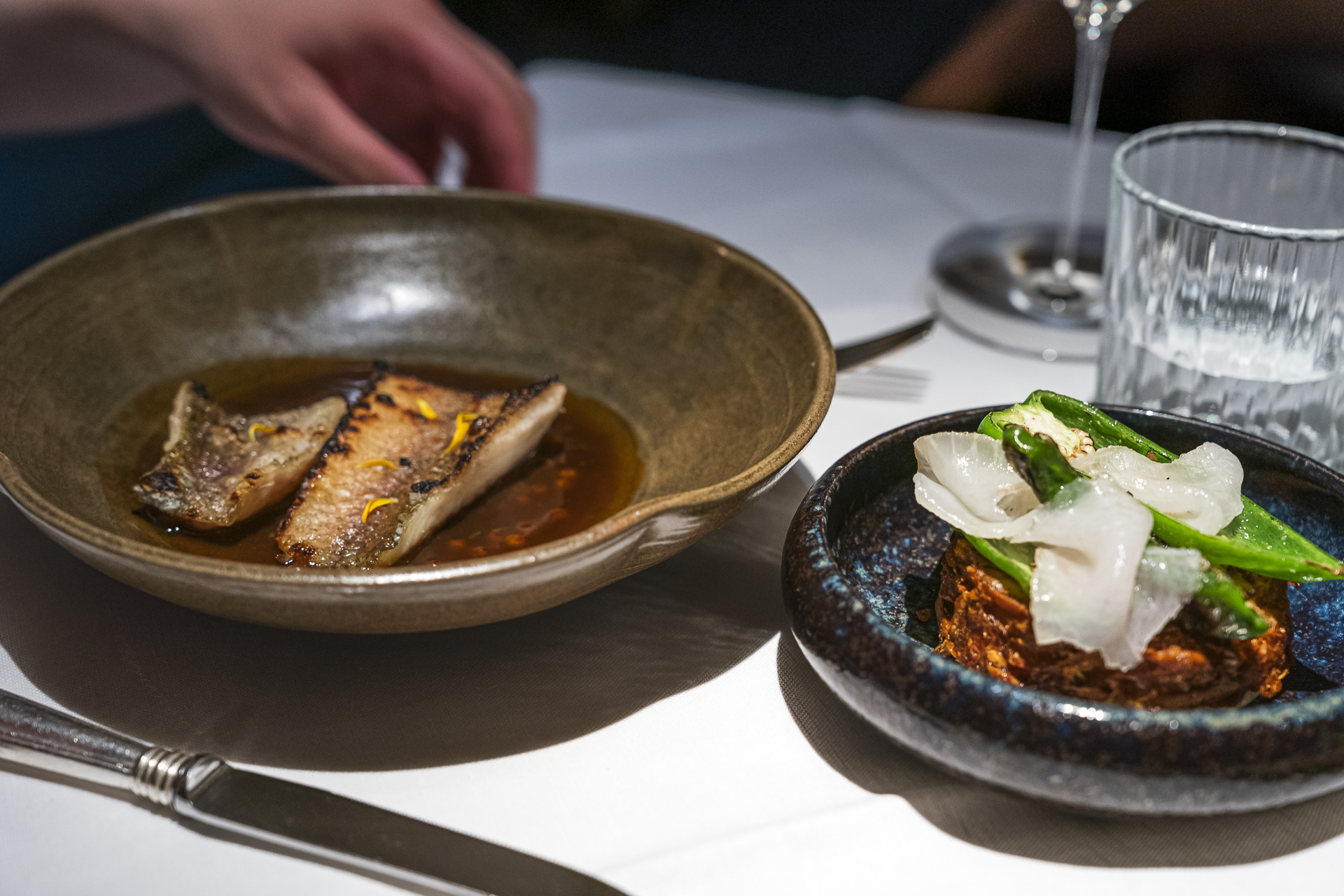
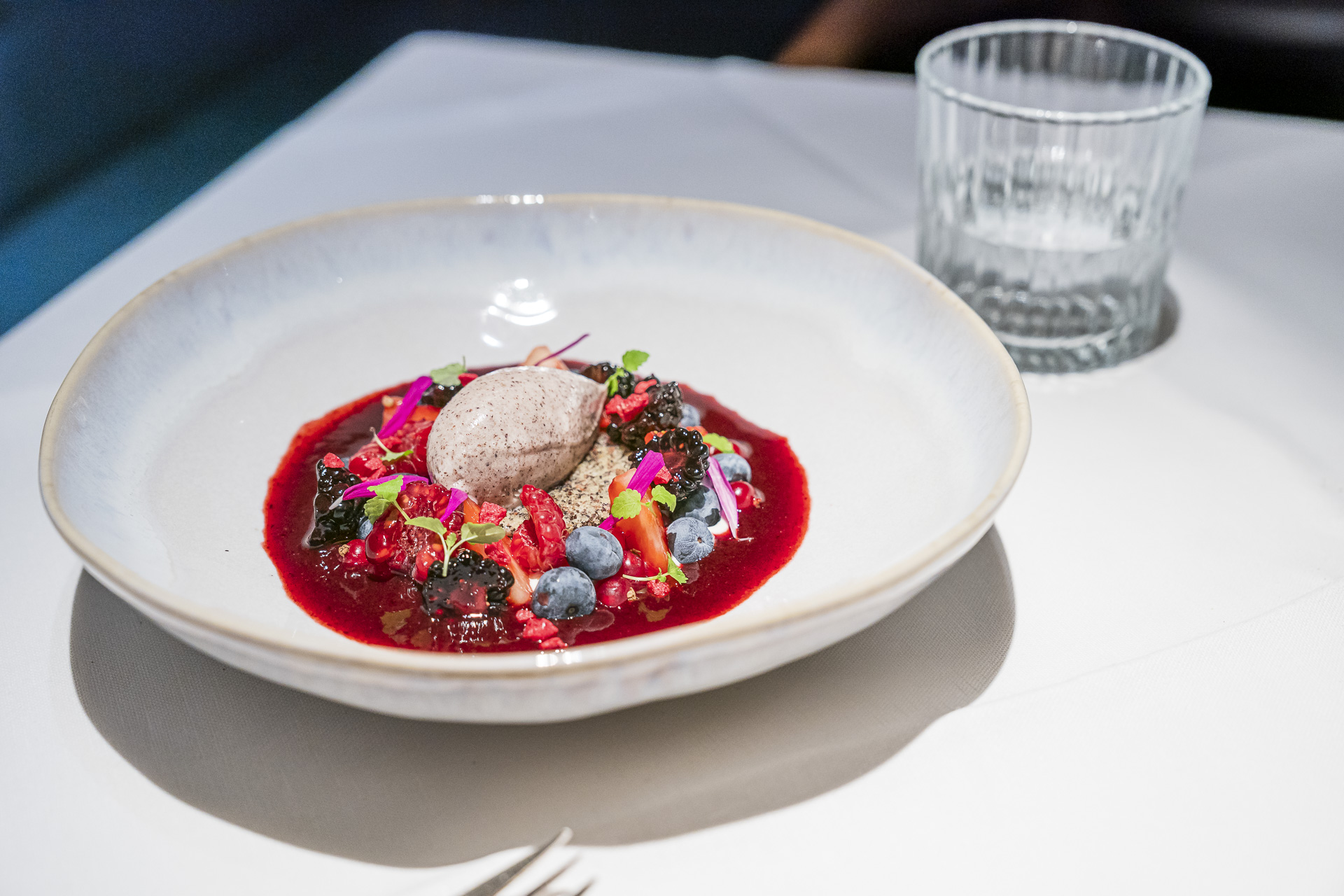
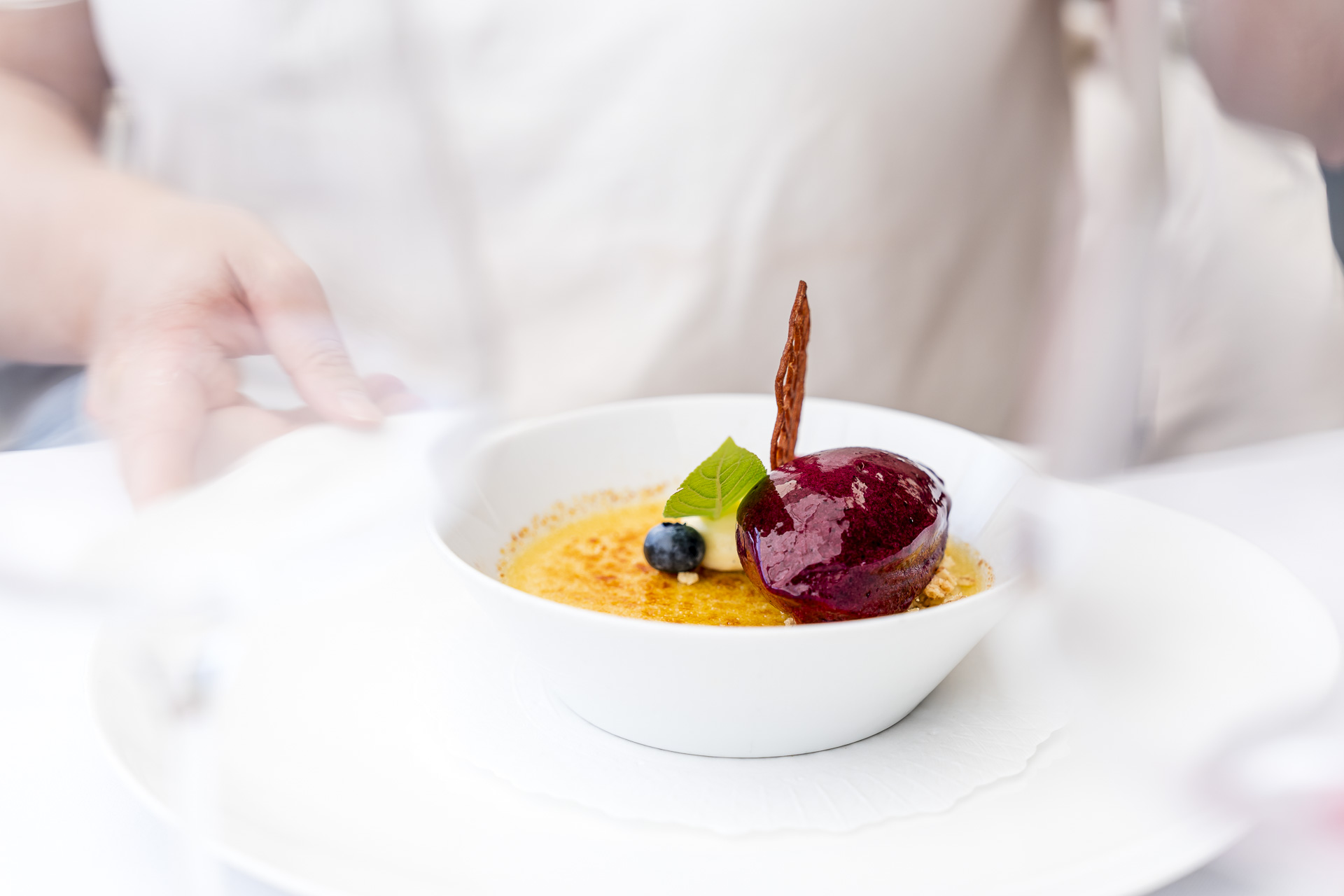
But back at the Hirschen, where everything comes full circle at dinner. To start there’s “Pickled from Field & Cellar,” straight from the fermentation cellar we visited earlier. Next up are summery grilled zucchini with edamame, chanterelles, and a refined paprika fond. For the main course I enjoy grilled zander with a hash brown, pimientos, fish jus, and lardo. The finale is a divine cold berry soup with sour cream and poppy seeds.
Good to know: For dinner at Hirschen, be sure to reserve in advance!
7. In Egg, get a feel for the sense of good building culture
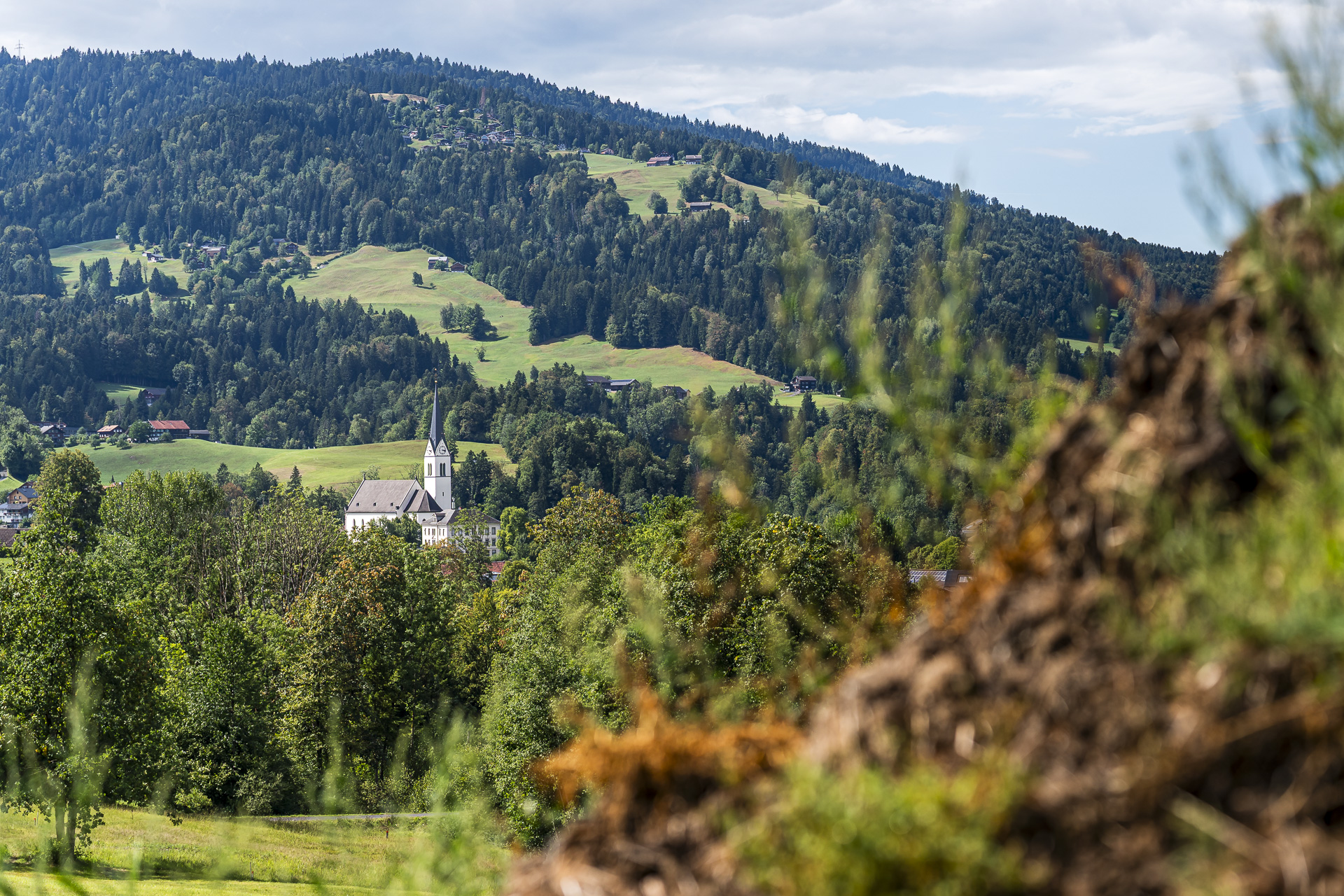
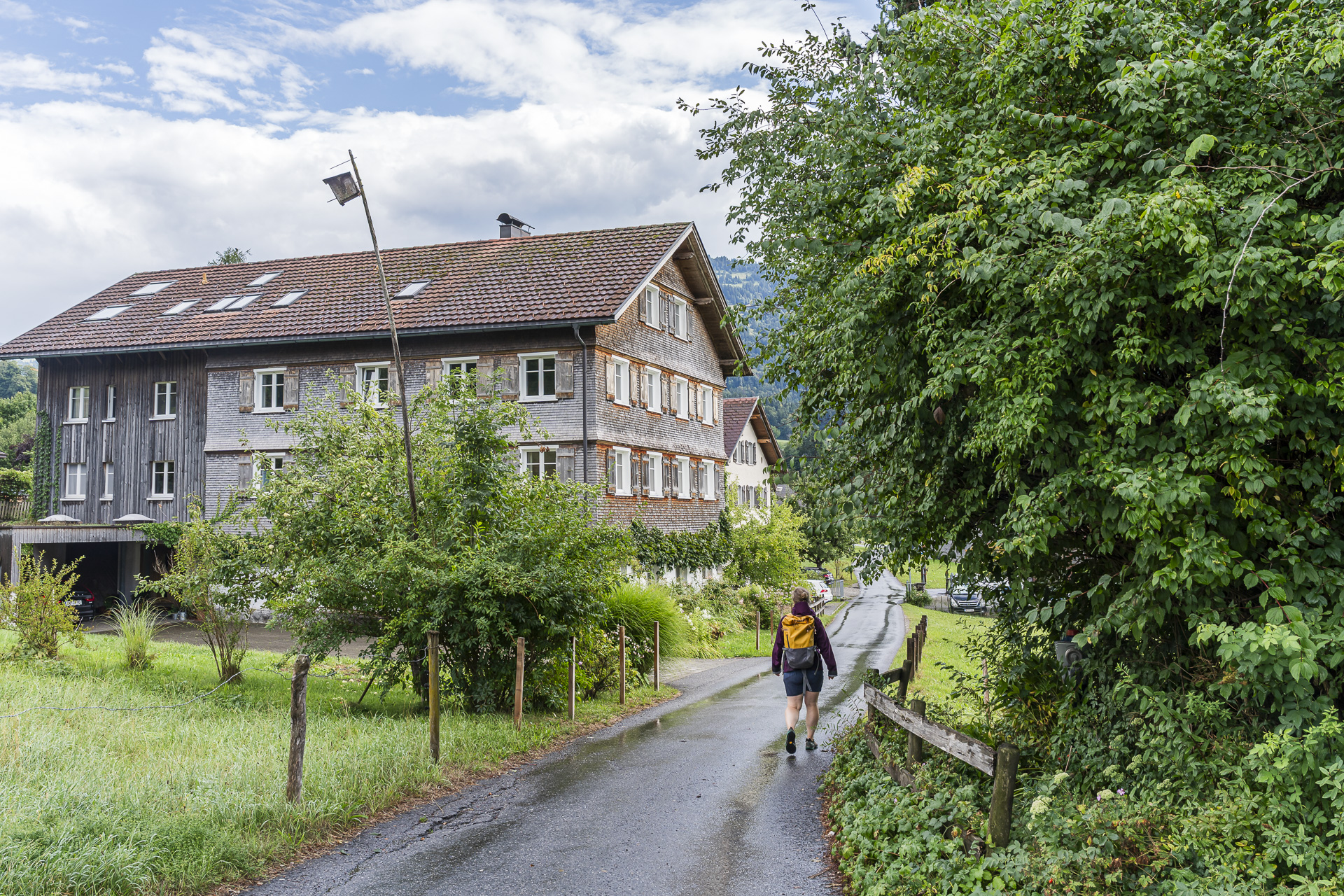
Traveling through the Bregenzerwald, one notices how much care is taken in construction and design here. Even some Aldi and Lidl branches fit into the village scene with adapted proportions and wooden-shingle facades. Background information on the regional building culture is offered by the so-called «Umgang»-routesTwelve village tours show, using selected buildings, how the people in the Bregenzerwald have shaped their living environment and continue to shape it to this day.
The roughly 10.5-kilometer «Umgang Egg» starts at the municipal office and leads in about four hours to selected buildings in the village core and in the outlying hamlets. Those with less time can easily shorten the tour. The «Umgang» routes develop alongside the villages, which is why new buildings are constantly being added. A current example stands directly at the starting point in Egg: the Posthus on the newly redesigned village square. The striking new building with a hipped roof and shingle façade picks up traditional elements and interprets them in a contemporary way.
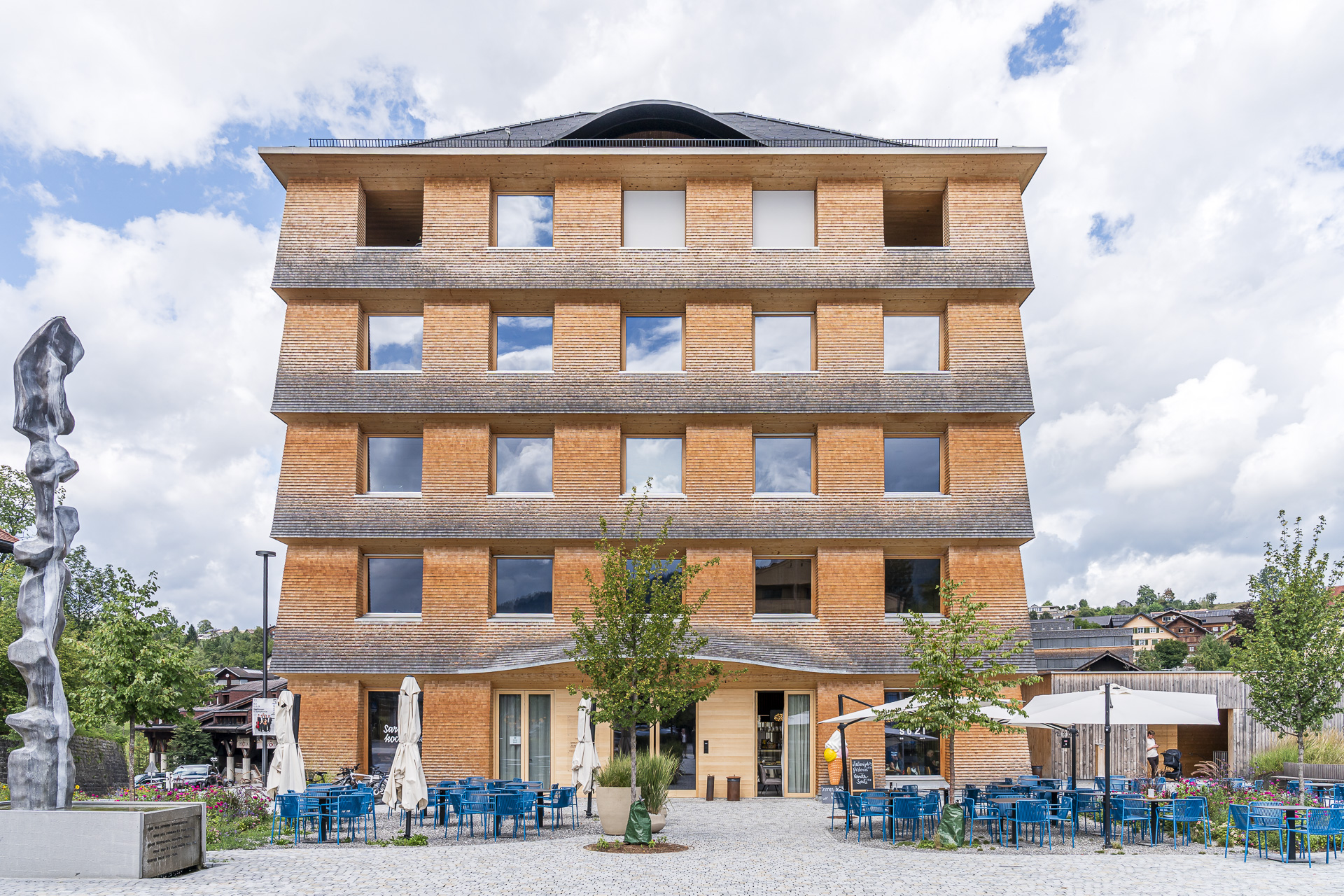
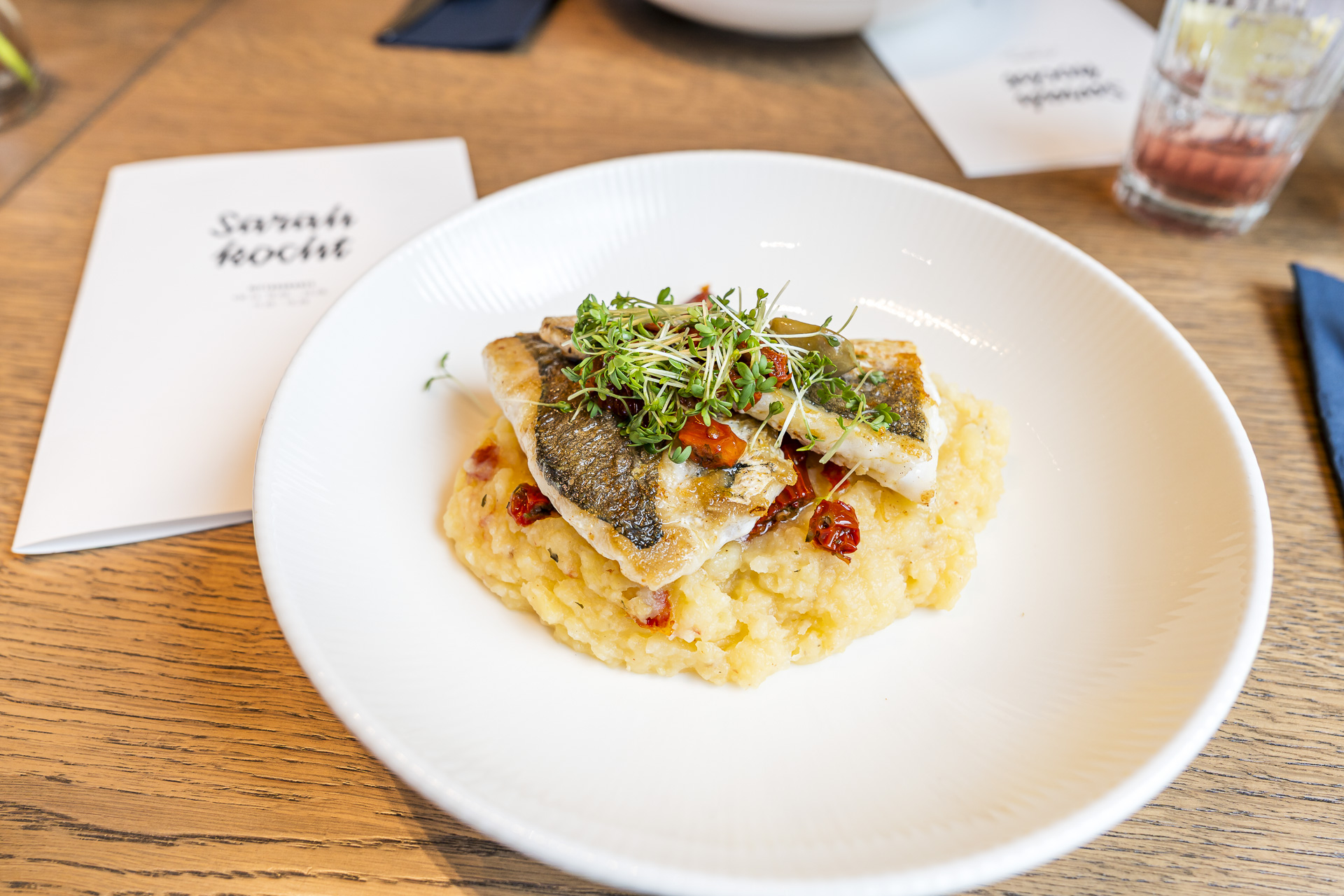
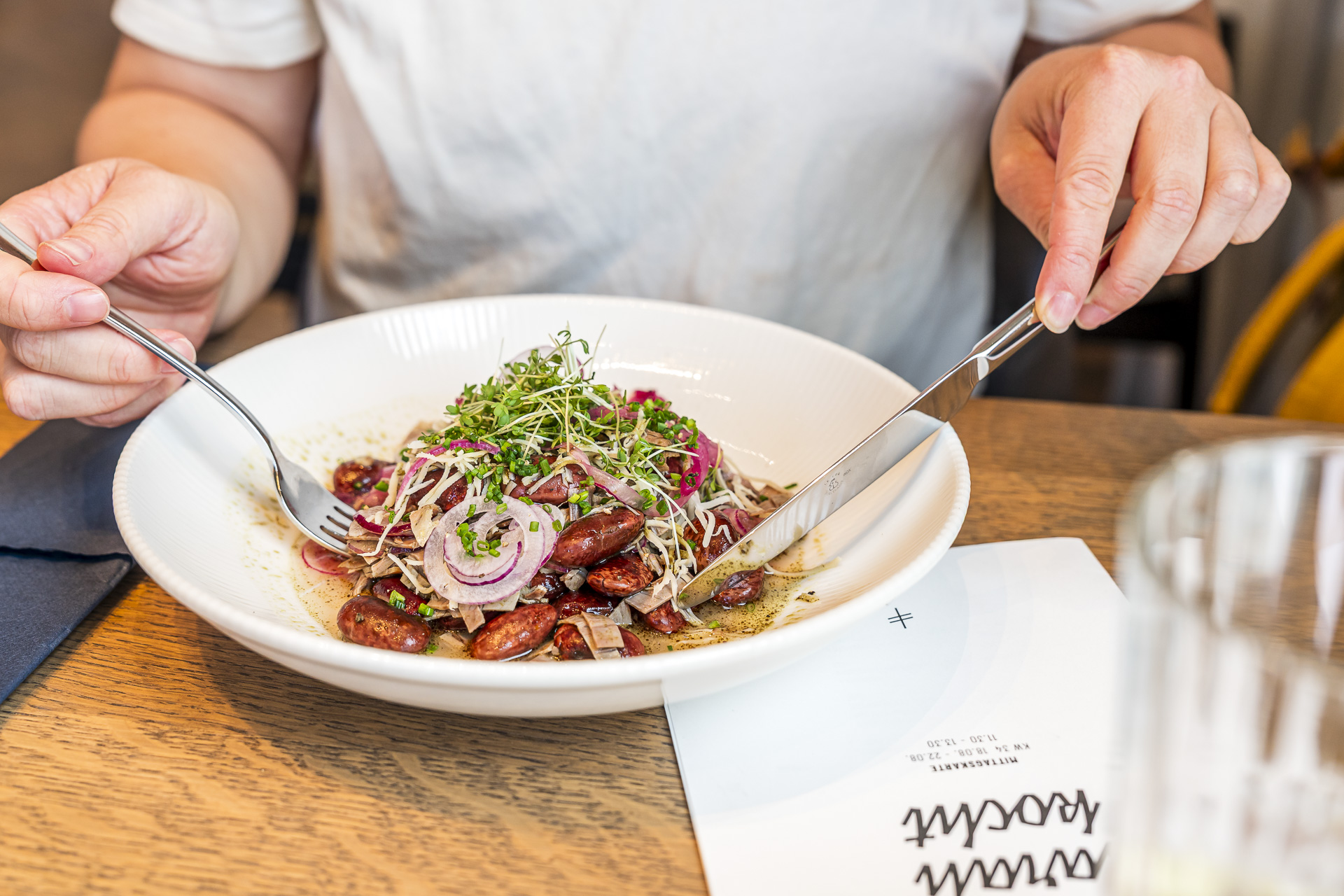
On the ground floor of the Posthus is the restaurant «Sarah kocht», whose outdoor seating opens directly onto the village square and, in good weather, additionally enlivens it. During our visit on a Saturday midday a rain cloud is approaching, so the action takes place indoors. Host Sarah Brückner combines regional ingredients with international influences under the motto «Wald + Welt». The weekly changing lunch menu offers a few uncomplicated, fairly priced dishes that are prepared with great care. There are also homemade lemonades and iced teas. An address you should definitely remember.
8. Take an Energiewanderung in Langenegg
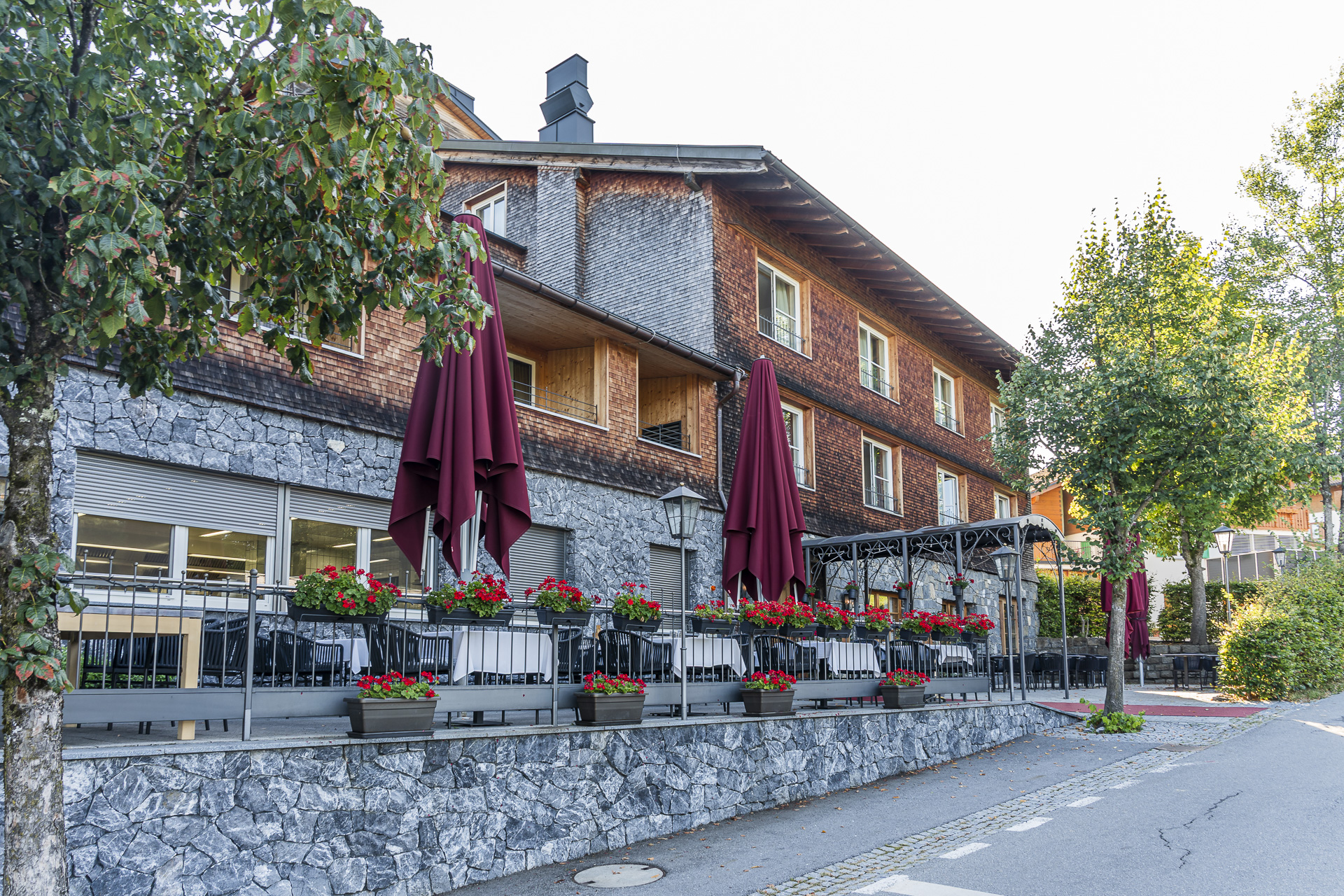
We spend our second night in Vorarlberg just under 20 minutes by bus north of Egg in the Krone Langeneggsurrounded by greenery.
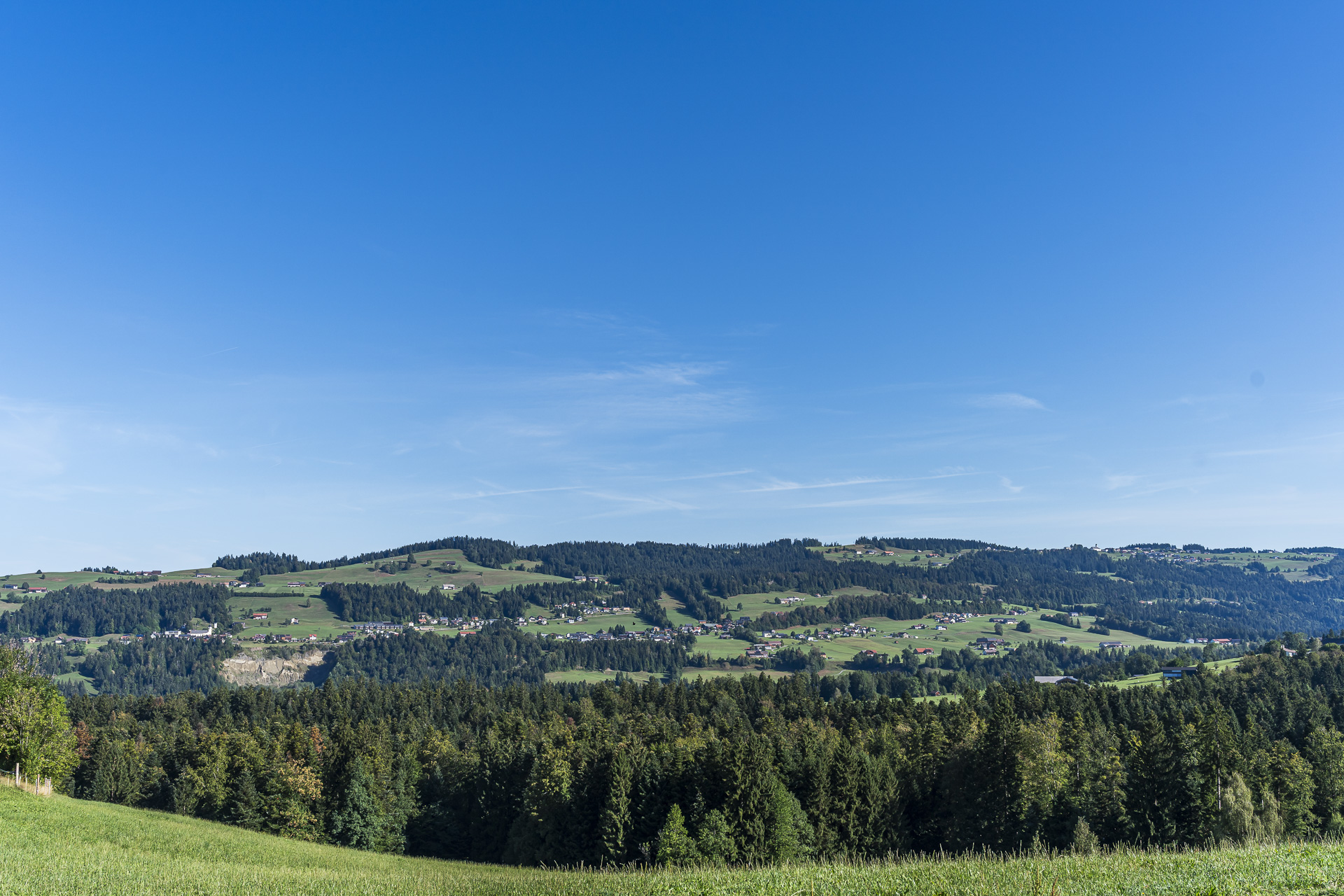
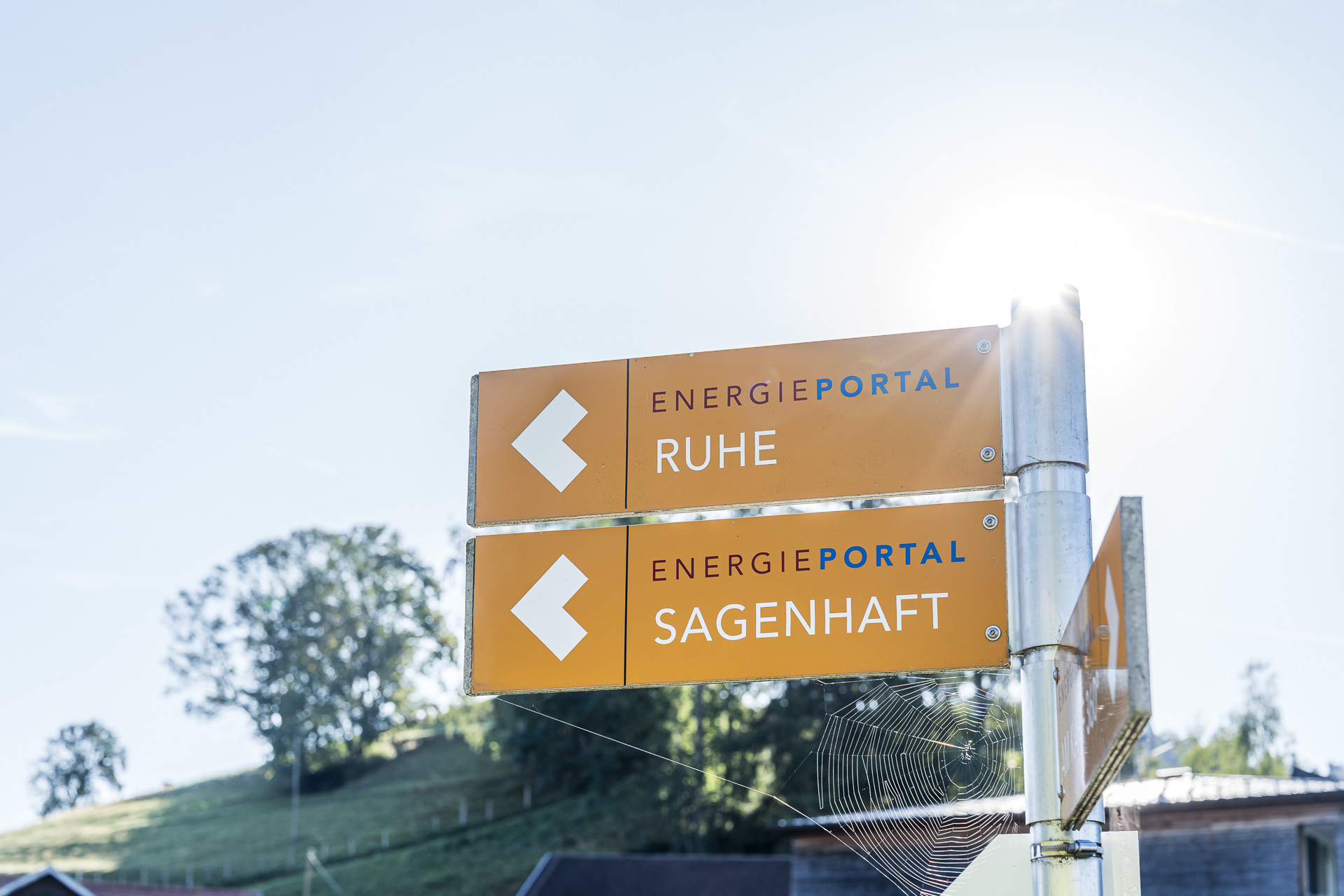
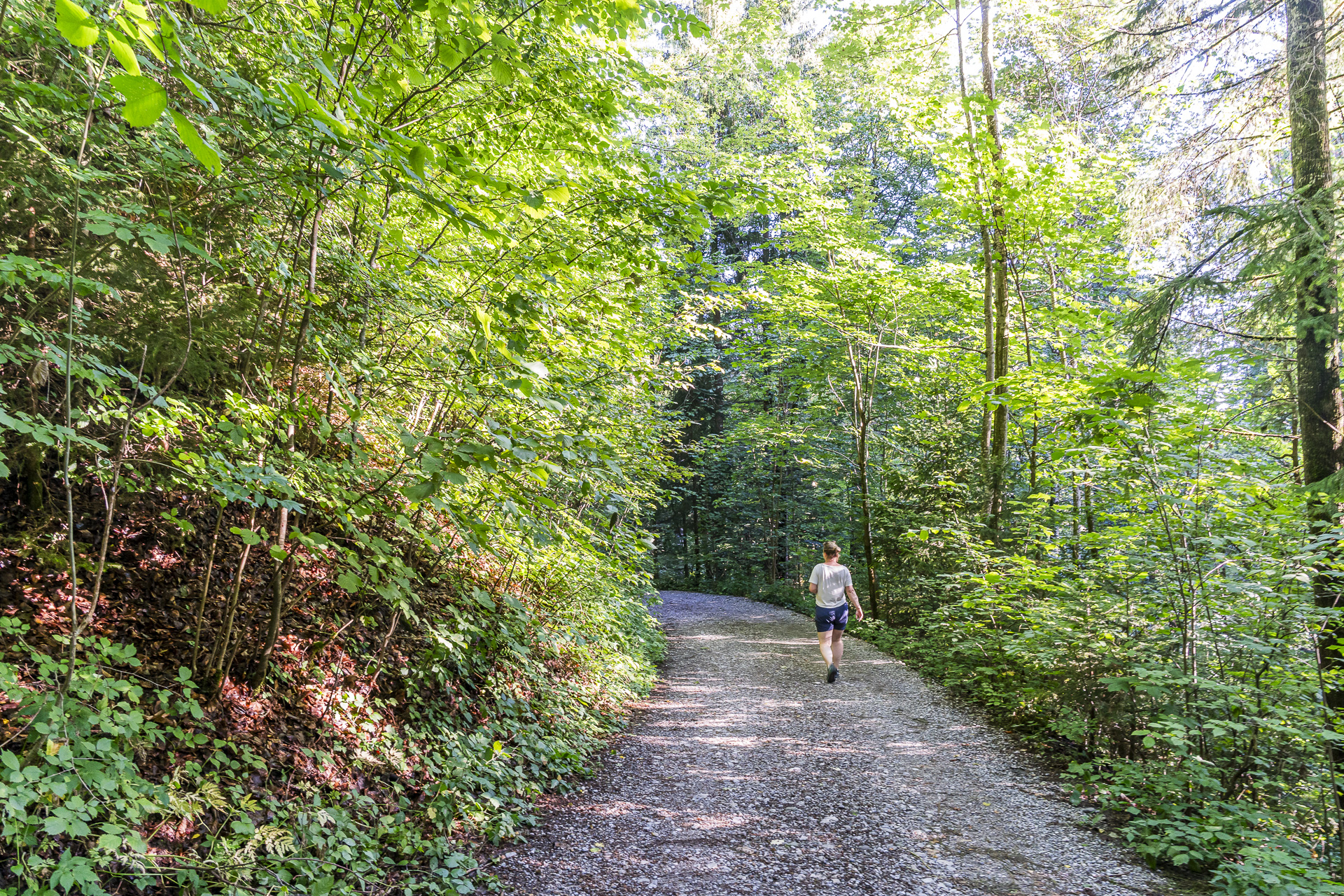
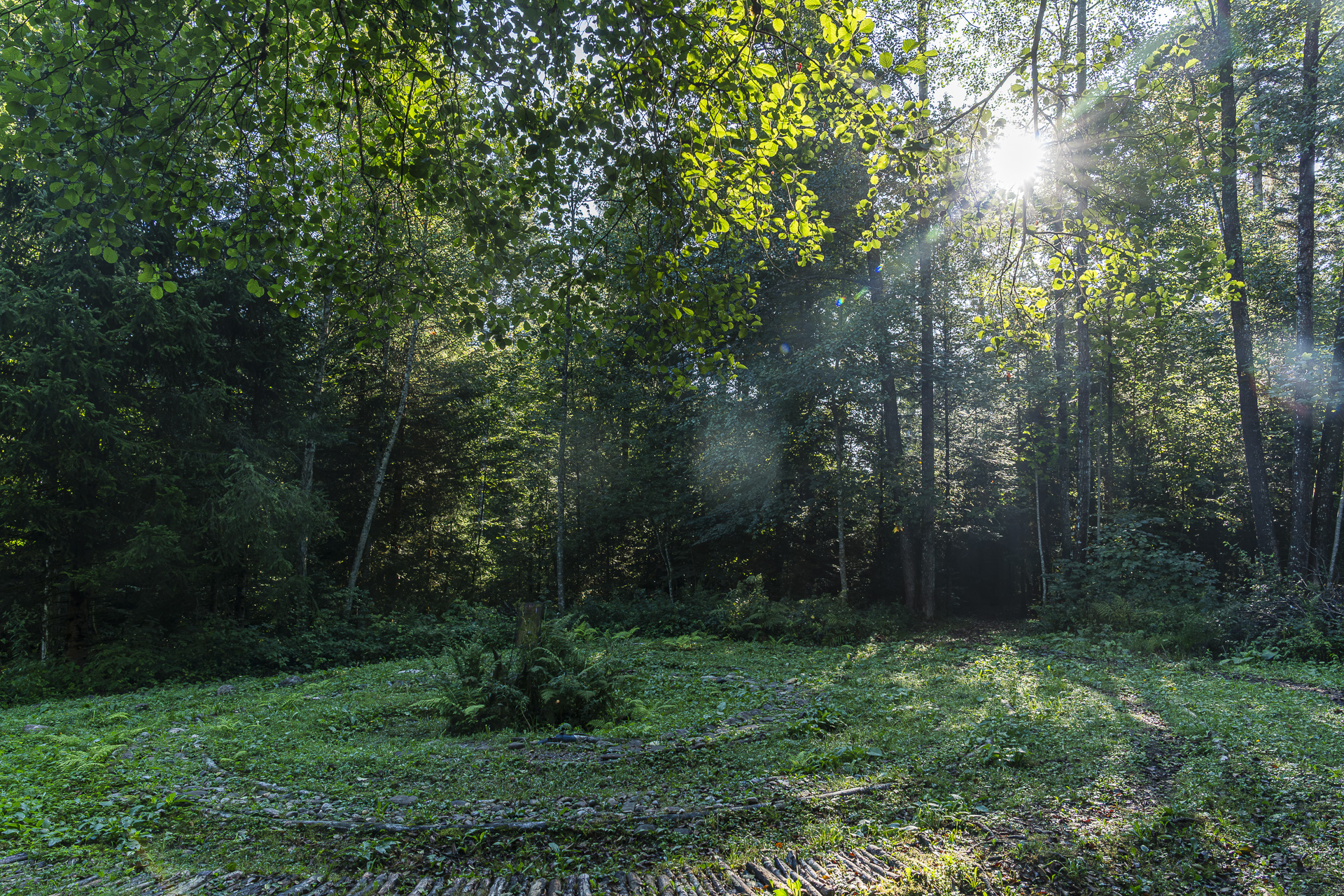
Right at the hotel is the so-called «Energiewanderung». The easy, well-signposted circular route runs for 4.2 kilometers through the surrounding forests and the «Nord» nature reserve. Along the way, information panels explain more about the environmental management of the municipality of Langenegg. Benches along the route invite you to pause, let your gaze wander over the green and let your thoughts drift. Wonderfully calming.
9. Visit the Hittisau Women’s Museum
On the third and final day of our extended weekend in Vorarlberg we make a detour to Hittisau. For over 25 years the only Women’s Museum in Austria has been making women’s history and women’s cultural production visible here. Not only is it remarkable that such a museum has found a home in a rural area, but the building itself is noteworthy as well. The starting point for the construction was the need for new premises for the fire department. What resulted is a building that combines several uses: alongside the fire department it houses the Women’s Museum and the rehearsal space of the local music society. In this way it exemplifies how a functional municipal building can create added value for the village and contribute to the revitalization of the village center.
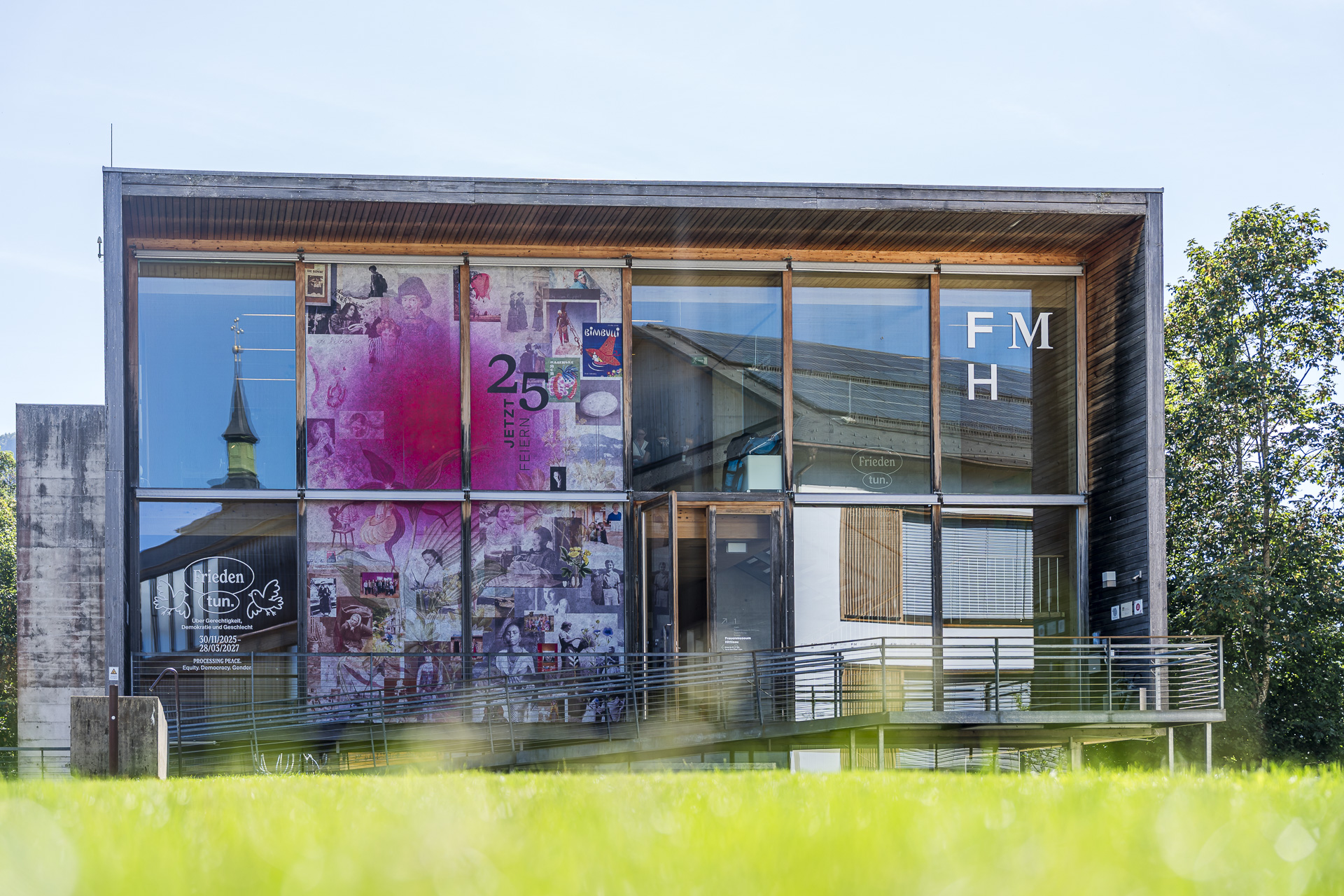
The current exhibition «FRIEDEN TUN.», which is on display until the end of March 2027, is devoted to the interrelations between peace, justice, democracy and gender and understands peace as an active, malleable process. The exhibition is multimedia and interactive and encourages reflection. We spent about an hour and a half here. The preview for 2027 is intriguing as well: from April the Women’s Museum will, under the working title «SCHÄM DICH?», focus on the topic of shame and its interplay with power, the body and gender.
Good to know: The Frauenmuseum Hittisau is open from Tuesday to Sunday from 10:00 a.m. to 5:00 p.m. Regular admission costs 10 euros.
10. Experience culinary delights and craftsmanship at the Krone Hittisau
And if you’re already in Hittisau, a visit to the Krone of course should not be missed. The traditional inn has stood on the village square since 1838 and demonstrates how existing building fabric is handled in the Bregenzerwald. From 2007 the house was carefully renovated in several stages. During this process the hosts worked with architect Bernardo Bader and numerous craftsmen from the Werkraum Bregenzerwald.
The renovation was not about restoring the house to an assumed historical original state. The current generation of hosts aimed instead to build on the qualities of the existing house, develop them in a contemporary way, and focus on durability. This is apparent even in the custom-made furniture, which is not intended to be replaced after just a few decades.
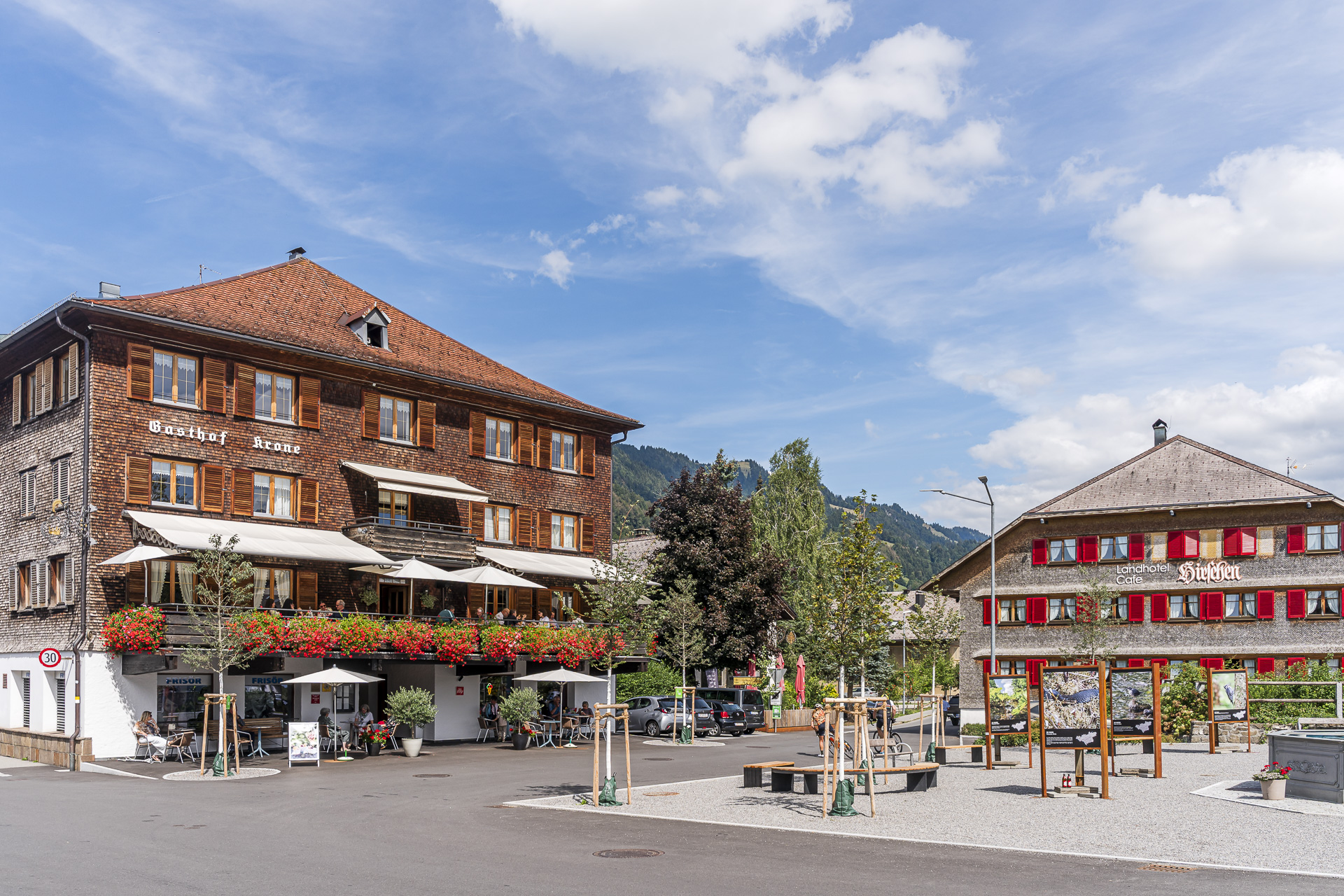
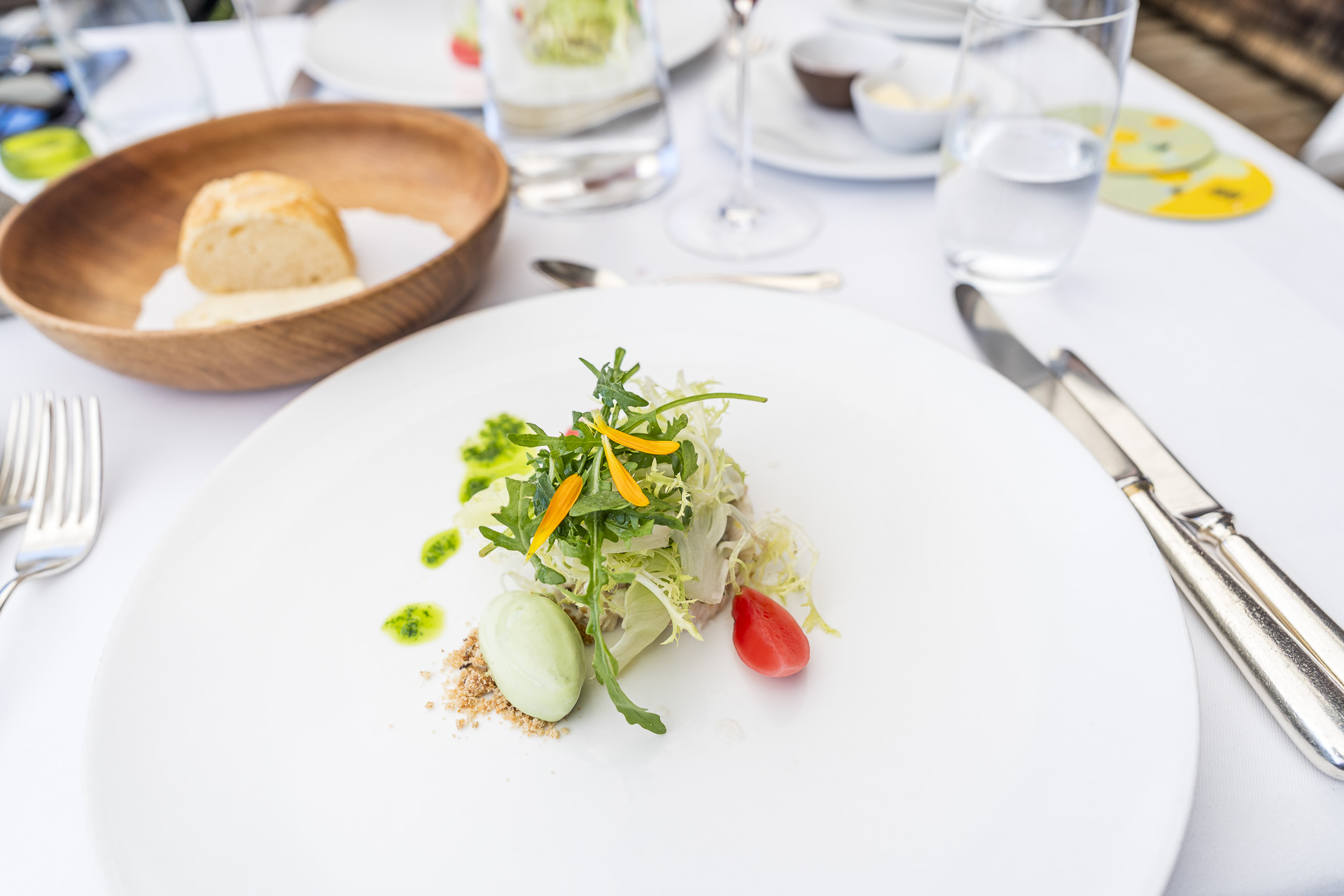
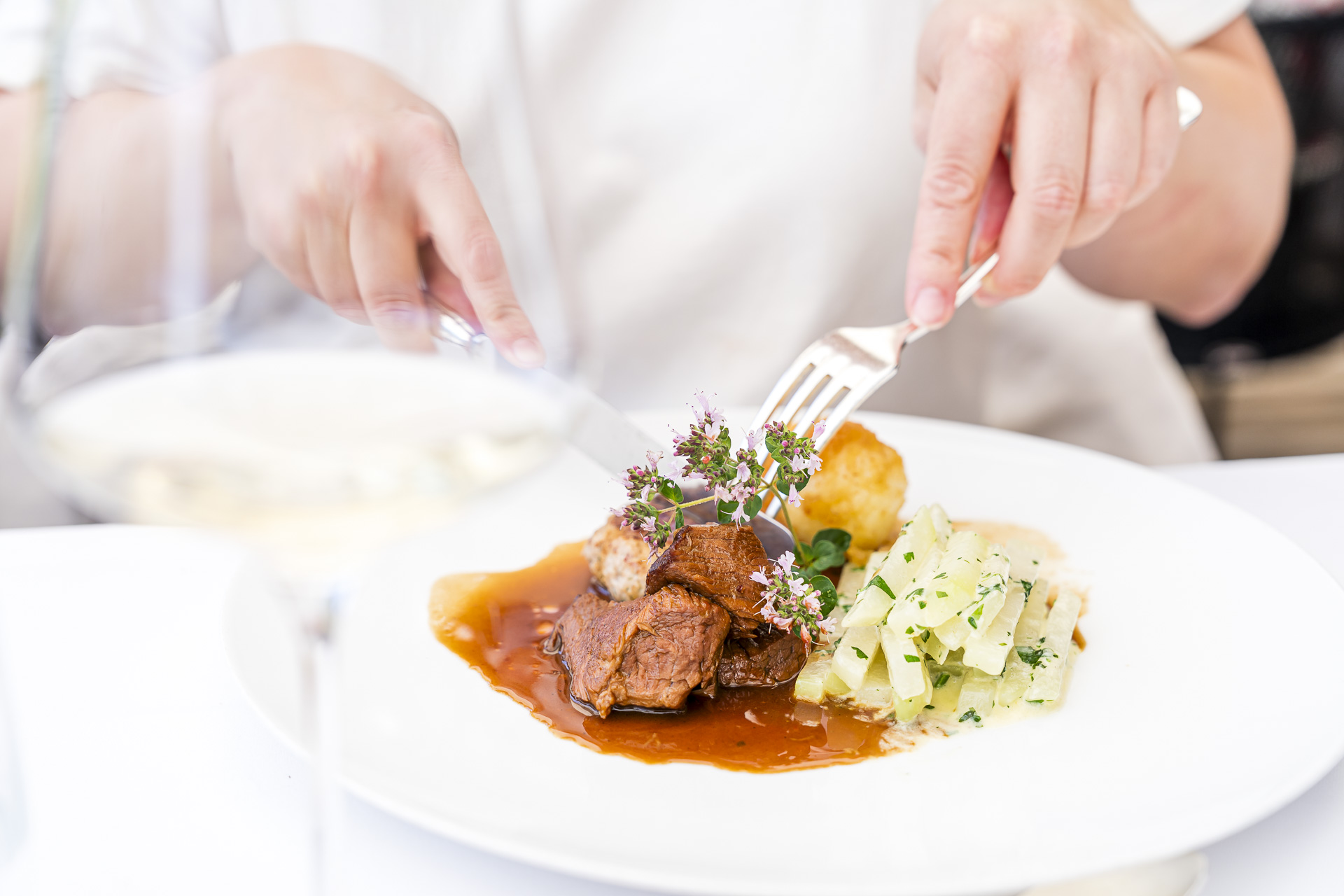
One detail still prompts me to ask: the balcony on the first floor that runs along the entire gable side, where the main entrance once was. For a traditional Bregenzerwald inn such a balcony is actually atypical. Dietmar Nussbaumer says with a laugh that this “disturbing detail” has already been a topic in conversations with the architects. Even so, he would not give up the balcony today. Why, we can easily understand during the subsequent lunch: while we enjoy a fine meal up here, we look out over the recently redesigned, traffic-calmed village center and watch the lively activity on the square.
Leave a Reply